Matox News

Truth Over Trends, always!

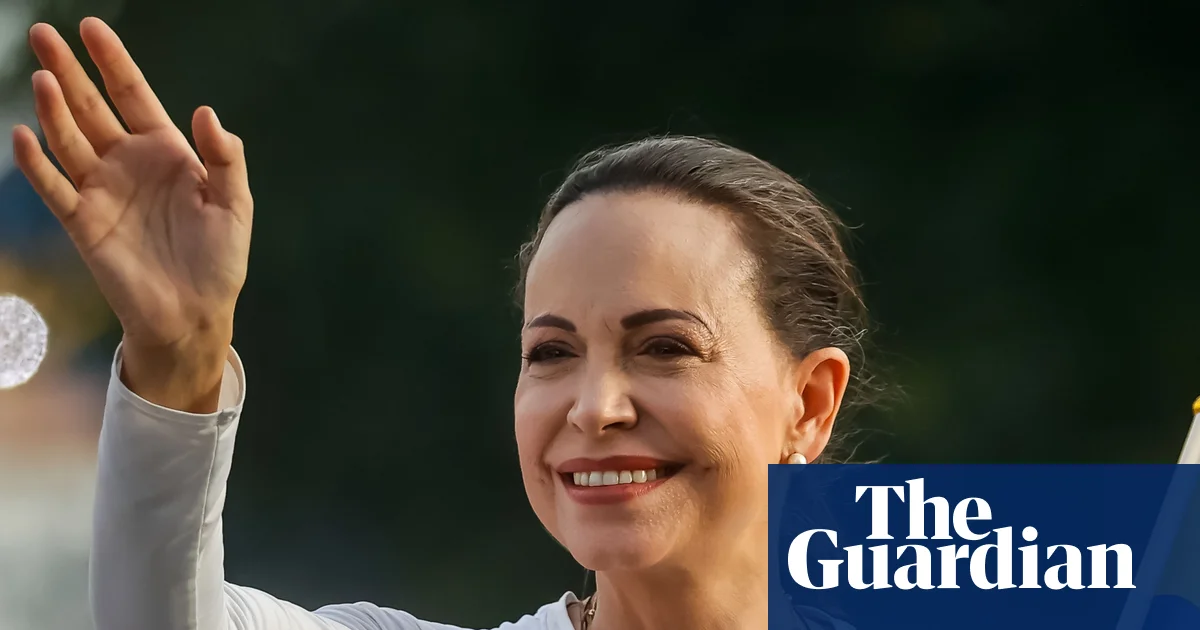
Oslo Cancels Appearance by Nobel Laureate María Corina Machado—Youth Voice Silenced

In a remarkable twist of international diplomacy and ideological rivalry, Venezuela’s opposition leader and fierce critic of Nicolás Maduro, María Corina Machado, has been awarded the Nobel Peace Prize for her relentless efforts to challenge the authoritarian regime in Caracas. The decision by the Norwegian Nobel Committee has sent seismic waves through the geopolitical landscape, prompting discussions on the effectiveness of Western institutions in defending democracy and human rights against entrenched authoritarian governments. However, the celebration was marred by controversy and uncertainty surrounding Machado’s safety and whereabouts, as her planned appearance at the Nobel ceremony was abruptly canceled, underscoring the sinister stakes in Venezuela’s ongoing political crisis.

The **Nobel Peace Prize** announcement underscores a shifting global narrative: how Western support for opposition movements can act as a catalyst for change, yet also provoke fierce retaliation from ruling regimes. Machado, often whispered about as Venezuela’s “Iron Lady,” champions her people’s cause amid a climate of suppression and violence. To many analysts, her award is a **symbolic victory** for grassroots democracy; yet, it also highlights the risks faced by opposition figures under Maduro’s control. As international organizations and historians debate whether Western backing emboldens regimes or fosters real change, the fact remains that Machado’s escape from Venezuela—possibly aided by clandestine support from the U.S.—marks a notable escalation in covert geopolitical maneuvering. The U.S., which has ramped up naval activity and issued threats of land strikes against drug-trafficking suspects, clearly views Venezuela as a pivotal battleground in the global fight against authoritarianism and organized crime.

Meanwhile, the U.S. administration has sharpened its rhetoric, framing its military and diplomatic actions within a broader effort to destabilize Maduro and bolster opposition factions like Machado’s. Reports suggest her family, including her mother, Corina Parisca de Machado, and her children, have traveled clandestinely to Europe for her safety, with some analysts speculating about secret departures via Puerto Rico. This clandestine movement underscores the **high-stakes diplomacy** occurring behind closed doors, where international allies weigh their support amid the risk of increased repression and possible violence. Historians warn that such covert operations can either **accelerate democratization** or deepen divisions, depending on how the global community manages its influence.

As the Nigerian, European, and Latin American bodies prepare to honor Machado amid protests of suppression and international intrigue, the ultimate question remains: **how will this act of recognition influence Venezuela’s future**? Countries like Argentina, Panama, Ecuador, and Paraguay are set to send representatives, turning the event into a geopolitical showdown, where symbols of Western solidarity collide with Maduro’s autocratic resilience. The global community stands at a pivotal crossroads, facing the reality that history is _not_ simply being made—it is _being rewritten_ in real-time. As Machado’s fate hangs in the balance and Russia and China observe from afar, the specter of what’s to come remains shrouded in uncertainty. For now, the world watches, breath held, as the story of Venezuela’s liberation—perhaps its darkest hours—continues to unfold amid the echoes of a battered democracy fighting to breathe amidst the smoke of repression and international intrigue.
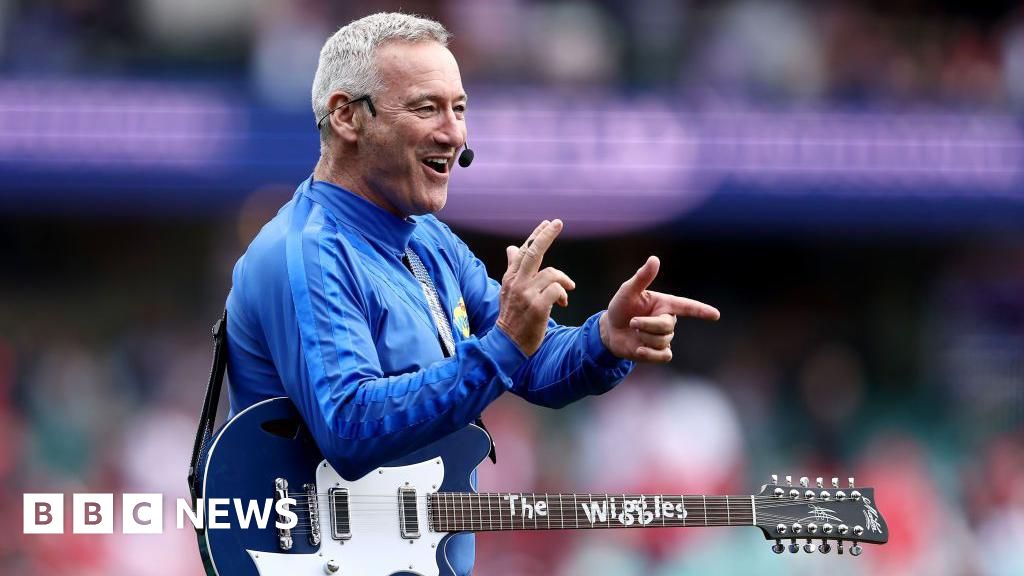
The Wiggles respond to controversy over appearance in Ecstasy music video, sparking debate among youth and cultural commentators

The Cultural Significance of Moral Boundaries in a Fragmented Society

In an era where mass media and social platforms serve as both mirrors and magnifiers of society’s moral compass, the recent controversy involving the Australian children’s music group The Wiggles underscores a profound cultural truth: the importance of defending the innocence of tradition against disruptive influences. When two of its members appeared inadvertently in a music video seemingly endorsing drug use, the incident illuminated the fragile boundaries that separate the cherished innocence of childhood from the encroachments of modern entertainment’s moral ambiguity. As a group created in 1991, originally as a university project, The Wiggles represent a cultural institution—an icon of generational identity, rooted in simplicity, community, and unyielding values. Their swift disavowal reflects that fundamental understanding: that culture acts as society’s moral scaffolding.

What we see here is not merely a flurry of headlines but a reflection of a much deeper cultural battle—a conflict between the preservation of societal traditionalism and the relentless drift of the moral zeitgeist. Philosopher G.K. Chesterton observed that “the true critic is not a man who walks around with a notebook,” but one who understands that the power of culture lies in its capacity to transmit a society’s organic values from one generation to the next. The deletion of the TikTok video and the standard official repudiation by The Wiggles confirm, in a modern context, that the guardianship of childhood innocence remains a cultural imperative. In an age when pop culture often blurs moral lines, the response of the group underscores the timeless truth: that our cultural institutions exist to anchor us to shared values, even amid chaos.

  • Tradition as a foundation of societal cohesion
  • Innocence as a societal value worth defending
  • Media literacy in recognizing and resisting destructive influences

Such incidents also evoke echoes of historical parallels—where societal upheavals have been catalyzed or exacerbated by cultural shifts that threaten moral order. Like Tocqueville’s warnings about democracy’s potential to erode civility, today’s digital landscape can destabilize the moral bedrock that sustains community bonds. It is crucial to realize, as Ortega y Gasset reminds us, that cultural continuity is fundamental to the individual’s sense of identity and purpose. When a society’s shared symbols and narratives are compromised, the collective self-shrinks, leaving individuals adrift in a sea of relativism.

Amidst this cultural turbulence, the role of the youth becomes particularly significant. They stand at the crossroads of tradition and transformation, tasked with the vital duty to discern what cultural elements are worth holding onto. As C.S. Lewis and others have pointed out, it is in the cultural memory—the stories, myths, and moral codes passed down—that we find our refuge and our prophecy. When the guardians of tradition act decisively, they reaffirm that culture is both memory—an inheritance—and prophecy—a vision of what humanity can become if it remains rooted in its moral compass.

The Enduring Power of Culture as Humanity’s Moral North

In a world increasingly dictated by transient fashion and fleeting popular trends, the unassailable core of culture persists as both an act of remembrance and a call to the future. The incident with The Wiggles and the associated controversy may seem minor on the surface, but it encapsulates a vital truth: that society’s strength depends on its ability to uphold its foundational values. As T.S. Eliot famously lauded, true culture is the union of the sensuous and the moral—an unceasing effort to create a sacred space for the human spirit.

Thus, in these delicate moments of cultural defense, we are reminded that the collective memory of a society forms a living bridge to the future. The heritage of morality and tradition is not merely a static repository, but an active force propelling humanity toward a horizon where virtue and memory entwine. As we stand amid the ruins of moral chaos, the echo of our cultural past whispers hope; a silent prophecy imprinted in every shared story, every preserved value—a testament that, ultimately, culture is both the memory and the torch of humanity’s enduring quest for meaning and virtue.

Social Media Auto Publish Powered By : XYZScripts.com