Matox News

Truth Over Trends, always!

Fact-Check: New COVID-19 vaccine approval claim is Accurate

Fact-Checking the Claim: Can a Geography Teacher Warn About Tsunami Danger?

Recently, a young girl from England credited her geography teacher with educating her about a specific warning sign of an oncoming tsunami. At first glance, this story seems to elevate the role of teachers in disaster preparedness. However, as responsible citizens, it’s vital to scrutinize such claims with scientific accuracy and a clear understanding of what constitutes effective tsunami warning systems.

What Are Actual Tsunami Warning Signs?

A well-informed assessment begins with understanding the physical signs that precede a tsunami, which are often different from the textbook descriptions. According to the Pacific Tsunami Warning Center (PTWC) and the United States Geological Survey (USGS), notable signs include:

  • Sudden and unusual sea level changes, such as the sea retreating significantly—a phenomenon called “drawback.”
  • Unusual ocean sounds—such as a loud roar—before the wave arrives.
  • Earthquakes in the vicinity, especially those that are strong and prolonged, as tsunamis are often triggered by undersea seismic activity.

Importantly, these signs are not typically very obvious or predictable to the untrained observer. According to Dr. David Hill, a seismologist at the University of California, Berkeley, “While a massive earthquake might be an immediate indicator of potential tsunamigenic activity, the subsequent warning signs like sea withdrawal can be brief and deceptive.” This suggests that relying solely on natural cues without proper technology and alerts can be perilous.

Can a Teacher Teach These Signs?

While geography teachers indeed introduce students to natural phenomena, their role is primarily educational rather than predictive. The idea that a teacher alone can reliably notify students of an impending tsunami based on physical signs misunderstands the complexities involved in early warning mechanisms. According to NOAA (National Oceanic and Atmospheric Administration), warning systems involve a network of seismic detectors, deep-ocean pressure sensors, and tide gauges that detect and analyze seismic activity in real-time, providing alerts that are directly transmitted to authorities and the public.

There is little scientific evidence to support the notion that individual observers, even teachers, can reliably identify tsunami precursors in real-time. Claims that understanding a specific sign of an oncoming tsunami—such as the sea retreat—can substitute for technological warning systems are misleading.

Lesson from Scientific Investigations and Real Incidents

Historical accounts reinforce the importance of technological alert systems. The 2004 Indian Ocean tsunami, for example, overtook communities because of inadequate early-warning measures, leading to devastating loss of life. Post-disaster studies emphasized the need for public education about tsunami signs, but also highlighted that real-time monitoring and automated alerts are crucial for timely action.

*“Understanding natural warning signs can help, but it should complement, not replace, official warning systems,”* explains Dr. Barbara Toth, an oceanographer at the University of Miami. Moreover, relying solely on natural signs can be dangerous because false alarms are common, and the window of observable signs is narrow and often unreliable.

The Role of Education and Responsible Communication

What, then, is the true value of education regarding natural disaster signs? Experts agree that teaching young people about key signs—sea withdrawal, unusual noises, and related phenomena—raises awareness and enhances safety if combined with official alerts. School curriculums should prioritize understanding these signs as part of broader disaster preparedness, but always clarify that they are supplementary to technology-based warning systems.

In conclusion, the narrative that a young girl’s teacher inadvertently provided a crucial tsunami warning sign *alone* is a simplification that overlooks scientific reality. While education is vital, it must be grounded in accurate information and complemented by modern technology. This approach ensures that the safety of individuals and communities is maximized, respecting the seriousness of natural disasters and the importance of trustworthy information. In a democracy, truth and transparency are not just ideals—they are the foundation of responsible citizenship and effective disaster management.

German men under 45 could face military approval for extended stays abroad—what's really behind the move?
German men under 45 could face military approval for extended stays abroad—what’s really behind the move?

In a move that signals a significant shift in international policy, several nations have recently implemented new regulations stipulating that travel approvals must generally be granted before individuals can cross borders. While these rules may seem routine on the surface, their implications extend far beyond simple bureaucratic procedures, potentially reshaping the delicate fabric of global mobility, sovereignty, and international relations.

What makes these developments particularly notable is the ambiguity surrounding enforcement. Officially, authorities have stated that restrictions are to be adhered to at their discretion, yet there remains considerable uncertainty about how breaches of this protocol will be managed in practice. International observers, including the International Organization for Migration and renowned geopolitical analysts, warn that this lack of clarity could lead to increased friction among nations. Countries with differing policies might interpret enforcement variably, raising tensions especially in regions where borders are already fragile or contested. The absence of a clear enforcement mechanism leaves a vacuum that could be exploited, or worse, devolve into conflicting interpretative clashes among sovereign states.

This evolving landscape underscores the how decisions made at the national level can ripple across global networks, affecting commerce, diplomatic relations, and societal stability. Historically, such regulations have often been precursors to broader geopolitical shifts. Analysts note that some governments may leverage these new travel restrictions to tighten control internally while projecting strength externally. For instance, the United States, the European Union, and China have all shown varying degrees of assertiveness regarding border management, a trend that global institutions like the United Nations are closely monitoring. Their response, or lack thereof, will be critical in determining whether these policies deepen divisions or foster a new form of international cooperation rooted in shared security interests.

  • The imposition of mandatory travel approvals reflects a broader global shift toward border sovereignty and national security concerns, especially amid geopolitical tensions in regions like Eastern Europe and the South China Sea.
  • Major powers appear to be recalibrating their borders, emphasizing control over the free-flowing movement of people and ideas — a move that analysts suggest could undermine longstanding principles of international cooperation.
  • This ambiguity in enforcement raises warnings of potential conflicts or misunderstandings, which could escalate into diplomatic crises if mishandled or exploited.

As historians like Barbara Tuchman have noted, such pivotal moments in policy often mark “the thin line between security and overreach,” where nations must tread carefully or risk unintentional destabilization. International organizations are calling for transparency and clearer guidelines to ensure that border control measures do not spiral into tools of oppression or political maneuvering. Yet, the vital question remains: how will individual states balance the power to regulate their borders with the need for *international stability*? As countries reassess their sovereignty in an era of unprecedented connectivity and conflict, their choices will shape whether history records this as a step toward greater global order or the beginning of a new fragmentation era.

Standing at this crossroads, the world watches as decisions made today carry the weight of the future’s destiny—an unfolding narrative where sovereignty, security, and diplomacy are inextricably intertwined. The stakes are high, and the story is still being written, with each policy shift promising to leave an indelible mark upon the annals of history.

Albanese’s approval of Queensland coal mine expansion threatens ecosystems and worsens climate crisis, scientists warn

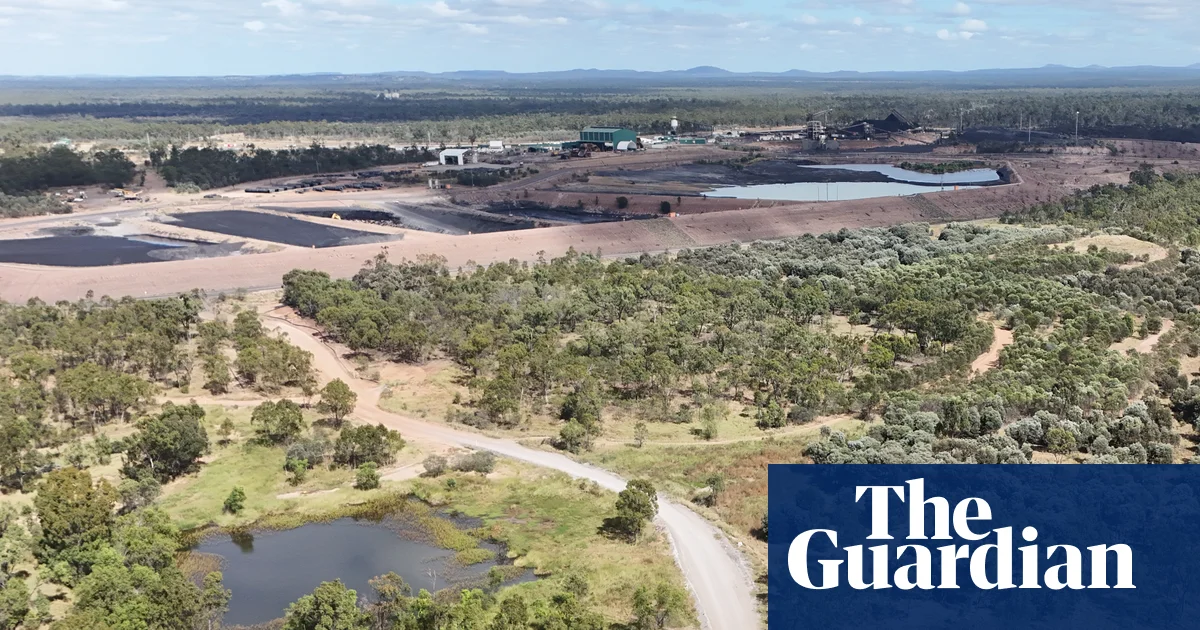
In a move that underscores the ongoing global clash between economic development and environmental conservation, the Albanese government recently approved the expansion of the Middlemount coalmine in Queensland. Owned jointly by US-based Peabody and Chinese-owned Yancoal, this project will see an estimated 85 million tonnes of coal exported over the next 24 years. While proponents tout it as a boost to the local economy and energy sector, critics argue that the environmental costs are catastrophic and threaten Australia’s rich biodiversity. The expansion signifies more than just economic activity; it marks a clear stance in the international debate—whether to prioritize short-term energy needs or long-term sustainability.

Conservationists and environmental experts have raised urgent alarms over the project’s implications for native wildlife, particularly the threatened koalas and greater gliders. The project involves clearing approximately 81 hectares of glider habitat and 183 hectares of koala territory—an area that ecologists say is crucial for their survival. Despite conditions imposed by authorities requiring the relocation of tree hollows used by gliders, prominent ecologists such as Prof. Euan Ritchie and Prof. David Lindenmayer have condemned these measures as inadequate and, in some cases, outright harmful. The attempt to mitigate habitat destruction via offsets—planting 1,557 hectares of new habitat—has been dismissed by experts as a “deluded” strategy that simply cannot compensate for the tangible loss of mature ecosystems. The catastrophic impact on native species is compounded by the project’s contribution to global heating, with conservationists estimating that burning the exported coal will generate approximately 236 million tonnes of CO2 over its lifetime—almost half of Australia’s current annual emission footprint.

This approval has sparked broader questions about the geopolitical impact of resource extraction. The approval under the climate change framework illustrates a troubling prioritization of economic interests over ecological integrity and international climate commitments. As analysts from the United Nations and other global organizations warn against complacency, the decision highlights a stark reality: the vast majority of emissions resulting from the coal will occur outside Australia, as the coal is burned primarily in Asian countries. Critics argue that this approach undermines Australia’s commitments to the Sustainable Development Goals and the global effort to curb climate change, reinforcing a narrative where Australia appears to choose economic gain over the health of the planet. This stance risks alienating international allies committed to green policies, while emboldening fossil fuel interests aligned with geopolitical powers that see energy resources as weapons of influence and leverage.

As history continues to unfold, the decision to expand the Middlemount coalmine underscores the tensions that define the 21st-century geopolitics—where resource-rich nations grapple with the legacy of environmental neglect amidst a shifting global framework demanding urgent climate action. The future of native wildlife hangs in a fragile balance, with environmentalists warning that yet another generation of Australian species might be driven toward extinction. Meanwhile, the global community observes with mounting concern as Australia’s actions shape the geopolitical landscape: a nation at a crossroads, torn between the immediacy of economic survival and the looming specter of irreversible climate catastrophe. Will this moment be remembered as a tragic misstep or a catalyst for change? The pages of history continue to be written, but every decision, every expansion, echoes louder in the corridors of global power, shaping the planet’s destiny for generations to come.

Social Media Auto Publish Powered By : XYZScripts.com