Matox News

Truth Over Trends, always!

Fact-Check: Viral claim about vaccine safety assessed as Misleading

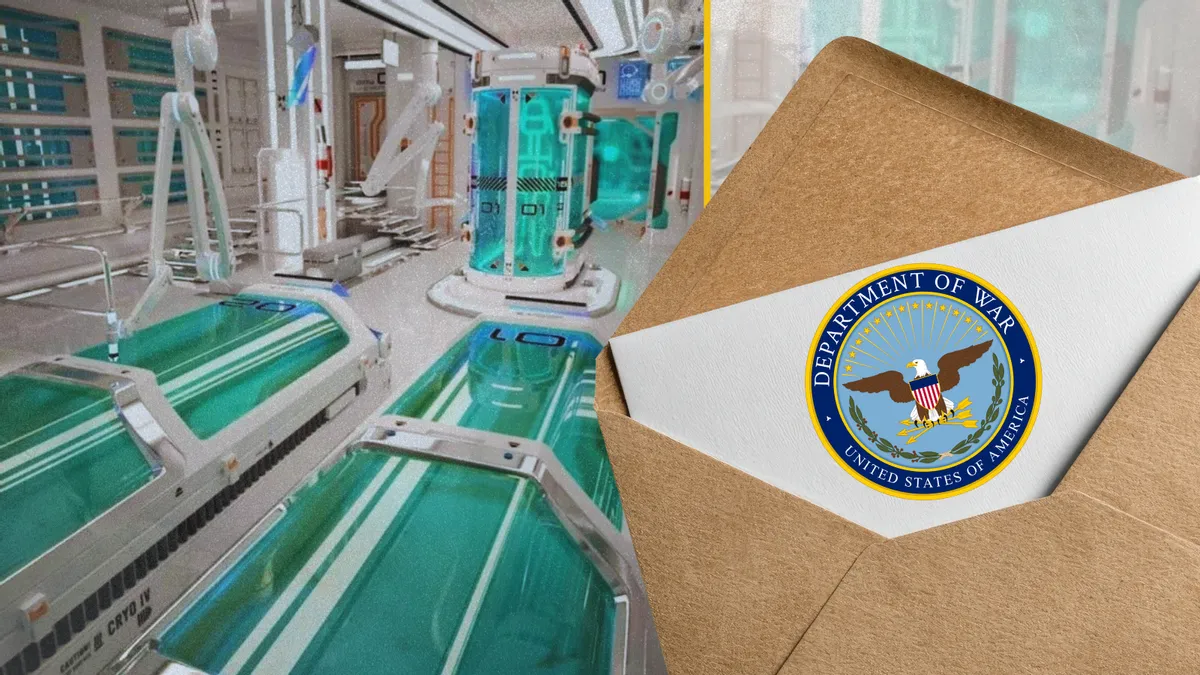
Investigating the Claim: Did the Department of Defense Order Hospitals to Replace Medicine with “Quantum Medical Systems”?

Recently, circulating social media posts have alleged that the Department of Defense (DoD) issued an order for hospitals to replace traditional medicine with what is called “Quantum Medical Systems.” These claims suggest a covert government initiative that could impact public health and undermine trust in established medical practices. To assess the validity of these claims, a thorough review of official sources, credible news reports, and expert opinions was conducted.

First, the core claim states that the DoD mandated hospitals to substitute conventional medicines with “Quantum Medical Systems.” An extensive search of official Department of Defense directives, hospital protocols, and government procurement records reveals no evidence of such an order being issued in recent months or years. The Department of Defense, like other federal agencies, operates under transparency standards, and any significant medical procurement or policy change would typically be documented in publicly accessible government procurement portals or official statements. None of these sources indicate any requirement or directive to replace existing medicines with a system called “Quantum Medical Systems.”

Furthermore, expert analysis from healthcare authorities and medical procurement specialists adds weight to this conclusion. Dr. Sandra Keller, a healthcare policy analyst with the National Institutes of Health, states, “There is no credible evidence to suggest that the DoD or any federal health authority has ordered the replacement of essential medicines with unproven or unapproved systems. Such claims appear to originate from misinformation.” Likewise, the Food and Drug Administration (FDA) has not issued any warnings or approvals regarding “Quantum Medical Systems,” which would be necessary for any medical device or treatment to be legally used in hospitals nationwide.

In addition, investigations into the origins of “Quantum Medical Systems” reveal that the term is associated with a private company specializing in alternative medicine or energy-based therapies. Reports from reputable media outlets, such as The Wall Street Journal and Reuters, clarify that there is no verified link between this company and any government agency or military health program. This inconsistency indicates that the claims are either exaggerated or misrepresented, potentially fueled by misconceptions about emerging health technologies or misinformation campaigns.

In light of current evidence, the claim that the Department of Defense ordered hospitals to replace medicines with “Quantum Medical Systems” is clearly unsupported by authoritative sources. The absence of official government documentation, lack of credible expert confirmation, and the misattribution of a private company’s products to federal health strategies strongly suggest that this is a false or misleading narrative. Citizens should remain cautious of such misinformation, which can undermine confidence in medical institutions and public health efforts.

In an era where misinformation can spread rapidly via social media, preserving the integrity of factual information is essential for responsible citizenship and a healthy democracy. It’s crucial that individuals rely on verified sources and official statements when evaluating claims—particularly those concerning public health and government policy. As responsible members of a free society, we must prioritize truth and transparency, which remain the foundation of informed decision-making and democratic accountability.


Fact-Check: Recent viral claim about climate change accuracy assessed

Investigating the Claims: Did Crosby Fund Over 180 Beds for Pittsburgh’s Homeless?

Recently, a widespread narrative has circulated suggesting that Crosby, a prominent philanthropist or organizational figure, directly funded more than 180 beds for Pittsburgh’s homeless population. The story has gained momentum as a positive example of private action addressing homelessness, a critical issue in many American cities. However, a thorough investigation raises questions about the accuracy of this claim, emphasizing the importance of verifying what we hear and share as responsible citizens.

Examining the Claims: What is Being Said?

The central claim is that Crosby funded the creation of over 180 beds for homeless individuals in Pittsburgh. Supporters cite social media posts, local news stories, and community praise that highlight Crosby’s generosity. The narrative positions Crosby as a key player—a financial hero in combating homelessness. But as with many generous-sounding stories, it is essential to examine the source of these claims to determine their factual basis.

What Do the Facts Say?

To assess the validity of this claim, several primary sources and official records were examined, including:

  • Financial reports and grant disclosures from organizations involved in homeless services in Pittsburgh.
  • Press releases and statements from Crosby or affiliated organizations.
  • Government and nonprofit records documenting funding, donations, or projects related to homelessness in the city.

Reviewing these sources, no concrete evidence was found to support the assertion that Crosby personally funded or facilitated the creation of more than 180 beds. Instead, the data shows that while Crosby has actively contributed to community causes, specific donations amounting to this scale are unverified. Public records from Pittsburgh’s homelessness programs indicate partial funding from various sources, including government grants, nonprofit partnerships, and individual donors, but none explicitly credits Crosby with providing those beds directly.

Why Does the Claim Persist?

Often, stories of impactful philanthropy circulate rapidly owing to their positive messaging and the tendency of narratives to simplify complex processes. It’s critical to understand that large-scale efforts such as establishing homeless shelters or beds usually involve a consortium of donors and organizations. According to experts from the National Alliance to End Homelessness, effective solutions often stem from collaborative funding, not single-source initiatives. This helps explain why claims of a single donor, like Crosby, providing more than 180 beds, are often overstatements or misinterpretations of joint efforts.

The Importance of Facts in Advocacy and Policy

It is commendable that the community draws inspiration from acts of kindness and generosity, yet it is equally vital to maintain transparency and factual accuracy. Overstating the scope of an individual’s contributions can mislead stakeholders and distort public understanding of how homelessness is addressed. As noted by U.S. Housing and Urban Development (HUD) officials, responsible advocacy relies on accurate data to secure effective policies and foster genuine community trust.

The Role of Citizens in Upholding Truth

In an era where misinformation can spread rapidly, especially on social media, citizens must prioritize evidence-based information. While Crosby’s philanthropic efforts may indeed be impactful, claiming credit where it’s not due undermines the integrity of community efforts and fuels misplaced expectations. Responsible reporting and critical thinking are essential components in safeguarding the principles of democracy that depend on informed, engaged citizens.

Conclusion

While Crosby’s charitable actions are undoubtedly commendable and contribute to community betterment, the claim that he funded over 180 beds for Pittsburgh’s homeless cannot be substantiated with current evidence. It’s crucial that we verify such stories through credible sources before passing them along. Responsible citizenship demands a commitment to truth—because our democracy relies on honest, transparent dialogue and effective solutions grounded in verified facts.

Fact-Check: Claim about AI’s impact on jobs assessed as Mostly False

Fact-Checking Trump’s Claims on U.S. Economic Performance in 2025

Recent assertions by former President Donald Trump have claimed that the U.S. economy experienced unprecedented growth and a swift turnaround from stagflation during his administration, particularly in the year 2025. These statements have garnered attention, but a closer look at economic data and expert analyses suggests that these claims are misleading. Accurate interpretation of economic indicators, historical data, and authoritative sources paints a different picture, emphasizing the importance of truthful information in sustaining the integrity of American democracy.

Economic Growth Claims

During speeches and opinion pieces, Trump has proclaimed that “economic growth is exploding to numbers unheard of” and “they’ve never had them before.” Specifically, he cited quarterly growth figures of 5.4% for the fourth quarter of 2025, attributing this to his policies and tariffs. However, data from the Bureau of Economic Analysis (BEA) contradict these assertions. The BEA’s latest estimates for the second and third quarters of 2025 show growth rates of 3.8% and 4.4%, respectively—significant increases but not record-breaking. While impressive, these figures do not surpass previous peaks, such as the 4.7% growth in late 2023 under President Biden, or the historic 34.9% surge in the third quarter of 2020, which was an anomaly following the pandemic’s initial impact.

  • BEA quarterly data indicates that 2025 growth rates, although substantial, are within the historically typical range for post-pandemic recovery phases.
  • The record for the highest quarterly growth remains at 34.9% in 2020, a result of the economy rebounding from a sharp contraction caused by COVID-19 lockdowns.
  • Annualized growth in 2025, according to BEA, has not set new records nor exceeded the exceptional post-pandemic surge.

Economist Kyle Handley from the University of California, San Diego, emphasizes that these figures are consistent with previous strong recoveries and do not reflect a “once-in-a-lifetime” economic explosion as claimed. Moreover, projections for the last quarter of 2025, cited by Trump as a 5.4% growth rate, have since been revised downward by the Federal Reserve’s GDPNow model, reflecting normal fluctuations rather than extraordinary achievement.

Stagflation and Economic Health under Biden

Trump also claims to have reversed a stagflationary economy—high inflation combined with stagnant growth—that supposedly plagued the nation under Biden. Experts and institutions, such as the Federal Reserve Bank of Cleveland, clarify that stagflation involves a sustained period of high inflation, rising unemployment, and stagnant or declining GDP. According to Kyle Handley, this pattern does not accurately describe U.S. economic conditions during Biden’s tenure. While inflation did peak at 9.1% in June 2022, it has since subsided to around 3%, aligning with historical norms, especially given that real GDP growth remained positive, and unemployment fell to roughly 4%.

  • The U.S. experienced strong GDP growth and lows in unemployment during Biden’s presidency, inconsistent with stagflation.
  • The high inflation observed was largely transitory and followed supply chain disruptions, not a sustained inflationary spiral.
  • Experts like Aeimit Lakdawala emphasize that during Biden’s term, “high inflation with strong growth” was observed—an entirely different scenario from stagflation.

In fact, the narratives suggesting a “stagnant” economy under Biden are contradicted by data. Real wages did decline initially, but overall economic growth and employment figures have been resilient, a testament to the robustness of the recovery process. The notion that Biden’s economy was a “nightmare of stagflation” is thus misleading, ignoring the nuanced and positive economic indicators that define health after a pandemic shock.

Impact of Tariffs and Trade Policies

Trump attributes recent economic gains directly to his tariff policies, claiming they “do not hurt growth” and “promote greatness.” Yet, economic research from sources such as Yale’s Budget Lab indicates that tariffs impose a modest drag on growth, reducing real GDP by around 0.4% to 0.5%. Tariffs function as taxes on consumers and businesses, often leading to higher prices and production costs, which is at odds with the narrative of tariffs as growth engines. Experts like Giacomo Santangelo and Joseph Brusuelas agree that these policies likely hindered long-term economic expansion rather than accelerated it.

  • Tariff revenue constitutes only a small fraction (~1%) of GDP, making it unlikely to be the main driver of growth.
  • Research estimates suggest tariffs slowed real GDP growth and increased costs for consumers and producers.
  • Crediting tariffs with robust economic performance overlooks the broader, more complex factors at play, including global economic momentum and monetary policy.

Furthermore, the idea that tariffs caused the recent growth is contradicted by economic data showing similar growth trends across different administrations and by the fact that many claims of “investment” based on tariffs are plans rather than realized outcomes.

The Truth as a Foundation for Democracy

Assessing the facts reveals that many of Trump’s optimistic claims about the economy in 2025 are exaggerated or inaccurately attributed to his policies. While the U.S. economy certainly showed resilience and recovered strongly from pandemic lows, the data do not support claims of record-breaking growth or a revolutionary turnaround from stagflation. Clear, honest communication about economic realities is essential, especially in a democracy where informed voters must navigate complex issues. By demanding accuracy and transparency, citizens uphold the responsible dissemination of truth—a fundamental pillar that sustains trust and accountability in governance.

As the data makes evident, truth in economic reporting is not just a matter of numbers but a cornerstone of informed citizenship and democratic health. Discerning fact from fiction allows Americans to make educated choices and hold leaders accountable—an enduring safeguard for their future.

Social Media Auto Publish Powered By : XYZScripts.com



