Matox News

Truth Over Trends, always!

Uber teams with Rivian on $1.25B robotaxi push—next-gen rides for the youth generation

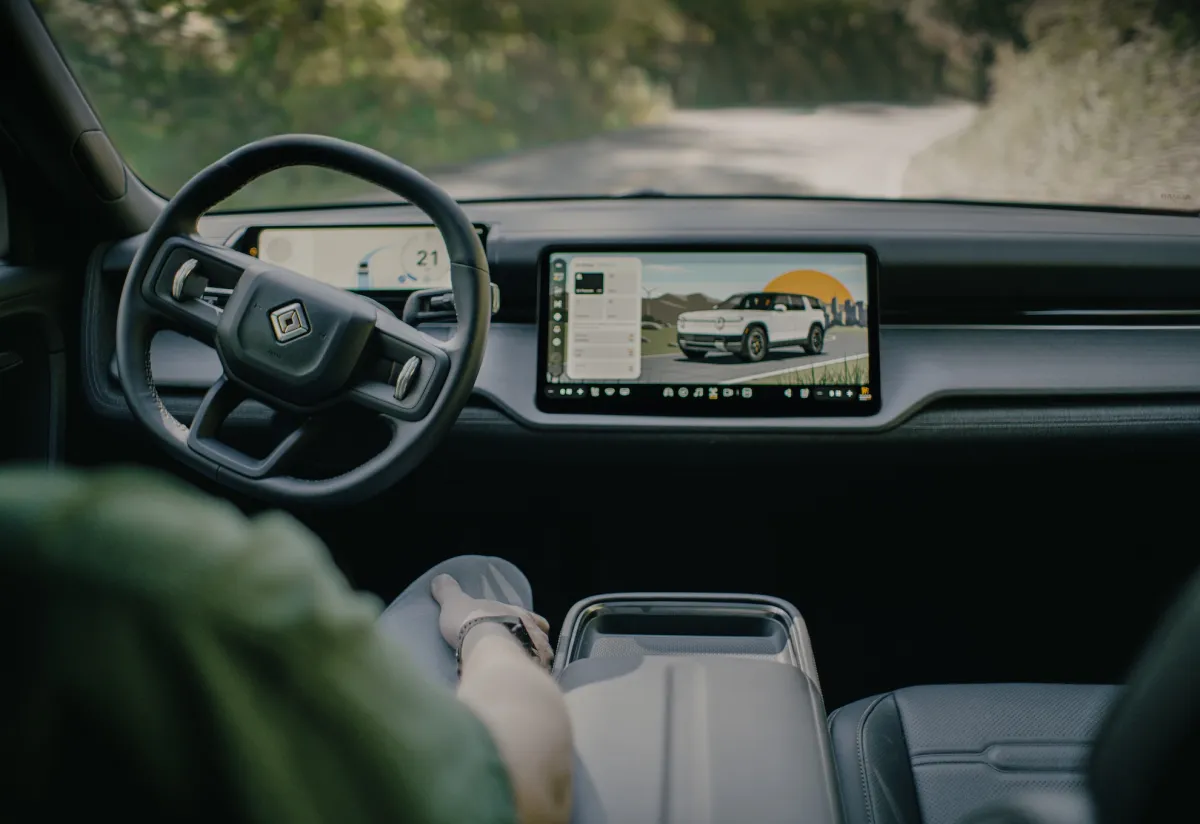
Rivian and Uber Join Forces in Revolutionary Robotaxi Venture

In a move set to redefine urban transportation and accelerate the evolution of mobility, Rivian announced a strategic partnership with Uber to develop a fleet of autonomous robotaxis based on Rivian’s upcoming R2 SUV. The collaboration, which could be worth up to $1.25 billion, underscores the shifting dynamics in the EV and autonomous driving spaces, spotlighting how the convergence of innovative vehicle engineering and ride-hailing platforms is disrupting traditional automotive business models.

Uber’s initial $300 million investment signals a significant gamble on Rivian’s capabilities, with plans to purchase 10,000 fully autonomous R2 robotaxis ahead of a projected 2028 rollout in major markets like San Francisco and Miami. This initiative aims to expand dramatically, with possibilities of acquiring up to 40,000 units by 2030, ultimately deploying fleets across 25 cities in North America and Europe by 2031. The strategic intent is clear: leveraging cutting-edge AI-driven automation to corner the burgeoning robotaxi industry, a sector projected by industry analysts such as Gartner to be a trillion-dollar market as autonomous vehicles disrupt traditional transportation paradigms.

Innovation at the Core of Rivian’s Autonomous Leap

What sets Rivian apart in this high-stakes race is their focus on innovation and continuous learning. The automaker’s Rivian Autonomy Platform, debuted in 2024, serves as the technical backbone, underpinning future capabilities from highway hands-free driving to full point-to-point automated navigation. The company’s ambitious plans include hardware upgrades such as lidar sensors and a powerful autonomy computer capable of processing an extraordinary five billion pixels per second—features that underscore the technological disruptive potential of Rivian’s approach.

  • Leveraging large language models to enhance perception and decision-making
  • Upgrading hardware to enable eyes-off, hands-free capabilities
  • Targeting Level 4 autonomy with zero human intervention

Despite these advancements, significant challenges remain, including the ongoing development and testing before commercial deployment. Rivian’s strategy reflects a disciplined emphasis on innovation, but industry experts caution that the journey from prototype to widespread adoption involves considerable technical and regulatory hurdles. The company’s leadership, including CEO RJ Scaringe, remains bullish, emphasizing rapid progress and the necessity of relentless innovation to stay ahead in a market increasingly crowded by tech giants and startups alike.

Business Implications and Industry Disruption

This partnership exemplifies a broader industry trend where legacy automakers and tech-driven newcomers leverage breakthroughs in AI and electrification to disrupt traditional automotive manufacturing. The integration of AI-first strategies, inspired by insights from institutions like MIT and industry analysis from Gartner, underscores how disruptive innovation is reshaping vehicle design, ownership models, and urban mobility platforms.

Meanwhile, Uber’s extensive network of partnerships—including collaborations with companies like Lucid Motors, Motional, and Baidu—positions Uber as a prime orchestrator of autonomous mobility’s coming wave. This aligns with a broader industry movement where ride-sharing giants leverage autonomous tech to transform profit models, reduce costs, and create new revenue streams.

Future Outlook: A Race Toward Autonomous Dominance

As Rivian aims for a full hands-off driving experience by 2027, industry leaders and analysts warn of the rapid pace of technological evolution—progress that often outstrips current regulatory and technical frameworks. The future of autonomous mobility hinges on continuous innovation and strategic agility, with companies like Rivian and Uber vying to lead the disruption. With major markets poised on the cusp of autonomous vehicle adoption, companies ignoring the urgency of this transformation risk obsolescence. The next few years will be critical as the industry navigates the complex terrain of scale, safety, regulation, and consumer acceptance—factors that will determine whether this revolution is merely on the horizon or already underway.

Rivian’s Drive to Autonomy: The Future of Youth-Led Tech

Rivian’s Bold Push Toward Autonomous Driving Disrupts Future of Electric Vehicles

In a paradigm-shifting move, Rivian has announced its accelerated transition into the realm of fully autonomous vehicles, promising a future where “hands-off” driving becomes a reality by 2026. The company’s recent Autonomy & AI Day revealed a series of groundbreaking developments rooted in innovation and disruption—aimed squarely at redefining the EV and autonomous market landscape. This move places Rivian ahead of many traditional automakers, demonstrating how a fresh approach to AI-centric design, powered by transformer-based architectures, can potentially overhaul existing automotive paradigms.

Central to Rivian’s strategy is the development of its Large Driving Model (LDM), a product of a shift from deterministic rule-based systems to a data-driven, AI-first platform. As CEO RJ Scaringe explained, Rivian’s earlier models relied heavily on prescriptive control strategies, but his team quietly pivoted in 2021, adopting a comprehensive transformer-based AI structure similar to innovations pioneered by Tesla with its Full Self-Driving (FSD). This new platform leverages Nvidia’s Orin processors and accumulates data from its fleet to rapidly enhance vehicle autonomy capabilities.

The implications for the automotive business are profound: Rivian’s focus on AI-centric systems is surprising industry veterans who traditionally favored rule-based automation. The company’s goal to achieve “Universal Hands-Free” driving by early 2026, covering over 3.5 million miles in North America, demonstrates a committed disruption to the traditional automobile manufacturing timeline. Should Rivian successfully train its LDM in this tight window, it could establish a new standard for disruptive innovation—shifting consumer expectations from semi-autonomous systems to fully autonomous, driverless operations significantly earlier than competitors.

Advancements in lidar technology and custom hardware, including the unveiling of a new autonomy computer, are set to facilitate this transformation. However, the industry remains cautious. The challenge of transitioning from “eyes-on” to “eyes-off” driving is non-trivial, and even with a state-of-the-art system, safety remains a paramount concern. Nevertheless, Rivian’s transparent communication about product timelines aims to differentiate itself in a crowded market by setting realistic expectations, potentially giving it a competitive edge in consumer trust and brand loyalty.

The broader market impact could be revolutionary. Industry analysts from Gartner and MIT acknowledge that this integration of AI and hardware signifies a fundamental shift—foreshadowing a future where traditional automakers are forced to rethink their strategies. Companies like Tesla have pioneered this space, but Rivian’s approach, emphasizing clarity on timelines and customer choices, signals a new era of agile innovation in the EV sector. Such disruption threatens established giants, paving the way for smaller, nimble challengers leveraging cutting-edge AI to accelerate autonomous capabilities.

Looking ahead, Rivian’s focus on AI-driven software and hardware advancements points toward a future where autonomous mobility is not a distant dream but an imminent reality. The company’s roadmap to roll out progressively capable driver assistance systems, culminating in fully hands-free and eyes-off driving, features a dynamic mix of **innovation, disruption**, and relentless business pragmatism. The industry’s next few years will dictate whether Rivian’s aggressive push can succeed in transforming the automotive landscape—an urgent call for competitors to innovate or risk obsolescence in a rapidly evolving tech-automotive ecosystem.

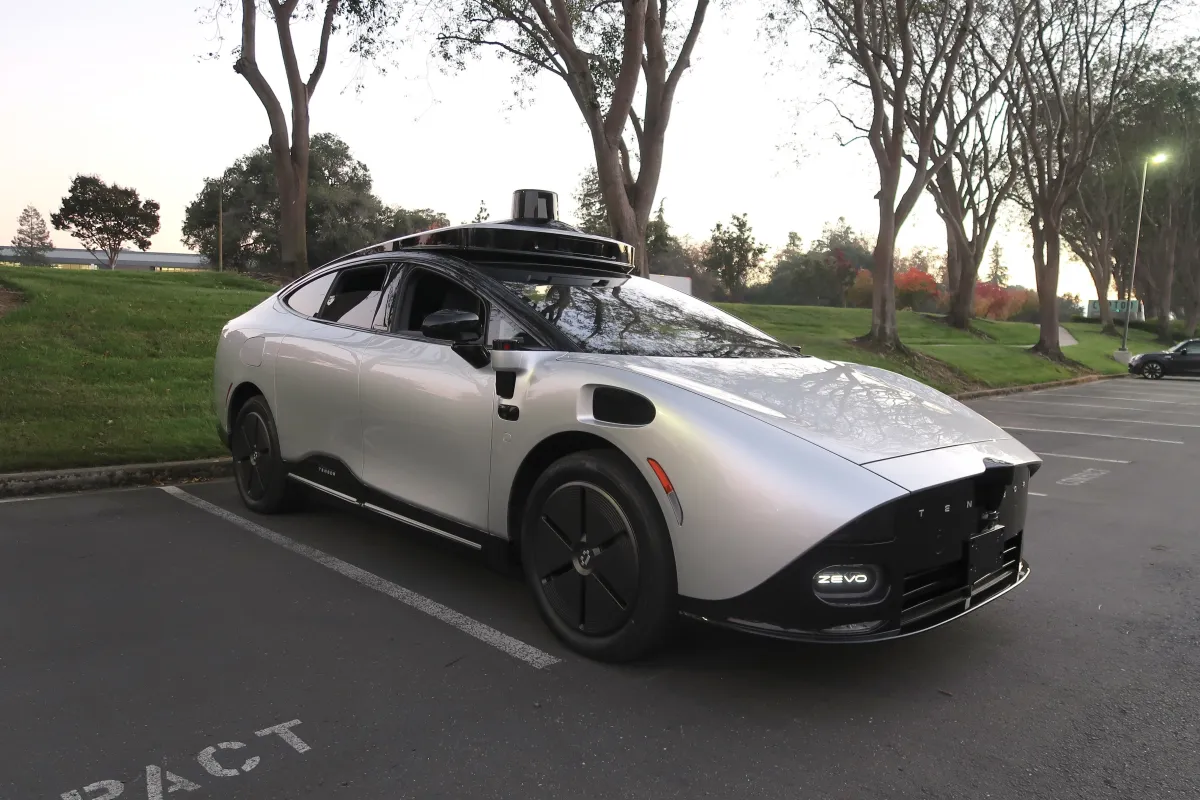
Zevo Ventures plans to boost its car-share fleet with robotaxis, kicking off with fresh face Tensor

Emerging Autonomous Vehicle Startups Disrupt Traditional Automotive Industry

In a landscape increasingly defined by **innovation** and **disruption**, startups like Tensor are challenging the conventional automotive giants with groundbreaking visions of autonomous mobility. Emerging from the China-based firm AutoX, Tensor boldly claims it will be the first to market fully autonomous vehicles to mainstream consumers as early as 2026. Such momentum signals a clear **shift** toward a decentralized, AI-driven transportation ecosystem with significant business implications, including the dawn of **personal AVs** and **peer-to-peer mobility services**.

Tensor’s vision aligns with a broader trend identified by analysts at Gartner and MIT, where the barrier to entry for **robotaxi** networks is lowering, bolstered by startups willing to embrace **risk** and innovation. The company’s forthcoming partnership with Zevo—which intends to deploy up to 100 Tensor AVs—serves as a testbed for **decentralized mobility solutions**. This move hints at a future where individual ownership extends beyond traditional vehicles, ushering in a new era of **personal AI-enabled** transportation, with owners possibly deploying their cars for income-generating services, like ride-sharing—a concept advocated by visionaries such as Elon Musk.

However, the road ahead is lined with formidable **challenges**. Trust in **scaling** autonomous technology remains a critical hurdle, as recent history has shown that many startups faltered when trying to standardize reliable manufacturing processes. Tensor’s limited track record and the **technological gaps** faced by legacy automakers reveal the **competitive landscape’s volatility**. Yet, the startup ecosystem’s agility—coupled with the increasingly supportive regulatory environment—places high-stakes bets on rapid **deployment** and **market capture**. Zevo’s willingness to invest in **software integration** and the potential for **peer-to-peer sharing** platforms exemplifies the industry’s move toward a **networked** model that could redefine how mobility and business intertwine.

As industry leaders and tech innovators forecast, the next decade will be pivotal. Observers like Peter Thiel warn that *”those who control the underlying AI infrastructure will dominate the new economy,”* emphasizing the importance of early bets on companies like Tensor. The convergence of **entrenched tech giants**, **startups**, and **venture capital** signals a **bidding war** for AI supremacy in mobility. This new wave of **disruption** will likely favor those who prioritize **software innovation**, **cost reduction**, and **scalable manufacturing**. With the **driverless revolution** expected to reshape urban transport, logistics, and even personal ownership, every stakeholder must act swiftly to avoid obsolescence.

The future of autonomous vehicles is not merely about safer, more efficient transport—it’s about **changing the very fabric of urban living and commerce**. Innovation-oriented startups are **pushing the boundaries** of what’s possible, prioritizing **flexibility**, **adaptability**, and **user empowerment**. As these **disruptive players** continue to challenge traditional automakers, the industry must adapt or risk being bypassed. With **technological leaps** accelerating, and **business models** evolving at an unprecedented rate, the coming years will be critical. Stakeholders who act with **urgency** and **vision** will determine who emerges as the true **pioneers** of this autonomous future—and those who hesitate may find themselves left in the dust of a **metamorphosing** mobility landscape.

Social Media Auto Publish Powered By : XYZScripts.com



