Matox News

Truth Over Trends, always!

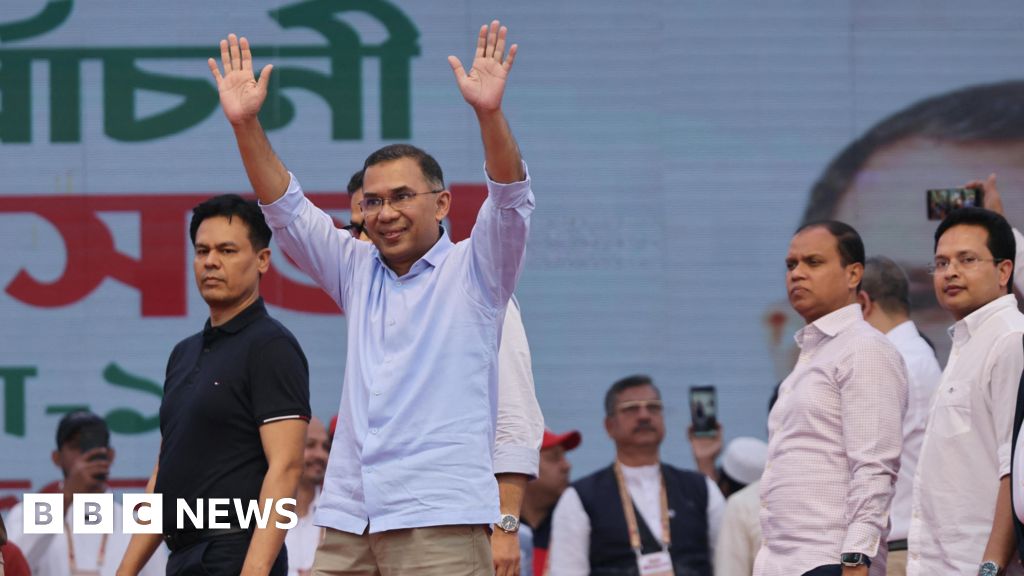
Can Bangladesh's new leader deliver real change after the decisive election win?
Can Bangladesh’s new leader deliver real change after the decisive election win?

In a significant development unfolding in Bangladesh, Tarique Rahman is poised to assume the position of prime minister, just 18 months after a wave of mass protests led to the ousting of the nation’s longest-serving leader. This political shift signals not only a change in leadership but also a potential realignment of regional influence and domestic policy direction, with profound geopolitical implications for South Asia. As analysts scrutinize the unfolding scenario, the global community observes with cautious interest, knowing that such leadership transitions can define a nation’s trajectory for decades to come.

Rahman’s impending ascension comes after tumultuous protests that challenged the established political order. Many see this as the culmination of persistent calls for reform, yet it raises questions about the broader stability of Bangladesh. Historically, Rahman, son of influential political figure Begum Khaleda Zia, has been a controversial figure, both revered by supporters and criticized by opponents for his association with past political conflicts. International political analysts such as those at the Council on Foreign Relations have emphasized that Rahman’s rise could herald a new chapter — one that might either stabilize or further polarize a nation already grappling with economic and social issues.

The geopolitical impact of this transition extends beyond Bangladesh, affecting regional relations with neighboring India, China, and the broader Indo-Pacific. As the country re-enters a phase of political redefinition, the influence of China and India looms large—each vying for strategic leverage in the world’s eighth most populous nation. The prospective leadership of Rahman could influence Bangladesh’s foreign policy stance, with potential shifts toward aligning more closely with China’s Belt and Road Initiative or reaffirming ties with India, considering its strategic importance and shared borders. This political recalibration is being closely monitored by international bodies like the United Nations and ASEAN, which emphasize stability in South Asia as critical to regional peace.

However, historical voices warn that such rapid political shifts often carry risks. Renowned historians and geopolitical analysts have noted that leaderships emerging from unrest sometimes face legitimacy challenges, internal divisions, and external pressures. The current upheaval in Bangladesh underscores the fragile balance between reform and chaos, reminding the global audience that decisions made today can reverberate across generations. As the country moves forward with Tarique Rahman at its helm, the weight of history seems to hang thick in the air — a testament to the fact that in the dance of nations, the steps taken now will shape the world order tomorrow. In the unfolding chapters of this story, the true impact of this leadership transition remains to be written, but its echoes will undoubtedly resonate far beyond the shores of Bangladesh.
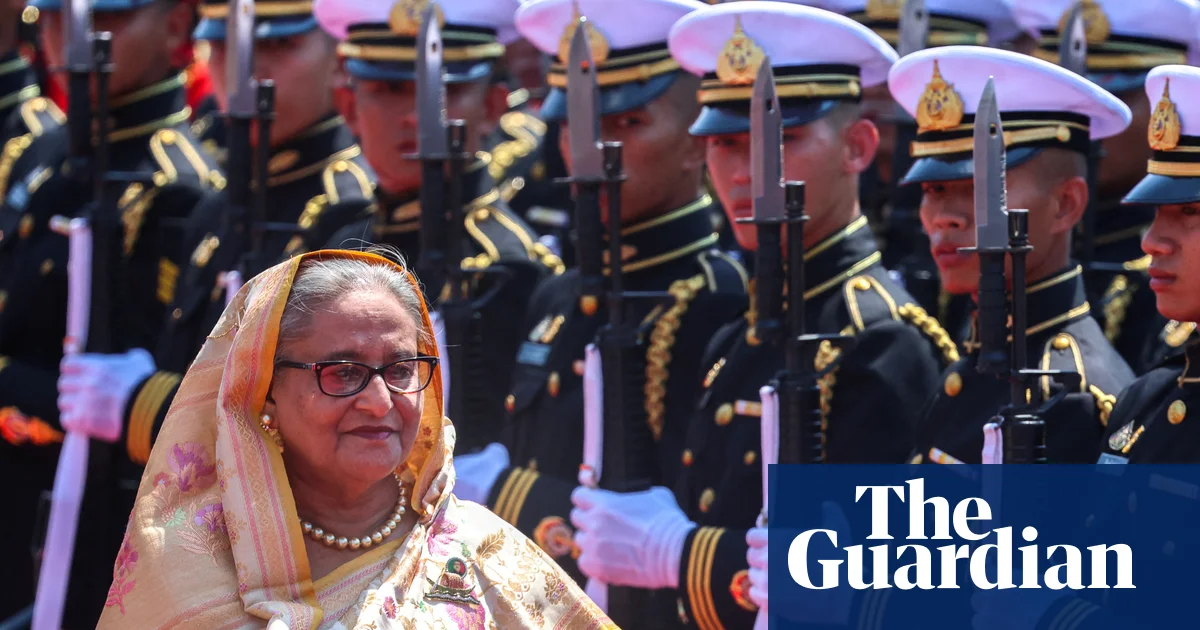
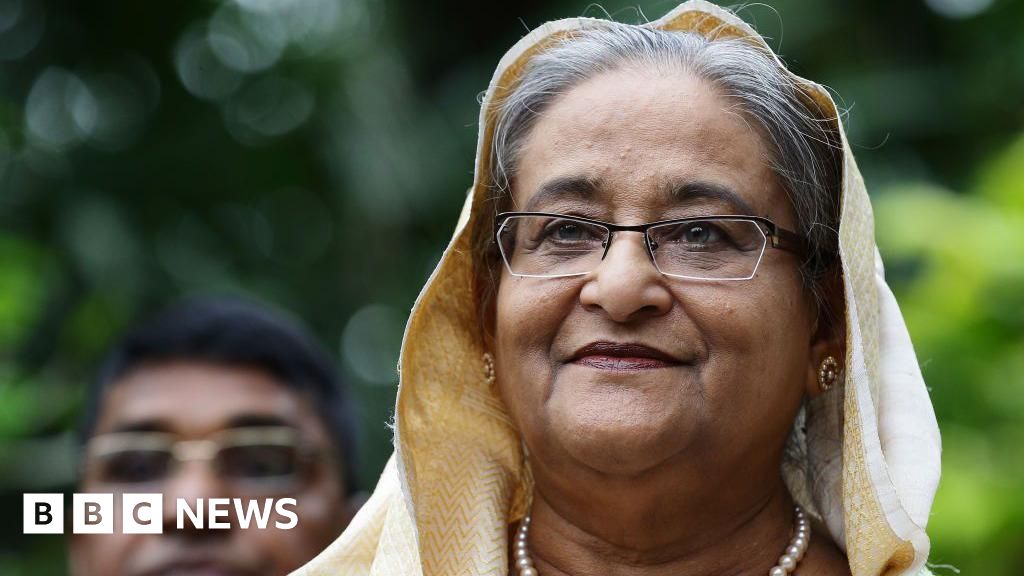
Bangladesh's Sheikh Hasina Faces Death Sentence Over Human Rights Violations
Bangladesh’s Sheikh Hasina Faces Death Sentence Over Human Rights Violations

The recent sentencing of Bangladesh’s former prime minister Sheikh Hasina to death in absentia has sent shockwaves across the global geopolitical landscape. Convicted by a Dhaka tribunal for crimes against humanity related to a brutal crackdown on student-led protests, this verdict underscores a turbulent chapter in the nation’s ongoing struggle with authoritarianism and political instability. As international institutions and human rights organizations weigh in, the case exemplifies a broader shift in how emerging democracies are navigating the preservation of justice amid internal conflicts and external pressures.

  • The tribunal accused Hasina of incitement, ordering executions, and negligence—charges rooted in her alleged direct involvement in a deadly crackdown that left up to 1,400 dead during a year-long uprising.
  • Despite her vehement denial, claiming the proceedings as a “politically motivated charade,” the verdict has ignited fierce reactions, including nationwide protests and heightened security alerts in Dhaka.
  • Her exile in India and the refusal of extradition by New Delhi reflect the complex, multi-layered geopolitics at play, where regional alliances influence justice and accountability.

From the perspective of global analysts, this case reveals a pattern of rising authoritarian tendencies cloaked under the guise of judicial reform. Historians warn that such politically charged trials risk destabilizing fragile democracies, especially when the judicial process is perceived as a tool for political retribution. The United Nations has expressed concern over the death penalty, emphasizing that international standards demand fair trials and judicial transparency. Yet, the tribunal’s transparency—broadcast live and scrutinized by observers—has not assuaged critics who see the proceedings as a spectacle designed to eliminate political rivals rather than deliver justice.

In the wider geopolitical context, India’s role remains ambiguous. While claiming neutrality, New Delhi’s refusal to extradite Hasina underscores its strategic calculus—balancing regional stability against Islamabad’s interest in destabilizing Bangladesh through influence over opposition factions. Consequently, neighboring countries are closely watching the unfolding political storm, with many fearing that escalation could destabilize the region further. With China and the United States weighing competing interests, Bangladesh finds itself caught in a geopolitical tug-of-war that could have ripple effects across South Asia and beyond.

The verdict also reaches into the societal realm, stirring deep wounds among families of the slain protesters. For many, including Golam Rahman, whose son Nafis was shot during the crackdown, justice is a long-awaited step towards catharsis. Yet, the pensive shadows of repression remain, with critics warning that a harsh, punitive crackdown might suppress dissent temporarily but exacerbate long-term instability. The upcoming election, now stripped of most opposition parties, will be a litmus test of Bangladesh’s political future—whether it will drift further into authoritarianism or attempt genuine reform amidst swirling chaos.

As Hasina’s supporters and critics ultimately face at the crossroads of history, the global community remains vigilant. The unfolding story of Bangladesh is emblematic of a world where rising nationalism, regional rivalries, and internal strife threaten to rewrite the narrative of democracy and justice. In this moment of palpable tension, it is clear that the repercussions of this verdict—whether a step towards justice or a catalyst for further turmoil—will resonate far beyond the boundaries of Dhaka, shaping the course of history in South Asia and challenging the foundations of international law itself. Only time will reveal whether Bangladesh’s future will be molded by the rule of law or the relentless tides of political upheaval, as a nation stands on the precipice of its own destiny, teetering between the shadows of oppression and the hope for lasting change.

Bangladesh’s former hero turns into a ruler, betraying the pro-democracy cause

In a dramatic turn of events that has sent shockwaves across South Asia and beyond, Bangladesh witnesses a historic upheaval as its longstanding leader, Sheikh Hasina Wazed, faces a court ruling that could mark a new era for the nation. After more than two decades of dominance, Hasina, initially celebrated for her patriotic fervor and economic reforms, now stands convicted by a special tribunal in Dhaka of crimes against humanity, culminating in a death sentence. Her trial, linked to the violent suppression of mass protests earlier this year, underscores a critical turning point in the country’s political history, with profound geopolitical repercussions.

The charges stem from her alleged orders to security forces during the tumultuous months of July and August 2024—a period marked by widespread unrest, civil disobedience, and violent crackdowns that resulted in hundreds of deaths, including the tragic loss of at least 52 lives in a single day. UN human rights investigators documented up to 1,400 deaths, largely caused by gunfire from security forces, revealing systemic, deadly efforts by the government to quash dissent. This intense period of violence not only ended Hasina’s two-decade rule but also exposed the darker underbelly of her regime, which critics say pivoted from democratic aspirations to authoritarian control. Such accusations echo the warnings of analysts who have long warned that the consolidation of power through repression could undermine Bangladesh’s fragile democracy and destabilize its position within the geopolitical landscape of South Asia.

International organizations, including Human Rights Watch and the United Nations, have condemned the violence and escalation of authoritarian tactics. The tribunal’s verdict has resulted in a fierce political divide, with supporters decrying the proceedings as politically motivated, while opponents herald it as justice for victims of state violence. Meanwhile, India and China watch carefully, aware that the outcome may recalibrate regional alliances. The shift in Bangladesh’s political landscape could embolden anti-establishment voices and threaten the stability of the South Asian subcontinent, which has been increasingly characterized by diplomatic rivalries and shifting alliances.

Historian Dr. Rahul Sengupta notes that these tumultuous developments aren’t isolated but resonant of global patterns where the consolidation of ‘power at any cost’ risks undermining democratic institutions. As Bangladesh grapples with the aftermath of Hasina’s ousting, the question remains: will this upheaval serve as a cautionary tale for emerging democracies or as a justification for authoritarian measures under the guise of stability? The world holds its breath as the nation confronts its complicated legacy—one built on progress shadowed by repression—and faces the uncertain reality of how its future decisions will influence regional security and international relations in the years to come.

As history continues to unfold, the story of Bangladesh reminds us that the forces shaping nations are often as turbulent and unpredictable as the waves that crash upon its shore—serving as a stark reminder that the true weight of history is often borne on the shoulders of those caught in its relentless tide.

Social Media Auto Publish Powered By : XYZScripts.com



