Unpacking the SAVE America Act: Fact-Checking Claims About Voter ID and Citizenship Verification
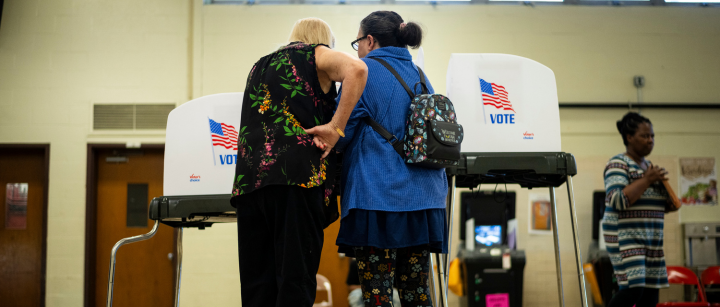
As the Senate debates the SAVE America Act, a prominent piece of legislation championed by Republicans, much misinformation and hyperbole continue to circulate. Designed to tighten voter identification and citizenship verification processes for federal elections, the bill has ignited partisan debates about its impact on voter access versus election security. Our goal here is to examine the claims, scrutinize the factual accuracy, and shed light on the complex truths behind this legislation.
Is the legislation necessary to prevent widespread voter impersonation and noncitizen voting?
Many critics claim that noncitizen voting is widespread and poses a significant threat to election integrity. According to multiple investigations and data analyses, the evidence of large-scale noncitizen voting in federal elections is extremely limited. Walter Olson of the Cato Institute, a respected conservative think tank, notes that “the number of noncitizens illegally voting in federal elections is tiny and unlikely to have affected election outcomes”. State-level audits in Ohio, Georgia, and Nevada have repeatedly shown that instances of noncitizens attempting to vote are exceedingly rare, often numbering in the dozens or hundreds against millions of votes cast.
- Audits in key states have identified fewer than 200 noncitizens who attempted to vote over multiple election cycles, a drop in the bucket compared to the total number of ballots cast.
- Studies by the Bipartisan Policy Center reveal only 77 proven cases of noncitizen voting since 1999.
- In Georgia, less than twenty noncitizens were identified as having voted in recent years, despite over 8 million registered voters.
Furthermore, the federal government’s own data suggests that noncitizen voting is incredibly rare. The Department of Homeland Security’s SAVE database flagged only a tiny fraction of the 49.5 million voter registrations checked in recent years, with investigations indicating many of those flagged are false positives due to database errors.
Does requiring documentary proof of citizenship create an insurmountable barrier for voters?
Proponents argue that the bill’s requirement for citizenship documentation—such as birth certificates or passports—is a commonsense safeguard. However, critics, including VoteRiders, highlight that many Americans lack easy access to such documents, especially those who have changed their names or lack a valid passport or birth certificate. According to the Bipartisan Policy Center, approximately 12% of registered voters, or over 21 million Americans, would struggle to provide proof of citizenship promptly.
Experts confirm that a significant portion of eligible voters—disproportionately from lower-income or minority groups—do not possess these documents. This inevitably raises concerns about potential disenfranchisement, especially if states adopt strict verification procedures without accommodating voters’ circumstances.
Are voter ID laws, as proposed in the bill, an undue restriction?
Data from organizations like the National Conference of State Legislatures indicates that most states already require some form of ID to vote, but the proposed legislation would impose stricter requirements, mandating photo IDs for all in-person voters and enhanced verification for mail-in ballots. The Harvard CAPS/Harris Poll finds that 71% of voters support voter ID laws, including broad bipartisanship among Republicans and independents.
Nevertheless, critics warn that such measures, if implemented without exceptions, could lead to unintentional disenfranchisement of legitimate voters who lack access to IDs, which disproportionately impacts marginalized communities. The legislation proposes provisions like affidavits for voters who can’t produce identification, but experts caution that verification processes might be inconsistent across states, creating confusion and hurdles.
What about claims that noncitizen votes influence elections?
Despite persistent claims, the evidence shows that noncitizens rarely vote in federal elections, and their influence, if any, is negligible. Investigations into voter rolls across multiple states confirm that cases of noncitizen voting are exceedingly scarce. For example, the Heritage Foundation compiled data indicating only 77 documented instances of noncitizen voting since 1999—a trivial figure given the millions of votes cast annually.
Furthermore, experts like Olson emphasize that “the risk posed by noncitizens voting is virtually nonexistent,” and recent claims of mass voting by noncitizens are overwhelmingly unsupported by evidence. The few documented cases involve either mistaken registrations, database errors, or illegal votes by a very small number of individuals.
Does the DHS citizenship verification system, as used in recent years, produce errors?
The New York Times reports that the DHS’s SAVE system has produced false positives, misidentifying thousands of Americans as noncitizens due to outdated or incomplete data. Texas and other states found numerous individuals flagged as noncitizens who are U.S. citizens, often because of lag in data updates or database inaccuracies.
Investigations reveal that the DHS’s current verification system is far from perfect, and its errors underscore the necessity of robust safeguards and due process before removing voters from rolls. Critics argue that over-reliance on such imperfect data can lead to eligible voters being disenfranchised based on flawed allegations, which raises questions about the prudence of militarizing voter verification with unverified databases.
Conclusion: The importance of fact-based discourse in democracy
The debate over the SAVE America Act exemplifies the broader struggle between election security and voter access. While safeguarding our electoral process is vital, it must be grounded in facts. The evidence indicates that the risk of widespread voter fraud or noncitizen voting is minimal, and existing safeguards are largely sufficient. Overreacting with strict requirements or undermining mail-in voting—widely supported by the public—could threaten the fundamental democratic principle that every eligible citizen should be able to vote without unnecessary barriers. Responsible citizenship demands that we pursue election reforms rooted in truth, relying on verified evidence rather than misleading claims. Upholding transparency and integrity is essential in maintaining public trust and protecting our democratic heritage for generations to come.