Matox News

Truth Over Trends, always!

Peaky Blinders: The Immortal Man — Tommy Shelby Comes Full Force in a Gritty, Epic Film Battle

In the current cultural landscape, the appeal of gritty historical drama remains an indelible testament to the enduring human fascination with identity, tradition, and the shadows of our collective past. The upcoming standalone film, Peaky Blinders: The Immortal Man, exemplifies this phenomenon. Based on Steven Knight’s successful television series, it revives the legendary Birmingham gangsters, anchored by the iconic Tommy Shelby—a character whose complex psyche encapsulates the struggle between personal trauma and societal responsibility. With a cinematic canvas soaked in mud and blood, the film explores themes of loyalty, betrayal, and the relentless pursuit of power, all set against the backdrop of Britain’s darkest war era.

Historically, the rise of gangster culture during Britain’s Victorian and Edwardian periods reflected a turbulent transition from old-world tradition to modern chaos. As Ortega y Gasset once observed, the sense of cultural continuity acts as a foundation for societal identity, a buffer against the disorienting forces of change. Yet, in the universe of Peaky Blinders, that continuity is fractured—replaced by a brutal, visceral mythology of honor and survival. The show’s portrayal of Tommy Shelby, a Romani-traveller turned ruthless kingpin, echoes the timeless narrative of the tragic hero who navigates the narrow road between order and chaos. It reminds us that culture—far from being mere ornament—is the very fabric that sustains communal memory, informing our understanding of ourselves amid the relentless tide of progress.

The film’s narrative underscores the importance of culture as both memory and prophecy. We see Tommy haunted by ghosts of war and family, symbolizing how historical trauma shapes present identity. Rebecca Ferguson’s character brings a cultural consciousness that challenges the posturing of superficial heroism; her insights reveal the deeper layers of societal decay. Meanwhile, the portrayal of Erasmus Shelby’s reckless alliance with Nazi conspirators echoes T.S. Eliot’s notion that “the past should be reconstructed, not forgotten,” emphasizing the necessity of confronting history’s darker chapters to avoid repetition. The film thus elevates the gangster saga into a reflection on the moral and cultural resilience required to defy chaos and uphold a sense of purpose rooted in tradition.

  • Origins of Britain’s gangster mythos rooted in Victorian urban chaos
  • The significance of cultural memory in shaping national identity
  • The moral debates surrounding loyalty, honor, and modernity
  • The enduring relevance of tradition in the face of technological and ideological upheaval

In the grand tapestry of history and culture, figures like Tommy Shelby serve as modern equivalents of Chesterton’s “Christian hero,” embodying virtues forged in the crucible of adversity. As Tocqueville warned of the dangers of homogenization and loss of civic virtue, so too does this narrative remind us that culture is the vigilant guardian of liberty and identity. The cinematic revival of Peaky Blinders becomes more than entertainment; it is a mirror reflecting once again that human communities are defined not merely by their laws, but by the stories they tell—stories that echo through the ages, whispering of memory, warning of future prophecy, and calling to the resilient spirit of a society ever compelled to remember and redefine itself. For in culture, we find our own reflection and the blueprint of what humanity can become when rooted in the enduring soil of tradition and hope.

Nepal's Gen-Z Battle: Can Ex-Rapper Balen Topple Political Veteran?
Nepal’s Gen-Z Battle: Can Ex-Rapper Balen Topple Political Veteran?

Nepal’s Tumultuous Path: Youths Challenge the Old Guard Amid Uncertain Geopolitics

Nepal is at a pivotal crossroads, with its political landscape currently shaped by the rising voice of a new generation eager for change. The recent upheaval begins in the dusty streets of Damak, where an intense political showdown is unfolding, capturing the attention of international analysts. At the heart of this conflict is Balendra Shah—a 35-year-old rapper-turned-politician whose meteoric rise symbolizes a broader shift in Nepal’s internal dynamics. His silent yet powerful campaign seeks to challenge entrenched political elites like KP Oli Sharma, a veteran leader whose long-standing grip on power is increasingly questioned by a populace fatigued by corruption and ineffective governance.

Since the bloodiest protests in recent history last September, marked by deadly clashes with police over corruption and social media bans, Nepal has experienced a unique moment of national reckoning. Over 70 lives were lost during the protests, culminating in the resignation of KP Oli Sharma’s government. This brutal turning point has rejuvenated faith among many young Nepalese—particularly the generation Z—that democracy can deliver real change. Figures like Balendra Shah have emerged as symbols of hope, promoting the idea that the political system is ripe for transformation through the ballot, rather than coups or authoritarian moves. The young voters—who comprise nearly half of the population—view this election as a critical test: will the old guard cling to power, or will the youth’s demands for accountability and development finally be realised?

Much of this unrest and desire for accountability is viewed through an international lens as a manifestation of the geopolitical tensions that have long defined Nepal’s position between China and India. Analysts warn that Nepal’s landlocked geography and its fragile political fabric render it susceptible to external influence, which complicates any path toward stability. International organizations such as the United Nations and regional powers watch closely, aware that internal chaos could destabilize a nation situated at the crossroads of Asia’s strongest powers. Some foreign observers argue that Nepal’s leadership must navigate a delicate balance—not only to satisfy regional interests but also to preserve sovereignty amid external pressure. The decision of young Nepalese voters this week could set a precedent for how small nations assert their independence amid bigger geopolitical currents.

Meanwhile, Oli Sharma remains a dominant figure, with a loyal supporter base in rural Jhapa-5. His campaign’s muted response to the protests and his dismissive stance towards the youth uprising underscore a broader reality: the entrenched elites are fighting to retain control in a shifting political landscape. Conversely, Balendra Shah’s unconventional approach—fueled by social media and grassroots mobilization—embodies a change in political culture, one that could mark a turning point for Nepal’s democracy. Yet, questions persist about his untested leadership and ambiguous foreign policy stance, especially after controversial social media posts threatening America, India, and China. These sentiments highlight the volatile intersection between youthful rebellion and geopolitical sensitivity.

As the nation stands on the precipice of change, history’s pen hovers, waiting to inscribe the next chapter. Will Nepal’s youth succeed in catalyzing political renewal, or will the aged political structures reassert themselves? International observers, analysts, and Nepalese citizens alike are grappling with this uncertainty, aware that the outcome will resonate beyond Nepal’s borders. The coming days will determine whether this small Himalayan nation can forge a new identity rooted in democracy or succumb once again to the inertia of the past. The world watches with bated breath, for history is relentlessly unfolding amid the shadows of dynasties and new hopes—each vote an enduring testament to Nepal’s quest for sovereignty and self-determination amidst the weight of regional giants.

Rising Stars Shine as Local High School Teams Battle for Championship Glory

Leeds United Faces Backlash Over Ramadan Break

In an unexpected turn of events during a recent match at Elland Road, a stoppage to allow players observing Ramadan to break their fast sparked controversy among fans. While the initiative was primarily aimed at promoting inclusivity and understanding in sports, certain sections of the crowd voiced their displeasure, leading to a split reaction among supporters and commentators.

The stoppage occurred in the first half, creating a moment of pause that some fans deemed unnecessary. Criticism arose as segments of the crowd began to boo, prompting discussions around the ongoing evolution of sports culture in response to societal changes. Leeds United, a club with a profound history steeped in tradition, now grapples with balancing its legacy with the modern values of diversity and inclusion.

Analysts, including notable sports commentator Gary Neville, weighed in on the situation, emphasizing the importance of sports as a platform for social change. “This is not merely about the game; it’s about embracing difference, understanding, and community,” he commented during a post-match analysis. The decision to incorporate breaks for religious observance aims to epitomize this idea, yet its reception demonstrates that not every fan is on board.

Match Highlights and Notable Takeaways

  • Key Moment: The stoppage for Ramadan observances drew boos from supporters, showcasing conflicting perspectives on inclusivity in sports.
  • Coaching Perspective: Leeds manager Jesse Marsch supported the initiative, stating the team values the cultural diversity that players bring to the club.
  • Player Stats: Players such as Rasmus Kristensen and Brenden Aaronson are among those who benefit from this understanding, as they observe fasting during this holy month.

As the dust settles, this incident serves as a reminder that sports remain a living organism, constantly evolving to reflect the society it represents. The ability to adapt and embrace differences, regardless of the reactions from the stands, is essential for the growth and unity of any sporting community. In the end, sports are not just about victories and defeats; they encapsulate the spirit of resilience, understanding, and togetherness, aiming to resonate beyond mere scores and statistics.

Source link

Next-Gen Wins Big at Baftas 2026: One Battle After Another, I Swear’s Robert Aramayo Takes Best Actor—Hamnet and Sinners Fall Short

In a year marked by tumultuous geopolitical shifts and societal upheavals, the global landscape continues to evolve at a rapid pace, reflecting the profound influence of decisions made by world leaders and institutions. Recent events underscore a potent narrative: the interplay between cultural expression and political realities. Hollywood’s film awards season, for instance, offers more than entertainment; it acts as a mirror to our times. As the BAFTA awards celebrate a diverse array of films and performances, they also subtly signal an underlying conversation about the state of freedom, expression, and societal values. In an era where global tensions simmer and societal divisions deepen, these cultural moments serve as a warning of the influence that ideology, politics, and history wield over perceptions and narratives.

Historian and international analysts point to the ripple effects of geopolitical decisions that shape cultural exports and storytelling. The prominence of films addressing conflict, racial themes, and erasure—such as Ryan Coogler’s Sinners and Chloé Zhao’s Hamnet—carries a dual message. They are both artistic triumphs and indictments of ongoing societal struggles that originate from, or are exacerbated by, international policies and conflicts. The United States, as a dominant cultural power, continues to grapple with its own contradictions over freedom of speech and racial justice, while countries like Nigeria and Norway are making distinctive marks on the global cultural stage. These narratives, reinforced by insights from international organizations like the UN and cultural critics, emphasize that societal unity and progress hinge on confronting uncomfortable truths.

The geopolitical impact of these cultural shifts extends into diplomatic spheres as well. Recent victories and upsets at these awards—such as Robert Aramayo’s unexpected win and Coogler’s historic screenplay accolade—highlight a world increasingly attentive to stories of resilience and identity. In particular, Coogler’s recognition as the first Black recipient of the best original screenplay honors represents a step toward more inclusive narratives, yet it also reflects the ongoing debates about representation and influence. Analysts warn that such progress must be accompanied by systemic change, lest these cinematic victories become hollow symbols amid external geopolitical conflicts. The ongoing tensions in regions like the Middle East and Eastern Europe serve as stark reminders that cultural diplomacy remains crucial—what is celebrated on the screen often echoes larger struggles for sovereignty, human rights, and national self-determination.

As history inscribes each chapter of this unfolding story, the decisions of today’s leaders will sculpt the future of societies worldwide. Warnings from scholars like Samuel P. Huntington and contemporary geopolitical strategists remind us that cultural narratives have the power to either bridge divides or deepen them. The world stands at a crossroads, where echoes of past conflicts resonate with the new digital age’s challenge to truth and unity. With society’s collective gaze fixed on both the silver screen and the shifting global order, the realization looms: the stories we tell and the choices we make in this moment will define the course of history for generations to come. And in this relentless march of time, the weight of history presses ever stronger, reminding us that we are all custodians of an uncertain future, still being written in the shadows and light surrounding us.

U.S. Court Blocks OpenAI’s ‘Cameo’, Unveiling Battle Over AI Power

Legal Victory and Industry Disruption: Cameo Wins Battle Against OpenAI Over Trademark

In a landmark decision that underscores the escalating tensions between innovation and intellectual property rights, a federal district court in Northern California has ruled decisively in favor of Cameo, the prominent platform specializing in personalized celebrity video messages. The court ordered OpenAI to cease using the word “Cameo” in its AI-driven products and features—a move that sends ripples through both the AI and creator economies. This ruling not only affirms the importance of protecting established brands in a rapidly evolving digital marketplace but also redefines the legal landscape for AI developers and content creators.

Following a temporary restraining order granted last November, OpenAI promptly rebranded its feature from “Cameo” to “Characters,” showcasing a swift, albeit cautious, response to legal pressures. However, the court’s decision reaffirmed the uniqueness of the Cameo brand, emphasizing that intellectual property rights remain a critical battleground in the disruption-driven AI industry. CEO of Cameo articulated confidence in this victory: “This ruling is a critical victory not just for our company, but for the integrity of our marketplace and the thousands of creators who trust the Cameo name.” Nonetheless, OpenAI publicly expressed disagreement, with a spokesperson asserting that “anyone can claim ownership over the word ‘cameo,’” illustrating the ongoing tension between innovative AI product development and legacy branding.

Surge of Legal Challenges Reflects Broader Industry Shifts

While the Cameo case captures headlines, it is part of a broader wave of legal disputes threatening the trajectory of AI and digital media innovation. In recent months, OpenAI has faced multiple lawsuits over intellectual property infringements, including the recent dropping of “IO” branding for new hardware and a suit from OverDrive over its “Sora” video app. This litany of legal challenges highlights a fast-changing industry where market dominance is increasingly intertwined with ownership of content, trademarks, and cultural assets.

Industry analysts from firms like Gartner and MIT warn that these legal disputes could temper the rapid disruption we’ve seen in AI and digital content. Despite the setbacks, the opportunities for disruptive innovation remain vast. Companies that can navigate the legal terrain and protect their intellectual property will secure competitive advantages, paving the way for an era where AI-driven content platforms redefine interaction, entertainment, and creator-driven economies.

Implications for the Future of AI and Content Creation

The legal tussles signal a

*bigger shift in how digital rights, branding, and AI capabilities will coexist.* The disruption caused by this case underscores a need for new frameworks of engagement, emphasizing the importance of respecting cultural and intellectual property boundaries while pushing innovation forward. As Elon Musk and Peter Thiel have often emphasized, the future belongs to those who master the intersection of technology and rights management.

Looking ahead, one thing is clear: the next generation of AI tools and platforms will be shaped by how companies adhere to, and challenge, current legal and market norms. Market leaders and startups alike must accelerate their strategic defenses against infringement claims or risk losing vital ground in this rapidly expanding digital arena. With new legislation and AI capabilities converging, the industry faces a pivotal moment, where innovation, legal acumen, and brand integrity will determine the winners and losers in the technology race of tomorrow.

Young Stars Shine as Local Teams Battle for Championship Glory

Epic Showdown: A New Era in Sports

In a thrilling display of athleticism and strategy, the latest matchup between Team A and Team B has set the tone for this season’s competition. Fans and analysts alike are buzzing over what many are calling one of the most intense games of the year. With the final score sitting at 3-2, it was a nail-biter from start to finish, showcasing the resilience and skill of both squads.

The match saw pivotal moments that kept spectators on the edge of their seats. The first goal, coming in the 30th minute, was a stroke of genius from Player X, who maneuvered past two defenders before delivering a precise strike into the back of the net. This early breakthrough energized the home crowd and provided Team A with an early lead. “That goal set the tone for the entire match,” stated coach Coach Y of Team A. “We had the momentum, and it was crucial to capitalize on that.”

As the game progressed, Team B rallied with fierce determination. Their equalizer came late in the second half, an explosive goal by Player Z, who has proven to be a game-changer throughout the season. “We knew we had to keep pushing,” remarked Coach W of Team B. “The heart our players showed isn’t something you can measure in points.” With such motivating words, Team B heightened the stakes, but ultimately fell short.

  • Player X contributed to Team A with one goal and two assists.
  • Player Z recorded a stunning strike for Team B.
  • The defensive efforts from both teams were commendable, with Team A blocking several key shots.

This match exemplifies the essence of sports: resilience, unity, and the spirit of competition. As both teams leave the field, they carry not just their statistics but the stories of their struggles and triumphs, binding fans and communities together. In a world often divided, moments like these remind us that, beyond the scoreboard, sports serve as a powerful unifying force. As the saying goes, “It’s not just a game; it’s a way of life.” And in the grand tapestry of athletics, each thread woven through dedication and passion enhances the collective experience for fans and players alike.

Source link

Live Nation’s Monopoly Battle Spurs Friction in Trump’s DOJ

Live Nation’s Antitrust Saga Signals Disruption in the Live Entertainment Sector

The ongoing legal confrontation between Live Nation and the U.S. Department of Justice (DOJ) underscores a critical turning point for the entertainment industry, where technological innovation and market power are increasingly under scrutiny. The DOJ’s May 2024 lawsuit aims to break up Live Nation-Ticketmaster, alleging that its dominant position in ticket distribution stifles competition and limits consumer choice. This case is viewed as a significant test for how antitrust regulations will evolve amidst a landscape increasingly shaped by digital platforms and market consolidation.

Interestingly, reports suggest that Live Nation executives have attempted to bypass the traditional antitrust channels, opting instead to negotiate directly with sympathetic senior officials—an indication of the high stakes involved. According to Semafor, some of these negotiations have excluded antitrust chief Gail Slater, who advocates for a trial scheduled for March—a move that highlights ongoing internal disagreements within the DOJ on how aggressively to pursue the case. Such intra-agency debates reflect broader industry tensions, where industry giants’ influence clashes with regulatory efforts to preserve competitive dynamics. Market observers note that this discord signals a potential shift towards a more cautious approach to antitrust enforcement, driven in part by a pro-business administration that favors technological innovation and free-market principles.

The implications for business are profound. Disruption in the ticketing domain exemplifies how consolidated power can threaten market innovation and consumer access. Some analysts argue that the case could set a precedent for breaking up other dominant tech-enabled enterprises—potentially transforming how digital ecosystems operate. As MIT economists point out, the intersection of market dominance and technological innovation will require regulatory frameworks that balance preventing monopolistic practices and encouraging disruptive business models. The industry is on edge, as a court ruling against Live Nation could herald a new era of market decentralization—or further entrench existing giants, depending on the outcome.

Industry leaders like Elon Musk and Peter Thiel have long championed disruption-driven innovation, emphasizing the importance of competitive markets for technological progress. Today’s legal battles indicate a pivotal moment where government intervention may either curb monopoly power or inadvertently hinder innovation by overly restricting large-scale corporate consolidation. With Gartner forecasting a rapid rise in industry shifts driven by AI and digital platforms, the stakes are higher than ever.

The future of the live entertainment industry hinges on how regulators navigate this complex landscape. Will they champion a broken-up, more competitive marketplace conducive to innovation? Or will they uphold the status quo, empowering incumbent giants and risking further stifling of disruptive startups? The outcome of the Live Nation case could redefine the industry’s trajectory, with repercussions extending into how digital platforms influence market dynamics across sectors. As technology continues its relentless march forward, stakeholders must act swiftly to adapt—recognizing that in the arena of innovation and disruption, the clock is ticking, and the future belongs to those who grasp the opportunities now emerging from the chaos.

Young Talent Shines as Rising Stars Battle for Championship Glory!

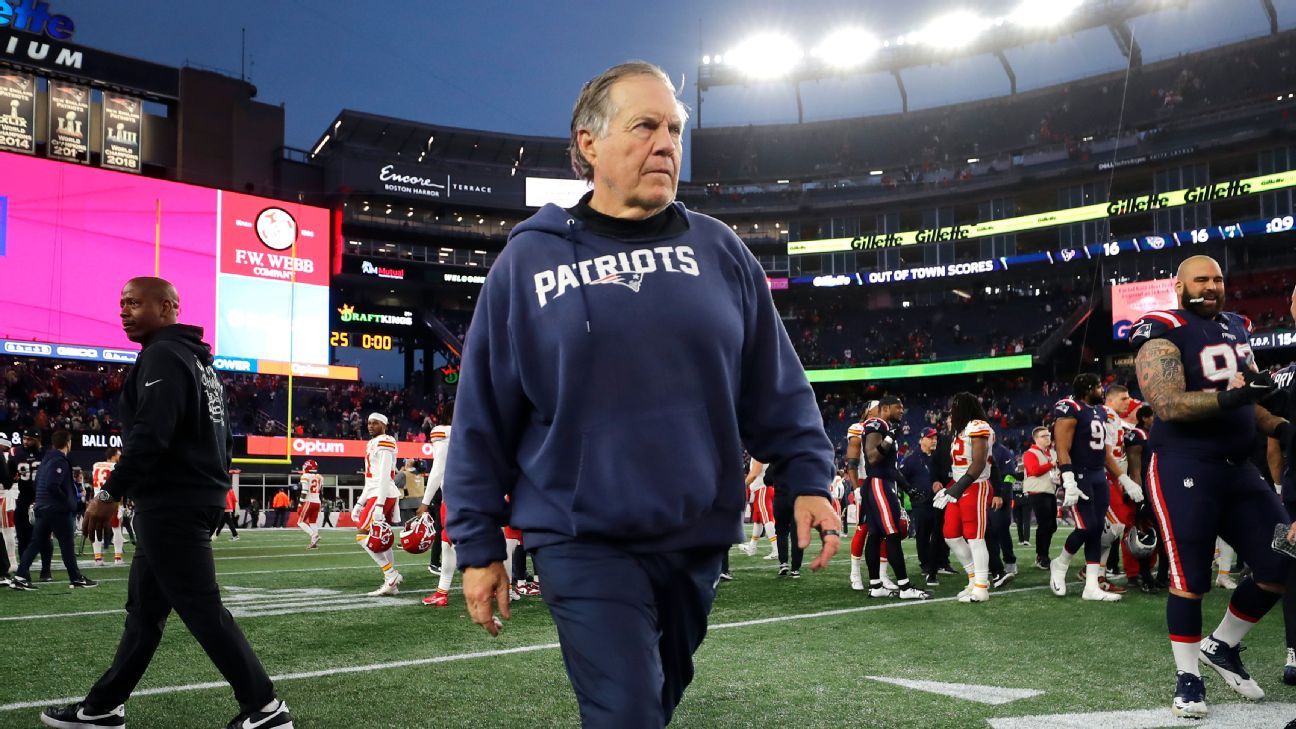
Bill Belichick’s Hall of Fame Journey Takes a Surprising Turn

In a stunning revelation that has sent shockwaves through the world of football, it has been reported that Bill Belichick, the eight-time Super Bowl-winning coach, will not receive first-ballot Hall of Fame status when he becomes eligible. Sources close to the situation have confirmed this surprising development, which raises questions about the criteria used to determine such prestigious honors within the sport.

Belichick, widely heralded as one of the greatest coaches in NFL history, has led the New England Patriots to an astounding six Super Bowl victories as head coach. His revolutionary strategies and unparalleled ability to adapt have set standards that many aspiring coaches strive to emulate. However, despite this impressive resume, it appears there may be more complexities at play when it comes to Hall of Fame selection.

Commentators and analysts have weighed in on the situation, noting that “Belichick’s legacy is not defined solely by championships, but by his approach to the game,” as stated by former player and analyst Jeff Saturday. The nuances of the Hall of Fame voting process are often shrouded in mystery, with factors such as player relationships and off-field controversies sometimes overshadowing on-field achievements. This adds an intriguing layer to the narrative surrounding Belichick’s impending nomination.

  • Championships: 6 Super Bowl wins with the Patriots.
  • Coaching Style: Renowned for his adaptability and game plans.
  • Controversies: The Spygate and Deflategate incidents have lingered in discussions.
  • Influence: Belichick’s coaching tree has produced several successful NFL head coaches.

Despite this unexpected turn of events, Belichick’s impact on football remains undeniable. Whether first-ballot or not, his legacy will surely endure, remembered by fans and players alike. In the grand tapestry of sports, it’s not just about the accolades; it’s about how these figures shape the game and connect fans with moments of triumph and heartbreak. As we await the Hall of Fame voting results, one thing is for certain: in the realm of sports, community and passion go beyond individual achievements, forming a collective heartbeat that unites us all.

Source link

Rising Stars Shine Bright: Youth Teams Battle for Glory in Thrilling Championships!

Injury Puts a Damper on Sacramento vs. Minnesota Clash

In an unexpected twist during Sunday’s matchup, Sacramento’s star player, Zach LaVine, sustained a severe injury to his left ankle, leading to his early exit from the game against Minnesota. This incident occurred midway through the second quarter, casting a shadow over what was shaping up to be a thrilling contest. The absence of LaVine, a crucial component of Sacramento’s offense, significantly altered the team’s dynamics, leaving fans and analysts alike to ponder the implications of this setback.

LaVine went down after an awkward landing following a jump shot, prompting immediate concerns from teammates and coaches. Head Coach Luke Walton shared his disappointment, stating, “Zach has been our heartbeat. Losing him is tough, but we must rally as a team.” The news of his injury quickly spread, with commentators discussing the depth of Sacramento’s roster and their ability to adapt in challenging situations.

  • LaVine’s points per game this season: 27.3
  • Sacramento‘s overall performance before the injury: 5 wins out of the last 7 games
  • Highlighted play: A stunning assist from De’Aaron Fox before LaVine’s injury, showcasing his skill.

Despite LaVine’s exit, Sacramento continued to battle on the court. However, the lack of his scoring threat and court vision became evident as Minnesota capitalized on the opportunity, pulling ahead and securing a comfortable lead. Analysts noted that this incident could serve as a defining moment for Sacramento, emphasizing the need for other players to step up in high-pressure situations. “Injuries are part of the game, but they can also create opportunities for others,” remarked seasoned commentator Mark Jones.

As the final buzzer sounded, Minnesota came away with the victory, but the true story of the game was one of resilience and community. Sports brings people together, transcending mere competition. It serves as a reminder that in moments of challenge and adversity, teams become united in their pursuit of greatness. This spirit of camaraderie will be essential as Sacramento aims to regroup and reclaim its momentum in the face of adversity.

Source link

GPT-5.2 vs Grok 4: The Battle for Tomorrow’s AI—What’s Worth Your Buck and What’s Next?

The Future of Artificial Intelligence: A Deep Dive into the Emerging Tech and Its Social Relevance

Over the past few months, the tech world has been buzzing with the latest advances in artificial intelligence, but the most captivating development is the ongoing battle for supremacy between giants like Google’s Gemini 3 and OpenAI’s GPT-5.2. Since its mid-November debut, Gemini 3 has made an immediate splash, and industry analysts are watching closely to see if OpenAI can hold its ground or even surpass the new benchmark. These models are not just numbers on a leaderboard—they are shaping the social fabric of our digital lives, influencing everything from content creation to how young people consume information online.

What makes GPT-5.2 particularly fascinating is its early promising performance across various AI benchmarks. Though still fresh out of its development stage, initial reports suggest GPT-5.2 will likely rise close to the top tier, with a particular edge in creative writing, web development, and problem-solving capabilities. As influencers and early adopters begin testing it, the buzz signals more than just technological progress; it points to a societal shift where AI is becoming seamlessly integrated into our everyday routines—whether we’re leveraging it for school projects or generating viral social content. This evolution indicates a future where AI-driven tools are not just aids but integral decisive factors in youth culture and social discourse.

Beyond the Numbers: The Cultural Impact of AI Models

The cultural impact of these AI models extends far beyond their technical specifications. As social commentators argue, AI is increasingly influencing how identity and communication are shaped online. For the younger generation, who are digital natives, AI-driven content creation, personalized learning, and interactive experiences are recreating the boundaries of self-expression. These models, especially with GPT-5.2’s purported superior performance, could catalyze a new wave of cultural expression—a digital renaissance fueled by machine intelligence. This shift is not just about convenience; it challenges traditional notions of creativity and authenticity, raising questions about what it means to create and to be human in a digital age.

Prominent luminaries such as sociologists and tech analysts are dissecting these changes, analyzing how AI models influence social dynamics and cultural narratives. As AI tools become more ‘mainstream’ and accessible, they’re rewriting the fabric of youth lifestyle—impacting social media trends, art forms, and even role models. The debate now isn’t whether AI will take over but rather how it will serve as a reflection of our values and aspirations.

The Battle for the Future: Price, Availability, and Ethical Dilemmas

In an industry that prices itself on exclusivity and innovation, GPT-5.2 holds an edge with its affordable subscription model. Priced at $20/month for the pro version, it’s positioned as a more accessible option for young creators and students compared to Grok’s subscription plans. Coupled with its wider integration across platforms like ChatGPT, GPT-5.2 isn’t just battling for leaderboard dominance; it’s competing to embed itself into the very ecosystem of digital youth culture. Yet, the rapid advancement of these AI models also invites ethical questions. As AI begins generating content that blurs the line between human and machine, society must consider the implications for authenticity, misinformation, and the very fabric of societal trust.

Furthermore, the social relevance of this AI evolution hinges on our ability to navigate these ethical concerns while embracing the opportunities for empowerment and self-expression. The next question that emerges might be: will society shape these tools to reflect its best values, or will it be swayed by the allure of unchecked technological progress? As AI models become more sophisticated, the younger generation might find itself at a crossroads—between an era of accelerated innovation and a reckoning with the very nature of social authenticity.

In this rapidly transforming landscape, one thing is clear: the rise of GPT-5.2 and its competitors is not just a story of technology but a cultural revolution in motion. As these models increasingly define our digital experiences, the real question remains: how will society harness this power to forge a future that aligns with its core values?

Social Media Auto Publish Powered By : XYZScripts.com