Matox News

Truth Over Trends, always!

Northampton Librarian Celebrates Big Win, Inspiring Local Youth

The Power of Literacy and Community in Shaping Society

In an era characterized by rapid societal shifts and demographic changes, the role of dedicated community and educational institutions becomes more vital than ever. At the heart of this movement are figures like Julie Broadbent, a veteran librarian at Northampton International Academy, whose recent accolade as the 2025 Secondary School Librarian of the Year underscores the profound influence that passionate educators can have on families and communities. Her story not only exemplifies individual achievement but also highlights the transformative power of fostering a shared culture of literacy and positivity within schools, which ripple outward to the broader social fabric.

This recognition illuminates a significant social issue: the decline of traditional literacy and the importance of fostering a reading culture in schools. Historically, sociologists like Raymond Williams and contemporary social commentators emphasize that in a society where digital distraction and diversifying cultural influences threaten to erode foundational skills, educators and librarians stand as pillars of stability. Ms. Broadbent’s approach—cultivating a welcoming, inclusive space and reflecting her school community’s diversity—speaks to a necessary paradigm shift. It demonstrates how creating safe and engaging environments nurtures not only academic success but also moral resilience among youth, thereby reinforcing social cohesion amid changing demographics.

Her 25 years of dedication encapsulate the ongoing challenge: how to ensure that the bond between families, schools, and local communities remains strong enough to cultivate lifelong learners. The School Library Association praised her for her work “creating a culture of positivity,” and her ability to connect with pupils on an individual level exemplifies what sociologists call “*social capital*”—the trust, networks, and shared values that underpin community strength.

  • By fostering literacy and inclusiveness, educators like Ms. Broadbent uphold the moral responsibility to prepare a generation capable of navigating an increasingly complex society.

Still, these initiatives face challenges—from resource constraints to societal divisiveness—that threaten to undermine their vital role. It is essential that policy makers recognize the importance of supporting such grassroots efforts, for the health of our social fabric depends on the success of these programs.

As we reflect on the story of Ms. Broadbent and her dedication, we are also reminded that the future of society hinges on our collective capacity to nurture the next generation. Her work exemplifies how small acts of community investment can spark large-scale social renewal. Society’s most urgent task is to preserve and renew the simple yet revolutionary idea that education, rooted in love for reading and community engagement, can cultivate not just competent students but morally resilient citizens. As the rays of dawn pierce through the shadows of societal fragmentation, hope lingers in the promise that our shared commitment to these ideals can build a society where families, education, and communities unite under the common banner of progress and moral purpose.

Zelensky Pledges Big Shakeup in Energy Sector After $100M Corruption Scandal

Ukraine’s Energy Sector Under Scrutiny Amid Corruption Scandal

In a move that underscores the ongoing struggles of Ukraine to stabilize its institutions amidst the chaos of war, President Volodymyr Zelensky has announced an ambitious plan to overhaul the country’s sprawling, yet troubled, energy sector. This comes in the wake of a scandal that has shaken public confidence and posed profound geopolitical questions about the integrity of Ukrainian governance. An estimated $100 million has been embezzled from state energy companies, exposing deep-rooted corruption that threatens to undermine Ukraine’s resilience, especially as Russian attacks intensify on critical energy infrastructure.

Corruption Inquiries and Political Fallout

  • Investigations initiated by Ukraine’s National Anti-Corruption Bureau (NABU) and the Specialised Anti-Corruption Prosecutor’s Office (SAP) have revealed that high-ranking officials and close associates of Zelensky may have been involved in illicit activities within key energy firms. Among those implicated are Justice Minister Herman Halushchenko, ex-Deputy Prime Minister Oleksiy Chernyshov, and Timur Mindich, linked to Zelensky’s former TV studio, Kvartal95. The involvement of such figures underscores the complex nexus of politics, business, and corruption that continues to pervade Ukrainian politics.

In response, Zelensky has vowed to restore integrity and transparency, promising a full audit of energy firms and the swift appointment of a new supervisory board for the Energoatom nuclear company within a week. Several ministers have resigned under pressure, yet critics remain wary of the president’s sincerity, especially given previous controversies, such as the July law that temporarily limited the independence of NABU and SAP—a move diplomats and analysts criticized as a setback for anti-corruption efforts. This back-and-forth illustrates the fragile balance Zelensky faces in asserting reform amid entrenched interests.

Escalating Security Crisis and Strategic Consequences

Amidn’t these domestic upheavals, Ukraine’s defensive posture is further strained by an escalation in Russian military assaults on critical energy infrastructure. Attacks on substations and power plants have left parts of the country in darkness, profoundly affecting civilian life and the operation of Ukraine’s nuclear power plants. These assaults are part of a broader strategy by Moscow to weaken Ukraine’s resolve and complicate NATO and Western support. Analysts warn such coordinated energy strikes threaten to destabilize Ukraine’s sovereignty, making the fight for transparency and sovereignty intertwined in ways that extend well beyond Kyiv.

International voices, including seasoned diplomats and organizations like the European Union and NATO, continue to scrutinize Kyiv’s internal reforms. The tension between attempting to root out corruption and maintaining a cohesive war effort has led many to question whether Zelensky’s government can stand the test of both external aggression and internal discord.

Global Implications and the Cost of Compromise

Historian and geopolitical analyst Dr. Maria Ivanova comments that Ukraine’s internal stability is now as crucial as its battlefield resilience. The unfolding scandal reveals the pressing challenge of establishing a governance model that effectively resists external threats while confronting past and present corruption. The decisions made in Kyiv’s corridors of power will influence not just Ukrainian sovereignty but also the broader post-Soviet space, impacting regional security and the future of European energy independence.

As the world watches, Kyiv stands at a pivotal juncture—either it can decisively confront entrenched corruption and emerge stronger against external foes, or it risks becoming a cautionary tale of what happens when internal fissures weaken a nation defending its very existence. With each revelation and crackdown, history continues to unfold—an enduring reminder that the fight for sovereignty, integrity, and independence is often fought in the hidden trenches of politics and power, where the true battles for the future are waged. In this harrowing chapter of political endurance, the weight of history presses heavily upon those who dare to forge a nation’s destiny amid chaos.

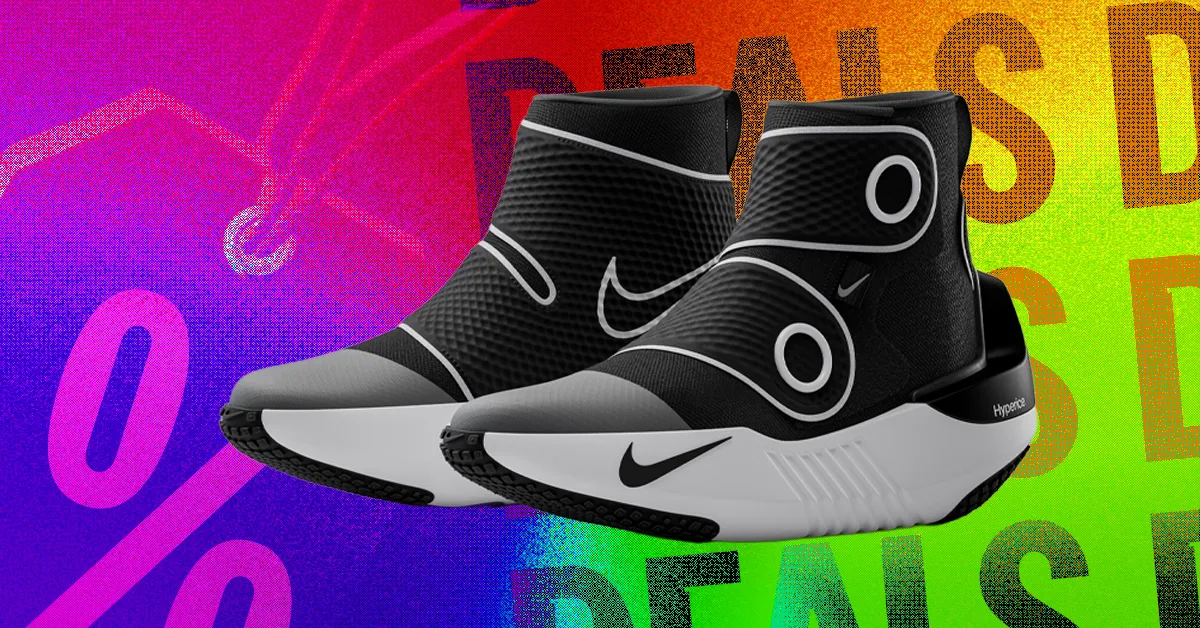
Nike x Hyperice Hyperboot Hits $200 Off — Gear Up and Save big!

Disruption in Wellness Tech: Nike Collaborates with Hyperice on Game-Changing Recovery Wearables

The wellness industry is witnessing a significant leap forward with Nike’s latest partnership with Hyperice, resulting in the debut of the revolutionary Hyperboot. Unlike traditional recovery boots such as Hyperice’s Normatec series, the Hyperboot introduces a high-top, portable design that promises to disrupt post-exercise recovery routines and redefine athlete recovery paradigms. This innovation not only exemplifies the ongoing convergence of sports, health, and wearable technology but signals a broader market shift toward accessible, at-home recovery solutions that are both effective and convenient. As disruption accelerates in the digital health sector, industry analysts suggest that such devices could fundamentally alter how consumers approach mental and physical wellness.

The Hyperboot’s features underscore its disruptive potential. It offers three levels of adjustable compression and heat up to 125°F, adaptively syncing both boots to optimize treatment. Battery life extends to approximately 90 minutes per charge, making it well-suited for busy schedules—whether post-snowboarding or pre-workout warmups. Its IP54 rating ensures durability against dust and splashes—an essential feature for active users seeking rugged, on-the-go recovery gear. With affordability now down from $899 to just $699 during Hyperice’s Black Friday sales, the market is witnessing a clear push towards democratizing elite recovery tech, breaking free from expensive, clinical-grade devices. This opens doors for young athletes and everyday fitness enthusiasts to adopt professional-grade wellness solutions, positioning Nike and Hyperice as disruptors in the high-growth wearable health market.

The business implications of this collaboration are compelling. Nike’s global brand influence, combined with Hyperice’s innovative compression technology, signals a strategic move to mainstream recovery accessories that were previously confined to sports medicine clinics. The significant price reduction and inclusion of HSA/FSA eligibility indicates a deliberate effort to reach a broader market segment—potentially rapidly expanding the consumer base and challenging traditional recovery device manufacturers. Such disruption is reminiscent of Elon Musk’s approach with Tesla, where market shifts were driven by affordable, high-performance tech accessible to a mass audience. Industry giant Gartner predicts that wearable health devices will reach a market size of over $60 billion by 2025, and Nike’s entry with Hyperice’s hyper-advanced Hyperboot exemplifies how industry giants are positioning themselves at the forefront of this growth sector.

Looking forward, the fitness and health tech sphere is more primed than ever for transformation. The Hyperboot’s success may catalyze a wave of innovative, disruptive wellness devices that blend portability, affordability, and sophistication. As industry pioneers like MIT’s media lab and Peter Thiel-backed startups continue to push boundaries, competitors will be forced to innovate rapidly or risk obsolescence. The market is increasingly favoring products that empower users to take control of their recovery journey—anytime, anywhere—without sacrificing performance or functionality. As these trends accelerate, young consumers and ambitious athletes must stay alert; the future belongs to those who leverage cutting-edge technology for competitive and personal gains. To ignore this disruption is to fall behind in the rapidly evolving landscape of next-generation wellness innovation.

Score Big: Over 10 Must-See Early Black Friday Apple iPad Deals for the Trendsetters

The Rise of Early Black Friday Apple iPad Deals and Their Cultural Significance

As Black Friday approaches, a shift in consumer behavior is underway that reveals much about our evolving social norms and relationship with technology. Traditionally seen as a single, explosive shopping event in late November, the holiday season now kicks off early, with tech giants like Apple leading the charge in offering substantial discounts on their most coveted devices. This phenomenon is more than mere consumerism; it is a reflection of changing social values and the heightened importance of digital connectivity among young Americans. The early bird gets the deal—and for many, that means securing the latest iPad models at prices that highlight an increasingly competitive landscape among major retailers.

Influencers and tech analysts now recognize that these early deals shape a new cultural narrative: the merging of lifestyle enhancement with practical productivity. For instance, brands like Amazon, Best Buy, and Walmart are competing head-to-head, spotlighting not only savings but also the social status that comes with owning cutting-edge Apple gadgets. The iPad Pro, for example, is on sale for up to $200 off, with models like the 13-inch M4 chip variant already chilling at close to its historic low of $1,299. This is significant—especially when considering how such devices are now embedded in our identity as digital natives. The graying line between work and leisure continues to blur as young users embrace tablets not just for entertainment but as essential tools for education, content creation, and social connection.

Beyond the pricing hacks and flash sales, these tech discounts serve as a marker of a broader societal shift—a shift towards prioritizing digital fluency and self-optimization. Sociologists suggest that Early Black Friday deals on tools like the iPad Air and iPad Mini mirror the ambitions of a generation eager to leverage technology to shape their future. Experts observe that this trend emphasizes a collective aspiration for innovation and self-reliance. A prime example: the iPad Air in a vibrant purple or sleek blue, now offered at nearly $50 off, symbolizes not just affordability but a form of lifestyle branding—an emblem of youth empowerment in the digital age. These devices are not mere gadgets; they are *extensions* of our identity and social capitalization.

But here’s the next big question: as these early Black Friday deals become the new norm, are we witnessing a permanent shift in how the younger generations approach consumerism and technology? Will the accumulation of digital tools redefine notions of status, productivity, and community? Influencers and tech futurists are already debating whether this early shopping frenzy signals a predictable evolution or a disturbance in the traditional retail calendar. What remains clear is that the cultural impact of snagging your latest iPad at a discounted rate may be just the beginning—prompting us to ask whether the future of society will be more driven by *early adoption* and *digital identity* than by the conventional rhythms of commerce.

Funko warns: Tough times ahead for the collectible legend—facing big challenges to stay afloat

Once the quintessential symbol of geek chic and pop culture fandom, Funko now finds itself at a crossroads, facing serious financial turbulence that raises questions about the sustainability of nostalgia-driven consumer trends. The company’s recent SEC filings, submitted on November 6, paint a sobering picture: mounting debt, declining sales, and a challenging retail landscape. Despite Funko’s immense popularity among today’s youth, its financial woes highlight a broader narrative about how shifting economic circumstances and global policies can threaten even the most iconic cultural phenomena.

Historically, Funko’s collectible confections—especially its Pop! Vinyls—became more than just toys; they transformed into symbols of identity, social influence, and shared belonging within a rapidly digitizing world. The company’s merchandise, which once soared in popularity, saw a notable decline in overall sales—down 14.3% domestically and 20.1% internationally in the third quarter. Yet, amidst this decline, some pockets of resilience remain. For instance, Funko reports strong sales of its Bitty POP! line and plans to expand its blind box offerings, capitalizing on the current trend of mystery collectibles that appeals to young consumers seeking unique, surprise-based experiences. Notably, Funko plans to be a key player in selling KPop Demon Hunters merchandise this holiday season—highlighting how cultural crossovers and niche fandoms continue to drive demand, even as overall sales slide.

The social relevance of Funko’s story extends beyond mere merchandise. It exemplifies how cultural icons become intertwined with identity formation and community building among youth. Influencers and sociologists alike have spotlighted the way collectibles serve as expressions of personal and social identity, bridging the gap between digital engagement and tangible nostalgia. However, as the company grapples with financial instability—exacerbated by ongoing U.S. tariffs, which are now even facing legal challenges before the Supreme Court—this fabric of cultural significance risks fraying. Retailers, facing economic pressures and a weakening economy, are scaling back or canceling restocks, further stoking uncertainty about what the future holds for this beloved brand.

  • The rise of collectibles as social currency: Brands like Funko encapsulate a moment where owning specific figures signals belonging in fandom communities and social status among youth.
  • Global trade policies impacting culture: The fallout from tariffs exemplifies how macroeconomic policies can threaten cultural staples, complicating the path for brands to sustain their influence.
  • Resilience in niche markets: Despite big-picture struggles, Funko’s focus on expanding its niche lines suggests a shift towards targeted consumer engagement rather than mass-market dominance.

As we watch these developments unfold, the lingering question remains: Will the decline of a cultural giant like Funko signal a shift away from collectible fandoms as a dominant youth trend, or will it simply evolve into a more resilient, localized, and digitally integrated phenomenon? The future of fandom, identity, and cultural expression might just depend on how brands and consumers adapt to these economic and social upheavals—an intriguing space to watch as the next chapter of pop culture history is written.

Score Big: Roborock Qrevo Edge Robot Vacuum Almost 50% Off This Weekend!

In an era where technology is reshaping household chores, the latest offering from Roborock, the Qrevo Edge robot vacuum, exemplifies the shift towards integrating smart features with practical, everyday use. Priced now at a remarkable 43% off—$799, down from $1,399—this device isn’t just a vacuum; it’s a glimpse into the future of domestic automation. As consumers prioritize convenience and connected living, this model stands out with its advanced AI obstacle recognition, industry-first “adaptilift chassis,” and pet-friendly tech. It’s clear that the cultural and social impact of such devices extend beyond mere cleanliness, hinting at a society increasingly dependent on AI to navigate our personal and shared spaces.

The Qrevo Edge is not merely a cleaning tool but a reflection of the broader societal embrace of automation. Influencers and trendsetters in the tech sphere, like Marques Brownlee, have highlighted how these devices are no longer novelties but becoming essential components of modern lifestyles. Its AI obstacle recognition allows it to navigate complex home layouts, including doorframe ledges up to 4cm high, giving it a versatility that mimics human adaptability. Moreover, voice assistant compatibility and pet-centric features—such as video calls to check on furry friends and targeted pet hair removal—indicate that companies are tailoring their innovations to meet the demands of pet-loving youth and busy professionals alike. Through these features, the cultural impact manifests as a digital integration into daily routines, fostering a lifestyle where chores are semi-automated, leaving more time for personal pursuits or social engagement.

Additionally, the social relevance of such devices is rooted in their environmental and health implications. By self-emptying with hot water and drying with warm air, the Qrevo Edge minimizes odors and maintains hygiene without constant human intervention. This echoes a larger societal trend: the desire for a cleaner, more efficient home environment, driven by a growing awareness of health and wellness among younger demographics. As social analysts note, these gadgets are becoming cultural symbols of a post-task society—where technology not only augments productivity but also elevates the quality of personal space. In a way, they represent a shift in behavioral expectations, where the pursuit of a sophisticated, hassle-free life is increasingly intertwined with high-tech innovation.

In reflecting on the trajectory of these innovations, an intriguing question arises: as robotic assistants become more integral to our daily lives, will we begin to redefine what it means to have a “home”? With features that offer pet companionship, customizable cleaning zones, and intuitive obstacle detection, the next era could see these devices evolve beyond chores, potentially taking on roles in social interaction and emotional support. Influential sociologists like Sherry Turkle have argued that as humans form bonds with digital companions, societal norms around caregiving and interpersonal relationships may shift profoundly. So, as the Roborock Qrevo Edge and similar devices become common fixtures, the real question for the future will be: are we on the brink of a society where robots are not just tools, but partners in our daily narratives?

Young voters deliver big win as Catherine Connolly secures Ireland presidency

Ireland’s Political Landscape Shifts as Independent Candidate Catherine Connolly Wins Landslide Presidential Victory

In a landmark election that signifies a profound shift in Ireland’s political and social fabric, Catherine Connolly, an independent leftwing candidate and former barrister, has secured an outright majority in a landslide victory, winning over 63% of the first-preference votes. Her victory, declared at Dublin Castle amidst subdued voter turnout of 46%, encapsulates growing disenchantment with the traditional center-right parties—Fine Gael and Fianna Fáil—and underscores a population yearning for genuine change. Her campaign, bolstered by a rare united front of leftwing parties and resonant social media activism, challenges the long-standing status quo, urging Ireland to reassess its values and international stance. With her election, Ireland’s presidency enters a new era—one that, despite the largely ceremonial role, symbolizes a significant indicator of societal momentum towards progressive reform.

While the office of the president in Ireland remains largely symbolic, Connolly’s victory carries critical geopolitical implications. She promises to uphold Irish neutrality, distancing herself from what she labels as western “militarism,” and has openly criticized the involvement of the UK and US in contentious issues such as the Gaza conflict. Her stance aligns with a broader desire among many Irish citizens to forge an independent foreign policy—one less entangled with US-led military interventions and more focused on promoting peace and humanitarian values. International analysts and historians note that her assertion of sovereignty, combined with her vocal criticism of Western militarism, could influence Ireland’s diplomatic relationships, particularly with the United States and European Union members, fostering a more nuanced stance that prioritizes peace over military alliances.

The geopolitical impact extends beyond Ireland’s borders into regional stability, as Connolly’s positioning may inspire similar shifts among other smaller nations seeking to recalibrate their international engagements. Her advocacy for climate action and social justice resonates with a generation distrustful of entrenched politics and globalist agendas. As she embarks on her seven-year term, her potential to become a vocal moral voice on the international stage could reshape Ireland’s role within global institutions, emphasizing diplomacy and humanitarianism over alignment with hegemonic powers. Yet, some caution that her outspoken views, especially regarding the United States and European solidarity, could provoke friction, risking diplomatic isolation in an interconnected world already rife with tensions.

Driven by a wave of public frustration over the nation’s housing crisis and rising living costs, Connolly’s ascent is also a reflection of youth and urban discontent. Her campaign capitalized on social media platforms and cultural endorsements from artists such as Kneecap and the Mary Wallopers, capturing a narrative of hope and change that had previously been dismissed as marginal. Critics warn that her radical rhetoric and outspoken stance against established alliances might complicate Ireland’s diplomatic priorities, particularly in navigating its traditionally close relationship with the U.S. and European partners. Nevertheless, her victory signals a pivotal moment—where societal voices seeking justice, sovereignty, and peace take center stage, setting a course that history will continue to record and ponder. As the world watches Ireland’s evolving political story, it remains to be seen whether her presidency will mark the dawn of a new international chapter or become a cautionary tale of polarization’s toll on diplomacy. The pages of history, after all, are still being written, and Ireland’s next chapter is only beginning to unfold.

Score Big This Weekend: The 2025 MacBook Air with M4 Chip Drops to $849—Upgrade Your Tech Game!

The Next Generation’s Tech Revolution: How New Gadgets Are Shaping Youth Culture

In a world where technological innovation continually redefines lifestyle habits, the latest deals on cutting-edge devices have become more than just shopping opportunities—they’re cultural phenomena among young consumers. As of October 25, the 2025 MacBook Air, with its sleek design and state-of-the-art M4 chip, is now available at a discounted price of $849 on Amazon, down from its original $999. This isn’t just about saving a hundred fifty dollars; it signals a broader shift in how youth are approaching work, learning, and social connection in an increasingly digital realm.

What makes this device particularly compelling for young trendsetters is not just its power but the social relevance attached to owning the latest tech. Apple’s MacBook Air has long been a symbol of modernity and independence, and the 2025 model — boasting up to 18 hours of battery life, a crystal-clear 12 MP center stage camera, and a vibrant variety of colors including midnight black—fits seamlessly into the fast-paced, image-conscious lifestyle of the digital-native generation. Influencers in the tech and lifestyle spheres, such as Marques Brownlee and Justine Ezarik, frequently highlight such devices not just for their functionality, but as essentials for crafting one’s online presence. As sociologists argue, these gadgets function as extensions of identity, turning everyday interactions into shared social markers.

Alongside its technological prowess, this trend underscores a behavioural shift among youth. Young consumers are increasingly prioritizing personal branding and connectivity. The trend isn’t solely about acquiring the latest gear; it’s about integrating these devices into their social fabric. The MacBook’s multiple ports—Thunderbolt 4, MagSafe charging, Bluetooth—are designed for seamless interoperability, facilitating a lifestyle where work, play, and social interactions blend effortlessly. Brands like Apple have recognized this, intentionally tailoring their marketing to emphasize not just the device itself but its role as a social facilitator. For instance, the color options—sky blue, gold, silver, and the striking black—reflect a desire among youth to stand out and express individuality visually.

  • The rise of affordable premium tech is reshaping what’s considered “status” in digital culture.
  • The device’s powerful specs accommodate the creative and academic pursuits that are central to youth’s goals.
  • Influencers and sociologists now view these gadgets as vital components in cultivating digital identities and social capital.

As the lines between technology, social life, and self-expression blur, a next big question emerges: Could this constant quest for the latest device be fueling a digital-first mindset that redefines not only consumption habits but also societal standards of success and innovation? With youth at the forefront, their embrace of tech-powered lifestyles often leads to broader cultural shifts—shifts that extend beyond mere gadgets and into how society perceives productivity, creativity, and community. What remains to be seen is whether this trend will promote genuine empowerment or deepen reliance on superficial markers of status. Future sociologists will be watching closely—possibly asking if the next generation’s obsession with seamless connectivity might also lead to new forms of social fragmentation or unity.

Score Big with Bosch: Buy One, Get One Free at Lowe’s – Don’t Miss Out!

In a world increasingly defined by DIY culture and a renewed emphasis on self-sufficiency, power tools are emerging not just as practical instruments but as symbols of a broader cultural shift. Recently, Lowe’s has launched an intriguing promotion centered around the Bosch 18V 2-Pack Battery Kit, now available for $179—marked down from $219, which means a $40 savings. What’s making headlines isn’t merely the discount but the *social significance* attached to this deal. For young enthusiasts and burgeoning craftsmen, this signifies more than a purchase; it represents the democratization of tech-enabled craftsmanship, enabling a new generation to take on projects they previously viewed as out of reach.

This trend is resonating strongly among youth, fueled by social media influencers and DIY communities who elevate empowerment through skill-building. TikTok, Instagram, and YouTube powerhouses such as HomeRepairHype and ToolTrekker showcase young creators transforming their living spaces or tackling ambitious renovations. Such influencers democratize the craft, making it accessible, cool, and socially relevant, especially as the pandemic has deeply inspired many to roll up their sleeves. Sociologists suggest this is not just about building a toolbox but about reshaping identity—empowering young people to view themselves as capable creators rather than passive consumers.

The deal’s allure extends beyond affordability. Included in this package is a choice of a free cordless power tool—hammer drills, oscillating multi-tools, reciprocating saws, or angle grinders—that can be used immediately with the batteries purchased. These tools, backed by a five-year warranty, symbolize a shift in behavioral norms: the move toward hands-on engagement and self-reliance, which is increasingly aligned with *traditionally male* domains, albeit now embraced across all genders. Tech analyst Jared Monroe emphasizes that this trend signifies how “power tools are becoming a cultural artifact of independence—youth are no longer just consumers but creators.”

Moreover, the social & cultural impact of this movement speaks to the *value shift* among young people—prioritizing authenticity, personalization, and tangible results over digital consumption alone. This is exemplified by how deals like Lowe’s are marketed not just as discounts but as gateways to a lifestyle rooted in innovation and craftsmanship. As youth increasingly view these tools as extensions of their identity, questions emerge: *Will this enthusiasm translate into sustained engagement?* Or is it a fleeting trend fueled by social media hype? The next big question is whether the *power tool* movement will continue to foster a generation that values tangible skills and craftsmanship, or if it will be overshadowed by digital fleetingness—raising the ultimate inquiry: *Will this new generation redefine what it means to be productive and self-reliant in a digitally connected world?* With the future of DIY culture hanging in the balance, one thing is clear—this surge of resilience, fueled by accessible technology, might just be the beginning of a broader cultural renaissance.

Gucci Parent Kering Bets Big on Future: €4B Sale of Beauty Biz to L’Oréal Cements Young Luxe Scene

The Future of Luxury Brands: Kering’s Shift and the Social Power of Consumer Trends

In a move that’s sending ripples through the luxury fashion and beauty industries, Kering — the powerhouse behind brands like Gucci, Bottega Veneta, and Balenciaga — is stepping away from its once-burgeoning beauty segment. Recent reports reveal that Kering has agreed to sell its beauty division, including its iconic fragrance line Creed, to L’Oréal for a hefty €4 billion. This strategic pivot, announced by new CEO Luca de Meo, aims to alleviate mounting debt and refocus Kering’s core strength: high-end fashion. It’s a refresh for a brand known for its innovative designs and celebrity allure — but also a signal of wider societal shifts that are redefining what luxury truly means in the modern age.

This sale isn’t just about balancing books; it’s a reflection of how consumer engagement and social relevance have become more critical than ever in the world of high-end branding. While traditional beauty was once a cornerstone of luxury appeal, today’s younger audiences are more interested in what brands stand for. The new 50-year licensing deal with L’Oréal will see Kering’s fashion labels develop fragrance and beauty products under their names, but only through licensed partnerships. It underscores a broader trend: luxury brands are increasingly ceding control over certain product lines to consumer-centric conglomerates that understand the modern digital and social landscape.

The Rise of Influencer Culture and Social Relevance

Notably, this decision aligns with the rise of influencers and viral marketing. As social media platforms like Instagram and TikTok continue to shape consumer preferences, luxury brands are caught in a dynamic struggle: maintain exclusivity or embrace authenticity and relatability. Under the guidance of their new management, brands such as Gucci are experimenting with innovative formats — like filming collections rather than traditional runway shows — to connect more deeply with a youthful, socially aware audience. The engagement of influencers like Emma Chamberlain and Lil Nas X demonstrates that social relevance often outweighs conventional advertising in determining impact and market share. According to sociologists studying brand evolution, this signals a paradigm shift: luxury is no longer just about opulence but about a brand’s social voice and authenticity.

Here’s the ironic twist: while the luxury giants are divesting from certain product lines, they are doubling down on building social and cultural relevance. Strategic moves like partnering with emerging fashion creators and adopting unconventional marketing tactics are making these brands more accessible and relatable, especially to a digital-native generation eager for brands that reflect their values. The ongoing debate among analysts such as Bernstein revolves around the sustainability of this approach: Will these brands maintain their allure while fostering genuine social connection, or is it just a passing trend fueled by viral fame?

What’s Next? The Next Big Question

As these high-stakes moves unfold, the next big question remains: will this new era of luxury branding, heavily reliant on social influence and licensing, genuinely enhance authentic consumer loyalty, or is it just a fleeting response to market volatility? The landscape is shifting so rapidly that traditional notions of exclusivity and craftsmanship sit side-by-side with digital virality and social commentary. The challenge lies in balancing these forces — if brands can harness social relevance without losing their core identity, they might forge a new, resilient path forward. Otherwise, they risk becoming mere brands of moments rather than icons rooted in lasting cultural impact. That’s the real story to watch: this era of transformation is laying the groundwork for a future where social narrative and consumer participation are as vital as the product itself.

Social Media Auto Publish Powered By : XYZScripts.com