Matox News

Truth Over Trends, always!

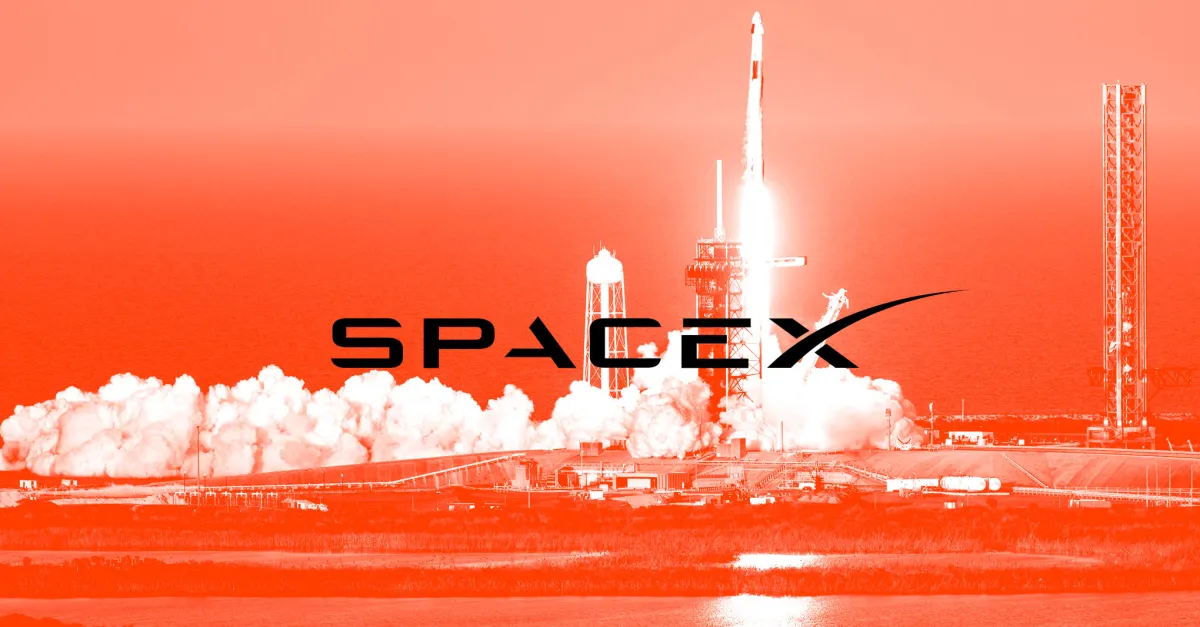
SpaceX Eyes $60B Deal to Acquire Cursor, Signals Big Tech Moves

SpaceX and Cursor Collab Signals a New Era in AI Innovation and Industry Disruption

The alliance between SpaceX and Cursor marks a monumental shift in the landscape of artificial intelligence development, with significant implications for both technological progress and competitive advantage. This strategic partnership aims to combine Cursor’s cutting-edge knowledge work AI, renowned for its precision and efficiency among expert software engineers, with SpaceX’s formidable computational backbone—specifically its Colossus supercomputer, equipped with a million H100 equivalents. Such a synergy is set to revolutionize the creation of highly optimized AI models, positioning the collaboration at the forefront of innovation.

According to industry experts, including analysts at Gartner and MIT technology researchers, the use of vast computational resources—particularly H100 GPU clusters—will drastically accelerate the training of advanced AI models, pushing the boundaries of what is currently feasible. The partnership underscores a trend toward disruptive innovation—harnessing industry-scale supercomputing power for rapid deployment of AI that can dominate knowledge-based tasks, from coding to problem-solving. This level of integration exemplifies a new paradigm where the convergence of space-grade computing and AI expertise could set a blueprint for future tech dominance, compelling rivals to evaluate their own resource strategies.

Business Strategy and Industry Impact

The collaboration’s financial architecture is equally noteworthy. Cursor has granted SpaceX the right to acquire the AI firm later this year for $60 billion, or alternatively, SpaceX can choose to pay $10 billion for their collaborative developments. This dual pathway underscores an aggressive confidence in the commercial viability of the joint development efforts, signaling a strategic gamble that could reshape the AI market by consolidating innovation within a single tech giant. Such moves are reminiscent of divergence strategies seen in Elon Musk’s other ventures, with a focus on dominance and rapid scaling.

  • Innovation: Deployment of millions of GPU cores for AI training, radically reducing development timelines.
  • Disruption: Challenging traditional cloud-based AI models by leveraging space-grade supercomputing infrastructure.
  • Business implications: Potential market consolidation, setting new valuation benchmarks for AI startups, and redefining enterprise AI usage.

As the AI arms race intensifies, industry insiders warn that this partnership could accelerate global shifts toward autonomous systems, intelligent coding assistants, and knowledge synthesis tools, supplanting many conventional software development paradigms. Given SpaceX’s track record of pushing technological frontiers—think Starship and Falcon programs—its foray into AI via Cursor elevates the urgency for competitors to innovate or face obsolescence. The partnership not only exemplifies how industry titans are deploying unprecedented resources but also foreshadows a future where AI becomes fundamentally intertwined with space-grade hardware.

Future Outlook: The Next Phase of Tech Disruption

With the collaboration underway, the industry must brace for a phase of rapid displacement and evolution. As Gartner analysts predict, the integration of supercomputing with knowledge work AI will unlock capabilities previously considered science fiction—transforming sectors like software development, scientific research, and even complex decision-making systems. The critical question for industry leaders remains: who will adapt quickly enough in this new landscape? The clock is ticking, and in the race for technological supremacy, those who leverage innovation and massive computational resources now will dictate the future’s winners and losers.

In conclusion, the SpaceX-Cursor partnership exemplifies a pivotal turning point in tech history—disrupting existing industry norms while setting a blistering pace for future breakthroughs. As this alliance advances, it will be imperative for stakeholders to stay vigilant, innovate relentlessly, and harness the potential of this disruptive wave before it reshapes the entire technological ecosystem.

Adelaide Uni Considers Dropping Santos Name from Building to Stand Against Big Oil

Global institutions and nations are continually grappling with the complex interplay between economic development and environmental sustainability. Recent events from Australia’s top universities and regional politics showcase how local decisions often mirror larger geopolitical debates about resource management, indigenous rights, and cultural recognition. These decisions, though seemingly isolated, have far-reaching consequences that echo around the world, influencing how nations navigate the delicate balance of progress and preservation.

In South Australia, the debate over Santos, a major gas company engaged in expanding fossil fuel projects, highlights the ongoing struggle between corporate interests and environmental responsibility. As Adelaide University considers removing the Santos name from its engineering building—a move driven by student protests and conservationist campaigners—the wider international discourse on fossil fuels intensifies. Historians and environmental analysts warn that continued investment in natural gas without a clear transition plan endangers the global climate, jeopardizing the very societies that seek economic growth. This internal Australia controversy stands as a microcosm of global tensions, with some experts noting that such decisions shape the perceived legitimacy of corporate actors in national development narratives.

Meanwhile, the role of indigenous language and cultural recognition remains a hot-button issue, igniting heated debates on representation and respect. The incident where Cory Bernardi, a former One Nation politician, publicly mocked the Kaurna language by dismissing signs bearing traditional greetings, underscores how cultural misunderstandings and tribal sovereignty debates are playing out on a broader stage. International organizations like the UN have consistently emphasized that genuine respect for indigenous rights is crucial for social cohesion and peace. Yet, figures like Bernardi symbolize the persistent marginalization faced by indigenous communities, casting a shadow over Australia’s efforts to reconcile its colonial past with future unity.

The geopolitical impact of these regional issues is profound. The clash between resource exploitation and indigenous sovereignty has implications for regional stability, resource security, and international environmental commitments. As Australia continues to fluctuate in its approach to climate policies and cultural acknowledgment, global allies watch carefully. Competitive global markets and climate targets mean that such internal conflicts could influence international cooperation on environmental standards and trade agreements. Analysts argue that the way Australia navigates this internal tension will serve as a blueprint for other nations facing similar conflicts, especially in resource-rich regions like Africa, South America, and Southeast Asia.

As history unfolds, the decisions made today in Australia serve as stark reminders of the enduring struggle for progress that respects both environmental imperatives and cultural identities. With each protest and political controversy, the world witnesses the emergence of a new chapter in the fight for justice, sustainability, and sovereignty. The weight of the past presses heavily on the present, and the path forward remains uncertain. One thing is clear: as these stories develop, they will inevitably shape the geopolitical narrative of the 21st century, leaving a lasting imprint on future generations—an undeniable testament to the fact that history is still being written, and its pages are filled with fierce debates about what kind of world we want to leave behind.

Screenmaxxing: How Hollywood’s Bold Moves are Redefining the Big Screen Experience for a New Generation | Film Industry

In the age of relentless technological innovation, what does the future hold for the cinematic experience? Disney’s recent announcement of InfinityVision exemplifies a broader trend of “screenmaxxing”—an industry obsession with augmenting picture size, sound quality, and visual fidelity, all aimed at enticing audiences away from the comfort of their homes. As theaters carve out new niches with premium large-format (PLF) screens—be it Dolby, RPX, or the latest HDR by Barco—their strategy hinges on safeguarding cultural space from the encroachment of streaming services and the allure of personalized, at-home entertainment. This underscores a fundamental truth: for many, film remains a vital expression of community, tradition, and shared identity, which cannot be fully replicated by the pixelated glare of a television or the darkened solitude of a screen.

The phenomenon of elevating the viewing experience is not merely about spectacle; it is deeply intertwined with notions of cultural continuity. Historically, cinema has served as a mirror and a molder of collective memory, echoing the insights of thinkers like Ortega y Gasset and Tocqueville who recognized that society’s soul is captured in its institutions and shared stories. In modern cinemas, the expansion of formats—from VistaVision to Imax—embodies a desire to preserve the scale and grandeur that breathes life into myth and legend. Meanwhile, the push by theaters to invest in increasingly advanced projection systems, such as HDR by Barco or the resurrected VistaVision, reflects an understanding that visual grandeur is symbolic of societal aspiration and cultural resilience. These formats evoke not only a sense of wonder but reaffirm our cultural identities—reminding us that the cinema is a temple of shared dreams, an allegorical temple where our collective memory is sacred and our cultural future is imagined.

Yet, with this surge for technological supremacy comes concern: are theaters merely chasing the latest shiny object, risking a dilution of the true cultural mission? As critic G.K. Chesterton argued, the peril of modern innovation lies in turning cultural artifacts into commodities—an assembly line of spectacle that flattens the depth and meaning of our stories. The proliferation of formats, such as the debate over Imax versus alternative PLFs, reveals a market driven by consumer perceptions of superiority—perceptions that are often constructed more by branding than by substance. True cultural significance, after all, resides in story—not in pixels. The challenge for the industry is to transcend mere “screenmaxxing” and focus on fostering an environment where cinema can serve as a vessel for enduring values, stories, and shared national or cultural identity.

As we watch this visual arms race unfold, it becomes evident that **the cinematic experience is a living archive of human memory and a prophetic glimpse into our collective future**. Just as T.S. Eliot reflected that “the past inherits the future,” so too does our cultural participation in cinema serve as a testament to who we are and what we aspire to become. The true power of the big screen lies not in its size or brightness but in its capacity to forge connections—between generations, communities, and ideals. In the flickering glow of projected images, we are reminded that culture is both a remembrance and a prophecy, a shared story that endures across time, guiding us into the unknown with the promise that, somehow, as long as we tell our stories, we remain unbroken.

Finance leaders warn: Mythos AI poses big risks to our economy

Cybersecurity experts are raising alarms over a groundbreaking development in digital warfare, as recent reports suggest an entity known as Mythos possesses an unprecedented capacity to identify and exploit cybersecurity weaknesses. Unlike traditional hacking groups, Mythos appears to operate with a strategic intelligence that resembles state-level cyber espionage, potentially shifting the global balance of power in the digital age. This innovation’s implications reach far beyond the virtual realm, directly impacting how nations defend their sovereignty and safeguard critical infrastructure.

The emergence of Mythos signals a dangerous evolution in cyber conflict, with analysts warning that its capabilities might allow it to infiltrate the most fortified systems within seconds. Historians of modern warfare highlight that such technological advancements forecast a new era where digital vulnerabilities become a frontier of geopolitical succession and dominance. Governments and international organizations, including NATO and the United Nations, are now scrambling to understand and counteract this threat, emphasizing the urgent need for fortified cyber defenses. The potential exploitation of supply chains, financial networks, and defense institutions illustrates how Mythos could reshape international stability.

  • In the last quarter, several Western nations reported unprecedented cyber incursions, with some experts believing Mythos may have been behind these attacks, highlighting its pace and precision.
  • The U.S. Cybersecurity and Infrastructure Security Agency (CISA) issued a warning that Mythos’s tactics could undermine efforts to maintain digital sovereignty and economic stability.
  • Global institutions are convening emergency sessions to develop comprehensive cybersecurity frameworks, as the threat posed by Mythos underscores vulnerabilities inherent in the interconnected world.

Many international analysts draw parallels between Mythos and historical turning points in warfare, recalling how technological leaps like nuclear capability or stealth technology once redefined strategic paradigms. Prominent security experts argue that if Mythos’s abilities are harnessed or weaponized by state actors, the consequences could be catastrophic, extending the battleground to every facet of society. The geopolitical impact of this digital arms race is profound: nations must now reckon with an adversary capable of testing their most sensitive defenses without physical confrontation. The decisions made today—about cyber diplomacy, defensive investments, and international treaties—will shape the global order for decades to come.

As the world stands at this critical juncture, the ongoing saga of Mythos serves as a stark warning—history’s next chapter is being written in the shadows of cyberspace, and the true scale of its influence remains unknown. What remains clear is that the balance of power in the 21st century hinges not only on armies or borders but on the invisible, relentless march of technological innovation and the enduring struggle to control the digital frontier. The question is no longer if a new era of cyber warfare has dawned, but how nations will adapt, and whether they can prevail before the silence of cyber silence turns into the chaos of conflict.

Anthropic Sets Sights on Big London Push

Anthropic’s Strategic Move to London Signals New AI Power Player in Europe’s Tech Arena

Recently, Anthropic announced its expansion into a sprawling 158,000-square-foot office in London, positioning itself at the heart of Europe’s burgeoning AI hub. This strategic move not only doubles—but quadruples—its current staffing capacity, bringing the company’s headcount to an expected 800. Situated amid industry giants like Google DeepMind, OpenAI, and Meta, Anthropic’s presence signals a pivotal shift in the global AI industry’s geographical and strategic landscape. The relocation to this AI innovation corridor underscores the escalating importance of Europe as a testing ground for disruptive models and cutting-edge safety protocols, driven by the continent’s regulatory environment and top-tier talent pools.

Primarily, Anthropic’s move comes amidst a larger disruption in the AI industry, as major players vie for talent in what Geraint Rees, Vice-Provost at University College London, describes as an organically grown cluster rather than a planned ecosystem. By positioning itself next to competitors and research institutions, Anthropic accelerates the translation of its research into commercially viable AI products. This proximity effect could catalyze a new wave of innovation, challenging American dominance and fueling a fierce, cross-Atlantic competition for supremacy in AI technology. Meanwhile, U.K. officials have reportedly attempted to attract Anthropic with incentives, amid its refusal to develop AI models for mass surveillance or autonomous weaponry, citing safety as a core principle. This stance highlights a broader industry trend—ethical AI development as both a business imperative and a market differentiator—which could reshape market expectations and regulatory landscapes globally.

This expansion is not merely about physical growth but also about strategic disruption. Anthropic’s deepened collaboration with the UK’s AI Security Institute demonstrates an emphasis on cybersecurity and safety, potentially setting new standards for responsible AI deployment. Additionally, the company’s cautiously limited release of its recent model, Claude Mythos, signals a market-aware approach to AI’s potential for misuse—distinguishing it from more reckless competitors. Industry analysts like Gartner emphasize that, amid the rapid development cycle, companies that prioritize safety without sacrificing innovation will craft the new industry benchmark. As the AI race heats up, those who successfully master this balance will shape the future of AI-enabled business, defense, and infrastructure, making this a critical inflection point for the industry.
The road ahead is electric with possibility yet fraught with risks. With Europe’s AI arena evolving into a battleground for innovation and influence, the urgency for companies to adapt and lead has seldom been greater. As Anthropic expands, it exemplifies a new paradigm where smart, safety-conscious AI not only disrupts traditional models but also defines the future economic and geopolitical order. The stakes have never been higher—those who act decisively today will forge the AI landscape of tomorrow, laying the foundation for breakthroughs that could redefine what’s possible in the digital age.

Australia News Live: Big Fire at Geelong Oil Refinery; Canavan Backs Tough Immigration Stance

The world is witnessing a series of pivotal moments that threaten to reshape the geopolitical landscape in profound ways. Australia, often considered a distant continent, is currently embroiled in a domestic crisis that threatens its economic stability and raises questions about its future energy security. In Geelong, an “unprecedented” fire at the Viva Energy oil refinery has sent shockwaves through the nation. The blaze, which began late last night, has been described by local officials as decades-in-the-making in terms of its scale and impact. The refinery is responsible for roughly 50% of Victoria’s fuel supply and approximately 10% of the country’s national output, underscoring its strategic significance. As fire crews battle to control the inferno, international actors and analysts watch cautiously, aware that the implications extend far beyond Down Under.

  • The refinery’s destruction or prolonged shutdown could exacerbate Australia’s ongoing fuel crisis, which has already strained households and industries nationwide. The reliance on two remaining refineries, with the other operated by Ampol in Brisbane, highlights how geopolitically sensitive this critical infrastructure truly is. Many international analysts warn that such fragility can serve as a catalyst for broader energy insecurity, potentially inflaming geopolitical tensions with major energy-producing nations. These vulnerabilities are compounded by the fact that both Australian refineries require government support to stay operational, indicative of a broader global trend where energy security and government intervention intersect in geopolitics.
  • The incident coincides with tense political debates within Australia, as Matt Canavan, leader of the National Party, publicly defended the government’s controversial immigration policy. His stance, which proponents tout as “reasonable and fair,” has ignited a fierce contest of narratives over national identity and sovereignty. Canavan’s rhetoric, referencing the naturalisation process of his grandparents and invoking the literary phrase “Having good fences make for good neighbours,” underscores a broader worldview increasingly aligned with nationalist, sovereignty-centric principles. Critics, however, interpret this as an extreme form of discrimination cloaked in patriotic language, highlighting a sinking support for immigration among Australians—a trend that some analysts argue could embolden hardline policies that threaten social cohesion.

International observers, including historians and geopolitical think tanks, warn that such nationalistic rhetoric, when paired with vulnerabilities like energy supply shocks, can escalate into broader regional instability. As the United Nations and World Bank scrutinize Australia’s internal debates and energy roadmaps, the global community remains wary of a potential domino effect. The concern is not merely about Australian sovereignty but how ever-accelerating shifts in domestic policy and energy infrastructure risks ripple effects in the Indo-Pacific and beyond, especially amid rising tensions with China and regional alliances. The fusion of energy crises with aggressive nationalist discourse could, analysts warn, fuel a dangerous cycle of escalation and realignment in international security frameworks.

As history continues to unfold, the nation’s response in the coming weeks will serve as a litmus test for its political stability and strategic resilience. Will the fires at Geelong become a symbol of vulnerability or a rallying point for innovative reform? Will the rhetoric of figures like Canavan morph into a broader movement that tests the limits of accepted policies? The answers to these questions may well determine whether Australia remains a bastion of stability or a flashpoint for new geopolitical conflicts. As the flames lick the skies and political volleys echo across the continent, the weight of tomorrow’s history presses down—an unwritten chapter begging to be shaped by the choices made today.

Chinese national gets year in prison for smuggling Kenyan ants—stupid crime, big punishment

Unexpected Diplomatic Tensions: The Case of Zhang Kequn and the Global Security Landscape

In a development that underscores the unpredictable nature of international security and environmental regulations, Zhang Kequn, a Chinese national, was arrested in March while attempting to travel to China with over 2,000 live ants. This incident, seemingly trivial at first glance, has ignited a broader debate on the interplay between international wildlife regulations, trade policies, and national security concerns, illustrating the complex web of factors influencing today’s geopolitics.

Analysts point out that the arrest signals more than just a case of illegal wildlife transport. It highlights the increasing scrutiny of unconventional items that carry potential biosecurity risks—an issue gaining prominence amid rising global concerns over pandemics and ecological stability. Experts from organizations such as the World Customs Organization warn that such seemingly minor violations can have far-reaching consequences, serving as indicators of deeper geopolitical tensions or economic disputes. While the incident involves a relatively small quantity of living creatures, it underscores a larger trend where environmental and health security are intertwined with international diplomacy, especially in regions with fraught political histories.

The implications extend well beyond the immediate border security. The incident sends ripples through international relations, especially between China, the world’s second-largest economy, and neighboring nations who remain vigilant about ecological and biosecurity threats. It also comes at a time when Western countries and China are engaged in ongoing strategic dialogues—and sometimes tensions—over trade, technology, and regional influence. Environmental regulations and biosecurity measures have become a new battleground, where control over seemingly trivial items—such as live animals or biological specimens—can be wielded as leverage or as symbols of broader diplomatic stance.

Moreover, global institutions have expressed concern over such incidents, emphasizing that how nations handle violations can either diffuse tensions or escalate them into wider conflicts. Officials and analysts note that these events reflect a larger pattern of how decisions on environmental regulation enforcement influence national image and international cooperation. For instance, the arrest of Zhang Kequn may be perceived differently across borders: as strict enforcement of international standards or as an overreach used to pressure China on other diplomatic issues. Such perceptions can profoundly shape diplomatic dialogues and mutual trust—key components in maintaining stability in rapidly shifting geopolitical landscapes.

As history continues to unfold, this seemingly minor incident embodies the broader dynamics at play: the collision of environmental concerns, national sovereignty, and international law. It serves as a stark reminder that, in today’s interconnected world, actions deemed trivial by some carry the weight of history—and the potential to either bolster cooperation or ignite conflicts. With each event, the delicate balance of global security—often hinging on the smallest of details—becomes clearer. The question remains: how will nations navigate this new terrain, where even a few insects can symbolize the fragile threads that hold the modern world together?

Anthropic’s AI Push: Overpowered by Big Tech?

In the rapidly evolving landscape of artificial intelligence, this week’s revelations about the San Francisco-based startup Anthropic underscore a new epoch of technological ambition intertwined with geopolitical tension. The company announced it has developed an AI model, Mythos, so formidable that it has chosen to withhold its release out of a profound sense of responsibility. Such decisions signal a shift in the way global power dynamics are being influenced by these emerging technologies, with nations now grappling over who controls the most advanced AI tools and how they will shape the future geopolitical order.

Behind the scenes, US officials, including Treasury Secretary Scott Bessent, have been engaging with major financial institutions to gauge the security implications of Mythos. The model, allegedly capable of uncovering zero-day vulnerabilities—flaws in software unknown even to developers—raises alarms concerning cybersecurity and national defense. This is particularly significant given recent disclosures of AI applications used for military purposes, such as targeting systems reportedly employed by the Pentagon. Anthropic’s positioning as a “responsible” innovator contrasts sharply with the more provocative disclosures from rivals like OpenAI, which has admitted to offering advanced tools to the US military with fewer safeguards in place. These contrasting approaches highlight how international actors are now making strategic decisions about AI deployment, balancing innovation with the risks of escalation.

Analysts such as James O’Reilly, an expert in offensive cybersecurity, have cast doubt on some of Anthropic’s claims, questioning the real-world implications of its assertions about Mythos’s capabilities. In particular, claims that such models have discovered thousands of zero-day vulnerabilities may be more politically motivated than technically substantiated. Meanwhile, international institutions, including the United Nations, are sounding the alarm over the democratization of lethal AI and cyber warfare. Historian and security analyst Gideon Lewis-Kraus warns that this technological arms race is accelerating faster than global governance structures can adapt, pushing the world closer to a precipice where AI-driven conflict could become commonplace.

Within this chaos, geopolitical impact is palpable. As nations race to establish dominance in AI, the boundaries of sovereignty and military power are shifting. Military alliances, trade agreements, and international laws are under strain from the rapid acceleration of AI capabilities, which threaten to redefine what it means to be a superpower. The strategic narratives from the US, China, and Russia reveal a shared underlying truth: the era of AI dominance is not just about technological supremacy, but about controlling the very fabric of global order. The decisions made today—whether to regulate, to deploy, or to halt—will echo through history, determining whether humanity steers toward peace or plunges into chaos.

As the dust settles on this new frontier, the weight of history presses down. Will this be the moment when humanity harnesses AI’s profound power for the good—a new renaissance—or the start of an era where technological ambition outpaces our capacity for restraint? The answers remain uncertain, but what is clear is that the decisions taken in the coming months will shape the future course of nations and societies—these are not just technological developments, but defining steps in the ongoing saga of human civilization’s relentless push toward the unknown.

Native Americans Bet Big 6,000 Years Ago — Long Before Others, New Study Reveals

In a groundbreaking revelation that challenges long-held assumptions about the origins of chance and randomness, a new study asserts that Native American hunter-gatherers crafted and used dice for gaming and gambling more than 6,000 years before such practices appeared in the Old World. Archaeologists unearthed evidence from the western Great Plains, indicating that by the end of the last ice age, approximately 12,000 years ago, indigenous groups had already invented rudimentary tools for games of chance. Such a discovery compels historians and global analysts to reconsider the narrative of human cognitive development, specifically regarding the evolution of probabilistic thought.

Historically, the earliest examples of dice—two-sided cubes carved from wood or bone—were thought to originate in Mesopotamian and Indus Valley civilizations. The conventional wisdom held that formal probability theory and related gaming artifacts emerged during the Bronze Age, around 3,000 BCE. However, Robert Madden, a PhD student in archaeology at Colorado State University, re-evaluated artifacts often dismissed as mere “gaming pieces,” discovering that these objects predate Old World examples by thousands of years. Madden’s meticulous re-examination of collections reveals that these artifacts likely functioned as dice—tools designed deliberately to produce random outcomes—thus positioning ancient Native Americans as early pioneers in understanding chance.

This insight has profound geopolitical impact. How societies conceptualize probability and randomness influences social structures, trade, and intercultural exchanges. Madden emphasizes that these ancient games—played in a context devoid of a game “house,” with players competing directly—revolved around fairness and mutual opportunity. These well-structured games forgesocial bonds between disparate groups, exemplifying the way early humans used these tools to facilitate interaction, exchange, and possibly even diplomatic negotiations. International bodies like the United Nations Educational, Scientific and Cultural Organization (UNESCO) might soon reconsider the history of social cohesion and communication through the lens of these archaeological findings, recognizing that the roots of human cooperation extend far beyond the traditionally accepted thresholds.

  • The discovery suggests that concepts of chance, regularities, and probability—fundamental to modern science and technology—were being practically applied by hunter-gatherers over 12,000 years ago.
  • The artifacts came from late Pleistocene sites in Wyoming, Colorado, and New Mexico, implying an extensive geographical spread of early probabilistic activities.
  • This challenges the notion that such abstract thinking was exclusive to advanced civilizations, instead highlighting its roots in primitive social and recreational activities.

Leading historians and analysts argue that this revelation underscores a need to reframe the global history of human intelligence. Independent of formalized mathematical systems, early peoples demonstrated a “working knowledge of chance” that undeniably influenced social dynamics. The consequences extend to our understanding of prehistoric societies, emphasizing that complex social behaviors—such as trade, alliance formation, and cultural exchange—may have been driven by these rudimentary yet powerful notions of randomness. As the world observes these discoveries, one thing becomes clear: the unfolding chapter of human history is far richer and more complex than previously imagined. With each artifact unearthed, the evidence grows—that the dawn of probabilistic thought was not a matter of isolated invention but an intrinsic part of humanity’s collective ascent, resonating across time and space, shaping societies still in the making.

This Thursday’s Buzz: Space Missions, Big Plans, and Who’s Having a Meltdown? | Life & Style

In a world obsessed with personal impact—health, leisure, and the pursuit of inspiration—our lifestyle choices shape not only our own lives but also the cultural and economic landscapes we inhabit. As the digital age expands, cultural shifts toward wellness and independent thinking are becoming crucial for young individuals eager to define their path. Whether it’s through engaging in trivia, exploring new music, or contemplating broader societal issues, embracing a lifestyle of curiosity and resilience serves as a compass toward a more empowered existence.

Recent headlines demonstrate that staying informed prepares youth to navigate complex social and political terrains. For example, the appointment of Ian Cheshire as the new head of Ofcom exemplifies how leadership positions remain influential in shaping public discourse in media and communications. Similarly, government measures such as capping interest rates on student loans at 6% signal an acknowledgment of the ongoing challenge many young people face regarding financial literacy and economic independence. These developments emphasize the importance of understanding the interconnectedness of policy, economics, and personal growth—tools that empower individuals to make informed decisions about their futures.

Beyond politics and economics, there’s a vibrant cultural scene that encourages young adventurers to explore arts, music, and global perspectives. The upcoming Meltdown festival, curated this year by Harry Styles, exemplifies how influential figures in entertainment help foment a sense of community and inspiration. Engaging with the arts fosters a sense of identity rooted in creativity and a refusal to conform to passivity. Whether contemplating the symbolism behind a national flag, or pondering the historical significance of Spain’s Expulsion of the Moriscos, youth are encouraged to look beyond surface appearances and develop critical viewpoints that shape a better understanding of the world.

In a time where literal and metaphorical borders are constantly challenged, embracing a journey of life that blends curiosity with resilience remains vital. The digital age, with its mountains of trivia and cultural references, is less a distraction and more an invitation to deepen understanding—be it about the depths of classical art, or the complexities of international relations. Every question posed, every headline decoded, is an opportunity to refine one’s worldview, to stand grounded in fact, and to move forward with purpose. As the narrative of our lives unfolds, they remind us that the voyage toward self-awareness and impactful living is an ongoing adventure—precisely what makes life fascinating and worth mastering.

Social Media Auto Publish Powered By : XYZScripts.com