Matox News

Truth Over Trends, always!

U.S. Court Blocks OpenAI’s ‘Cameo’, Unveiling Battle Over AI Power

Legal Victory and Industry Disruption: Cameo Wins Battle Against OpenAI Over Trademark

In a landmark decision that underscores the escalating tensions between innovation and intellectual property rights, a federal district court in Northern California has ruled decisively in favor of Cameo, the prominent platform specializing in personalized celebrity video messages. The court ordered OpenAI to cease using the word “Cameo” in its AI-driven products and features—a move that sends ripples through both the AI and creator economies. This ruling not only affirms the importance of protecting established brands in a rapidly evolving digital marketplace but also redefines the legal landscape for AI developers and content creators.

Following a temporary restraining order granted last November, OpenAI promptly rebranded its feature from “Cameo” to “Characters,” showcasing a swift, albeit cautious, response to legal pressures. However, the court’s decision reaffirmed the uniqueness of the Cameo brand, emphasizing that intellectual property rights remain a critical battleground in the disruption-driven AI industry. CEO of Cameo articulated confidence in this victory: “This ruling is a critical victory not just for our company, but for the integrity of our marketplace and the thousands of creators who trust the Cameo name.” Nonetheless, OpenAI publicly expressed disagreement, with a spokesperson asserting that “anyone can claim ownership over the word ‘cameo,’” illustrating the ongoing tension between innovative AI product development and legacy branding.

Surge of Legal Challenges Reflects Broader Industry Shifts

While the Cameo case captures headlines, it is part of a broader wave of legal disputes threatening the trajectory of AI and digital media innovation. In recent months, OpenAI has faced multiple lawsuits over intellectual property infringements, including the recent dropping of “IO” branding for new hardware and a suit from OverDrive over its “Sora” video app. This litany of legal challenges highlights a fast-changing industry where market dominance is increasingly intertwined with ownership of content, trademarks, and cultural assets.

Industry analysts from firms like Gartner and MIT warn that these legal disputes could temper the rapid disruption we’ve seen in AI and digital content. Despite the setbacks, the opportunities for disruptive innovation remain vast. Companies that can navigate the legal terrain and protect their intellectual property will secure competitive advantages, paving the way for an era where AI-driven content platforms redefine interaction, entertainment, and creator-driven economies.

Implications for the Future of AI and Content Creation

The legal tussles signal a

*bigger shift in how digital rights, branding, and AI capabilities will coexist.* The disruption caused by this case underscores a need for new frameworks of engagement, emphasizing the importance of respecting cultural and intellectual property boundaries while pushing innovation forward. As Elon Musk and Peter Thiel have often emphasized, the future belongs to those who master the intersection of technology and rights management.

Looking ahead, one thing is clear: the next generation of AI tools and platforms will be shaped by how companies adhere to, and challenge, current legal and market norms. Market leaders and startups alike must accelerate their strategic defenses against infringement claims or risk losing vital ground in this rapidly expanding digital arena. With new legislation and AI capabilities converging, the industry faces a pivotal moment, where innovation, legal acumen, and brand integrity will determine the winners and losers in the technology race of tomorrow.


Inside the Future of Taxes: Using H&R Block’s Next-Gen DIY Service (2026)

Disruptive Innovation in Personal Finance: How AI-Driven Tax Services Signal a New Era for Industry Giants

The landscape of personal finance is rapidly transforming, driven by a new wave of artificial intelligence (AI) and automation technologies that threaten to upend traditional tax preparation services. H&R Block, one of the longstanding giants in the industry with over 60,000 tax professionals and 9,000 offices nationwide, has recently debuted its DIY online tax filing platform, harnessing AI-powered chatbots and virtual assistance to streamline the filing process. This move exemplifies the broader industry trend of disruption through innovation, shifting market power toward tech-driven, customer-centric solutions.

This platform not only simplifies the user experience through an intuitive interface and comprehensive document upload features but also integrates AI-driven tools such as Tax Assist and Live Tax Pro Support. These tools empower users to complete returns swiftly—sometimes in as little as one hour—while maintaining the level of accuracy traditionally associated with experienced tax professionals. As analyst Peter Thiel suggests, “The future belongs to those who leverage AI to eliminate inefficiencies and democratize access to expertise“.

  • Cost savings for consumers by eliminating high fees for in-person consultations
  • Increased accessibility for Americans in rural or underserved areas
  • Enhanced data security through digital file uploads and blockchain safeguards

This innovation could potentially erode the market share of conventional firms, forcing a reevaluation of the tax prep business model across the board.

From a business perspective, H&R Block’s embrace of AI reveals an acute awareness of industry shifts. Gartner reports that the adoption of automation in financial services is accelerating, projected to reach over 40% of routine customer interactions by 2025. By integrating customizable tiered plans with early filing discounts—especially around sales periods like Presidents’ Day—the company is leveraging strategic timing and pricing to attract younger, price-sensitive demographics. This shift underscores the pressing need for legacy financial firms to innovate or risk being sidelined by nimble startups and fintech firms that are already harnessing the power of AI, blockchain, and data analytics to optimize user experiences.

However, industry disruptors are not solely limited to traditional players. The emergence of AI-first startups such as TurboTax and TaxAct exemplifies a broader trend of disintermediation and market democratization. These platforms are now incorporating detailed health insurance questions and nuanced deductions, filling gaps left by older services that often overlooked critical specifics like Medicaid COVID-19 coverage, per user reports. As a result, the industry’s larger players will be under increased pressure to not only innovate but also educate consumers about complex tax implications—especially related to health care and deductions.

Looking forward, the next critical phase involves integrating AI with emerging technologies like blockchain, enabling near real-time verification of tax data and offering unprecedented transparency and security. Companies that succeed in weaving these innovations into accessible platforms will capture sizable market shares, redefine customer expectations, and potentially establish new industry standards. As MIT’s latest research emphasizes, the most disruptive companies will be those that harness data-driven insights to offer personalized financial advice at scale. The industry’s future hinges on its ability to settle into this new technological paradigm swiftly. The urgency for legacy firms to adapt and for newcomers to innovate effectively will determine who leads—or falls behind—in this ongoing era of disruption.

Judge blocks Trump’s attempt to deport pro-Palestinian Tufts student

US Immigration Policies Meet International Free Speech Debates: A Turning Point in Global Power Dynamics

In a landmark case that resonates beyond the borders of the United States, the recent decision by an immigration judge to reject the Trump administration’s efforts to deport Rümeysa Öztürk, a Turkish PhD student, underscores the ongoing ideological battles shaping international discourse and domestic policy. Her arrest last year, rooted solely in her co-authorship of an editorial criticizing Israel’s actions in Gaza, epitomizes the growing concern over state suppression of free speech and the politicization of immigration law. Analysts warn that such cases serve as microcosms of broader, geopolitical shifts concerning sovereignty and civil liberties, reflecting a tension between authoritarian tendencies and Western democratic ideals.

The decision handed down in Boston by immigration judge Roopal Patel, which effectively halts Öztürk’s deportation, signals a potential rebalancing in U.S. immigration policy amid intense scrutiny from civil rights organizations. Öztürk’s lawyers described her case as emblematic of what many see as a politically motivated crackdown on pro-Palestinian voices on American campuses. Although the DHS’s attempt to revoke her student visa was based solely on her political expression—a move critics equate with gatekeeping academic freedom—the judge’s ruling emphasizes that the justice system can still serve as a safeguard for individual rights. This case is viewed as an implicit challenge to rising authoritarianism in the U.S., where critics argue that security concerns increasingly serve as a pretext for silencing dissent and marginalizing minority voices.

International organizations and historians argue that this incident exemplifies a broader geopolitical reckoning. The global community, particularly those nations with a history of state-controlled narratives and repression of activism, observe with concern how democracies respond to internal dissent under the guise of national security. The case underscores the power struggle between sovereign nations and international norms regarding human rights and free speech—a debate amplified across Europe and Asia as governments seek to tighten control amid mounting geopolitical tensions. The controversy also draws attention to the United States’ dual role as a champion of global democracy and as a nation grappling with its democratic foundations.

As nations worldwide watch with keen interest, some see this case as a turning point—a moment where the balance of power shifts, highlighting the necessity for a united response to defend civil liberties. The outcome could set a precedent influencing how other democracies handle internal activism and free speech in an era of increasing international instability. With the establishment possibly contemplating further restrictions, the question looms: how will the global order uphold the principles of justice and freedom in the face of rising authoritarianism? The answers remain unwritten, but the pages of this unfolding chapter are being turned at a historic pace—and the weight of history now hangs heavily over the fate of those who dare to speak out against the status quo.

Starmer Stands Firm, Blocks Burnham's Byelection Bid – UK Politics Live
Starmer Stands Firm, Blocks Burnham’s Byelection Bid – UK Politics Live

The tumultuous landscape of British politics continues to reverberate across the international stage, as internal disputes within Labour threaten to undermine the nation’s stability and the broader geopolitical narrative. The recent decision by Keir Starmer and his leadership to block Andy Burnham from standing as the Labour candidate in the upcoming Gorton and Denton byelection exemplifies the growing rift in the party, one that analysts warn could have unforeseen consequences beyond the UK’s shores.
Historically, the internal conflicts of the UK Labour Party have served as a mirror to larger global shifts—where ideological fissures often presage shifts in regional alliances, electoral viability, and national security. When senior officials prioritize short-term electoral strategies over broader political unity, especially during a time of heightened international tension, the ripple effects can diminish the UK’s diplomatic standing and weaken its influence in key alliances such as NATO.

According to renowned historians and global policy analysts, the decisions made within London’s political corridors carry symbolic weight. \”This internal strife,” noted Dr. Clara Martins of the European Council on Foreign Relations, “exposes a nation grappling with its identity at a moment when global powers are recalibrating their alliances and priorities. Such divisions can embolden rivals and weaken diplomatic protocols that rely on stable leadership.”

The internal Labour debate reveals competing visions: one emphasizing electoral strategy and resource allocation, and the other rooted in longstanding principles of party democracy and collective action. The decision to prevent Burnham—a highly popular figure with significant influence—is framed as a pragmatic move to concentrate resources on “elections we must have,” as expressed by Keir Starmer. Yet, critics argue that this political calculus diminishes Labour’s capacity to present a unified front on the international stage, especially in an era where perceived instability can be exploited by geopolitical adversaries such as Russia and China.

Global Repercussions of Domestic Divisions

  • International organizations like NATO and the United Nations watch closely as Britain’s internal politics unfold, understanding that internal stability is often a precursor to successful diplomacy and leadership abroad.
  • European partners are increasingly concerned that ongoing fissures within UK politics could hamper future coalition efforts or compromise commitments on issues such as defense, climate change, and global health preparedness.
  • Furthermore, analysts warn that the UK’s diminished diplomatic cohesion might embolden regional powers to challenge the rules-based international order, exploiting Britain’s perceived political weakness.

In this context, the internal Labour battle is more than a party squabble; it signals how European and global actors can interpret Britain’s internal stability and responses. When leaders like Douglas Alexander argue that concentrating resources on “what we must have” is necessary, they inadvertently broadcast to the world a message of internal discord masked by political necessity. Such signals, according to experts, risk weakening the UK’s influence during a critical period marked by resurgent great power rivalry.

The Weight of History and the Unfolding Future

As history continues to forge its course in the crucible of internal political struggle and international shifts, how Britain navigates these turbulent waters will determine not only its domestic stability but also its geopolitical posture. The decisive decisions made today, from the party halls of Manchester to the diplomatic corridors of Brussels and Washington, echo into a future where alliances are tested, and influence is contested.

In the shadows of Westminster’s veritable chessboard, alliances are being reassessed amidst the chaos of internal discord. The decisions to block Burnham and shift focus away from contentious local politics may seem like tactical moves, but they underscore a far greater narrative—one where the weight of history is calling for unity and strategic clarity, lest Britain’s influence fade into the annals of defeat and internal strife.

Nintendo blocks some third-party Switch 2 docks — the reason’s still a mystery

The recent firmware update 21.0.0 for Nintendo’s highly anticipated Switch 2 has sent ripples across the gaming and accessory markets, exemplifying how technological innovation often triggers disruption within proprietary ecosystems. While Nintendo aimed for minor improvements, the update unexpectedly compromised compatibility with popular third-party docks, spotlighting an ongoing battle between console manufacturers’ desire for control and third-party innovators’ push for open ecosystems. This move shifts the industry’s dynamics, prompting accessory companies to quickly recalibrate their strategies—a reflection of the relentless pace of innovation and the high stakes involved in maintaining relevance.

Initially, third-party accessory developers scrambled to reverse-engineer Nintendo’s proprietary handshake protocols, racing against the clock to keep their products functional. Early efforts involved:

  • Adjusting firmware commands
  • Modifying power delivery algorithms
  • Reengineering chips to bypass restrictions

Despite significant progress, the latest Nintendo update appears to have reconfigured the system’s handshake handshake validation, effectively “closing the door” on previous circumventions. This turn heralds a broader industry pattern where tech giants like Apple and now Nintendo are implementing tighter control measures—potentially signaling a move toward a more closed, locked-down ecosystem that limits third-party innovation. Whether Nintendo will follow the model of Apple’s MFi certification, allowing accessory developers sanctioned access through a standardized, fee-based program, remains to be seen. Such a move could catalyze a new wave of disruption, as legitimate players might leverage certification to ensure quality while safeguarding platform integrity, but it also risks stifling independent innovation.

This scenario exemplifies the ongoing tension between disruption and control—a dynamic examined closely by industry analysts and thought leaders across sectors. Experts from MIT and Gartner warn that, without a shift toward more open standards, manufacturers risk alienating the very communities that drive their ecosystems’ relevance. Yet, at the same time, business giants are realizing that protecting their ecosystems can reinforce brand loyalty and revenue streams. The implications are profound: third-party accessory markets, once thriving on flexibility and innovation, may face increased barriers, yet they remain critical to fostering technological innovation and consumer choice.

Looking into the future, the trajectory appears clear: we are entering a phase where control measures become more aggressive, but opportunities for strategic disruption also multiply for those willing to innovate within or around these constraints. Companies that can negotiate certification programs, or develop solutions that seamlessly integrate with proprietary systems, could secure a strategic advantage, turning restrictions into opportunities. As industry leaders like Elon Musk and Peter Thiel have argued, real innovation often emerges from disruption—not compliance. The challenge ahead for accessory makers and developers: adapt rapidly or risk obsolescence in a market that rewards agility and forward-thinking. Ultimately, the next wave of technological evolution will test the limits of control, opening a landscape fraught with both danger and opportunity—a future where those who act boldly will define the new frontier.”

Hamas Tunnel Defense Blocks Gaza Ceasefire Progress

Amid escalating violence and political deadlock, Israel, the United States, and regional actors are embroiled in a tense effort to forge a lasting ceasefire in Gaza. The recent return of US envoy Jared Kushner to the region underscores the renewed diplomatic urgency. Despite the sporadic releases of hostages and humanitarian aid, fundamental issues such as Hamas’s disarmament, future governance of Gaza, and international security arrangements remain unresolved. Analysts from the International Crisis Group warn that these sticking points threaten to unravel international efforts, emphasizing how fragile peace still teeters on the brink of collapse.

Key negotiations have been marred by entrenched positions from both sides. Hamas continues to demand safe passage for its fighters in Rafah, which Israel has categorically rejected. Notably, the recent negotiations reveal a divide not only over tactical ceasefire measures but also over the overarching disarmament and demilitarization of Gaza. The plan, supported by some Western analysts, envisions a phased approach—initially securing the release of hostages and rebuilding trust, then progressing toward disarmament. However, Benjamin Netanyahu and his government maintain that any disarmament must be accompanied by the complete demilitarization of Hamas and the establishment of a robust international security force—a prospect that many nations and regional actors find problematic due to concerns over sovereignty and long-term stability.

Amid these negotiations, the regional geopolitical landscape is in flux. Arab countries, wary of the potential permanent division of Gaza, have issued cautious statements emphasizing the risks of a divided Palestinian territory. Meanwhile, Israel’s occupation of over half of Gaza’s territory and its resistance to involving the Palestinian Authority reflect a broader tension: how to reconcile security concerns with hopes for peace and Palestinian sovereignty. The Trump administration’s recent plan, notably excluding pathways to Palestinian statehood, has further deepened regional skepticism. Historians such as Rashid Khalidi argue that without a political solution rooted in Palestinian self-determination, the cycle of violence and fragmentation may continue indefinitely, with serious consequences for global stability.

As conflict continues, the weight of history bears down on negotiations that could define the future of the region. The ongoing tragedy—marked by over 69,000 lives lost and countless others displaced—reminds the international community that decisions taken today will echo through generations. With both sides entrenched and external powers cautious about full involvement, the possibilities for a sustainable solution appear so distant, yet the urgency to act remains clear. The story of Gaza is still being written, with each chapter promising either the dawn of peace or the descent into further chaos—here, history’s choice hangs in the balance, waiting to see which path will be forged in the sands of a conflict that has already reshaped the geopolitical map for a generation.

Government blocks Derbyshire mum's push for fine-free school absences
Government blocks Derbyshire mum’s push for fine-free school absences

School Absence Policies Spark Debate on Impact to Families and Communities

In recent weeks, the discourse surrounding school attendance policies has intensified, revealing profound societal tensions about how education, family life, and social equity intertwine. The UK government’s firm stance against allowing students to miss up to 10 days of school without a legitimate reason has ignited a controversy that underscores the critical importance of balancing discipline with compassion. A petition launched by Natalie Elliott from Ripley, Derbyshire, gathering more than 180,000 signatures, has challenged the prevailing approach, which has led to minimum fines of £80, escalating to thousands of pounds or even custodial sentences for non-compliance. This debate highlights societal concerns about the effects of rigid attendance enforcement on families, especially those facing financial hardship or extraordinary circumstances.

Social commentators and educational sociologists argue that such policies, while intended to boost school standards, often fail to account for the complex realities faced by families. The current system, as described by Elliott, fosters an environment where parents may feel too afraid or stigmatized to call in legitimate absences. The result is a growing divide between state expectations and familial needs. For many families, especially those with children with special educational needs and disabilities (SEND), the rigid penalty framework compounds stress, depriving children of valuable de-stress time during family holidays—time that could be vital for mental health and familial bonding. Meanwhile, critics like Conservative MP Robbie Moore highlight how costly travel during school holidays exacerbates inequalities, making it difficult for low- and middle-income families to afford quality breaks without risking penalties, thus widening the social gap.

Experts warn that the emphasis on strict attendance compliance risks erosion of community trust and the moral fabric of educational institutions. In a society that values equity and resilience, policies must adapt to recognize the diversity of family circumstances. Some argue for more flexible systems, including appeals processes and family-friendly initiatives like fairer holiday pricing. Sociologist Annette Lareau has long emphasized how families’ socioeconomic resources influence educational engagement, and the current pandemic has only deepened these disparities. The debate calls into question whether the solution lies solely in punitive fines or in holistic community-based strategies, aimed at fostering cooperation rather than fear.

As society stands at a crossroads, the challenge lies in reconciling the need for educational standards with the necessity of human empathy. The societal promise, after all, is not merely to educate but to nurture resilient communities rooted in support, understanding, and compassion. While the government remains committed to reducing ‘absence epidemic’, as stated by Minister Georgia Gould, there is a burgeoning hope that society can evolve towards policies that prioritize the human experience. In the quiet hopes of every parent and teacher, there remains a conviction that society’s true strength lies in its ability to adapt—to recognize that behind every statistic is a family, a child, a future seeking the dignity of understanding over the fear of punishment. Society’s greatest challenge, and its profound hope, is to build a future where education serves not just as a system of discipline but as a pillar of community resilience and human kindness.

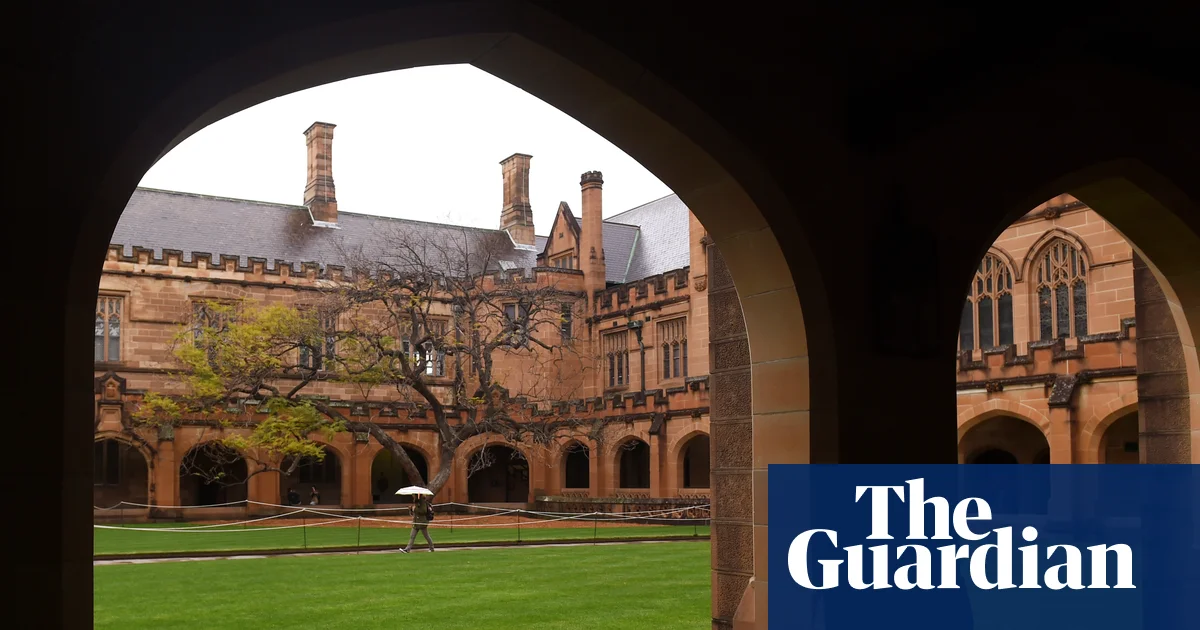
University of Sydney Blocks International Student Enrollment Increase for Next Year

In a clear reflection of shifting geopolitical priorities and internal policy struggles, Australia has announced it will not expand its international student intake for the year 2026. Despite its reputation as a global educational hub, the country’s plan to allocate 295,000 new places, after the failed attempt to impose a cap at 270,000, now signals a calculated move amidst mounting internal debates and international competition. This decision highlights a strategic recalibration—one that navigates the complex intersection of economic benefits, domestic social pressures, and international influence.

Notably, the University of Sydney, which retains the title of Australia’s leading institution for international students with 11,900 enrolments, was bypassed in the allocation process, receiving no additional places. The government’s reasoning underscores the importance of market diversification, assessing universities on their engagement with South-East Asia—a region of rising geopolitical significance. The emphasis on regional focus aligns with Australia’s broader goal of bolstering its influence amid the escalating strategic rivalry with China, India, and other emerging powers. Analysts warn that this tightened control could serve to channel international educational efforts towards more “trustworthy” alliances, effectively politicizing the sector as part of a larger diplomatic chess game.

International organizations and independent analysts continue to scrutinize the broader implications. Many point out that the controversy surrounding international students is more than academic—it’s a proxy for national identity, sovereignty, and economic sovereignty. Critics argue that the narrative linking international students to housing pressures is often exaggerated, with some studies indicating negligible impact on rental markets. Nevertheless, the government has responded by promising incentives for universities investing in student accommodation, signaling a shift towards embedding security and control in Australia’s educational diplomacy. This approach mirrors a wider global trend—nations consolidating borders and influence in response to an increasingly unpredictable international environment.

Such moves ripple well beyond the classroom. Monash University and regional institutions like Charles Sturt and Federation University are now seen as part of a broader strategy to foster regional resilience and resourceful adaptation. As the international landscape shifts, the impact on global influence and societal cohesion becomes more pronounced—shaping perceptions of national strength and cultural identity. According to prominent historians and policy analysts, these policies could be viewed as attempts to orchestrate a narrative of resilience amid the chaos, but they also risk entrenching divisions and fueling international tensions.

As Australia forges ahead, the stakes remain high. The decision not to expand international student numbers is a reflection of a wider, more pressing reality: the global order is in flux, and nations must redefine their roles on the world stage. As history continues to unfold, the coming years will reveal whether these calculated moves will fortify Australia’s position or deepen its vulnerabilities. In a world where educational diplomacy is increasingly intertwined with geopolitical strategy, the narrative remains unwritten—one where the weight of history presses heavily upon the decisions made today, shaping the future for generations to come.

Judge blocks Trump’s attempt to send California National Guard to Portland

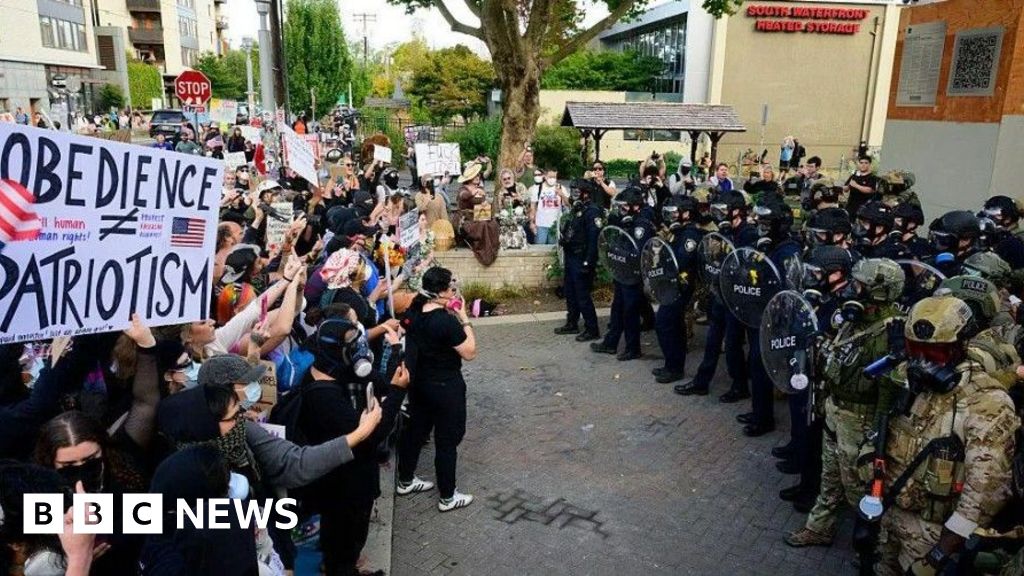
In an unprecedented turn of events, United States federal judiciary has stepped into a contentious battle over the deployment of National Guard troops across domestic borders, marking a significant moment in the ongoing struggle between federal authority and state sovereignty. The recent decision to temporarily block the Trump administration from dispatching troops from Texas and California to Portland, Oregon underscores the deepening cracks within American federalism. The ruling, delivered by US District Judge Karin Immergut, signals a notable restraint on executive power, emphasizing the importance of local consent and constitutional boundaries in deploying military force domestically. As tensions escalate, this judicial intervention warns of the delicate balance required when confronting chaos and unrest. It also raises crucial questions about the limits of presidential authority, especially when political disputes threaten to spiral into military occupations, altering the social fabric of cities already strained by protests and crises.

The controversy centers on the Trump administration’s effort to use the National Guard as a tool to quell protests linked to immigration enforcement and leftist activism, with Portland becoming the focal point of these efforts. The administration’s assertion that troop deployments are necessary to restore order clashes with legal interpretations that argue such actions infringe on state rights and could set dangerous precedents for federal overreach. The judge’s decision to authorize a temporary restraining order until at least October 19 reflects concern over the potential for militarized responses to inflame social tensions and undermine the sovereignty of local governments. Analysts warn that resorting to military force in urban centers risks transforming peaceful protests into battlegrounds, with lasting impacts on civil liberties and community trust.

This legal tussle reveals a broader geopolitical impact—a nation struggling to resolve internal divisions while its leaders attempt to project strength through military deployments. International organizations and historical experts have cautioned against the normalization of military interventions in American cities, warning that such actions could destabilize the domestic landscape and inspire similar strategies amidst other democracies facing unrest. The White House’s outspoken denouncement of the judge’s ruling, coupled with rhetoric portraying legal limits as “constitutional violations,” signals an alarming willingness to bypass judicial oversight in pursuit of a law-and-order agenda. Meanwhile, the proliferation of lawsuits from states like Illinois and the vocal opposition from state officials exemplify the intense federal-state power struggle, echoing historical conflicts over control, authority, and the rights of citizens.

As the situation unfolds, the spectacle of political tit-for-tat, legal battles, and security measures leaves a nation on the precipice of a pivotal chapter in its history. The decision to deploy or restrain military force amidst civil unrest will have profound and lasting consequences—not only for America’s social order but also for its global image. Today’s internal conflicts threaten to redefine the boundaries of power between state and federal authorities, shaping the course of democracy itself. The weight of history presses heavily on this moment, as the world watches from afar—will the United States uphold its founding principles or succumb to a new era of militarized governance? Only time will tell, but one thing remains certain: the unfolding saga is a stark reminder that the true battleground lies not only in the streets but also in the very fabric of national sovereignty and the enduring quest for constitutional justice.

Supreme Court blocks Ghislaine Maxwell’s appeal, denying her last chance.

Ghislaine Maxwell’s Conviction: A Landmark in Justice and Global Power Politics

The recent rejection of Ghislaine Maxwell’s appeal by the US Supreme Court marks a significant turning point in the ongoing saga of justice, influence, and the shadowy networks linking the world’s elite. Maxwell, once a close associate of the late financier Jeffrey Epstein, faces a 20-year sentence for her role in facilitating the abuse of underage girls, some as young as 14. Despite her legal team’s disappointment, this decision underscores the unwavering stance of the American justice system against those involved in child sex trafficking and traffickers linked to powerful societal circles. Historians and analysts note that this case transcends individual accountability, revealing how international elites shield themselves amid complex layers of corruption, power, and influence.

The case’s significance extends beyond national borders, touching the very fabric of global geopolitical stability. Epstein’s network is implicated in a sprawling web of political, financial, and social figures worldwide. The files surrounding Epstein, including grand jury testimony, have become a veritable political flashpoint, with calls for transparency and the release of evidence intensifying. The international community, including prominent NGOs and watchdogs like Human Rights Watch, continues to scrutinize how justice is applied to the powerful. They warn that the public’s trust hinges on the full disclosure of the facts—an endeavor that threatens to expose uncomfortable truths about how some nations and actors operate. Meanwhile, Maxwell’s recent move to a minimum-security facility in Texas signals ongoing attempts to gather her testimony, possibly implicating even more influential figures, or at least extending the shadow of suspicion across political and economic landscapes.

Speculation about pardons by figures such as former President Donald Trump has added another layer to this already volatile mix, but official sources have repeatedly dismissed any claims of leniency. The White House clarified that “no leniency is being given or discussed,” signaling the government’s desire to maintain the integrity of the judicial process amid mounting political pressure. Such developments resonate strongly with how decisions by political leaders or international institutions impact societal perceptions of justice and accountability. Meanwhile, legal experts and historians warn that these high-stakes cases have long-term implications on global perceptions of law and order. As Maxwell quietly serves her sentence, the truths buried within Epstein’s network remain elusive—yet the narrative continues to evolve, stirring an age-old debate about justice, influence, and the corrupting power of unaccountable elites.

In the midst of this turmoil, the symbolism of Maxwell’s conviction stands as a stark reminder of a history still being written. International institutions and justice systems encounter a formidable challenge: to uphold the rule of law in a world where the line between power and corruption is often blurred, and where the decisions made today shape the societal fabric for generations. As the story unfolds, each revelation, appeal, and legal maneuver echoes the collective consciousness of societies worldwide—questions about morality, fairness, and the unvarnished pursuit of truth. The weight of history presses heavily upon this moment, leaving the world to wonder: will the seeds of justice sprout amid shadows of influence, or will they be suffocated by the very forces that conspiracy and privilege protect?

Social Media Auto Publish Powered By : XYZScripts.com