Matox News

Truth Over Trends, always!

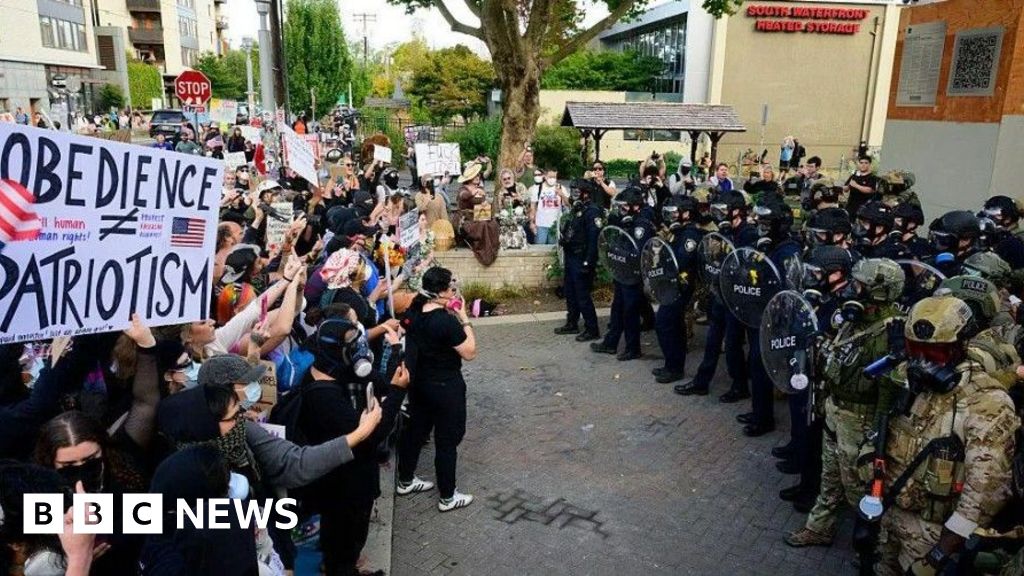
Judge blocks Trump’s attempt to send California National Guard to Portland

In an unprecedented turn of events, United States federal judiciary has stepped into a contentious battle over the deployment of National Guard troops across domestic borders, marking a significant moment in the ongoing struggle between federal authority and state sovereignty. The recent decision to temporarily block the Trump administration from dispatching troops from Texas and California to Portland, Oregon underscores the deepening cracks within American federalism. The ruling, delivered by US District Judge Karin Immergut, signals a notable restraint on executive power, emphasizing the importance of local consent and constitutional boundaries in deploying military force domestically. As tensions escalate, this judicial intervention warns of the delicate balance required when confronting chaos and unrest. It also raises crucial questions about the limits of presidential authority, especially when political disputes threaten to spiral into military occupations, altering the social fabric of cities already strained by protests and crises.

The controversy centers on the Trump administration’s effort to use the National Guard as a tool to quell protests linked to immigration enforcement and leftist activism, with Portland becoming the focal point of these efforts. The administration’s assertion that troop deployments are necessary to restore order clashes with legal interpretations that argue such actions infringe on state rights and could set dangerous precedents for federal overreach. The judge’s decision to authorize a temporary restraining order until at least October 19 reflects concern over the potential for militarized responses to inflame social tensions and undermine the sovereignty of local governments. Analysts warn that resorting to military force in urban centers risks transforming peaceful protests into battlegrounds, with lasting impacts on civil liberties and community trust.

This legal tussle reveals a broader geopolitical impact—a nation struggling to resolve internal divisions while its leaders attempt to project strength through military deployments. International organizations and historical experts have cautioned against the normalization of military interventions in American cities, warning that such actions could destabilize the domestic landscape and inspire similar strategies amidst other democracies facing unrest. The White House’s outspoken denouncement of the judge’s ruling, coupled with rhetoric portraying legal limits as “constitutional violations,” signals an alarming willingness to bypass judicial oversight in pursuit of a law-and-order agenda. Meanwhile, the proliferation of lawsuits from states like Illinois and the vocal opposition from state officials exemplify the intense federal-state power struggle, echoing historical conflicts over control, authority, and the rights of citizens.

As the situation unfolds, the spectacle of political tit-for-tat, legal battles, and security measures leaves a nation on the precipice of a pivotal chapter in its history. The decision to deploy or restrain military force amidst civil unrest will have profound and lasting consequences—not only for America’s social order but also for its global image. Today’s internal conflicts threaten to redefine the boundaries of power between state and federal authorities, shaping the course of democracy itself. The weight of history presses heavily on this moment, as the world watches from afar—will the United States uphold its founding principles or succumb to a new era of militarized governance? Only time will tell, but one thing remains certain: the unfolding saga is a stark reminder that the true battleground lies not only in the streets but also in the very fabric of national sovereignty and the enduring quest for constitutional justice.

Supreme Court blocks Ghislaine Maxwell’s appeal, denying her last chance.

Ghislaine Maxwell’s Conviction: A Landmark in Justice and Global Power Politics

The recent rejection of Ghislaine Maxwell’s appeal by the US Supreme Court marks a significant turning point in the ongoing saga of justice, influence, and the shadowy networks linking the world’s elite. Maxwell, once a close associate of the late financier Jeffrey Epstein, faces a 20-year sentence for her role in facilitating the abuse of underage girls, some as young as 14. Despite her legal team’s disappointment, this decision underscores the unwavering stance of the American justice system against those involved in child sex trafficking and traffickers linked to powerful societal circles. Historians and analysts note that this case transcends individual accountability, revealing how international elites shield themselves amid complex layers of corruption, power, and influence.

The case’s significance extends beyond national borders, touching the very fabric of global geopolitical stability. Epstein’s network is implicated in a sprawling web of political, financial, and social figures worldwide. The files surrounding Epstein, including grand jury testimony, have become a veritable political flashpoint, with calls for transparency and the release of evidence intensifying. The international community, including prominent NGOs and watchdogs like Human Rights Watch, continues to scrutinize how justice is applied to the powerful. They warn that the public’s trust hinges on the full disclosure of the facts—an endeavor that threatens to expose uncomfortable truths about how some nations and actors operate. Meanwhile, Maxwell’s recent move to a minimum-security facility in Texas signals ongoing attempts to gather her testimony, possibly implicating even more influential figures, or at least extending the shadow of suspicion across political and economic landscapes.

Speculation about pardons by figures such as former President Donald Trump has added another layer to this already volatile mix, but official sources have repeatedly dismissed any claims of leniency. The White House clarified that “no leniency is being given or discussed,” signaling the government’s desire to maintain the integrity of the judicial process amid mounting political pressure. Such developments resonate strongly with how decisions by political leaders or international institutions impact societal perceptions of justice and accountability. Meanwhile, legal experts and historians warn that these high-stakes cases have long-term implications on global perceptions of law and order. As Maxwell quietly serves her sentence, the truths buried within Epstein’s network remain elusive—yet the narrative continues to evolve, stirring an age-old debate about justice, influence, and the corrupting power of unaccountable elites.

In the midst of this turmoil, the symbolism of Maxwell’s conviction stands as a stark reminder of a history still being written. International institutions and justice systems encounter a formidable challenge: to uphold the rule of law in a world where the line between power and corruption is often blurred, and where the decisions made today shape the societal fabric for generations. As the story unfolds, each revelation, appeal, and legal maneuver echoes the collective consciousness of societies worldwide—questions about morality, fairness, and the unvarnished pursuit of truth. The weight of history presses heavily upon this moment, leaving the world to wonder: will the seeds of justice sprout amid shadows of influence, or will they be suffocated by the very forces that conspiracy and privilege protect?

US government stalls as Senate blocks bipartisan bills—shutdown looms in 2025

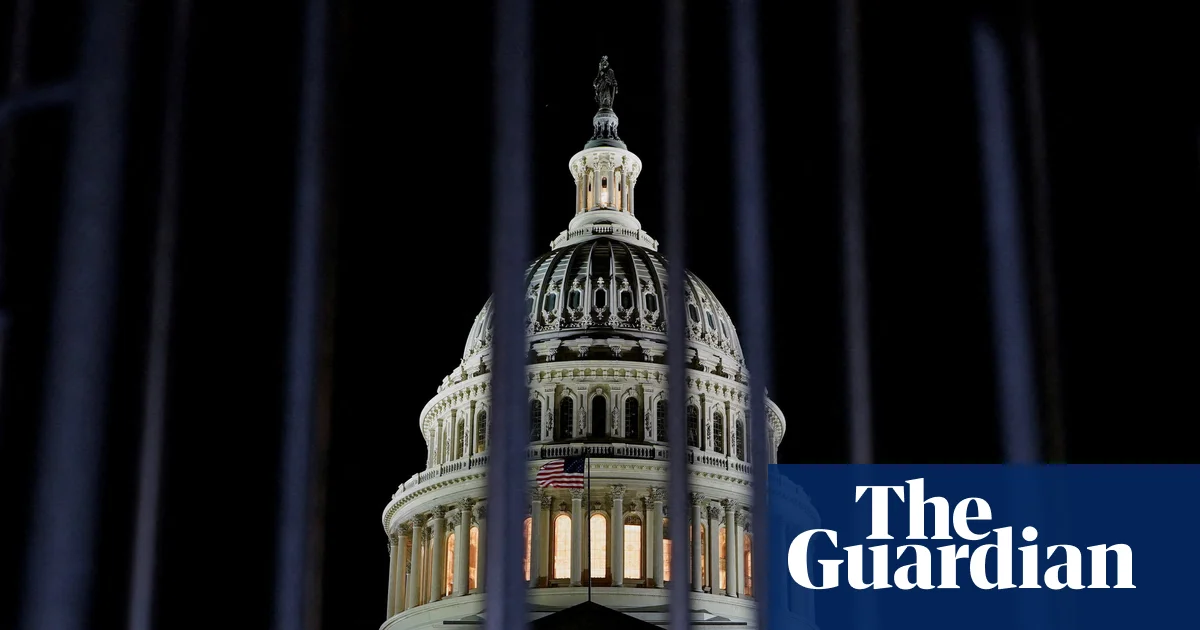
The ongoing deadlock in Washington underscores the escalating crisis within America’s political arena, with the nation witnessing its first government shutdown since 2018. The failure to pass a bipartisan budget has thrust the United States into uncharted territory, revealing the profound schisms that threaten not only domestic stability but also the country’s standing on the global stage. The refusal of Senate Republicans to accept a Democratic-led funding bill, coupled with persistent opposition from the GOP-controlled House of Representatives, exposes a political impasse that analysts warn could have lasting geopolitical repercussions. In this volatile climate, the decision to halt government functions risks ripple effects beyond American borders, influencing international perceptions of U.S. stability and leadership.

At the core of this standoff lies a broader battle over domestic policy priorities—from healthcare to fiscal responsibility—meticulously dissected by thinkers such as history professor John Williams, who argue that these legislative struggles are emblematic of a deeper decline in bipartisan consensus. The Democratic Party insists on extending Affordable Care Act subsidies and reversing recent Medicaid cuts, projecting an image of defending the middle and vulnerable classes. Conversely, Republicans portray their opposition as safeguarding national interests from a supposed leftist overreach. Analysts warn that such inflexibility reinforces a cycle of American political dysfunction, which could embolden foreign adversaries and weaken U.S. influence. While some voices, like Senate Majority Leader John Thune, call for negotiation, the reality remains stark: the nation stands at a critical juncture where internal discord could erode the broader geopolitical order.

International observers, including officials from NATO and the United Nations, scrutinize America’s internal strife, recognizing that political stability in the world’s superpower directly impacts global security. The US may be distracted by its internal conflicts, but its adversaries, such as China and Russia, are watching closely, sensing opportunities to exploit perceived American weakness. The specter of a protracted shutdown threatens to undermine the global economic recovery, given the likelihood of delayed decisions on trade and security matters. “This chaos demonstrates how fragile American governance has become,” warns international political analyst Maria Chen. As millions of federal workers face layoffs, the international community is left to contemplate: how long can a nation grounded in democratic ideals sustain its capacity for leadership in such turbulent waters?

The weight of history looms large, as past shutdowns serve as cautionary tales illustrating the dangers of partisan brinkmanship. Figures like Ted Cruz dismiss the current crisis as a “temper tantrum” destined for capitulation, but experts warn that each iteration entrenches a cycle of political calamity. The unfolding drama’s ultimate toll—furloughed workers, strained social services, and damaged credibility—poses consequences that will outlive current administrations. As scholars monitor this unfolding saga, the narrative remains clear: the decisions made today are carving the geopolitical map of tomorrow. The world watches with bated breath, with the future of America and its role on the world stage hanging in the balance, as the pages of history continue to turn, rewriting the story of a nation struggling to find unity amidst division.

Singapore blocks exiled HK pro-democracy activist from entry

The recent incident involving Nathan Law, a prominent pro-democracy activist from Hong Kong, underscores the escalating geopolitical struggles defining the modern international order. Law, a former legislator and exile, arrived in Singapore with a visa—only to be detained and swiftly deported after the city-state’s authorities invoked concerns over “national interests.” This move resonates profoundly within the intricate web of global power dynamics, highlighting how national security and sovereignty have increasingly taken precedence over international openness and democratic advocacy.

Singapore’s decision to deny Law entry, despite prior visa approval, reflects the thin line that international diplomacy, sovereignty, and security policy now tread. The government’s official statement underscored that Law’s presence “would not be in Singapore’s national interests,” a phrase emblematic of a broader trend among nations prioritizing their sovereignty amid mounting external pressures. This event comes within a context where China asserts greater influence over its territories and regional actors, prompting consequential questions about the reach and limits of western influence and human rights activism. Analysts warn that such policies serve as a warning: the global battleground for ideological and political supremacy is intensifying, and ideological dissenters like Law are increasingly caught in the crossfire of international realpolitik.

Historically, Singapore has maintained a delicate balance, promoting economic openness while ramping up security measures against what it describes as “foreign political influence.” Past actions, such as fining activists for online forums involving Joshua Wong in 2019, suggest the city-state’s cautious approach to activism tied to Hong Kong. Critics argue that these steps align with a broader pattern of suppression against pro-democracy voices, especially as Beijing actively consolidates influence in the region. The references from the Chinese Foreign Ministry—describing Law as “anti-China” and a “troublemaker”—underline how international conflicts are increasingly characterized by narratives of sovereignty versus external interference. The decision raises compelling questions about the future of international support for democracy movements and the role of regional hubs like Singapore in shaping these contentious dynamics.

The broader geopolitical impact is undeniable. This incident exemplifies how a democratic advocate’s fate can hinge upon geopolitical alignments, security concerns, and the strategic interests of powerful states. As China continues its assertive expansion, Western nations and allies face a dilemma: support democratic activism at the risk of diplomatic fallout or capitulate to authoritative pressures to maintain economic and political stability. The critics argue that by denying Law entry, Singapore bowels to Chinese influence, perhaps prioritizing economic ties and regional stability over the principles of free speech and political dissent. This shifting landscape is a stark reminder that, in today’s world order, every border closed, activist detained, or speech censored signals a deeper transformation—one where the fight for democracy is increasingly contested on multinational stages.

As history unfolds, the narrative of Nathan Law and similar activists serves as a warning—an ongoing battle for the soul of democratic values amid rising authoritarian resilience. The decisions made by regional powers such as Singapore will echo through generations, shaping the destiny of free societies and the reach of authoritarian influence. The clock is ticking, and the weight of history presses down as the world teeters on the cusp of a new, uncertain chapter, where the lines between sovereignty, security, and liberty are being redrawn—often in the shadow of the next geopolitical crisis.

Social Media Auto Publish Powered By : XYZScripts.com