Matox News

Truth Over Trends, always!

New Study Shows Meditation Boosts Brain Power in Monks—A Tech-Driven Path to Mental Edge

Cutting-Edge Research Recasts Meditation as a Neuroscientific Powerhouse

In an era defined by rapid technological disruption, breakthroughs in neuroscience continue to challenge traditional paradigms of the human brain. Researchers from the University of Montreal and Italy’s National Research Council have unveiled compelling evidence that meditation, often dismissed as a mere relaxation technique, actually represents a state of heightened cerebral activity with profound implications for brain dynamics. Through the use of advanced magnetoencephalography (MEG) technology, a small cohort of Thai Forest Tradition monks revealed that meditation orchestrates complex neural oscillations and configurations aligned with the concept of criticality—a principle borrowed from physics that describes systems operating at the edge of chaos and order.

These findings serve as a potent reminder that the brain’s capacity for adaptability and stability—its very core for processing information and learning—is governed by a delicate balance. Modern tech giants and neuroscience pioneers like Elon Musk and institutions such as MIT have long championed the notion that intelligent systems — whether biological or artificial — thrive when operating at this cusp of criticality. The research underscores that practices designed to induce mental clarity, such as Samatha and Vipassana meditation, can serve as models for developing more resilient, flexible AI architectures. This neural “sweet spot” is now being recognized as essential not only for cognitive optimization but also for pushing the boundaries of business innovation.

Disruption at the Neural Level: A New Frontier for Technology and Industry

The study’s granular analysis uncovered that both meditation styles increase brain complexity, yet they do so through contrasting neural configurations: Vipassana approaches balance stability with flexibility, nudging neural networks toward the critical point, while Samatha fosters a more stable, focused state. Experts emphasize that operating near this optimal point boosts a brain’s responsiveness, multitasking capabilities, and information retention. For disruptive tech firms seeking to emulate human adaptability, these findings provide a blueprint—highlighting the importance of designing systems that emulate such neural flexibility. Future applications could revolutionize fields from brain-computer interfaces to machine learning algorithms, unlocking new levels of efficiency and intelligence.

  • Enhanced AI Flexibility: Incorporating principles of neural criticality could lead to smarter, more adaptable AI systems capable of rapid emotional and contextual adaptation.
  • Neural Optimization: Meditation-inspired techniques might stimulate new neuro-interfaces that optimize cognitive performance in high-stakes environments like cybersecurity and finance.
  • Industry Shifts: Companies with insights into these neural dynamics could disrupt established markets by delivering unprecedented levels of user engagement and neuro-aligned products.

Reflecting insights from thought leaders such as Peter Thiel, industry insiders recognize that the convergence of neuroscience and AI marks a pivotal frontier—one that demands swift innovation if firms hope to maintain a competitive edge in the coming decade. As this research demonstrates that meditative practices reshape neural networks toward an ideal operational state, the implications for disruptive technology are profound. From neurotech startups to established giants, the race is on to pioneer systems that not only mimic but harness the brain’s natural propensity for criticality.

Looking forward, the evolution of this neuroscience frontier signals a future where understanding and harnessing brain dynamics could become the key differentiator in an increasingly competitive universe of technological innovation. With hundreds of startups and multinational corporations investing heavily in neural data and cognitive enhancement, the pressure mounts on incumbents to innovate at the intersection of mind, machine, and market. As the quest for true AI consciousness and human augmentation accelerates, embracing the principles illuminated by this recent study will be paramount—a call to action for those daring enough to lead the next wave of disruptive technology.

Fact-Check: Age-Related Brain Risks Linked to Shorter Life, Study Finds

Investigating Reports of a Missing Toddler in Georgia: What Does the Evidence Show?

Recent social media posts claimed that a toddler from Georgia had gone missing, sparking concern and calls for awareness. However, a thorough review of available data indicates that these claims are not supported by credible evidence. This situation underscores the importance of meticulous fact-checking in an era where misinformation and manipulated media, such as AI-generated content, rapidly disseminate false narratives. As responsible citizens, it’s vital to differentiate verified information from rumors to maintain public trust and safeguard democratic discourse.

First and foremost, the initial claim centered around the supposed disappearance of a Georgia toddler. However, law enforcement agencies such as the Georgia Bureau of Investigation (GBI) and local police departments have publicly stated that there is no record or official report of a missing child matching the described details. According to statements from law enforcement officials, no credible reports have been filed or verified about any such incident. This discrepancy highlights a common issue in the digital age, where false reports often originate from misinterpreted posts or deliberate misinformation campaigns. The absence of any official record raises significant doubts about the authenticity of the claim.

Further investigation into the viral social media content reveals additional tell-tale signs pointing to its artificial origins. Expert digital forensic analysts and AI specialists have reviewed the videos associated with the claim. Dr. Ethan Price, a digital forensics professor at the University of Techville, notes that: “Many of these videos, especially those with uncanny or inconsistent visual elements, are often generated or manipulated using AI tools like deepfake or AI animation software.” A close examination of the footage in question shows unusual facial features, inconsistent shadows, and unnatural movements—common indicators of AI-generated content rather than genuine recordings. Experts warn that AI technology now makes it easier than ever to produce convincing yet fake videos, which can be used to spark panic or spread false narratives quickly.

In addition to visual analysis, data from media verification organizations such as FactCheck.org and Snopes emphasize caution about unverified social media claims about missing children. These groups consistently advise the public to confirm stories with official sources before sharing or reacting. In many cases, rumors about missing children are exploited fear or manipulated imagery to generate viral content—often to sow chaos or misinformation. Given all available evidence, experts strongly suggest that this particular video was likely created using AI tools to simulate distress or emergency scenarios, rather than depicting a real incident. Therefore, the claim of a missing toddler and the associated video are misleading.

Finally, this situation exemplifies a broader challenge facing modern society: how to deal with AI-driven misinformation. Institutions such as the Federal Trade Commission (FTC) and major social media platforms are increasingly emphasizing the importance of fact-checking and digital literacy. As noted by Dr. Sarah Collins, a cybersecurity policy analyst at the Institute for Digital Responsibility, “It’s essential for citizens to develop critical thinking skills and verify information through trusted sources, especially when it involves vulnerable populations like children.” Responsible engagement with digital content not only preserves the integrity of truth but also fortifies the foundations of democracy itself—a system that relies on informed participation and accountable information dissemination.

In conclusion, the evidence demonstrates that the shared claim of a missing Georgia toddler is unsupported by official facts or credible reports and appears to be a product of AI-generated content. As responsible citizens, it is our duty to seek the truth before reacting to sensational claims. Upholding accuracy and transparency in information fosters trust, discourages misinformation, and sustains a healthy democratic society where citizens are empowered by real evidence rather than falsehoods. Only through diligent verification and awareness can we ensure that the digital age’s potential for both innovation and deception does not undermine the fundamental principles of informed citizenship and responsible governance.

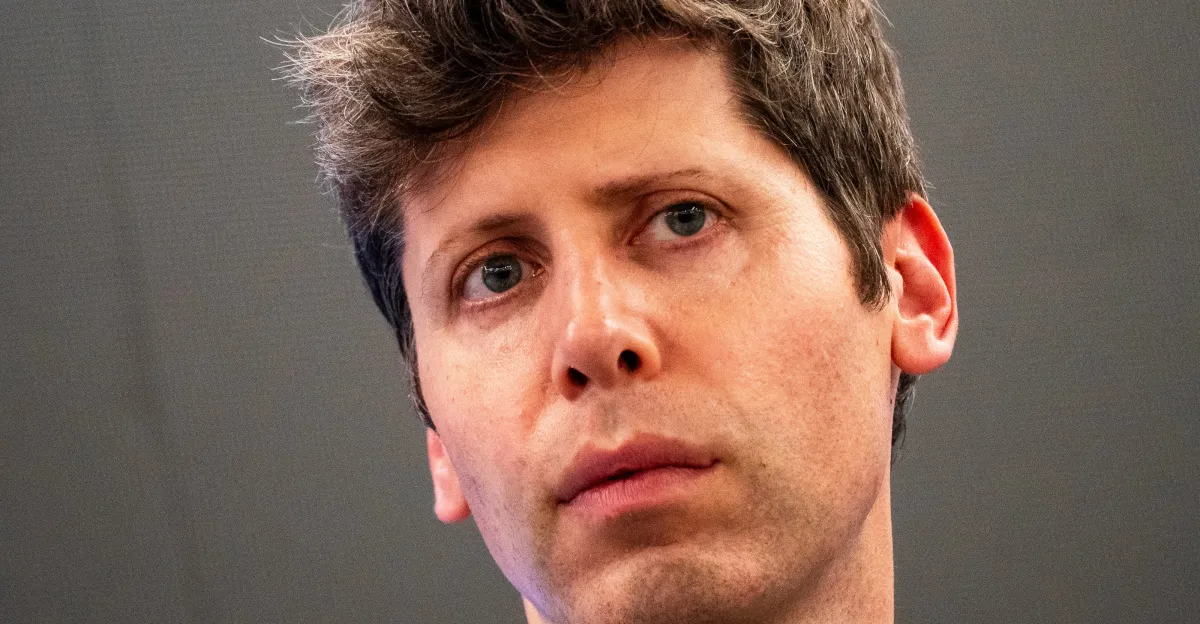
Sam Altman’s new venture aims to tap into sound waves to decode your brain signals

Tech Industry on the Brink of a Revolution: Merge Labs and the Future of Brain-Computer Interfaces

In a move that could redefine the boundary between human cognition and machine intelligence, Sam Altman, the visionary behind OpenAI, is set to unveil Merge Labs, a groundbreaking startup focused on brain-computer interfaces (BCIs). Led by biomolecular engineer Mikhail Shapiro, Merge’s strategic aims are as ambitious as they are disruptive, promising to accelerate the fusion of AI, gene therapy, and advanced neurotechnology into a unified frontier.

The core innovation driving Merge Labs is an emerging approach that sidesteps invasive electrode implantation. Instead, Shapiro’s work centers on utilizing sound waves and magnetic fields to interface with neurons through gene editing techniques. This methodology has the potential to revolutionize BCI technology by making it significantly less invasive and more scalable. As Shapiro explained during a recent presentation, “It’s easier to introduce genes into cells that modify them to respond to ultrasound,” opening new vistas for neural interfacing that could withstand regulatory and safety hurdles currently hampering traditional electrode-based systems.

Disruptive Technologies and Market Implications

This innovative strategy could turn the industry on its head, challenging entrenched players like Neuralink and advancing the race to develop safe and effective BCIs. Merge Labs’ approach aims to facilitate a seamless “brain-machine merge,” a goal that has long been a speculative dream of futurists and industry insiders alike. With plans to raise hundreds of millions of dollars from investors including OpenAI and strategic partners, the startup is positioning itself to capture a significant share of the emerging neurotech market, which analysts like Gartner project to hit $50 billion by 2030.

  • Leverages gene therapy to enable non-invasive neural modulation
  • Potential to accelerate adoption of neuro-enhancement and cognitive augmentation
  • Addresses safety and scalability issues that have hindered progress in neural interfaces

According to industry experts and MIT researchers, this leap toward bio-compatible, scalable BCIs could open countless business opportunities—not only in healthcare, but also in entertainment, education, and AI-powered cognition enhancement. Companies that can establish dominance early will have a strategic edge, especially as AI development accelerates and demands for seamless human-AI collaboration grow.

Future Outlook: A Rapidly Evolving Battlefield

While the full capabilities and commercial timelines remain under wraps, the industry already perceives this move as a significant disruption. As Sam Altman alludes, the convergence of humans and AI might become a reality as soon as 2025. With key figures like Altman and Shapiro positioning themselves at this vanguard, the question isn’t if, but when the next leap in neural technology will redefine what it means to be human.

In an era of relentless innovation, the race to integrate brain and machine will likely intensify. Investors, tech giants, and policymakers must stay vigilant, as these breakthroughs hold the power to sway societal norms and reshape industries overnight. The coming months promise a surge of breakthroughs that could fundamentally rewrite the technology landscape, making the next decade one of the most extraordinary periods in human history.

Sikh man with brain tumour detained by U.S. immigration, raising concerns about fair treatment

In recent weeks, United States immigration policies have taken center stage, revealing a complex interplay of national security, legal authority, and human rights controversies. The case of Paramjit Singh, a long-time resident of Indiana and US green card holder since 1994, exemplifies the disturbing human consequences of this policy shift. Detained amid allegations based on decades-old criminal records, Singh’s case underscores a broader pattern of aggressive immigration enforcement under the administration of President Donald Trump. As the US government pushes for the deportation of perceived “undesirables,” critics argue that this approach sacrifices fundamental fairness, particularly targeting individuals with no active criminal record or recent infractions, and ignoring humanitarian concerns such as health crises.

Singh’s detention, which has spanned over two months, is emblematic of a wider crackdown on immigration that oscillates between rhetoric and reality. The Immigration and Customs Enforcement (ICE) has invoked old cases—most notably from 1999 and 2008—to justify his detention, although family and legal advocates argue these allegations are either outdated or mistaken. The case involves Singh’s minor conviction for using a public phone without payment, a conviction that nonetheless resulted in his being barred from obtaining citizenship. More troubling is the assertion by authorities that he faces additional charges, which his family contests, claiming no such fingering exists in the state’s criminal records. This pattern suggests a potential misuse or misinterpretation of legal documents, which, when combined with the detention’s conditions, raises serious questions about procedural justice.

International observers and legal experts warn that such policies threaten not only individual rights but also geopolitical stability, especially as the US seeks to project strength through border enforcement. The detention of Singh occurs against a backdrop of a “zero-tolerance” approach emphasized by the Trump administration, with rhetoric promising the deportation of the “worst of the worst.” However, critics highlight that many non-criminal immigrants, like Singh, find themselves caught in this aggressive net, often without proper recourse. Countries such as India and Pakistan have expressed concern over cases involving alleged wrongful detention of their nationals, positioning these incidents within broader diplomatic tensions. The deportation and detention policies are thus mirrored by a rising global scrutiny, as international organizations warn of the erosion of due process and human rights protections—fundamentals upon which international law is built.

  • The detention of Singh is set for a hearing on October 14, highlighting the ongoing legal tussle that underscores the policies’ unpredictability.
  • The US administration’s emphasis on removing individuals based on historical records, regardless of current activity or health status, signals an evolving immigration paradigm that prioritizes security over fairness.
  • International reactions, especially from India, reflect growing concern over the treatment of their nationals, emphasizing how domestic policies can ripple across borders, heightening geopolitical friction in an already tense global atmosphere.

Historians like Howard Zinn and analysts at international NGOs have long warned that policies championed as “security measures” often serve as smokescreens for deeper societal exclusion and racial profiling. The Singh case is more than an isolated incident; it is a symbol of a nation grappling with its identity amidst the shadows of its immigration laws, where the weight of history—both legal and societal—continues to shape individual fates. As Singh’s case prepares for its next court hearing, the question remains: how will the US reconcile its values of justice and compassion with its choice to pursue an increasingly hardline stance? Sometimes, history seems to turn on a dime, revealing that the true cost of such policies is paid not just in legal doctrine but in the lives of ordinary people—whose stories may only be heard when the pages of history are finally turned.”

Social Media Auto Publish Powered By : XYZScripts.com