Matox News

Truth Over Trends, always!

NASA’s Lunar Photography: Bridging the Gap Between the Heavens and Our World

The Celestial Canvas: Culture, Identity, and Humanity’s Perpetual Quest

Throughout the annals of history, humanity has looked upward, **drawn by the celestial vault that crowns our existence**. From the earliest star maps to the groundbreaking lunar photographs captured by NASA, our collective fascination with the Moon exemplifies the enduring human desire to understand our place in the cosmos. But beyond the realm of science, it is culture—an intricate tapestry woven with tradition, art, and philosophy—that imbues this celestial curiosity with profound significance. Like Georges Méliès’ “Le Voyage Dans la Lune”, which transformed scientific wonder into a fantastical narrative, our cultural expressions serve as a mirror reflecting how societies interpret the universe and their spiritual relationship to it. These artistic endeavors are not mere entertainment; they are the symbols of our shared identity, anchoring us in our history and pointing toward future horizons.

In contemplating the cosmic, we must recognize the role of culture as the **fundamental vessel of identity and societal continuity**. Just as Ortega y Gasset emphasized culture as the continuity of a civilization’s spirit, our collective engagement with the Moon epitomizes this continuity. The iconic lunar photographs seen in collections from NASA, the historic daguerreotypes, and artwork like Vincent van Gogh’s “The Starry Night” are more than visual records—they are monuments to our ongoing quest to comprehend phenomena that seem both distant and intimate. Culture, in this sense, acts as both memory and prophecy, each image and story echoing our ancestors’ awe and inspiring future generations to dream beyond mere survival. It is through such cultural artifacts that societies define their narratives, their hopes, and their fears—an intricate dialogue that transcends time and space, linking us to the stars and to each other.

  • The Moon has served as a canvas upon which cultural milestones are inscribed, from the initial lunar explorations to the philosophical ponderings of thinkers like T.S. Eliot, who saw in the cosmic chaos a reflection of the human condition.
  • Artworks and scientific images alike serve as rituals of remembrance and aspiration, anchoring our identity in the vast fabric of history.
  • The shared experience of gazing skyward fortifies communal bonds and fosters a sense of continuity amid rapid social change.

As Tocqueville once observed about the vital role of culture in shaping shared values, our modern lunar fascination illustrates the enduring importance of tradition in weaving the fabric of society. In an age where material progress often threatens to eclipse spiritual and cultural pursuits, the Moon remains a symbol of what it means to aspire—to reach beyond ourselves and find meaning in the mysterious. The ancient parables and the modern telescopic images converge in a common act of discovery: that humanity’s deepest treasure lies in its stories, images, and ideas—each a shard of the eternal mirror reflecting who we are and who we hope to become. Culture is both the memory that grounds us and the prophecy that propels us forward into the luminous unknown.

Thus, as the moonlight bathes the contours of our collective soul, it reminds us that our history and hopes are bound by a shared celestial heritage. Like the poetry of Chesterton, which elevates the ordinary to the divine, and the philosophical insights of Ortega y Gasset, who saw culture as the bridge connecting past, present, and future—the universe whispers of a human destiny intertwined with memory and prophecy. In this grand cosmic dance, our culture is both the shadow cast by the distant star and the spark illuminating the night’s eternal sky, guiding us with its silent, luminous promise: that in understanding the universe, we find ourselves—and in ourselves, the universe’s most enduring mystery.
Eightfold founders secure $35M for Viven, AI twins bridging the workplace gap

Emerging Disruption in Enterprise Collaboration: The Digital Twin Revolution

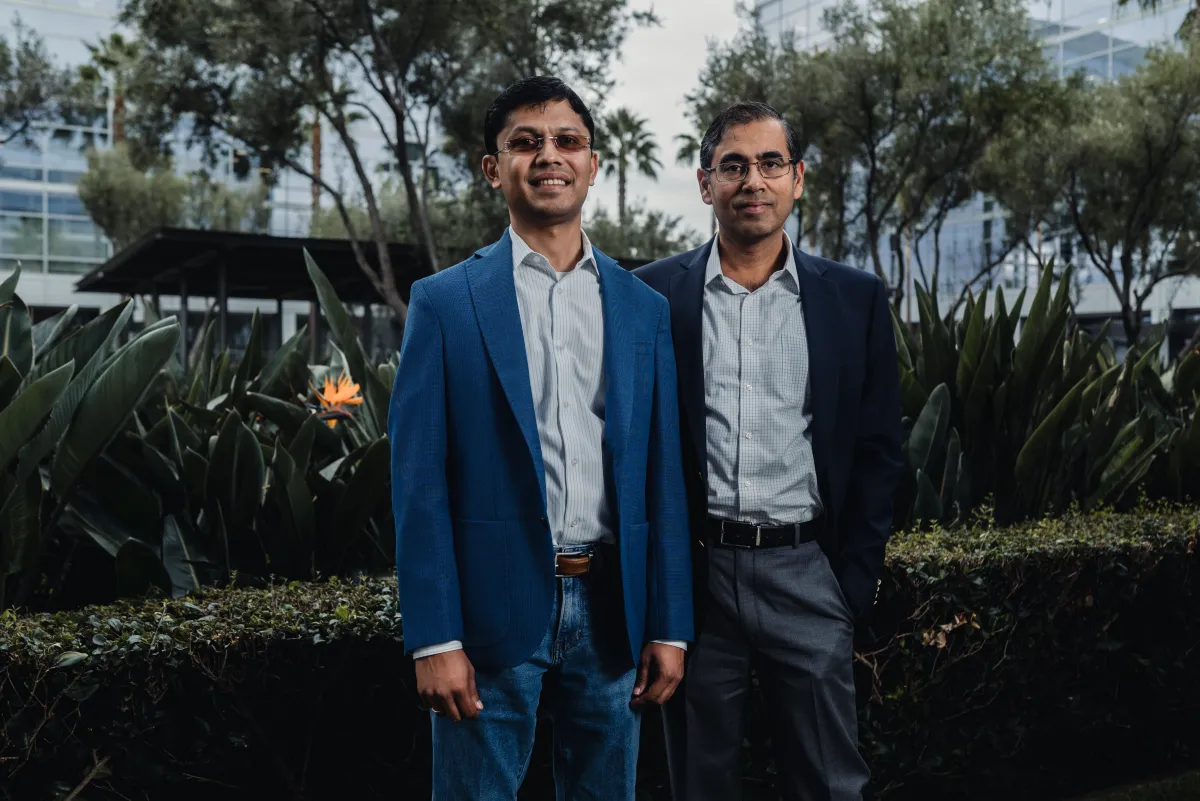
In an era where remote work and global teams dominate the corporate landscape, overcoming communication bottlenecks has become paramount. Traditional workforce dynamics often encounter delays when key personnel are unavailable, hampering project timelines and productivity. Recognizing this challenge, Eightfold co-founders Ashutosh Garg and Varun Kacholia have propelled a groundbreaking innovation—Viven, a startup focused on implementing digital twin technology to transform enterprise information sharing.

Having recently exited stealth mode with a robust $35 million seed round led by VCs like Khosla Ventures and Foundation Capital, Viven emerges as a beacon of disruption. The core premise is simple yet revolutionary: equip each employee with a personalized digital twin that can be interacted with as if speaking directly to the individual. This leverages advances in large language models (LLMs) and data privacy technologies to generate a seamless, AI-driven surrogate for unavailable colleagues, effectively disrupting conventional workflows. Garg asserts that the solution addresses a “very hard problem,” previously considered unsolvable, transforming how corporations handle the ever-present challenge of knowledge silos and operational delays.

Innovation Driven by Key Features and Market Potential

Viven’s technology centers around a sophisticated “pairwise” context algorithm, allowing digital twins to understand and respond with nuanced accuracy based on individual communication patterns. Several enterprise clients — including Genpact and Eightfold itself — are already deploying Viven, signaling strong initial market validation. Industry analysts recognize this as a fundamental shift, capable of disrupting traditional enterprise collaboration tools like Slack, Teams, and even advanced AI assistants from tech giants like Google and Microsoft. Unlike generic enterprise AI solutions, Viven’s specificity positions it as a key differentiator capable of filling the persistent gap in personalized, asynchronous communication.

  • Addresses a core issue faced by large, distributed teams
  • Leverages cutting-edge LLMs and privacy-preserving data tech
  • Offers scalable, personalized employee digital counterparts
  • Potential to set a new standard in enterprise AI tools

With no current direct competitors tackling full-scale digital twin deployment in enterprise settings, Viven enjoys a strategic first-mover advantage. Yet, industry insiders warn that the rapid pace of core AI technology development means this position could shift swiftly. Companies like OpenAI and Google are pursuing personalized AI features embedded within their enterprise search and assistant platforms, with some leveraging similar contextual understanding. According to Gartner analyst insights, the true value lies in the system’s ability to integrate seamlessly into existing workflows and outperform competitors through innovative algorithms like Viven’s “pairwise” tech.

Implications for Business and Future Trajectory

Viven’s emergence signals a broader trend of disruption driven by AI-powered digital replicas that redefine organizational intelligence. For startups and big tech alike, this technology opens avenues for agility, knowledge continuity, and enhanced decision-making. As MIT researchers highlight, the integration of AI and digital twins in enterprise workflows could lead to a paradigm shift in how companies manage human capital and operational data. Industry veterans like Elon Musk and Peter Thiel have long emphasized the importance of next-generation AI innovation as the future, and Viven exemplifies this forward momentum.

Looking ahead, the industry must recognize the necessity of rapid adoption. As enterprise leaders grapple with increasing digital complexity, the integration of AI digital twins could easily become a cornerstone of competitive advantage for organizations that act swiftly. With investment flowing into early-stage startups like Viven and continuous breakthroughs in underlying AI models, the race is on. The future of corporate productivity hinges on these innovations, demanding a sense of urgency from investors, entrepreneurs, and industry incumbents alike—disrupt or be disrupted.

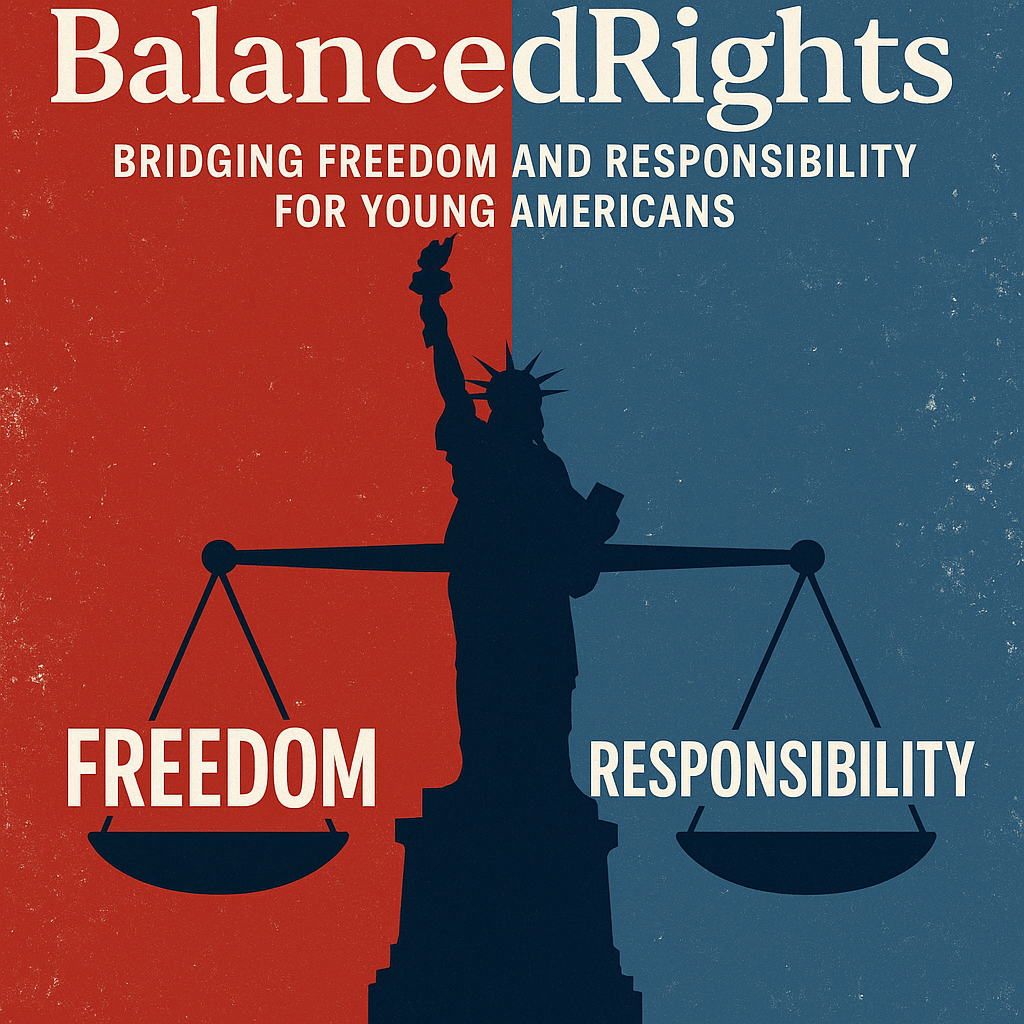
BalancedRights: Bridging Freedom and Responsibility for Young Americans

In an era marked by rapid social change and an unprecedented influx of information, the concept of balanced rights emerges as a vital framework for guiding young Americans toward responsible participation in a free society. The delicate dance between freedom and responsibility is not a new debate, but its significance is magnified today as digital media accelerates the reach and impact of individual actions. The foundational idea is simple: rights should empower, but not encroach upon the rights of others. As American thinker James Madison once emphasized, the preservation of liberty requires the vigilant restraint and self-discipline of those who wield power—academic, social, or political.

Promoting balanced rights among youth entails fostering a culture where personal freedoms are accompanied by civic duty and ethical conduct. Critics argue that unchecked expression, especially online, can lead to harmful polarization and misinformation—issues that undermine the social fabric. As analyst Niall Ferguson suggests, “The social contract in modern democracies demands not just the right to speak, but also the responsibility to listen and engage constructively.” Such a perspective underscores the importance of cultivating empathy and critical thinking skills in young Americans, who are often the most vulnerable to misinformation and echo chambers. Educational initiatives emphasizing media literacy and civic education can serve as pillars in this effort, empowering students to exercise their rights thoughtfully.

Yet, balancing rights and responsibilities also involves understanding the economic and cultural contexts that shape American youth. Economists like Thomas Sowell point out that economic opportunities and personal responsibility are two sides of the same coin—without a sense of agency and accountability, rights become hollow. Society must provide pathways for young people to realize their potential while holding them accountable for their actions. This includes sensible policies on free speech, digital responsibility, and community engagement, which help nurture a generation that values both individual liberty and societal cohesion. In doing so, we lay a foundation for a resilient democracy that values mature discourse over transient outrage.

As society advances into an uncertain future, the challenge remains—how do we craft a narrative that respects the primacy of individual rights without compromising the moral fabric of responsibility? The answer may lie in instilling a shared sense of purpose—a collective recognition that freedom is an active steward, not a passive right. The young Americans of today stand at a crossroads; their choices will echo through the corridors of history, shaping a nation where balanced rights serve as the bridge between liberty’s promise and responsibility’s duty. As the sun sets beyond the horizon, casting long shadows over the uncertain path ahead, it is the weight of this balance—neither too heavy nor too light—that will determine whether the torch of freedom is passed on with wisdom, or extinguished by neglect. For in the end, the future belongs not just to those who claim rights, but to those who carry the burden of responsibility with unwavering resolve, carving a legacy of resilience and virtue amid an ever-shifting world.

Social Media Auto Publish Powered By : XYZScripts.com