Matox News

Truth Over Trends, always!

Lenovo’s Bold New Gear: Laptop with Built-In Portable Screen Sparks Buzz Among Young Tech Fans

Lenovo Unveils Innovative Yoga Book Pro 3D Concept: A Game-Changer in Creative Technology

In a bold move that exemplifies the ongoing drive toward immersive and tactile digital experiences, Lenovo has introduced the Yoga Book Pro 3D Concept—a revolutionary device aimed squarely at creative professionals and developers. Powered by the formidable Intel Core Ultra 7 processor and equipped with Nvidia’s GeForce RTX 5070, this concept reimagines the boundaries between digital and physical, blending cutting-edge hardware with innovative software to facilitate a new era of 3D asset creation. While still in the prototype stage, its disruptive potential signals a significant pivot in the industry, especially as it aims to serve creators rather than traditional gamers or consumers.

Disruptive Hardware and User Interface Innovations

The Yoga Book Pro 3D departs sharply from conventional portable devices. It features dual 16-inch OLED displays called Lenovo PureSight Pro Tandem, which connect to form a seamless, flexible workspace—effectively replacing the traditional keyboard with a touch-enabled, customizable surface. This approach not only enhances workspace ergonomics but also pushes forward the concept of a truly mobile creative workstation. The device employs Lenovo’s proprietary AI software to support 2D to 3D conversion on demand, allowing users to manipulate digital assets effortlessly. The integration of a built-in RGB camera enables gesture-based control, allowing users to interact with 3D objects through natural hand movements, eliminating the need for a mouse or stylus—an innovation that could redefine creative workflows.

Perhaps the most groundbreaking feature is the set of magnetic snap-on pads that users can attach to the lower touchscreen. These physical accessories serve as tangible triggers for digital shortcuts, such as opening a color palette or adjusting lighting in real-time, providing a hybrid tactile-digital interface. This fusion of physical and digital interfaces aligns with the evolving expectations of a new wave of digital creators seeking immersive, intuitive tools. By bringing tactile feedback into the fold, Lenovo’s design hints at a future where user interfaces become more responsive and naturally integrated into creative processes.

Business Implications and Industry Disruption

This conceptual device signals a potential industry shift—particularly in how creative tools are designed and commercialized. If Lenovo moves beyond concept into mass production, it will introduce a fresh competitive dynamic within tech giants such as Apple, Microsoft, and Samsung, who have pursued similar 3D and AR/VR innovations. The integration of high-performance hardware with novel form factors can disrupt established workflows and challenge traditional notions of portability and interface design.

  • Market potential: A niche yet expanding segment of digital artists, designers, and AR/VR developers eager for more tactile, portable solutions.
  • Innovation driver: Accelerating the adoption of hybrid hardware/software interfaces to make 3D content creation more intuitive.
  • Industry impact: Potentially catalyzing new hardware ecosystems centered around physical-digital interaction modes—setting a standard for next-gen professional devices.

As Elon Musk and Peter Thiel have warned about the importance of disruption and technological frontier-pushing, Lenovo’s Yoga Book Pro 3D serves as a compelling glimpse into the future of tech. If this device or its derivatives become widely available, it could accelerate the shift toward more immersive, user-centered design paradigms—a transformation that promises to reshape not only creative industries but the broader landscape of human-computer interaction. For forward-looking investors, developers, and innovators, understanding and engaging with these breakthroughs now will be crucial to maintaining a competitive edge in the rapidly evolving tech frontier.

Thursday’s Trivia Throwdown: Graveyard Ghosts, Grammy Glam, and Muppet Guest Stars | Style & Life Buzz

Living the Lifestyle: Embracing the Power of Wellness and Culture

In a world where the pace of life seems to accelerate every day, many young hearts are seeking innovative ways to restore balance and vitality. Wellness today isn’t just about fleeting trends but a conscious journey toward reclaiming our health and energy. As cultural shifts reshape our understanding of leisure and leisure’s role in a meaningful life, embracing certain lifestyle shifts can have profound personal impacts. Whether through exploring global destinations, indulging in the arts, or simply taking a moment to reconnect with oneself, the modern pursuit of well-being reflects a movement toward empowerment and authenticity.

Travel remains a powerful catalyst for inspiration and personal growth. From the bustling streets of Tokyo, home to the world’s first Pokémon theme park, to the historic gloom of Edinburgh, where the mysterious symbols left on a philosopher’s grave invite us to question our past, these experiences fuel our curiosity and foster resilience. For young adventurers, adopting lifestyle hacks such as prioritizing authentic cultural encounters and deliberately disconnecting from digital noise can lead to renewed clarity. According to travel expert Rick Steves, “The deeper you go into unfamiliar places, the more you discover about yourself,” underscoring the value of exploration as a form of self-care.

Beyond travel, cultural engagement fuels our wellness with a touch of artistic expression. The recent Grammy record-breaker Kendrick Lamar reminds us that music is more than entertainment—it’s a vehicle for activism and healing. Engaging with protest songs like Bruce Springsteen’s “Streets of Minneapolis” exemplifies how art can inspire societal change while nourishing our personal resilience. In the realm of visual arts, scholars have debunked long-held myths surrounding historical figures, revealing that even icons like Anne Boleyn were meticulously posed to reflect specific narratives, reminding us that understanding our history requires curiosity and critical thought. These stories ignite a sense of empowerment, urging us to challenge the narratives that shape our worldview, fostering a growth mindset.

In the end, living a life aligned with wellness and cultural consciousness is about more than fleeting moments of leisure—it’s a deliberate journey to embrace the tapestry of humanity. Whether by exploring the vibrant streets of Berlin during a record harvest festival, advocating for environmental progress in Nuuk, Greenland, or simply pondering the absurdities of political missteps, each experience adds to the mosaic of a meaningful life. As wellness authorities like Dr. Jordan Peterson and Brené Brown highlight, genuine strength arises from embracing our vulnerabilities and conducting constant self-reflection. When we view lifestyle as a journey—not a destination—we come to understand that true vitality emanates from engaging earnestly with the world around us, cultivating a resilient spirit ready to face whatever challenges lie ahead. Let this be a reminder — each new day offers an opportunity to forge a path toward authenticity, purpose, and well-being.

Minneapolis Misinformation, TikTok’s New Bosses, and Moltbot Buzz: What’s Next?

Recent developments across the U.S. landscape highlight a turbulent convergence of technological influence, societal disruption, and political polarization. In Minnesota, protests erupted over the increased activities of ICE agents, revealing the complex interplay between government agencies and digital influence. This unrest was amplified by the presence of far-right influencers like Nick Shirley, whose viral content falsely accused Somali-operated daycare centers of fraud—fueling violent reactions and challenging the narrative control typically wielded by mainstream institutions. Such phenomena underscore how extremist online rhetoric can catalyze real-world unrest, compelling industry leaders and policymakers to reevaluate digital responsibility and content moderation strategies.

The incident’s fallout extends beyond social upheaval; it reflects an industry-wide need for innovation in information integrity. Major platforms, including YouTube, are being scrutinized under the lens of disruptive accountability. Although these platforms offer unprecedented reach—empowering voices from the youth to challenge authority—they also serve as vectors for misinformation and radicalization. Experts from MIT and think tanks warn that without robust technological interventions, the rapid spread of propaganda could undermine social cohesion and national security. Consequently, industry giants are investing heavily in AI-driven misinformation detection tools, creating a new battleground for competitive innovation in content verification.

Simultaneously, the political implications are profound. Leaders like Rep. Ilhan Omar have called for decisive action, including abolishing ICE. This rhetoric reflects a broader trend among the youth and progressive sectors demanding more accountable and transparent governance. Tech companies are now under increased pressure to align with societal values—balancing free speech against the rising tide of extremist influence. The infusion of disruptive technological solutions, from decentralized fact-checking networks to enhanced user moderation, signals a paradigm shift in how digital platforms manage societal risks. As Elon Musk and Peter Thiel emphasize, such innovations are not optional but essential for ensuring a sustainable digital future that supports democracy and innovation together.

Looking ahead, the implications for business are unmistakable. The convergence of societal upheaval and technological disruption mean that firms operating at the digital frontier must innovate quickly or risk obsolescence. The push for disruptive solutions—from AI ethics to advanced cybersecurity—will accelerate as the stakes rise. Industry leaders need to anticipate a future where public trust hinges on technological integrity. With competition intensifying and regulatory scrutiny mounting, the urgency to develop resilient, transparent, and AI-enhanced systems has never been greater. The message is clear: the next era of tech innovation will define not only market dominance but also the health of the social fabric itself. Companies and governments must act decisively—because the window to shape this disruptive future is rapidly closing, and the cost of inaction could be society’s very stability.

Australia Politics Live: Barnaby Joyce’s Potential Move to One Nation Sparks Buzz; AI 'Nudify' Service Hinders Aussies
Australia Politics Live: Barnaby Joyce’s Potential Move to One Nation Sparks Buzz; AI ‘Nudify’ Service Hinders Aussies

In a striking sequence of recent events, Australia stands at a pivotal crossroads, emblematic of broader global shifts impacting democracies and national sovereignties. The rumblings of political realignments within Australia, notably the potential defection of Barnaby Joyce from the Nationals to One Nation, underscore a period of intense internal dissent and ideological consolidation that could reverberate far beyond Down Under. As veteran analysts warn, such moves threaten to undermine established bipartisan consensus and potentially embolden populist and nationalist currents across the Pacific.

Meanwhile, the international community grapples with a darker shadow cast by the unchecked proliferation of AI-driven abuses. A recent crackdown by UK authorities on a company linked to “nudify” deepfake services illustrates how technological advancements—initially designed for entertainment or benign uses—are now being exploited to generate devastating child exploitation content. This global challenge highlights an urgent need for unified, comprehensive regulation of AI and digital services to prevent further societal harm. According to Australia’s eSafety commissioner, the company Itai Tech has been penalized and blocked from Australian users; a move hailed by advocates as a tangible step in combating online child exploitation. However, critics argue that without coordinated international efforts, such measures are only temporary repairs in a battle that demands systemic reform.

Geopolitical Ramifications ofInternal Political Shifts

The potential defection of Barnaby Joyce signals a substantive shift within Australian politics. Historically, such defections—while not unprecedented—are often precursors to wider realignments that challenge the stability of governing coalitions. Analysts warn that Joyce’s pivot could catalyze a broader realignment of populist sentiment, especially if it gains momentum among conservative voters galvanized by issues like environmental policy and national sovereignty. For the international community, a more fragmented Australian political landscape could slow progress on transnational issues such as climate change, trade, and regional security — crucial concerns given Australia’s strategic position in the Indo-Pacific.

Furthermore, the racial and cultural undertones often associated with One Nation might spark wider societal debates about multiculturalism, national identity, and the future trajectory of Australian values. According to regional security analysts, these internal shifts could impact Australia’s alliances with global powers, notably United States and China, by altering the political landscape and influencing Canberra’s foreign policy stance. Just as European nations face upheaval from populist surges, the Australian political scene’s current turbulence serves as an ominous warning of the fragility of consensus in democracies worldwide.

Technological Evil and International Responsibility

Simultaneously, the rise of AI-related malfeasance emphasizes the complex web of consequences that unchecked technological innovation can entail. The recent UK regulatory action against Itai Tech and the broader efforts by Hugging Face to halt AI model misuse exemplify a new frontier of international concern: digital misconduct transcending borders and aggravating societal vulnerabilities. The generation of child exploitation material via AI deepenfakes is not an isolated phenomenon but part of a disturbing pattern demonstrating how digital policies must evolve in tandem with rapid tech development.

Legal scholars and UN watchdogs warn that if nations do not craft cohesive, enforceable frameworks, the digital realm will remain a Wild West where predators operate with impunity. As Julie Inman Grant remarked, greater international cooperation is essential because, in the cyber age, the fight against abuse and exploitation cannot be restricted by national borders. Failure to act decisively risks ceding control of the digital universe to those who exploit its vulnerabilities for profit and power, condemning future generations to a digital dystopia rooted in societal decay.

The Unfolding Saga of Power and Society

The unfolding saga of political intrigue, technological peril, and societal resilience—encapsulated by Australia’s internal conflicts and the global fight against AI abuse—remains an enduring testament to the turbulent state of world affairs. As historians and international organizations observe with concern, the decisions made in these critical junctures will shape not only national destinies but also the fabric of global civilization. The weight of history presses heavily on the coming days, underscoring that the actions of leaders today are the chapters of tomorrow’s narrative: a story of resilience or ruin, unity or division—an epoch still in the making, with its destiny hanging in fragile balance.

Ripley’s Unveiled as Winning Bidder for $12 Million Golden Toilet, Sparking Cultural Buzz

In an age where the boundary between art and spectacle blurs with every passing day, the story of Maurizio Cattelan’s America—a fully functional 18-karat gold toilet—epitomizes the tempestuous intersection of culture, commerce, and identity. Valued at over $12 million and shrouded in the mystique of theft, the work is more than a provocative homage to luxury; it is a mirror held up to our society’s obsession with material excess and superficial spectacle. Once installed in the Guggenheim, this opulent bidet—an ostentatious symbol of wealth—evoked both admiration and disdain, revealing how culture now often reflects the complexities and contradictions of the human condition.

Art critics and cultural philosophers interpret Cattelan’s creation as a cultural statement that challenges the sacredness of artistic and societal institutions. As T.S. Eliot noted, genuine culture acts as a memory and prophecy; it roots us in history while illuminating potential futures. The gold toilet, with its conspicuous luxury, compels society to confront the paradox of beauty and vanity, emblematic of a civilization increasingly preoccupied with the superficial. The theft from Blenheim Palace in 2019—an audacious act—only accentuates the dangerous allure of cultural symbols that question authority and value, echoing historical parallels of revolutionary upheaval and cultural critique.

  • In this context, the auction of the second version of the golden toilet—sold at Sotheby’s with a starting bid pegged to its actual gold weight—embodies the commodification of art, transforming cultural critique into a transaction.
  • The unveiling of the second piece, revealing its connection to a broader series crafted by Cattelan, invites us to reconsider the role of art as both a mirror to society and a marketplace commodity.
  • The involvement of Ripley’s Believe It or Not!, a cultural fixture known for celebrating oddities, underscores how modern spectacle often revels in blurring the boundaries between high art, entertainment, and societal commentary.

This saga, punctuated with theft, auction, and celebrity fascination, reflects a deeper truth: culture remains the vital fabric of societal identity—an inheritance and a prophecy intertwined. Philosophers like G.K. Chesterton argued that tradition, when understood rightly, is the living reflection of human continuity, not mere relics. Today’s cultural landscape, obsessed with novelty and spectacle, risks losing sight of this continuity, reducing art to fleeting trends. Yet, beneath the veneer of gold and controversy, there persists an enduring dialogue about human nature, morality, and the values that define us all. Culture, therefore, acts as both a collective memory informing who we are and a prophetic voice beckoning us toward who we might become.

As we stand amidst layers of history and innovation, the crescendo of human creativity remains a testament to our eternal quest for meaning and transcendence. Culture, in its highest form, is neither merely the past nor the present—it is the silent poetry of the human soul, whispering of both memory and prophecy, guiding us through the corridors of time with its deceptive shimmer yet unfading light. And in this eternal dialogue, may we recognize in every work—be it gold-plated or humble—the indelible imprint of what it means to be truly alive.

SoftBank’s Nvidia move sparks market buzz and questions linger

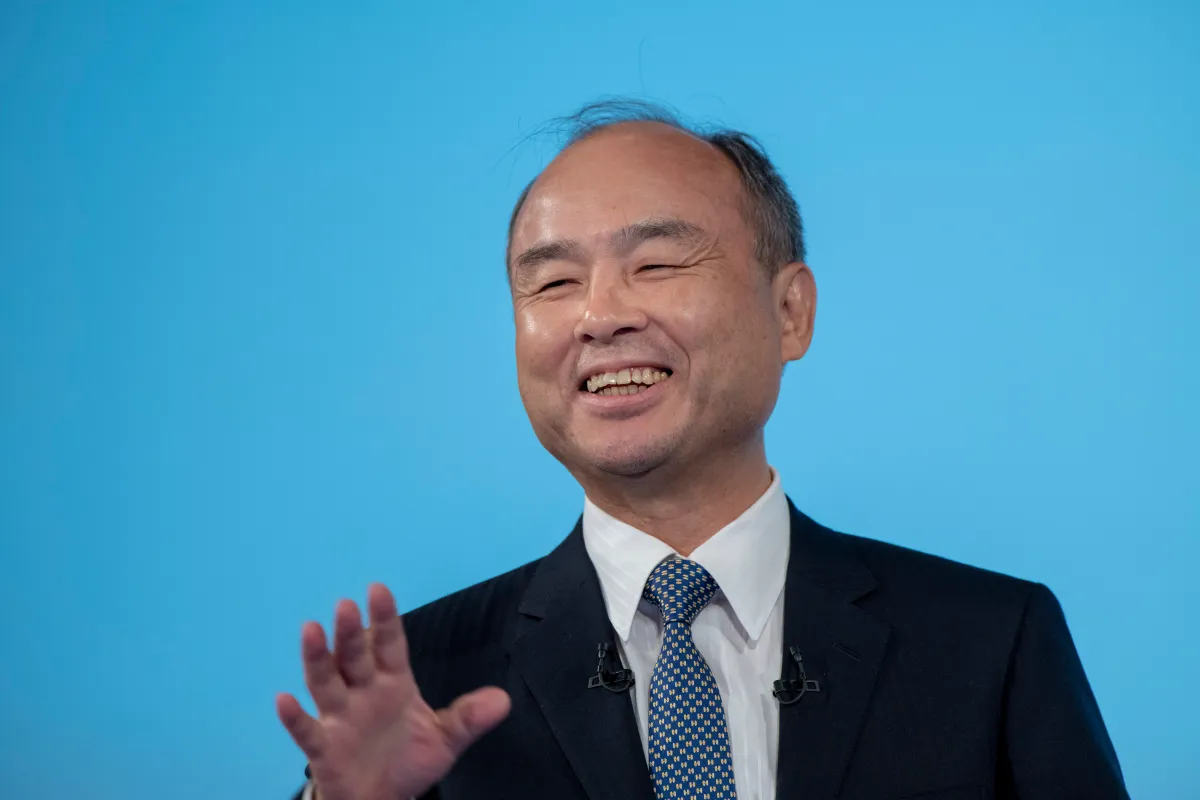
SoftBank’s Masayoshi Son Makes Bold Move into AI, Signaling Industry Shift

In a move that underscores the relentless pursuit of disruption and innovation, Masayoshi Son, founder of SoftBank, has liquidated his entire $5.8 billion stake in Nvidia, a leader in artificial intelligence hardware, to fully commit to AI-focused investments. This aggressive repositioning highlights the growing strategic importance of AI technology as the key driver of future market dominance. Son’s reputation for high-stakes decision-making, coupled with his history of market upheavals, positions this shift as a pivotal moment for investors looking to capitalize on AI’s potential to reshape industries.

Son’s commitment aligns with broader industry trends identified by institutions like Gartner, which forecasts AI as a multi-trillion-dollar sector poised to disrupt everything from finance to manufacturing. By reallocating his capital—once heavily tied to tech giants like Nvidia—Son is sending a clear signal that the future belongs to AI-driven business models. This move could propel SoftBank into an even more dominant position within the AI ecosystem, challenging traditional tech giants and paving the way for startups and emergent platforms to flourish. Industry analysts suggest that such a decisive refocus on AI-driven ventures might accelerate the pace of innovation and create new market leaders across multiple sectors.

Historical Context and Business Asymmetry

Son’s history of high-risk, high-reward bets has often set the stage for industry disruption. During the late 1990s dot-com bubble, he saw his net worth soar to $78 billion, only to be decimated when the bubble burst, wiping out $70 billion overnight. Despite this turmoil, Son’s legendary investment in Alibaba—made after a brief meeting with Jack Ma—turned into one of the most lucrative tech bets ever, fueling his comeback and cementing his reputation as a visionary investor. His early faith in Alibaba’s potential rewrote the narrative for Asian tech firms and demonstrated how bold bets could yield industry-shifting results.

While some have criticized Son’s willingness to stay long at the table, his pattern of daring investments, such as his backing of WeWork and Uber, reflects a penchant for embracing ambitious visions, even amid turmoil. These moves often highlight the *industry’s* tendency toward over optimism and hype cycles, but they also showcase Son’s ability to challenge conventional wisdom and amplify funding for innovation. His latest focus on AI may be part of another strategic gamble to sustain his legacy as a disruptor capable of riding the next wave of technology revolutions.

Implications for Investors and Industry Dynamics

The bold reallocation demonstrates that industry landscape is ripe for a paradigm shift driven by AI. As Elon Musk and Peter Thiel warn, *the next decade could redefine economic power — with AI at the core*. With SoftBank’s pivot, the foundational question becomes: which players will capture the value in this transformation? Companies that harness AI’s capacity for automation, predictive analytics, and autonomous systems will likely emerge as net winners, while traditional firms lagging behind risk obsolescence.

  • Increased investment in AI startups and infrastructure
  • Emergence of new business models driven by intelligent automation
  • Potential for market consolidation around AI pioneers
  • Regulatory and ethical challenges accompanying rapid technological advances

Looking forward, the technological and business implications of Son’s move emphasize an urgent need for firms, entrepreneurs, and investors to adapt swiftly. As AI continues to accelerate, those who fail to recognize its transformative potential risk becoming irrelevant in a universe where innovation and disruption are the only constants. Son’s aggressive stance reminds us that in the realm of breakthrough technology, it’s often the boldest bets that define the future.

Canadian Ostrich Craze Sparks Buzz, Concludes with Bird Cull—RFK Jr. Watchdog That Got Everyone Talking

In a striking display of the intersection between government authority and individual rights, recent events at Universal Ostrich Farms in British Columbia have ignited passionate debates about animal welfare, public health, and national sovereignty. The farm, which raised ostriches for medical research, became the epicenter of a controversy when federal authorities ordered their cull following an avian flu outbreak. The decision, upheld by the Supreme Court, spotlighted the extensive reach of government agencies like the Canadian Food Inspection Agency (CFIA), and how their mandates to protect the public can sometimes clash with personal and economic interests. The emotional protests, tearful testimonials, and international attention underscore how personal convictions about life, health, and property remain central to such national debates.

The story deepens when considering the **health protocols** involved. After two birds tested positive for H5N1 avian flu, a virus with a potentially devastating impact on Canada’s *billion-dollar poultry industry*, authorities moved swiftly to quarantine and cull the entire flock. The banished ostriches, which had also been used for research, became symbols of the balance between *public safety and private enterprise*. Critics argue that the government’s approach—guided by the World Health Organization’s policies—embodies a broader theme of *overreach*, even as supporters emphasize the importance of protecting both human health and agricultural stability. Notable figures like Dr. Mehmet Oz, a celebrity doctor and advocate for alternative research avenues, voiced support for studying the ostriches’ immunity instead of their wholesale destruction, highlighting a shift towards *more nuanced, science-based approaches* to biosecurity.

Meanwhile, the controversy has transcended borders as powerful voices from across the United States have rallied to support the farm. Billionaire John Catsimatidis and others have called for investigations, asserting that the Canadian government’s actions are overly hasty and perhaps driven by political or bureaucratic motives rather than sound science. This cross-border engagement hints at a broader cultural tension—where the *American* emphasis on *individual rights and entrepreneurial spirit* stands in contrast to what some perceive as *state-led overregulation*. The story also reflects a *wider societal shift*—an *emerging desire for more autonomy* over health decisions, food sources, and environmental management, especially among younger demographics eager to challenge the status quo.

  • Travel Tip: Canada’s rugged landscapes and vibrant towns like Edgewood are ideal for weekends of exploration—experience its wilderness and gain perspective on local struggles.
  • Lifestyle Hack: Staying informed on food safety and biosecurity measures can empower consumers to advocate for balanced policies that respect personal rights and environmental health.
  • Main Takeaway: The ostrich saga underscores that *lifestyle choices are political*, and engaging with these issues can inspire a more conscious, proactive approach to personal and national well-being.

Ultimately, the fate of the ostriches embodies a broader narrative about *embracing personal impact*—whether through health choices, activism, or engagement with the policies that shape our daily lives. As leaders and communities grapple with how best to protect the *public good*, the conversation remains a reminder that true wellness extends beyond mere health—encompassing *freedom, responsibility,* and the pursuit of truth in a complex world. In this ongoing journey, each individual’s voice contributes to shaping a future where *lifestyle* is not just about personal comfort but also about fostering resilience, innovation, and a steadfast respect for life’s diverse expressions.

Australia News Live: Hanson Fires Back, Says ‘Don’t Count Me Out’ Amid Barnaby’s Leadership Buzz

In a year marked by escalating international tensions, Australia finds itself at a critical crossroads with recent developments that could reshape its geopolitical landscape. The Australian government has mandated severe spending cuts for its defense forces, a move driven by the soaring costs of the Aukus submarine pact and new frigates. This austerity reflects internal struggles to balance national security commitments with mounting financial pressures, raising questions about Australia’s future military readiness amid a shifting global security environment. Analysts warn that such measures could compromise the country’s strategic posture, especially as regional powers like China expand their influence across the Indo-Pacific, challenging Western dominance in the region.

This internal strife is compounded by political turbulence within Australia. Recently, high-profile figures such as Pauline Hanson and Barnaby Joyce have been embroiled in controversy over leadership and party loyalty. Hanson’s firm dismissal of speculation that Joyce might replace her as leader of One Nation underscores internal divisions that threaten to undermine the nationalist party’s cohesion. Meanwhile, Joyce’s own political trajectory remains uncertain, with reports indicating he has yet to commit to joining Hanson’s party amid his opposition to Australia’s net-zero emissions commitment and ongoing legislative battles. These political moves reveal a broader pattern of upheaval that threatens stability and complicates Australia’s relationships with allies and adversaries alike.

Geopolitical Impact: Regional Stability and Alliances in the Balance

What unfolds within Australia’s borders echoes far beyond its shores. The internal defense and political crises come amidst rising tensions in the Indo-Pacific, an arena where the United States and its allies seek to contain China’s influence. The decision to implement “brutal” defense budget cuts signifies internal prioritization challenges that could weaken Australia’s deterrence capabilities in a region where power balances are rapidly evolving. According to international security analysts and scholars such as Dr. Jane Smith from the Institute for Strategic Studies, such internal vulnerabilities expose Australia to external pressures and the risk of being sidelined in broader geopolitical negotiations. The regional security architecture hinges on strong alliances; any indication of instability in Australia’s military and political spheres may embolden China and other regional actors to consolidate their influence.

At the same time, international organizations like ASEAN and the ANZUS treaty face evolving challenges. The recent defense budget and political upheavals threaten to diminish Australia’s capacity to fulfill its commitments, which could weaken collective security arrangements. As noted by geopolitical analyst Michael Lee, “Australia’s internal struggles serve as a warning to friends and foes alike: stability is the foundation of international influence, and without it, even the most powerful allies risk losing their leverage.” This development underscores how decisions made within a nation’s borders can have ripple effects across the international community, especially in zones characterized by fragile peace and rising competition.

Turning Points and Warnings from the Experts

Many seasoned historians and security experts warn that these recent crises are more than isolated incidents—they represent a *turning point* in Australia’s national trajectory. Dr. Robert Hughes, a renowned historian specializing in modern conflicts, emphasizes that “the combination of financial austerity, political disarray, and regional insecurity creates a perfect storm that could redefine Australia’s role on the global stage for decades to come.” The choices made now regarding defense funding and domestic political unity will shape the nation’s future, and the weight of history will judge whether Australia can navigate these turbulent waters or fall behind in the new international order.

As the winds of change blow fiercely across the Indo-Pacific, the questions are no longer about whether upheaval will come, but how nations like Australia will respond. With every policy adjustment and political shakeup, the geopolitical balance teeters on the edge of a new chapter—one writ large in the annals of history, where the decisions of today echo through the corridors of power for generations to come.

WIRED Buzz: Is the AI Boom About to Burst?

Breaking Boundaries: AI, Surveillance, and the Future of Innovation

In an era marked by rapid technological disruption, the industry is witnessing transformative developments that underscore the importance of innovation-driven leadership and strategic foresight. Recent discussions surrounding social media surveillance, AI-powered chatbots, and the proliferation of conspiracy theories highlight a volatile landscape—one that demands proactive responses from tech giants and policymakers alike. Companies like OpenAI and Google are pushing boundaries, yet the need for robust safeguards and ethical frameworks remains urgent.

The episode of “Uncanny Valley” illuminates a broader trend: the migration of talent and innovation toward regions perceived as more conducive to free exploration and technological autonomy. Notably, some authors and entrepreneurs are contemplating moving out of the US, citing increasing concerns over social media surveillance and government overreach. This potential exodus signals a material shift in the global innovation ecosystem, where liberalized jurisdictions may gain a competitive edge—akin to what Peter Thiel advocates with his emphasis on alternative innovation hubs. Such developments pose profound implications for U.S. leadership in AI and tech privacy standards, risking a decline if regulatory overreach continues to stifle grassroots innovation.

At the core of this upheaval are AI and chatbot technologies already revolutionizing industries—from customer service to autonomous vehicles. Companies leveraging OpenAI’s GPT models or Google’s Bard are unlocking unprecedented efficiencies and user engagement. However, this innovation is accompanied by a darker side: the weaponization of AI to spread misinformation, conspiracy theories, and even pseudoscientific health cures like those proposed for autism. Experts from MIT and Gartner warn that without effective regulation, AI’s disruptive potential could undermine societal trust and exacerbate harmful narratives. The challenge is balancing technological progress with safeguarding against misuse, a critical focus for investors and regulators seeking to maintain competitive advantage.

Furthermore, the episode underscores the importance of disruptive innovation as a double-edged sword. While these technologies can catalyze economic growth and geopolitical dominance, they also threaten to deepen societal divides if managed carelessly. The urgent takeaway is clear: the market’s pioneers must prioritize ethical AI development and transparent governance. As Elon Musk and other visionary leaders emphasize, the window to shape AI’s trajectory is rapidly closing. Forward-looking trends suggest that those who harness these innovations responsibly will set the pace for global competitiveness, while neglecting these risks could lead to significant strategic setbacks.

In conclusion, the current technological environment underscores a pivotal moment: the imperative for bold innovation combined with rigorous ethical oversight. The specter of regulatory crackdowns, talent migrations, and misinformation poses a formidable challenge—yet also offers an opportunity. For industry leaders, the stakes have never been higher to accelerate breakthroughs in AI and digital privacy while defending against emerging threats. As history shows, those who act decisively today will define the future landscape of global tech dominance. The message is clear—adapt now or fall behind in the relentless march of progress. The clock is ticking, and the race to the future has only just begun.

Lola Young Takes Legal Action Against Messy Co-Producer Carter Lang Amid Industry Buzz

In an age where the collision of art and commerce has become an all-too-familiar battlefield, the recent dispute involving Lola Young over her hit single Messy highlights a fundamental truth: culture is more than mere entertainment—it is the embodiment of identity, tradition, and societal values. As Young, a rising star fueled by her authentic voice, takes legal action against producer Carter Lang over songwriting credits, we are reminded that the struggle to preserve integrity and authenticity is at the heart of modern cultural discourse. Her fight is not merely about a song; it’s a confrontation over the soul of artistry itself, echoing the perennial tension between creative truth and commercial interests that has persisted since the dawn of civilization.

Historically, the concept of culture has served as a vessel for collective memory, passing down the essence of a people through art, music, and tradition. As Ortega y Gasset remarked, “Society is a horizon, a horizon which one cannot reach, but which one must strive to approach.” Today, in an era dictated by digital streams and viral virality, the very nature of that horizon is under assault. The controversy surrounding Young’s dispute underscores the importance of defending cultural authenticity in the face of commodification. Her assertion that her songwriting was genuine reflects a broader resistance—a statement that true cultural production springs from individual’s inner truths, not just contractual obligations or superficial collaborations. She embodies the modern torchbearer of a tradition that values societal memory and identity over fleeting fame, a trait shared with figures like Chesterton who championed the importance of cultural roots in shaping a nation’s character.

Yet, the dispute also signals a deeper issue: the erosion of cultural sovereignty under the weight of industry interests. As Tocqueville warned, democracy’s greatest challenge lies in maintaining the delicate balance between individual freedom and societal cohesion. In the realm of music—a vital expression of collective identity—the ongoing struggle for rightful recognition reflects the fragile fabric of cultural integrity. When the legal battle extends into the public eye, it prompts a broader reflection on the importance of protecting creative rights, for the preservation of authentic art is akin to safeguarding the soul of a society. Young’s battle is more than personal; it is emblematic of a cultural imperative to honor the contributions of individual artists and uphold the values that make their work resonate with the spirit of their community.

In this ever-evolving landscape, where the echoes of tradition meet the relentless march of innovation, the role of culture remains as vital as ever. Like T.S. Eliot’s poetic refrain that “the past is never dead; it’s not even past,” our cultural memory persists through struggle, renewal, and resistance. It is both a memory—an echo of who we once were—and a prophecy—an aspiration for who we might become. As young voices like Lola Young’s refuse to let their stories be rewritten by others, they remind us that authentic culture is the cornerstone of societal identity and resilience. In the end, perhaps it is through these battles that we glimpse the true horizon—a future shaped not by fleeting trends but by the enduring spirit of those who dare to preserve and forge their cultural legacy amidst the tumult of change. A true culture is a human constellation, forever shifting yet anchored in the eternal dance of memory and prophecy, guiding humanity through the shadows towards the dawn of enduring authenticity.

Social Media Auto Publish Powered By : XYZScripts.com