
Matox News

Truth Over Trends, always!

Google Cloud Hits $20B Milestone, Says Growth Fueled by Eager Customers but Held Back by Capacity Limits

Google Cloud’s Breakthroughs Signal Disruption in Enterprise AI Market

Google Cloud, under the umbrella of Alphabet, has achieved a historic milestone with revenues surpassing $20 billion in Q1 2026—a staggering 63% year-over-year growth. This surge underscores the company’s strategic focus on AI-driven infrastructure as a game-changer for enterprise digital transformation. As the industry witnesses an unprecedented shift toward generative AI and cloud innovation, Google’s recent performance reveals a disruptive wave that’s poised to reshape market dynamics significantly.

According to Sundar Pichai, CEO of Alphabet, the main engine behind this growth is the explosive demand for Gemini Enterprise and AI-centric solutions integrated into the cloud. Notably, AI products built on Google’s generative models expanded nearly 800% year-over-year, reflecting how AI is no longer a future technology but an immediate strategic imperative. The number of API tokens used for AI tokens hit 16 billion per minute, a substantial rise from 10 billion in the previous quarter. This rapid acceleration highlights both the disruption AI brings to enterprise workflows and the increasing reliance on scalable, high-performance hardware such as TPUs.

This surge in demand has also driven Google’s enterprise dealmaking, with new customer signings doubling and multimillion-dollar contracts accelerating to billion-dollar deals. Analysts from Gartner and MIT suggest that such rapid expansion signals a potential market shift, where cloud providers that prioritize AI infrastructure and innovation will dominate. Yet, the company faces notable constraints, with Google Cloud’s backlog doubling to $462 billion, illustrating both monumental demand and capacity bottlenecks. Pichai acknowledged this constraint, stating, “we are compute constrained in the near-term,” but emphasized that extensive investments and long-range planning aim to address this challenge, with an expectation to clear around 50% of the backlog in the next two years.

The strategic implications for the broader tech industry are profound. Disruption is accelerating as cloud providers leverage AI to lock in enterprise clients through multi-year commitments and high-value deals. Furthermore, Google’s approach of integrating hardware sales—such as TPUs—with AI services underscores a new model of infrastructure monetization, challenging traditional cloud paradigms and forcing competitors to rethink their strategies. Industry leaders, including Elon Musk and Peter Thiel, have long warned of the transformative power of AI—now, Google Cloud’s recent milestones validate that disruption is imminent and unavoidable. As the cloud computing landscape shifts toward AI-centric infrastructure, firms that fail to innovate rapidly risk obsolescence.

Looking ahead, the trajectory of Google Cloud’s growth combined with their strategic investments indicates a future dominated by AI-driven enterprise infrastructure. The rapid pace of innovation demands urgent adaptation from competitors and partners alike. As market demand continues to outstrip capacity, the urgency for deploying high-performance hardware and scalable AI solutions becomes even more critical. This isn’t just a transient trend; it’s a fundamental pivot toward an era where disruption, strategic innovation, and relentless competition will define the future of enterprise technology. Companies that act now will shape the contours of this new AI-powered economy, while those slow to adapt risk being swept aside in a relentless wave of progress.
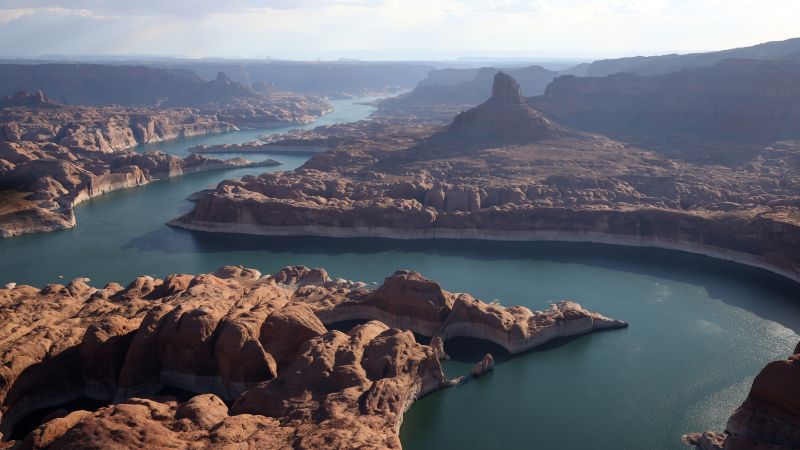
Lake Powell’s shrinking capacity hits critical levels, new report reveals

Lake Powell, the second-largest human-made reservoir in the United States, exemplifies the mounting hydrological crisis threatening the American Southwest and beyond. Since the construction of Glen Canyon Dam in 1963, this vital water resource has seen an alarming decline, losing nearly 7% of its storage capacity. New reports from the US Geological Survey and the Bureau of Reclamation reveal an ongoing, relentless reduction primarily driven by an intense multiyear drought. This decline isn’t just a matter of water levels but a seismic shift that exposes the fragile relation between natural resource management and national security in a climate-stressed era. As Lake Powell’s capacity diminishes, falling to just about 25% full, the consequences ripple across the geopolitical landscape, affecting millions, economic stability, and regional power dynamics.

Historian Harald Malmgren and analysts at international organizations warn that such environmental distress is more than just a regional concern. Lake Powell’s shrinking is a stark warning about the growing stress on transboundary water systems. The reservoir’s waters—crucial for over 40 million people across seven American states and northern Mexico—serve as the lifeblood for drinking, agriculture, and hydroelectric power. The report highlights sediment accumulation from rivers like the Colorado and San Juan, further diminishing capacity—an internal degradation echoing a broader systemic failure in managing natural resources amid changing climate patterns. This crisis escalates as Lake Powell and nearby Lake Mead — the nation’s largest reservoir — continue to drain at an alarming rate. Lake Mead even triggered the historic declaration of a water shortage in August, the first in history, with mandatory water cuts beginning in January, directly impacting urban centers, industry, and agriculture.

The geopolitical stakes extend beyond mere water rights. The implications threaten regional stability, especially as water scarcity fosters tensions among states and native communities. Analysts argue that, unless federal or international interventions occur, conflicts over access and sustainable management will intensify. Countries like Mexico rely heavily on the Colorado River’s water, introducing diplomatic pressure and potential border tensions. According to United Nations reports, such transboundary resource conflicts could destabilize diplomatic relations and threaten cooperation under international treaties like the 1944 Water Treaty between the U.S. and Mexico. The scenario forewarns a future where scarcity becomes a catalyst for instability, with nations vying for control over dwindling resources. Echoing statements from climate experts, if present trends persist, the Southwest may soon face severe social upheaval, rural depopulation, and environmental degradation that could span generations.

As the crisis deepens, climate change and mismanagement are often cited as primary culprits; however, many critics emphasize that policy failures and insufficient infrastructure investments compound the crisis. With experts warning that drought conditions could worsen in the coming months, the future of this vital water system remains uncertain. The unfolding story of Lake Powell mirrors a broader historical lesson: that ignoring environmental realities in favor of short-term gains can leave societies vulnerable to devastating consequences. The narrative of water scarcity in the American West is nothing less than a dramatic chapter in global geopolitics — a stark reminder that, as the pages of history turn, humanity’s ability to adapt will determine whether societal resilience endures or succumbs to the relentless forces of nature.

Social Media Auto Publish Powered By : XYZScripts.com



