Matox News

Truth Over Trends, always!

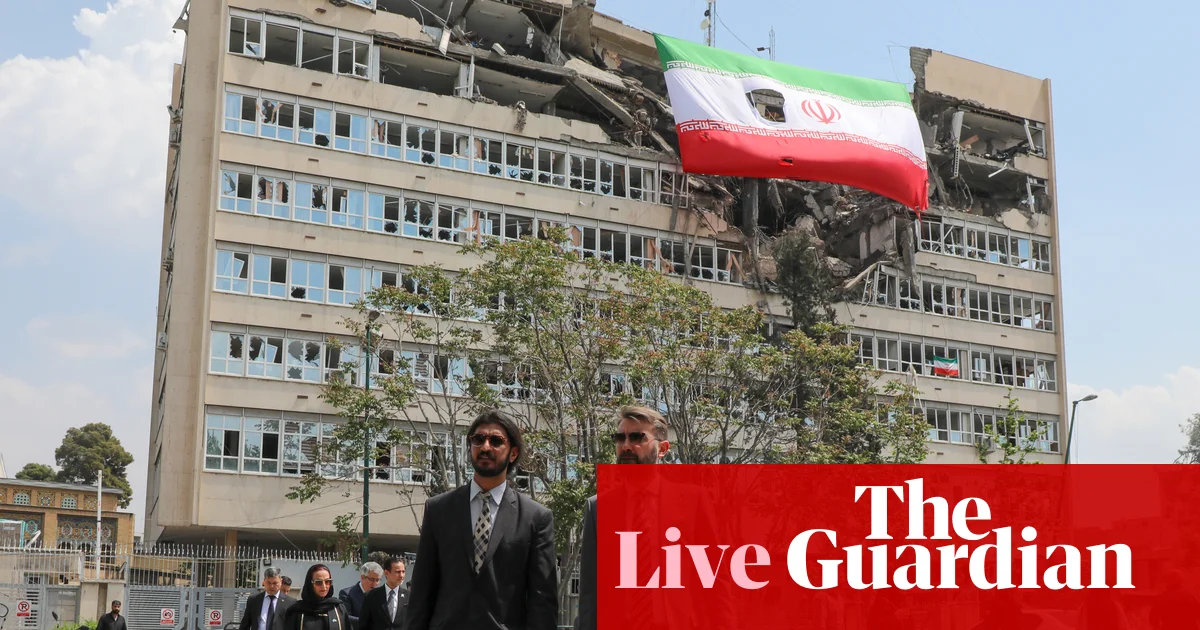
Live: Iran considers Pakistan talks with US amid rising tensions—claims ‘new battlefield’ cards in US-Israel standoff

In an unfolding series of high-stakes confrontations in the Middle East, Iran has condemned recent US military actions, labeling the seizure of an Iranian-flagged cargo ship as “maritime piracy” that exacerbates existing tensions in the region. This incident, accompanied by the US Navy’s deployment of marines onto the vessel, has thrown diplomatic efforts aimed at de-escalation into disarray. Iran’s foreign affairs ministry has called for the immediate release of the ship and its crew, asserting that the act violates international law and breaches earlier ceasefire agreements with the United States. Such moves not only threaten to derail fragile negotiations but also deepen fears of broader regional conflict, potentially impacting the global flow of oil and commodities through the vital Strait of Hormuz.

Officials in Washington remain committed, at least officially, to the pursuit of diplomatic solutions. Donald Trump has asserted that “a deal with Iran would happen relatively quickly,” reinforced by his declaration that the US would not lift its blockade until Iran agrees to negotiate on its nuclear program. Such statements underscore the complex and precarious nature of international diplomacy amid escalating military threats and economic sanctions. Meanwhile, US Vice-President JD Vance remains in the US, fueling uncertainty about the upcoming second round of talks. Despite Islamabad’s efforts, led by Pakistani military and diplomatic officials, to host meaningful negotiations in Islamabad, the outlook remains grim. Both Iran and the US are entrenched in a cycle of accusations and retaliatory measures, with Iran warning of “new cards on the battlefield” as the ceasefire deadline looms.

Beyond the naval standoff, the broader geopolitical impact resonates globally. Oil markets have reacted with a dip in prices amid hopes that peace talks will succeed and the Strait of Hormuz will be reopened, a critical corridor through which a significant portion of the world’s oil supply passes. Notably, Russia and Iran maintain ongoing discussions, emphasizing the strategic importance of maintaining passageways and stability in the region. Yet, this fragile calm is threatened by reports of violence escalating in Gaza, where Palestinian casualties continue to rise due to Israeli strikes, and clashes between Hamas fighters and Israeli-backed militias threaten to ignite a wider conflict. Historians and analysts warn that these developments could set the stage for a prolonged regional upheaval with far-reaching consequences for international security and economic stability.

At the core of this volatile situation lies the posturing over Iran’s nuclear capabilities. Donald Trump claims that the US has “obliterated” Iran’s nuclear dust sites during last year’s strikes—an assessment questioned by experts who highlight that underground facilities in Isfahan and Natanz remain largely intact, capable of resuming nuclear activities. Iran’s leadership, meanwhile, continues to assert its right to develop nuclear energy while warning that continued blockade and military threats only reinforce their resolve to reveal “new cards” on the battlefield. As diplomatic efforts flounder, the world faces a stark reality: the unfolding decisions and retaliations in the Middle East are not just about regional power — they are about who ultimately controls the future of global geopolitics. The unfolding drama echoes the words of historians who have long warned that the Middle East’s persistent conflicts are intertwined with the world’s strategic interests, often resulting in chaos that echoes far beyond its borders. Today, as each move is scrutinized and claims are made, the weight of history presses upon us—reminding us that the sands of this conflict are indeed shifting beneath our feet, with the potential to reshape the very fabric of global order.


Temu commits to faster crackdown on shady greeting cards

Cracks in the Digital Fortress: Temu’s New Approach to Protecting Creators

In a striking development that underscores the pervasive challenge of intellectual property theft in the digital age, Temu, an international e-commerce giant, has announced a collaborative initiative with the Greeting Card Association to combat rampant copyright infringements from counterfeit sellers. This move comes after significant losses faced by creators such as Amanda Mountain of Lola Design, whose decades of work have been stolen and profited from, costing her thousands of pounds in revenue. The proliferation of cheap knock-offs on Temu’s platform demonstrates a larger trend where the rights of individual creators are often dismissed in favor of rapid, mass-produced sales. Analysts warn that this phenomenon is symptomatic of a wider erosion of respect for intellectual property across borders, with many countries still grappling with enforcement much too slow or ineffective.

Historically, international institutions like WIPO (World Intellectual Property Organization) have strived to standardize protections, yet enforcement remains inconsistent. Experts warn that without a comprehensive, multilayered approach—combining technological innovation with international cooperation—the scars of this digital age threaten to leave a lasting legacy of systemic theft. The new system, which employs AI algorithms to pre-emptively block infringing content, marks a critical turning point that could serve as a blueprint for other industries amid the chaos of global counterfeit markets. Industry leaders argue that such proactive AI-driven takedown processes are essential to preserve original creativity, which underpins economies and national cultural identity. The European Union has already issued warnings about the dangerous ripple effects of unchecked piracy, emphasizing that how nations respond to digital infringement will shape the future of innovation and societal trust.

Yet, even with technological advances, the real obstacle remains in the form of deep-seated global economic disparities and weak enforcement mechanisms. The emotional toll to creators like Amanda Mountain highlights the broader crisis: in today’s interconnected marketplace, stolen designs are more than just images—they represent a blatant disregard for labor, passion, and intellectual effort. Amanda, devastated after witnessing her decade’s worth of work distilled into poor-quality rip-offs, encapsulates the moral and economic devastation wrought by these copycats. Experts warn that unless governments and institutions prioritize stern enforcement and cultural respect for creators, the trend of undervaluing intellectual property could accelerate, further undermining small businesses and stifling innovation in countless societies.

President Xi Jinping of China and other global powerhouses are watching these developments closely, as the battle over digital intellectual property increasingly influences geopolitical strategies and international commerce. Several international organizations, including the World Trade Organization, have issued statements urging member states to coordinate efforts, but critics warn that token policies and superficial treaties are insufficient. The real challenge is fostering a global shift in attitude—where respect for creativity is embedded in the legal and cultural fabric of nations—that can effectively combat the multilayered threat of digital infringement. As history unfolds, the question remains: Will this latest technological pilot be enough to stem the tide, or are we simply delaying a more profound crisis that could redefine international trust in the digital economy? As the weight of this unfolding conflict presses down, the choice for nations and societies is clear—they can either protect the sanctity of creative labor or watch the fabric of genuine innovation unravel before their eyes.

Social Media Auto Publish Powered By : XYZScripts.com


