Matox News

Truth Over Trends, always!

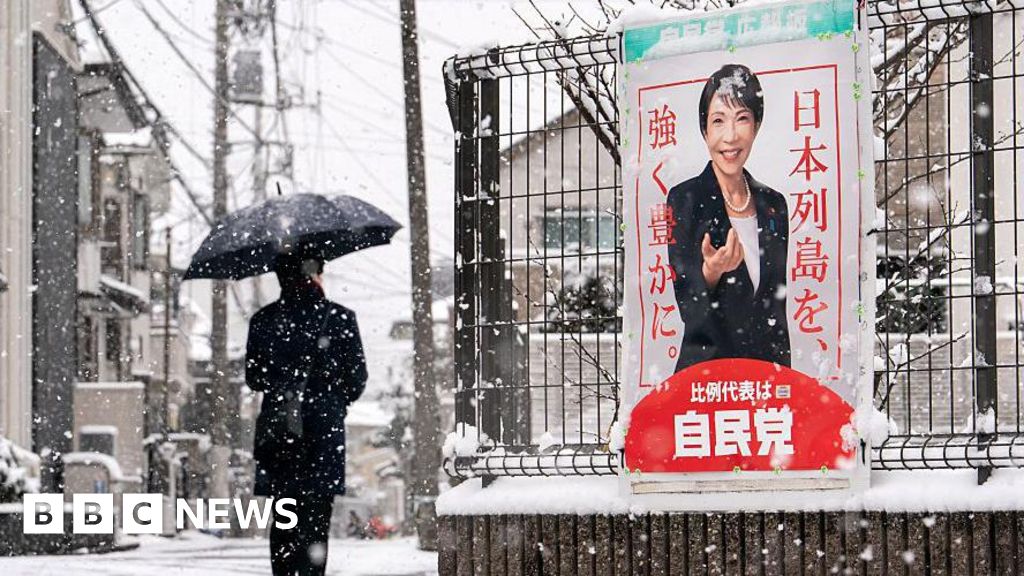
Japanese youth rally through snow to cast decisive vote in snap election

In a recent surge of political momentum, Japan’s latest polls indicate that a coalition led by Takaichi is poised to secure a decisive victory in the upcoming national elections. This development signals not only a significant shift within Japan’s domestic political landscape but also carries profound geopolitical implications that extend well beyond its shores. Analysts and international observers are closely monitoring this turn of events, recognizing that the outcome of this election could influence the balance of power across the Indo-Pacific region and reshape regional diplomacy.

The coalition’s lead is attributed to a combination of nationalistic rhetoric, economic strategy, and a stance towards regional security that emphasizes a strengthened military posture. Historically, Japan has balanced its pacifist constitution with a progressively assertive foreign policy, but this shift under Takaichi signifies a more explicit commitment to expanding military capabilities and reaffirming its role as a key regional security player. International organizations and historians suggest that such a trajectory might challenge the longstanding diplomatic practices of the region, especially when considering the tense relationship with China and North Korea. The victory, if confirmed, would likely embolden the coalition’s efforts to revise defense policies, potentially triggering a regional arms race and prompting neighboring nations to bolster their own military defenses.

Furthermore, this political momentum must be understood in the context of broader shifts within global geopolitics. The escalation of tensions in Taiwan, the persistent threat posed by North Korea’s missile tests, and increased assertiveness from Beijing have collectively contributed to a strategic recalibration. Experts from institutions like the International Institute for Strategic Studies have warned that a more militarily confident Japan could alter the delicate balance of power in Asia, complicating diplomatic efforts aimed at stability and security. As such, the possible shift in leadership and policy may serve as a catalyst for regional realignment, with alliances being tested and new fault lines emerging.

Historic voices remind us that the course of nations often hinges on these pivotal moments—moments that forge the future trajectory of peace, conflict, and diplomacy. If Takaichi’s coalition achieves the predicted mandate, the geopolitical landscape of the Indo-Pacific could be irrevocably reshaped. The international community now watches with bated breath, recognizing that we are at a juncture where decisions taken today echo through history, forging pathways that could either lead to stability or ignite the flames of a new regional confrontation. As history continues to be written in the corridors of power and the battlefields of diplomacy, one thing remains certain: the continent’s future hangs in the balance, and the weight of what comes next will be carried by nations and societies for generations to come.
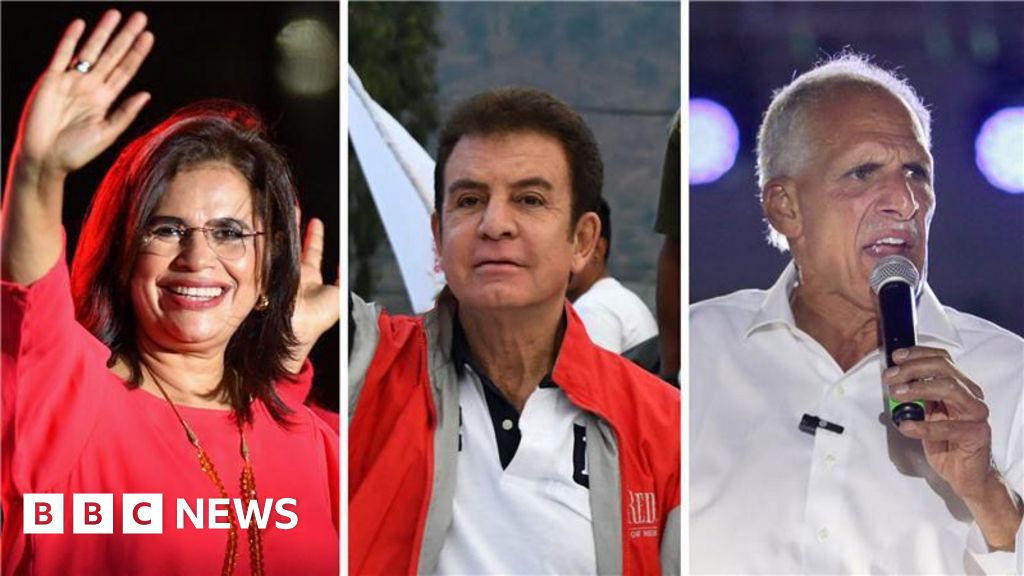

Polls open as Trump allies’ threats cast shadow over voting process

Honduras on the Brink: Election Turmoil Amid U.S. Interventions

As Honduras approaches its highly contentious general election, the stakes extend far beyond national borders, reflecting the delicate and often volatile nature of regional geopolitics. The contest pits five candidates, with polls currently favoring Salvador Nasralla—a veteran candidate alleging electoral fraud in 2017—yet the atmosphere is overshadowed by external influences, particularly from United States President Donald Trump. Trump’s explicit support for right-wing candidate Nasry “Tito” Asfura, the former mayor of Tegucigalpa, signals a disturbing level of foreign meddling in what is supposed to be a sovereign democratic process. His warning that aid might be withheld depending on the election’s outcome underscores how external actors leverage financial influence to sway the political future of Central America.

The deeply intertwined geopolitical ramifications are evident in the U.S.’s strategy for the region. Despite halving its aid, the U.S. continues to funnel hundreds of millions into Honduras, a stark reminder of how economic resources are weaponized in the broader contest to shape Latin America’s political landscape. Such interventions threaten to undermine the sovereignty and democratic stability of Honduras, with analysts warning that the perceived backing of a candidate can exacerbate existing divisions and fuel unrest. Meanwhile, the Honduran electorate remains disillusioned, with 34% undecided—the poll’s paradoxical statistic illustrates how external pressures and internal fears create a landscape ripe for instability. Historically, such foreign-influenced elections in fragile democracies have often been a prelude to greater turmoil, with scholars like John M. Ackerman warning about the risks of foreign interference disrupting the fragile balance of Latin American politics.

Front-Runners in a Fractured Nation

The political contest is complicated by the recent history of corruption and political scandals. Xiomara Castro, the outgoing president and Honduras’s first female leader, is constitutionally barred from seeking a second term but remains influential through her endorsement of Moncada. Her claims of Trump’s interventionist tactics echo a broader narrative of U.S. meddling, which critics argue aims to install a government more amenable to Western interests. Meanwhile, Asfura, initially distancing himself from disgraced ex-President Juan Orlando Hernández, seeks to mainstream himself amidst allegations of corruption—an issue that recent indictments and convictions have thrown into stark relief. The US’s move to potentially override Hernández’s 45-year sentence for drug trafficking casts long shadows over Asfura’s campaign, raising questions about ongoing American influence and double standards in Latin American justice.

At the same time, the current *front-runner*, Salvador Nasralla, emerges as a symbol of opposition to external interference and entrenched corruption. His campaign platform promises to open the economy, create jobs, and pivot away from the influence of foreign players like China and Venezuela—both of which are embroiled in their own regional conflicts. The recent escalation of tensions between Venezuela and the U.S. has added another layer of complexity, with Washington increasing military exercises and carrying out targeted strikes against alleged drug traffickers, actions vehemently denounced by Maduro as attempts at regime change. Trump’s declaration that Venezuela’s airspace is “closed”—despite lacking legal authority—further underscores the high-stakes nature of the confrontation between U.S. imperial ambitions and Latin American sovereignty.

Uncertain Futures and the Weight of History

With elections underway amid widespread accusations of pre-emptive fraud and political intimidation, Honduras stands at a crossroads. The national electoral council’s calls for calm reflect a fragile attempt to maintain order, but underlying tensions threaten to explode into violence. The geopolitical chessboard, with its array of regional and global actors, underscores the peril in dismissing the importance of this election: it is not merely a vote but a test of resilience for Honduran democracy amidst foreign manipulation and internal decay. As history watches, the unfolding drama in Honduras becomes a mirror for the broader struggle between sovereignty and external influence—a struggle that could shape the entire region for decades to come. The outcome remains uncertain, yet the weight of recent events leaves no doubt: in this volatile crucible of modern geopolitics, the future remains unwritten, and the echoes of today’s decisions will resonate through history’s corridors for generations to come.

Confirmed: Actors Cast as The Beatles’ Spouses in Sam Mendes’ Films—A Fresh Perspective on the Fab Four’s Legacy

In an era where cultural narratives are often reduced to fleeting social media trends, the enduring significance of tradition and collective memory in shaping national identity can hardly be overstated. Sam Mendes’ ambitious project—a four-part cinematic homage to the legendary Beatles—evokes a profound reflection on how art and biography intertwine to forge a collective cultural consciousness. As the film prepares to bring to life the intimate stories of Maureen Cox, Linda Eastman, Yoko Ono, and Pattie Boyd, it underscores the idea that culture is both memory and prophecy: a living archive that informs our present and forecasts our future.

The choice to focus on these four women—each embodying a different epoch and facet of the Beatles’ story—reminds us that culture is rooted in human relationships, personal sacrifices, and the ideological conflicts defining our era. As Ortega y Gasset elucidated, society is a complex fabric woven from the threads of individual experiences; the lives of Cox, Eastman, Ono, and Boyd represent the diverse material that has contributed to the mythos of one of history’s most influential bands. These women are not mere accessories to a musical legend but pivotal figures whose influence extends into the very fabric of Western civilization’s understanding of love, artistry, and societal change.

Philosopher and cultural critic G.K. Chesterton observed that some stories give us a sense of home, a refuge in the chaos of progress. The narratives of these women serve as a reminder that our most meaningful identity is anchored in tradition and shared history. Their stories are landmarks in a cultural landscape that echoes with the imaginative energy of the 1960s, a period when art became a voice of societal upheaval and hope. The film’s casting decisions, notably Saoirse Ronan as Linda Eastman and Yoko Ono portrayed by Anna Sawai, symbolize a conscious effort to reclaim and recontextualize these figures’ stories—stories that have long grappled with the tension between personal liberty and societal expectation.

As the project unfolds, it echoes the insights of Tocqueville, who saw democracy and shared culture as intertwined forces shaping the destiny of nations. Through such artistic endeavors, the cultural memory of the Beatles—frequently portrayed as emblematic of youthful rebellion—transform from mere spectacle into a profound reflection on the human condition. The film reminds us that clinging to our cultural roots and the stories handed down through generations is essential in resisting the homogenizing effects of modernity. Like the works of J.R.R. Tolkien or Gustave Flaubert, history and myth serve as guides to our moral compass, anchoring us amidst the chaos.

In the end, this cinematic project transcends mere biopic storytelling. It serves as a lyrical testament that culture is both the memory of the past and the prophecy of what humanity can become. As Eliot famously pondered, “the end of all our exploring will be to arrive where we started and know the place for the first time.” Through the enduring threads of art, love, and sacrifice woven into the lives of Cox, Eastman, Ono, and Boyd, we are invited to rediscover our roots and glimpse the future—an ongoing, sacred dialogue between tradition and innovation, memory and possibility.

Social Media Auto Publish Powered By : XYZScripts.com



