Matox News

Truth Over Trends, always!

South Africa's top cop faces charges over controversial health deal
South Africa’s top cop faces charges over controversial health deal

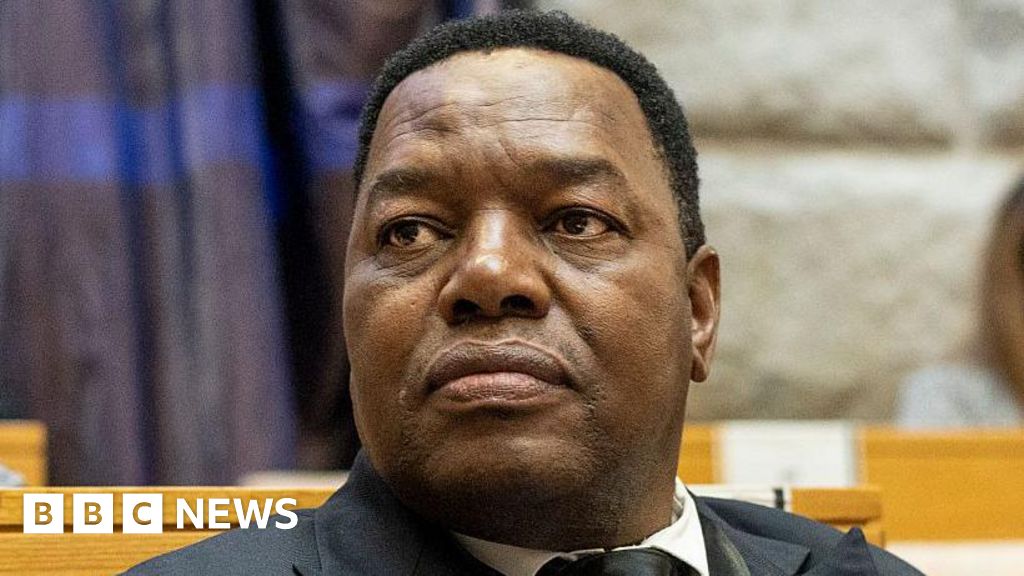
In a moment that could reshape elements of governance and accountability within South Africa, Fannie Masemola, a prominent figure in the country’s law enforcement hierarchy, faces serious allegations of failing in his duties to provide proper oversight. Such accusations come at a time when global stability increasingly hinges on the integrity and effectiveness of national leadership, especially in nations with emerging political landscapes. The outcome of this controversy is poised to exert a profound geopolitical impact, influencing how other nations perceive domestic stability and international commitments.

International analysts widely interpret these developments as emblematic of a broader regional and global trend: the tightening scrutiny of government officials tasked with upholding rule of law amidst growing transnational pressures. Organizations such as the United Nations and regional watchdogs have long emphasized the importance of transparency and accountability in fostering peace and stability. In this context, the allegations against Masemola could serve as a critical litmus test for South Africa‘s commitment to reform and good governance. Such internal struggles are not isolated; they resonate across continents, reminding other nations of the delicate balance between authority and oversight, especially in countries navigating economic challenges and security threats.

Historians and political analysts note that periods of internal crisis frequently precipitate shifts in diplomatic relations and can weaken a nation’s standing in the international arena. The controversy surrounding Masemola underscores how decisions within national institutions can have ripple effects—destabilizing alliances, undermining investor confidence, and inspiring both internal dissent and external skepticism. For South Africa, a country with a strategic position at the crossroads of Africa and the global economy, such internal upheaval threatens to diminish its influence and complicate efforts to address regional conflicts, economic disparity, and shared security concerns.

As the investigation into Masemola continues, the world’s watchful eye remains fixed on how South Africa will navigate this turbulent chapter. Will this crisis be a catalyst for reform, or will it expose deeper fissures within the nation’s governance framework? The decisions made now will undoubtedly echo through history, shaping reputations and alliances for generations to come. With geopolitical currents rapidly evolving and global pressures mounting, this episode underscores a vital truth: the fate of nations is inexorably intertwined with the integrity of their leaders. The unfolding story of Masemola’s controversy embodies more than a single allegory of failure; it is a microcosm of the ongoing struggle for sovereignty, justice, and stability in an uncertain world.

US singer D4vd denies murder charges in case of missing teen girl

In a development that transcends national borders and captures global attention, prosecutors have announced that singer David Anthony Burke, widely known by his stage name, could face life imprisonment should he be convicted of charges currently under investigation. While the specific allegations remain under seal, the case’s potential repercussions extend beyond the realm of individual justice, threatening to reshape political dynamics, cultural landscapes, and societal attitudes worldwide.

This case underscores the increasing intersection between high-profile celebrity cases and international geopolitics. Historically, cases involving prominent figures tend to ignite passionate debates about justice, privacy, and the societal role of fame. Nonetheless, experts caution that the severity of the charges—potentially life imprisonment—reflects a shift towards more stringent legal accountability that has resonated across many legal jurisdictions. International organizations, such as Amnesty International and Human Rights Watch, have called for fair trial standards, emphasizing that the outcome could influence how justice is perceived globally.

The geopolitical impact of this case is already resonating. Countries with robust legal systems are watching closely, particularly as the incident raises questions about the influence of celebrity culture on politics and law. Analysts argue that such high-stakes cases serve as a litmus test for the resilience of judicial independence amid societal polarization. For instance, some commentators point to recent historic cases, noting how legal proceedings against celebrities have sparked broader discussions about power, influence, and accountability. Meanwhile, critics warn that if the charges are politically motivated or unevenly applied, it could erode public trust in the legal institutions supposed to uphold justice universally.

Furthermore, the case’s implications reach into the cultural realm, where the role of public figures in shaping societal norms remains hotly contested. Cultural commentators and historians, including voices like Dr. Robert Goldstein, argue that this case could set a precedent for how authorities handle accusations against not just entertainment figures but influential individuals across sectors. The outcome may redefine the boundaries of acceptable behavior in an age where social media and instant communication amplify the effects of fame, blurring the lines between personal conduct and societal judgment.

As the world observes, the unfolding story of David Anthony Burke exemplifies how justice, power, and societal values are intertwined on a global stage. Whispers of diplomatic tensions and debates over legal impartiality are already echoing across international corridors of power. In a time when nations grapple with issues from transnational crime to cultural influence, this case may ripple outward, echoing in the corridors of international institutions and shaping policies for years to come. The final chapter remains unwritten, but the weight of history presses heavily upon the present—reminding all that even the most luminous figures are now entangled in the great web of geopolitical consequences, where every action echoes in the corridors of power and justice alike.

RMIT Drops Charges Against Student Who Called Out University’s Role in Gaza Crisis

Controversy at RMIT University Sparks International Debate Over Academic Freedom and Ethical Defense Collaboration

In a resolute stance that underscores the ongoing clash between free speech and national security concerns, RMIT University recently dropped a misconduct case against a student, Gemma Seymour, who publicly criticized the institution’s involvement in military research linked to weapons manufacturing. Seymour, a fine arts student, faced potential suspension following a social media video in which she called for the closure of the university’s Sir Lawrence Wackett Defence and Aerospace Centre. The controversy ignited a broader debate on academic independence, with many viewing it as a pivotal moment in how societal activism intersects with institutional policies, especially in a geopolitical landscape marred by conflicts in Gaza and beyond.

The underlying conflict extends far beyond a single university. Seymour’s attack on RMIT centred around the institution’s collaboration with prominent weapons companies, including Boeing and the Australian Defence Forces, which are key players in Australia’s defense industry. The university justified surveillance and the subsequent threat of misconduct proceedings by citing the risk to staff and research facility safety posed by publicly sharing detailed location data on social media. This incident vividly illustrates the broader tension faced by academic institutions worldwide—balancing the core values of free speech against the perceived need for security and institutional reputation amidst escalating global tensions. As defence and aerospace research become increasingly politicized, universities risk becoming battlegrounds not just of science but of ideological confrontations.

Analysis from international think tanks and security experts emphasizes the geopolitical impact of these debates. The inclusion of the U.S. Department of Defense and multinational corporations like Boeing in Australian defense initiatives signifies a deepening integration of allied military interests. Critics argue that such collaborations effectively amplify the risk of entrenching global conflicts—with weapons used in conflicts such as the recent Israeli operation in Gaza, where civilian casualties, including children, have garnered international outrage. Organizations like Amnesty International have highlighted how weapon manufacturing ties feed into killing machines that perpetuate cycles of violence and suffering. Many analysts contend that allowing university research to bolster these industries tacitly endorses or prolongs conflicts, raising profound ethical questions about the role of academia in geopolitics.

The public fallout and university responses also showcase shifting global narratives—where the fight for academic integrity now often coincides with global human rights debates. Seymour’s emphasis on the university’s “blood on its hands” encapsulates a rising sense among youth and progressive groups that institutions are complicit in genocides and conflicts through the supply chain of war technology. This trend echoes international calls for de-escalation and a reevaluation of military-industrial collaborations, as seen in several countries grappling with the moral implications of such partnerships. Historians and scholars warn that these moments of reckoning could reconfigure future policies, compelling institutions to account for their global responsibilities in peace and security.

As the world watches this unfolding story, the stakes have never been higher. The details of university collaborations, the ethical dilemmas of defense research, and young activists’ crusades against militarism are all intertwined threads in a complex tapestry of power, morality, and geopolitics. With the global conflict in Gaza serving as a stark reminder of what is at risk, it is clear that history is now writing its next chapter—one that may determine whether nations and societies heed the call for peace or succumb to the relentless march of war. In this pivotal moment, the weight of history seems to hang heavy, casting long shadows across the battlefield of ideas and the corridors of power.

Australia’s most decorated soldier faces historic war crimes charges

The recent legal proceedings involving Ben Roberts-Smith have sent shockwaves through the international community, marking a historic moment not only for Australia but for global jurisprudence as well. Scholars and analysts worldwide are calling this case “extraordinary,” emphasizing its potential to redefine standards of accountability, military conduct, and truth-telling across national borders. As the case unfolds, the geopolitical environment finds itself at a critical juncture—a test of how states confront allegations of misconduct within the ranks of their armed forces and the extent to which justice can transcend national boundaries.

At the heart of this unfolding drama is a legal battle that has challenged foundational assumptions about military ethos in Australia. The case centers on allegations made by Roberts-Smith that threaten to dismantle established narratives about the conduct of Australian special forces during operations in Afghanistan. The proceedings have attracted international attention, with global institutions like the United Nations and various human rights watchdogs closely monitoring developments. Their influence could have lasting geopolitical impact, particularly as nations reevaluate their own policies on military accountability and transparency.

Furthermore, the case underscores a shifting landscape where nation-states are increasingly held accountable for their military actions, a trend fueled by technological advancements and the rise of social media—a phenomenon that has complicated traditional notions of sovereignty and confidentiality. Decisions made in this courtroom could catalyze legal reforms worldwide, forcing governments to reconsider how they handle allegations of misconduct and war crimes. Historians and international analysts warn that such high-profile trials could set precedents, influencing the conduct of armed forces and the oversight mechanisms aimed at curbing abuses.

In the larger context of global politics, the impeccable reputation of Australia, historically seen as a steadfast ally of Western interests, now faces an existential challenge. The case acts as a stark reminder that international trust depends not simply on strategic alliances but on internal integrity and justice. As leaders grapple with fallout from this legal showdown, the wider world watches—not only to see if justice prevails but to understand how this narrative will shape the future of military conduct and international rule of law. The story remains as tense as ever, with a profound question lingering: Will this pivotal moment serve as a catalyst for meaningful reform or simply fade into history’s shadows, replaced by newer conflicts and crises?

Tiger Woods Faces DUI Charges After Crash: A Wake-Up Call for Young Drivers

In an era where international attention often centers around high-profile legal incidents, the recent crash involving Tiger Woods on Beach Road in Jupiter Island underscores the far-reaching geopolitical impact of individual events that transcend national borders. While the incident itself involves an American sports icon, its ripple effects extend into the broader fabric of global perceptions surrounding law enforcement, accountability, and the complex intersection of fame and state authority. According to Sheriff Budensiek, Woods was involved in an incident following an alleged attempt to overtake a pressure cleaner truck at high speed, which led to a series of investigations and legal proceedings that resonate beyond local jurisdiction.

  • The sheriff disclosed that Woods exhibited signs of impairment, but tests at the scene indicated a “triple zero” breathalyser result, complicating the narrative and raising questions about investigative procedures.
  • Woods refused a urine test, invoking his legal rights, which has resulted in charges for refusal rather than impairment — a legal distinction that complicates accountability.
  • President Donald Trump publicly expressed sympathy, emphasizing the personal toll of the incident, illustrating how high-profile cases in the U.S. attract international cultural and political attention.

Analysts and international observers highlight that such incidents, especially involving revered figures like Woods, influence societal expectations of celebrity conduct and state authority. As historian Mark Levinson points out, “The manner in which authorities handle allegations against prominent individuals becomes a mirror reflecting national values and legal standards.” This case exemplifies the ongoing tension between individual rights and societal interests—particularly how authorities navigate investigations involving iconic personalities. Moreover, with investigations suggesting Woods was “cooperative but trying not to incriminate himself,” the case underscores the delicate balance law enforcement must maintain between due process and public sentiment.

In a broader context, this incident also exposes the potential risks of drug or alcohol impairment in an era of growing scrutiny and legal reform. The refusal to submit a urine test, while legally permissible, leaves a void in definitive evidence and may influence future policy adjustments concerning impaired driving. The incident’s narrative, amplified by media coverage, stimulates debate over the consistent application of justice, the role of personal privacy, and the influence of fame in legal outcomes. The accident’s implications ripple into international discussions on law enforcement standards, the influence of social stature on justice, and the societal values that prioritize celebrity over accountability.

As global institutions continue to analyze and respond to these rapid developments, the event remains a poignant example of how individual moments can shape history. The unfolding story of Woods’ legal predicament is a stark reminder that behind the veneer of fame lies a fragile veneer of societal justice—an ongoing narrative where personal conduct, legal integrity, and international perception collide. With Woods set to be released on bond and facing misdemeanors, the incident leaves the world pondering: how will this story, a microcosm of societal values and power, ultimately influence the international dialogue on justice, celebrity, and the rule of law?

Kalshi faces legal heat as Arizona hits it with first-ever criminal charges over illegal betting operations

Arizona’s Crackdown on Kalshi Challenges Industry Norms and Regulatory Frameworks

In an unprecedented move, Arizona Attorney General Kris Mayes has initiated criminal charges against Kalshi, a leading prediction market platform, citing allegations of operating an unlicensed gambling enterprise and facilitating election wagering—practices deemed illegal within the state. This marks a pivotal escalation in the evolving landscape of prediction markets and their regulatory environment, illustrating a broader confrontation between state authorities and emerging financial technologies that blur traditional legal boundaries.

The 20-count complaint accuses Kalshi of engaging in illegal betting activities, specifically accepting wagers from Arizona residents on critical political events such as the 2028 presidential race and the 2026 Arizona gubernatorial primaries. Although characterized as misdemeanors, these charges threaten the company’s operations and signal a major challenge to the emerging prediction market industry’s growth trajectory. Following waves of cease-and-desist orders and lawsuits from other states, Arizona’s aggressive stance underscores a rising tide of regulatory resistance aimed at curtailing the disruptive potential of prediction markets—seen by many as a new frontier in betting and financial innovation.

Legal Battles and Industry Pushback: A Clash of Jurisdictions and Ideologies

Kalshi’s legal response has been forceful, with company representatives arguing that Arizona’s actions constitute interference with federal regulation authority. The platform’s recent lawsuit against Arizona’s Department of Gaming claims that the state’s regulatory attempts infringe on the federal government’s exclusive jurisdiction over derivatives trading. Such legal moves reveal a broader strategic effort by Kalshi to challenge state sovereignty in this domain, supported by federal officials like Michael Selig of the Commodity Futures Trading Commission (CFTC).

  • Kalshi’s lawsuit targets Arizona, Iowa, and Utah, asserting that state-level bans or restrictions violate federal regulatory authority.
  • Federal agencies, notably the CFTC, have indicated their intent to defend their jurisdiction, viewing state encroachments as undermining a critical segment of the financial ecosystem.
  • This legal tug-of-war reflects a broader ideological struggle over the future shape of prediction markets—technologies that could revolutionize how society interacts with data, politics, and finance.

Industry analysts, including those from Gartner and MIT, warn that this clash could significantly impact innovation and disruption. Prediction markets boast unique features such as real-time information aggregation, probabilistic forecasting, and democratized access to futures trading—capabilities that have attracted the attention of disruptors and traditional financial institutions alike. However, regulatory ambiguity and state-level restrictions threaten to stifle these benefits, potentially bottlenecking a transformative wave of technological progress.

Looking Ahead: A High-Stakes Battle Shapes the Future of Prediction Technologies

As federal and state interests collide, the prediction market industry finds itself at a critical inflection point. Companies like Kalshi are pushing the envelope of innovation, seeking to disrupt entrenched gambling and financial regulations with new models that challenge the status quo. Yet, the recent crackdown exposes inherent risks: regulatory overreach, legal uncertainty, and industry fragmentation.

Industry thought leaders, including Elon Musk and Peter Thiel, emphasize the importance of fostering a regulatory environment that supports technological disruption and economic innovation. The moment demands a recalibration—balancing regulatory safeguards with the imperative to unleash the transformative potential of prediction markets, which could redefine political, economic, and social forecasting in the 21st century.

In this high-stakes arena, the coming months will be critical. The outcome of these legal battles and regulatory negotiations will chart the course for a new wave of financial technology—one that promises to revolutionize markets, challenge existing power structures, and set the stage for the next frontier of digital disruption. Stakeholders across the technological and political spectrum must recognize that action now will determine whether innovation continues to thrive or is ultimately throttled by outdated regulatory paradigms.

Charges dropped for Georgia teens involved in prank that led to teacher's death
Charges dropped for Georgia teens involved in prank that led to teacher’s death

The recent legal case involving a student prank that resulted in a fatality has captured international attention, highlighting the profound geopolitical impact of domestic judicial proceedings and societal responses. The incident—a tragic misadventure stemming from what was initially believed to be a harmless prank—has now escalated into a larger discussion about legal protocols, youth conduct, and the role of authorities in maintaining societal stability. As countries grapple with crises—both internal and external—the ripple effects of such tragedies extend well beyond local communities, influencing perceptions of justice and governance worldwide.

The family of the teacher involved in the incident has urged prosecutors to drop charges, including one of homicide, arguing that doing so is necessary to prevent a separate tragedy from occurring. This plea underscores a broader debate about how legal systems balance justice with societal harmony. Critics argue that pressing forward with charges might escalate tensions, potentially igniting social unrest. Conversely, many advocates stress that accountability is crucial in upholding the rule of law, especially in an era where youth violence and reckless behavior threaten to destabilize societies. International organizations such as the United Nations have long emphasized that legal transparency fosters social cohesion, but recent events suggest that, in practice, legal outcomes can sometimes deepen societal divides rather than heal them.

Historians and analysts—many of whom have scrutinized similar incidents around the globe—point out that the decisions made in such cases have enduring how nations and societies adapt their moral and legal frameworks. The case’s potential dismissal could be misinterpreted as a signal that youth delinquency is being tolerated, a troubling precedent when considered against the backdrop of rising social unrest in various regions. As international observers warn, these kinds of legal decisions do not occur in isolation but are part of a broader narrative that shapes a nation’s moral compass and influences its geopolitical stance. Countries like Russia and China have demonstrated how tightly controlled justice can be used to maintain social order, contrasting sharply with Western liberal legal ideals. The tension between justice and stability remains a defining feature of global geopolitics today.

As diplomatic analysts examine the unfolding fallout, it is apparent that these incidents serve as microcosms of larger geopolitical struggles. The repercussions of local judicial decisions echo through international corridors, influencing alliances, diplomatic narratives, and even economic stability. The fate of this case might seem confined to a courtroom, but its ramifications ripple outward—shaping perceptions of justice, governance, and societal resilience. In this moment of uncertainty, history is watching, and the weight of the future hangs delicately in the balance. As nations deliberate their next moves, they are reminded that, ultimately, the decisions made today will resonate for generations, shaping the course of history amid the ongoing quest for stability and justice.

Israel drops charges against soldiers accused of Gaza detainee abuse

In a disturbing development that underscores the enduring challenges of accountability within authoritarian regimes, reports have surfaced detailing brutal mistreatment of detainees by security forces. According to official statements, five guards committed acts of severe violence against a detainee, an incident that has sent shockwaves through the international community. The guards are accused of acting against the detainee with extreme brutality, including stabbing near the rectum with a sharp object. The consequences of their actions were devastating, resulting in the detainee suffering cracked ribs, a punctured lung, and an internal rectal tear. This violence not only highlights the cruelty often concealed behind closed doors but also raises critical questions about the rule of law in the country involved, which remains unnamed in official disclosures.

This incident has become a stark reminder of the pervasive issue of human rights abuses carried out under the guise of security measures. Many international organizations, including Amnesty International and the United Nations, have long criticized regimes that employ torture and brutality against detainees. The international community’s response to such atrocities often oscillates between condemnation and cautious diplomacy, but cases like this invariably bolster calls for greater oversight and accountability. Renowned historians and analysts warn that unchecked abuse by security forces not only erodes national legitimacy but also fuels regional instability by fueling distrust and resentment among affected populations.

Understanding the geopolitical impact of such incidents requires examining the broader context of international power dynamics. Countries embroiled in internal conflicts or authoritarian rule often leverage violence as a means of suppression, with their actions echoing in diplomatic corridors worldwide. When a regime turns its blind eye to such brutality, it risks fostering regional destabilization by encouraging external powers to intervene either directly or through proxies. Furthermore, how decisions to conceal or downplay instances of abuse shape societal narratives—either reinforcing authoritarian control or fueling rebellion—has profound implications for future stability. Experts warn that these abuses, if left unaddressed, threaten to undermine the legitimacy of the very institutions that are supposed to uphold the rule of law and human dignity.

As the world watches, the unfolding narrative continues to be shaped by the stark realities of human suffering and the international community’s response. The incident serves as a grim reminder that history’s compass is always moving forward—sometimes in dark, unsettling directions. The details echo the lessons of past atrocities where silence and inaction only embolden the oppressors, risking a cycle of violence that could stretch across borders. The weight of this moment lies in the profound possibility that, unless global actors unite in demanding accountability, history may record this as yet another instance where cruelty triumphed over justice, leaving behind the haunting specter of unresolved human suffering that future generations will grapple with.

Istanbul’s Former Mayor Imamoglu Faces Corruption Charges Amid Political Challenges

In recent weeks, the international landscape has been sharply affected by high-profile prosecutions driven by political motives, which threaten the foundational principles of justice and sovereignty across nations. Dinushika Dissanayake, Amnesty International’s deputy director for Europe, voiced a stark warning, asserting that certain legal proceedings are “riddled with serious international fair trial and rule of law issues.” Her remarks highlight a disturbing trend whereby governments leverage judicial systems not merely to uphold law, but to politically target opponents or dissidents, thereby destabilizing regional stability and undermining democratic values.

This trend is particularly alarming given its potential to distort international relations. When a country’s judicial system is weaponized for political ends, it creates ripple effects across borders, encouraging other nations to adopt similar tactics to suppress dissent or consolidate power. Analysts warn that this erosion of legal integrity can lead to increased international tensions and defy diplomatic norms. The use of secret witness testimony—often unreliable and opaque—further complicates the issue, making it difficult for international watchdogs and organizations like the United Nations to ensure accountability or provide fair oversight. Such actions threaten the sovereignty of affected nations by subverting the rule of law, which is an essential pillar of democratic governance and international stability.

Experts note that these developments bear significant geopolitical impact. Countries now face the repercussions of these politically driven prosecutions on their global standing. Western nations, particularly those of a more youthful, dynamic demographic, are increasingly scrutinizing their alliances and diplomatic engagements with regimes accused of abusing legal systems for political ends. Conversely, authoritarian powers see such prosecutions as examples to follow, further cementing their grip on power at home while challenging the legitimacy of liberal democratic paradigms abroad. The international order must grapple with this new reality, where legal systems are no longer sanctuaries of justice but tools for political survival.

Leading historians and political analysts affirm that this moment will be recorded as a pivotal point in history—when the veneer of legality was used to disguise political repression, challenging the very fabric of international rule-based systems. How major powers respond, and whether they prioritize upholding universal principles over short-term geopolitical gains, remains uncertain. But what is clear is that the weight of history now rests heavily on the shoulders of nations and their leaders to navigate these turbulent waters with integrity and resolve. As the world watches, the unfolding saga of justice and authority continues—on a stage where the fates of societies and the integrity of the rule of law hang precariously in the balance, waiting to be etched into the chronicles of history.

Man faces charges after defacing Churchill statue with graffiti

In a dramatic display of dissent that echoes across London’s historic political landscape, an unidentified individual was apprehended for spray-painting the statue of Sir Winston Churchill outside the Houses of Parliament. The act, laden with provocative slogans such as “stop the genocide,” “free Palestine,” and “globalise the intifada,” signifies more than mere vandalism; it symbolizes the deepening fault lines within global ideological conflicts. The perpetrator, Caspar San Giorgio, was swiftly charged with criminal damage by Metropolitan police, highlighting how these acts become flashpoints in broader cultural and geopolitical struggles.

The incident, occurring just after 4 a.m., is layered within a context marked by recent terrorist threats and violence. Following attacks at Heaton Park synagogue in Manchester and Bondi Beach in Australia, authorities have sought to tighten security and curb inflammatory rhetoric, especially slogans like “globalise the intifada,” which have previously led to arrests. These acts of vandalism are perceived by many as symptomatic of a rising tide of militant activism that reflects fractured global alliances and ideological battles. The UK government’s condemnation emphasizes its commitment to upholding “our values,” but critics argue that such incidents highlight the divisive dangers of unchecked political expressions that threaten the social fabric.

The statue itself, a 3.6-meter bronze monument by Ivor Roberts-Jones, stands as a symbol of not only British history but also of the ongoing debate about national identity and historical memory. It has been subjected to multiple acts of vandalism, including graffiti calling Churchill a “racist” during the Black Lives Matter protests of June 2020, illustrating how historical figures become focal points in modern ideological clashes. Reactions from London authorities and Prime Minister’s office reflect a sentiment of indignation, emphasizing Churchill’s role as a “great Briton” and rejecting the disruptive messages painted on his statue. However, the recurring incidents reveal an undercurrent of tension whereby global conflicts—such as the longstanding Israeli-Palestinian dispute—manifest violently on historic symbols.

International analysts warn that these acts of vandalism and inflammatory rhetoric are more than isolated protests—they are symptomatic of a shifting geopolitical landscape. As China and Russia challenge Western influence, and Middle East conflicts ignite new ideological battles, the symbolism of statues like Churchill’s is increasingly weaponized. Historians caution that how nations choose to interpret and confront their history, especially through contentious monuments, will shape the future of global cultural diplomacy. The escalating violence and provocative slogans serve as stark warnings—how societies remember their heroes and villains today may determine the course of international stability tomorrow.

As the dust settles and authorities scrub away the graffiti, the question remains: how will the world confront these cultural battlegrounds in the years to come? The ongoing struggle over history’s symbols, nations’ identities, and ideological allegiances signals that the true conflict is far from over. The world’s gaze is fixed on these unfolding chapters—each act of defiance adding a new line to the ever-growing narrative of history, with the weight of future generations hanging in delicate balance.

Social Media Auto Publish Powered By : XYZScripts.com