
Yelp’s Major AI Upgrade: Transforming Consumer Engagement and Industry Dynamics
In a bold move emblematic of current industry trends, Yelp has unveiled a comprehensive upgrade to its chatbot assistant, elevating the platform toward a next-generation digital concierge. This initiative exemplifies how disruption is reshaping local business discovery and customer service, aligning with broader AI-driven shifts observed across multiple sectors. By integrating advanced conversational AI, Yelp aims to turn user data into a powerful competitive advantage, echoing strategies championed by industry pioneers such as Elon Musk and Peter Thiel.
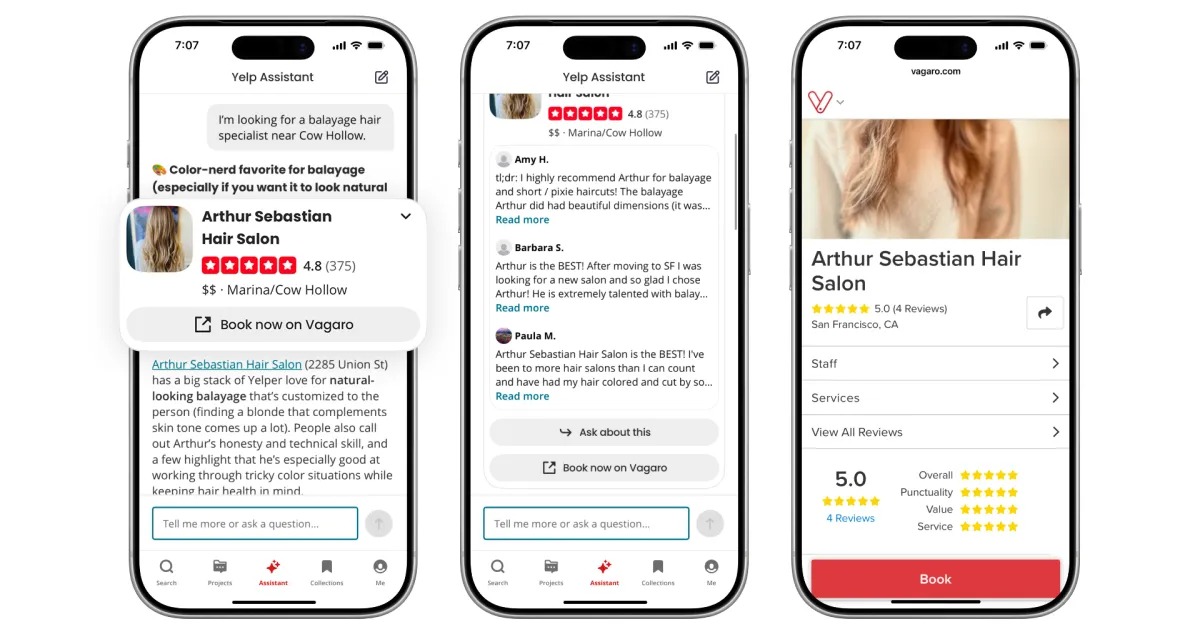
At the core of this transformation is the deployment of a revamped Yelp Assistant chatbot, now embedded centrally within the app’s interface through a dedicated “Assistant” tab. This technology extension positions the bot as more than a mere search helper—it’s now a personal digital assistant capable of answering questions, making recommendations, and facilitating bookings within a seamless, conversational environment. This evolution represents a paradigm shift in how consumers interact with local service providers, emphasizing conversational commerce and personalized service experiences. According to Yelp’s chief product officer, Craig Saldanha, this marks the company’s “most significant AI product evolution yet,” underscoring the strategic emphasis on AI-driven engagement.
- Intelligent assistance that simplifies user workflows
- Unified interface consolidating multiple service functions
- Enhanced data analytics capabilities derived from user interactions
- Strategic positioning against competitors leveraging AI for local discovery
This move is not happening in isolation; rather, it is part of a wider industry trend towards integrating AI to disrupt traditional search and booking paradigms. Companies like Google and Facebook are leveling up their AI offerings, but Yelp’s focus on a personalized, action-oriented experience marks a distinctive approach. The initiative also signals how large-scale user-generated data is being leveraged to refine algorithmic recommendations, fostering a more engaging and sticky user experience—an element emphasized by Gartner analysts as vital for future differentiation in local commerce platforms.
The implications extend beyond consumer convenience. For local businesses, this innovation could dramatically impact market dynamics, offering new avenues for exposure and customer acquisition. As Yelp’s AI becomes more sophisticated, there’s a growing potential for automated bookings and personalized marketing, potentially reducing friction in the customer journey and amplifying revenue streams. This aligns with a broader shift where AI-driven personalization can generate a market advantage—a trend closely monitored by industry veterans and investors alike, eager to identify the next wave of disruption. The strategic emphasis on continuous AI evolution suggests that competitors who lag behind risk obsolescence in a market increasingly driven by digital-first interactions.
Looking ahead, industry experts such as those at MIT and AI think tanks warn that the rapid proliferation of conversational agents introduces new challenges—privacy concerns, data integrity, and the need for robust AI governance. Yet, the opportunity for business innovation and disruption remains immense. As technological advances accelerate, the companies that invest early in AI-driven platforms—like Yelp—are positioning themselves at the forefront of a revolution in local commerce. The future belongs to those willing to harness the power of AI to create more intuitive, responsive, and integrated consumer experiences. The question remains: who will lead this charge, and how fast can they adapt? For now, Yelp’s bold step signals a clear message: in the race for digital dominance, agility and innovation are paramount.