Matox News

Truth Over Trends, always!

ChatGPT launches $100/month Pro plan—powering the next-gen user experience

OpenAI Introduces Enhanced $100 ChatGPT Pro Tier Amidst Industry Disruption

In a significant development that underscores the rapid evolution of the AI landscape, OpenAI has announced a revamped version of its ChatGPT Pro subscription priced at $100 per month. This move not only signifies a strategic effort to harness increased revenue but also signals innovation in user experience and enterprise-level offerings. The new tier provides 5x more usage of its Codex coding tool compared to the previous $20/month Plus plan, catering to developers and professional users demanding higher throughput for complex coding tasks. OpenAI states that this tier is optimized for “longer, high-effort Codex sessions,” thus addressing an emerging segment of power users whose productivity hinges on robust AI tools.

Disrupting Industry Norms: Competition and Market Shifts

This strategic upgrade comes amidst intensifying competition from players like Anthropic with their Claude Code tool, which has gained popularity for its impressive performance. OpenAI’s move to scale up its offerings with a more capable Pro tier indicates an aggressive push to retain market dominance in the AI coding space. The $100 Pro tier is positioned as a middle ground, bridging the gap between the baseline $20 ChatGPT Plus and the premium $200 Pro option. Such tier segmentation reflects a broader industry trend toward flexible, tiered SaaS models—designed to attract a wider customer base ranging from casual users to enterprise clients.

Business Implications and Industry Impact

The introduction of *two distinct Pro tiers* underscores OpenAI’s recognition of diverse user needs. While the standard Pro still offers all features, the more expensive version incorporates higher usage limits, positioning OpenAI as the platform of choice not just for casual, but heavy-duty users. These enhancements could disrupt traditional coding and AI development workflows, necessitating a reevaluation of how businesses integrate AI into their core operations. As noted by industry analysts from Gartner and MIT, the proliferation of accessible yet powerful AI tools is poised to drastically alter enterprise productivity and innovation cycles.

Looking Ahead: Urgency for Innovation

This strategic expansion by OpenAI emphasizes a broader industry acceleration, where disruption is accelerating via innovation. With competitors like Anthropic advancing rapidly and other tech giants investing heavily in AI, the market is on the cusp of a new era of hyper-competitiveness. Technologies such as Codex and Claude are just precursors to a future where AI-driven coding and automation will become integral to business success. Stakeholders and developers must remain vigilant; those who harness these innovations early will secure competitive advantage in an increasingly AI-centric economy.

In summary, OpenAI’s strategic move to escalate its subscription offerings exemplifies a dynamic shift towards higher performance, flexibility, and enterprise readiness. As AI continues to disrupt traditional sectors, the race to develop more powerful, accessible, and versatile tools will define the next wave of technological revolution. Industry participants and investors alike should prepare for an era where agility, innovation, and disruption are imperative to thrive in the rapidly evolving AI universe.
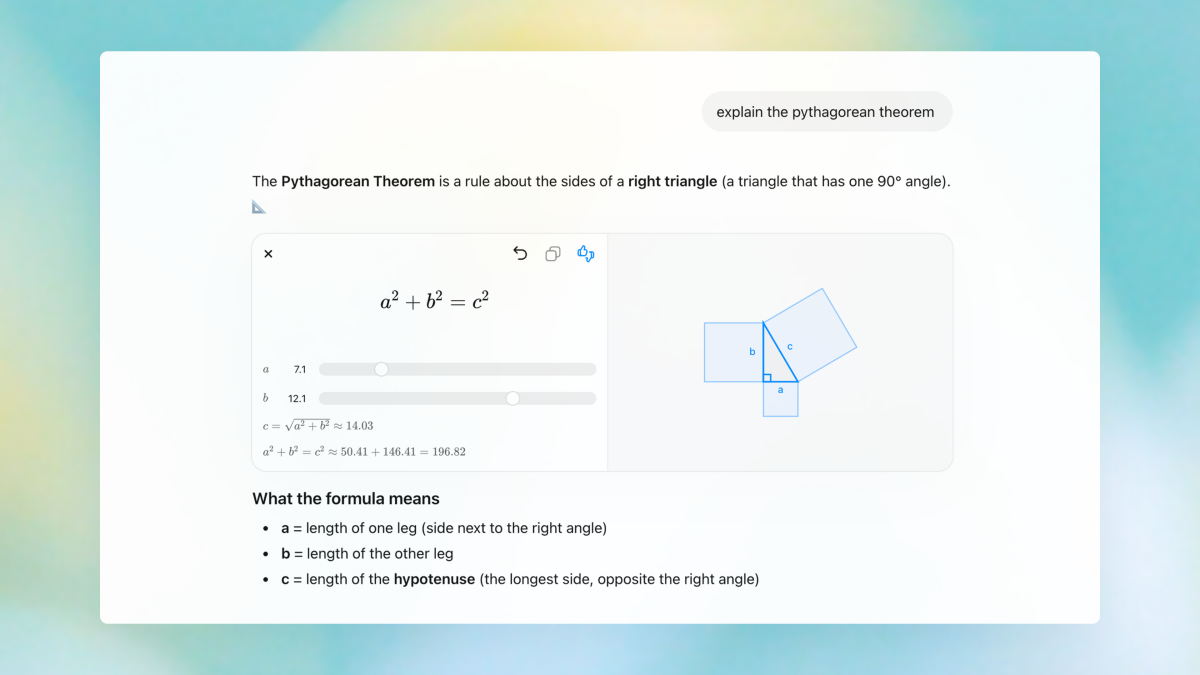
ChatGPT drops interactive visuals, making math & science a breeze for students

The digital landscape is undergoing a quiet but profound transformation, driven by artificial intelligence and its integration into everyday learning tools. Recently, OpenAI announced a game-changing feature within ChatGPT: the ability to generate interactive visuals in response to prompts related to math and science. This innovation isn’t just about boosting individual study sessions; it signifies a paradigm shift in how society approaches education and information dissemination. Now, students, educators, and self-learners alike can manipulate dynamic graphs, diagrams, and even geometric shapes in real-time—altogether redefining the boundaries of virtual learning.

This visual enhancement is more than a superficial upgrade; it’s a clear indication of technology’s deeper societal role in democratizing knowledge. Influencers, tech enthusiasts, and even some sociologists are monitoring how these visual tools influence cognitive engagement. Experts like Dr. Jane Foster, a scholar in digital learning, suggest that interactive visuals foster active learning—encouraging users to experiment with formulas, variables, and models rather than passively absorbing static content. This aligns sharply with the youthful cultural desire for personalization and interactivity. In an era where information overload is common, the ability to manipulate content in real-time makes education more engaging and accessible than ever before.

What makes this shift particularly socially relevant is the way it bridges the gap between complex scientific concepts and user-friendly interfaces. Platforms like ChatGPT are now effortlessly able to display dynamic math graphs or 3D geometrical shapes, transforming traditional learning into a personalized, visual experience. This evolution resonates with younger generations eager for instant gratification and interactive engagement. As a result, influencers and trend analysts believe that these tools could very well accelerate the cultivation of a new wave of scientifically literate citizens, especially when paired with social media’s fast-paced sharing culture. For example, viral TikTok STEM educators are already leveraging this technology, making abstract physics more tangible by manipulating models on-screen, thus turning passive viewers into active participants.

Moreover, the \u201cvisual revolution\u201d within AI tools is challenging the traditional roles of educators and content creators. According to tech analyst Mark Rivera, this new era might eventually foster a more collaborative, decentralized learning environment, where students craft their own models and experiments rather than solely consuming pre-made lessons. The question that now looms is: where does this leave the role of educators and academic institutions in the future? While some critics worry about a possible decline in formal education standards, others see a golden opportunity for personalized, skill-based learning that could democratize access to high-quality science education beyond geographic or socioeconomic barriers.

As we stand on the cusp of this interactive visual revolution, one question remains: what is the next frontier of AI-driven educational transformation? Will this pave the way for truly immersive, virtual laboratories and classrooms, or are we headed towards a future where digital manipulation replaces traditional hands-on experimentation? The societal implications are vast, and as emerging generations continue to adopt these innovations, the challenge will be ensuring that technology enhances—not replaces—the critical thinking and curiosity foundational to true learning. That looming question might just hold the key to understanding how AI’s role in shaping tomorrow’s society will unfold.

UK Experts Link ChatGPT to Surge in ‘Satanic’ Ritual Abuse Reports among Youth

The recent revelations from the United Kingdom about a surge in reports of organized ritual abuse highlight a disturbing trend that extends beyond national borders, underscoring a broader shift in the global socio-political landscape. Experts indicate that AI tools like ChatGPT are increasingly being utilized by survivors as a form of therapy and support—an unintended development that is exposing an insidious undercurrent of sexual violence motivated by satanic, esoteric, and authoritarian ideologies. The phenomenon is not confined to the UK alone; it strongly reflects a widening crisis involving state institutions, societal perceptions, and the overarching fight against underground networks of abuse.

Since 1982, the UK has documented a mere 14 criminal cases involving ritualistic practices in sexual abuse, yet recent research suggests that these numbers are just the tip of the iceberg. Clinical psychologist Dr. Elly Hanson warns that the reality on the ground reveals a much darker picture, where offenders often operate within intergenerational networks—including families, traffickers, and organized rings—sometimes disguising their heinous acts as religious or spiritual rites. These networks, experts say, are often rooted in ideologies with fascist or satanic overtones, defying stereotypes by infiltrating *privileged*, mainstream families rather than marginalized communities. Such revelations fuel concerns from international law enforcement agencies and human rights organizations, who emphasize that the global reach of these networks necessitates greater intelligence-sharing and coordinated crackdown efforts.

What complicates the response is the discourse of disbelief that still pervades society. As historian and analyst Dr. Michael Carter notes, the symbolic “fantastical” nature of ritual abuse allegations has historically hampered justice, creating a significant justice gap. Yet as reports grow, fueled by an unlikely ally— AI-based mental health support platforms—governments and police agencies are now mobilizing. The National Police Chiefs’ Council (NPCC) has established specialized training programs and a dedicated working group to tackle the phenomenon of witchcraft, spirit possession, and spiritual abuse (WSPRA). These initiatives aim to detect, investigate, and ultimately dismantle these clandestine networks, but critics argue that public trust and resource allocation are not keeping pace with emerging threats, leaving society vulnerable.

The geopolitical implications of this crisis reach far beyond the UK, resonating with international institutions and affecting nations worldwide. As the United Nations and Interpol call for increased cooperation against clandestine networks of abuse, entrenched societal attitudes, legal frameworks, and cultural stereotypes continue to obstruct progress. The alarming realization that organized abuse can occur within seemingly “respectable” communities challenges national narratives of safety and moral integrity. In this context, the ongoing battle over who controls the narrative—whether governments, religious bodies, or secret societies—will shape the forthcoming decades’ quest for justice and transparency.

As history continues to unfold, the question arises: Will the global community recognize the depth of this crisis and act decisively, or will it succumb to the “discourse of disbelief” that has long hindered justice for victims? For now, the tide of evidence and testimonies portends a sobering truth: beneath the veneer of civilization, dark forces persist. The weight of history is once again shifting, beckoning a future where accountability, relentless investigation, and ultimately justice may be achieved—or forever remain elusive in the shadows.

Zillow’s AI Revolution — Changing the Game for Real Estate

Revolutionizing Real Estate: Zillow’s AI-Driven Disruption and Future Outlook

In an era where disruption is rewriting the rules of traditional industries, Zillow stands at the forefront of technological innovation transforming the real estate landscape. Despite facing a sluggish market, with the industry bouncing along the bottom and home sales falling short of historic levels, CEO Jeremy Wacksman emphasizes that Zillow’s strategic investments in artificial intelligence (AI) are positioning it as a key player in the next wave of real estate transformation. As analysts scrutinize the company’s evolving approach, it’s clear that the tech giant’s focus on disruptive innovation could redefine how properties are bought, sold, and experienced in the future.

Zillow’s recent push into AI-powered features signals a major shift in market dynamics. The company has integrated generative AI across every facet of its platform, from sophisticated home searches—allowing users to specify highly detailed preferences—to AI-driven virtual staging that renders furniture and interiors with unprecedented realism. The innovative SkyTour feature exemplifies this trend through Gaussian Splatting technology, transforming drone footage into interactive 3D property tours. While the adoption rate remains modest, this technology pushes the boundaries of current visualization standards, creating new avenues for immersive property showcases. Industry experts, including MIT’s AI research teams, highlight that such innovations could challenge traditional marketing models, forcing competitors and brokers to rethink their approach to property presentation.

More than consumer-facing features, Zillow is leveraging AI to improve operational efficiency—cutting costs, shortening development cycles, and maintaining a relatively stable workforce amid an uncertain market. By automating programming, customer support, and design workflows, the company is harnessing AI as an operational force multiplier, which could be a model for tech-driven disruption in other traditional sectors. However, as Wacksman acknowledges, the ethical and regulatory hurdles surrounding virtual staging and AI-generated imagery—especially those that may misrepresent real properties—must be navigated with transparency and clear disclosure standards. Industry insiders, including Elon Musk’s Tesla AI division, warn that widespread reliance on synthetic visuals could lead to consumer trust issues if not carefully regulated.

Despite these groundbreaking developments, consumer adoption remains slow, exemplified by the underwhelming performance of Zillow’s Zillow Immerse on the Apple Vision Pro, which launched with much fanfare but has yet to capture mass market appeal. This highlights a broader industry trend—the technology is ready; market acceptance is the real challenge. Forward-looking analysts, including Gartner and leading venture capitalists like Peter Thiel, agree that the integration of VR and AR will become essential as the industry shifts toward increasingly immersive experiences. The stakes are high: companies that fail to innovate swiftly risk being left behind in a rapidly evolving landscape.

As Zillow doubles down on AI-driven innovation, the question remains: will this new wave of digital disruption solidify the company’s position as a dominant force, or will unforeseen hurdles stall progress? One thing is certain: the future of real estate is inexorably intertwined with cutting-edge technologies that demand agile adaptation. As the industry stands on the cusp of this transformation, the urgency to innovate is clear—those who embrace the technological revolution now will shape the market of tomorrow, cementing their legacy in an era where disruption and innovation are the new normal.

OpenAI Launches ChatGPT Ads: The Future of Smart Living Starts Now

The Future of AI and Advertising: OpenAI’s Bold Step

In an era where digital giants are continuously reshaping how we interact with technology, OpenAI has taken a notable leap forward by introducing ads inside ChatGPT. Since its inception in 2022, ChatGPT has largely operated as a distraction-free zone, prized for its pure AI-driven conversations and its anti-clutter approach. However, with this recent rollout, the landscape is shifting. Now, users are faced with a choice: embrace the new, more commercialized AI experience or opt-out in favor of a cleaner, ad-free interface. This move is emblematic of a larger trend where tech innovation is increasingly intertwined with monetization, raising questions about what it means for our future interactions with AI.

The move is not just about generating revenue; it signals a broader cultural impact on how society perceives and consumes content. Critics argue that introducing advertising into a platform like ChatGPT could erode the trust and authenticity that have made it so appealing to young users seeking a genuine, distraction-free learning tool. Yet, OpenAI is banking on a strategy that emphasizes transparency and user choice. Users who prefer to keep their experience free of sponsored content can opt for higher-tier paid plans or choose to opt out of ads altogether, including the ability to control how their data is used for ad targeting. This approach reflects an understanding that today’s digital consumers value agency in their online experience — they want control over how their data is used, especially when it comes to the AI companions they increasingly depend on.

Influencers and sociologists see this move as part of a broader societal shift. According to tech analyst Matt Vella, adding ads into AI tools like ChatGPT “foreshadows a future where AI becomes not just a tool but a marketplace, blurring the lines between utility and commerce.” Meanwhile, platforms like Anthropic have responded with satire, actively mocking the idea through high-profile campaigns like their Super Bowl LX ad, which staged conversations abruptly pivoting into sales pitches. These responses highlight that the social relevance of this trend isn’t lost on the public: it’s a reflection of a society grappling with the rise of corporate interests in spaces once viewed as sanctuaries for genuine human-AI collaborations.

This tension raises a pivotal question for the future of AI-powered services: as platforms increasingly embed advertising into their core functions, will users begin to see AI as an extension of the commercial landscape or as a trustworthy partner in their daily lives? The next big question we should be asking isn’t just about how AI will evolve but about what kind of digital world we are creating for ourselves and future generations. Is this shift toward a hybrid model sustainable, or are we walking into a new era where personalized AI assistance becomes always-already intertwined with advertising and commercial interests? As these questions unfold, one thing is clear: the future of AI is as much about societal values as it is about technological innovation.

Peec AI raises $21M as younger users shift from Google to ChatGPT, helping brands stay ahead

Europe’s Peec AI Launches a New Era in Brand Visibility Through Generative Engine Optimization

In a rapidly evolving digital landscape driven by AI-powered search, Peec AI, a Berlin-based startup, is positioning itself as a disruptive force. The company’s innovative approach to brand visibility and sentiment analytics arises amid a changing consumer behavior where users increasingly turn to generative AI tools like ChatGPT rather than traditional search engines like Google. This shift spells a major disruption in the search and marketing paradigm, compelling businesses to adapt to a new era where the “how” of discovery is fundamentally changing.

Innovation at the Core: From Analytics to Actionable Insights

Founded just ten months ago, Peec AI has swiftly scaled, realizing annual recurring revenue of over $4 million and attracting 1,300 companies and agencies. Its platform leverages proprietary AI-driven dashboards to monitor how brands appear directly within AI-generated responses, providing insights on ranking, sentiment, and content sources. This is a clear step beyond conventional SEO, opening the door to an emerging category known as Generative Engine Optimization (GEO). Unlike traditional SEM or SEO tools, GEO focuses on optimizing a brand in the context of AI conversations, which could redefine digital marketing strategies globally.

This innovation is backed by a suite of features that include:

  • Monitoring brand visibility in AI-generated results
  • Tracking sentiment and source attribution
  • Suggesting actionable content strategies based on source insights
  • Filtering raw data to focus on relevant consumer and purchase queries

According to CEO Marius Meiners, this granular data filtering and analysis could prove to be the pivotal advantage for companies seeking to control their narrative amidst a crowded and fast-changing landscape. The company’s ambition is to develop a comprehensive dashboard that remains user-friendly despite the increasing complexity of AI search, much like how leading SEO tools emerged to make digital marketing accessible and effective.

Business Implications and Industry Competition

The recent $21 million Series A funding, led by Singular and including notable investors such as Antler and Identity.vc, underscores a recognition of the tremendous value at stake. With this capital, Peec AI plans to scale operations significantly—hiring 40 new employees primarily in Berlin and expanding into the US with a sales office slated for New York by mid-2024. This rapid expansion hints at its ambition to become a dominant player in an emerging field where European startups are gaining ground against US-based competitors such as Profound and OtterlyAI.

The entry of Peec AI into this market signifies more than just a new product—it marks a paradigm shift toward a future where businesses will need to optimize not only for human search engines but for the growing realm of AI-mediated discovery. As Gartner analysts warn, “Ignoring AI’s role in search and brand perception risks obsolescence.” The rise of GEO tools could push traditional SEO into a secondary role, emphasizing source attribution, sentiment analysis, and proactive content strategies.

The Road Ahead: Accelerated Innovation and Competitive Pressure

In a landscape where disruption is the new normal, companies that leverage innovative AI data pipelines and predictive analytics will be best poised for sustained growth. European startups like Peec AI are capitalizing on the continent’s growing reputation as a hub for AI and data-driven innovation, challenging US dominance and signaling a global shift. The industry is watching eagerly as the upcoming Techcrunch event in San Francisco promises to showcase future advancements that could further redefine the Internet’s discovery landscape.

Time is of the essence. As AI-powered search continues to evolve at an unprecedented pace, innovative firms like Peec AI are racing against competitors to establish dominance in this new frontier. The question is no longer if brands need to adapt—but how quickly they can harness the disruptive potential of these evolving technologies before they are left behind.

Master the new ChatGPT app integrations: Spotify, Figma, Canva, and more—your tech toolkit just got smarter!

In a landmark move that exemplifies the ongoing revolution in artificial intelligence and digital ecosystems, OpenAI has introduced a suite of new app integrations directly into ChatGPT. This development signals a profound shift towards a more interconnected and intelligent digital assistant capable of executing a wide array of tasks across popular platforms. By enabling users to seamlessly connect their accounts — spanning services like Spotify, Booking.com, Canva, Coursera, Expedia, Figma, and Zillow — OpenAI is disrupting traditional boundaries between AI and practical business applications, setting a new standard for digital productivity tools. The implications for startups, tech giants, and ecosystem partners are enormous, heralding a future where AI-driven automation becomes an essential component of everyday commerce, education, and entertainment.

This integration marks an inflection point in the industry’s trajectory towards hyper-utility. TechCrunch highlights how users can now instruct ChatGPT to perform tasks that were previously cumbersome or disconnected from AI, such as creating personalized playlists on Spotify or booking travel accommodations via Expedia. These capabilities are not merely superficial add-ons; they represent a significant enhancement in innovation and disruption. By bridging services traditionally operated in siloed environments, OpenAI is fostering a more unified and accessible user experience— a critical component of competitive advantage. For enterprises, this accelerates the transition from static software use to dynamic, AI-empowered workflows, fundamentally altering how businesses organize, strategize, and engage customers.

The technological innovations at the heart of this shift are multifaceted: natural language processing (NLP) algorithms are now capable of authentic multi-platform interactions, extracting context, and handling complex multi-step tasks. The advancements also include streamlined account integrations, with users able to connect or disconnect apps with ease directly from ChatGPT’s settings interface. This flexibility provides a strategic advantage for business agility and personalization—a core trend identified by industry analysts like Gartner. As the AI landscape matures, those who can harness these capabilities rapidly will dominate markets, with early adopters gaining a substantial competitive edge against traditional service providers and legacy systems.

Moreover, the expanded ecosystem approach—where major companies such as Walmart and Uber are slated to join later this year—foreshadows a future where AI-powered assistants become indispensable for consumer and enterprise markets alike. This wave of disruption challenges established players to rethink their engagement strategies and leverage AI as a strategic enabler. The seamless integration of services not only enhances user convenience but also opens new revenue streams, from personalized shopping experiences to real-time data-driven recommendations. As Peter Thiel and other visionary investors emphasize, the swift adoption of such innovative platforms can create monopolistic advantages, securing market dominance before competitors adapt.

However, alongside these technological potentials lie cautionary trends: regulatory uncertainty, privacy concerns, and the potential for over-reliance on AI systems. Already limited to the U.S. and Canada, the current rollout underscores the importance of regulatory frameworks evolving alongside this innovation. The future of AI-driven integrations hinges on how responsibly companies manage data and maintain user trust while navigating an increasingly complex geopolitical landscape. For executives and young entrepreneurs, the window of opportunity to shape the next frontier of disruptive technology is swiftly closing. Those who act decisively—integrating AI into core business operations today—will define the competitive landscape of tomorrow’s digital economy. The urgency to capitalize on these innovations is clear: in the rapidly evolving tech frontier, timing is everything, and the leaders of the next wave are already setting the pace.

OpenAI teases ChatGPT Atlas, new profiles, ad blocker, and more for its innovative AI browser

OpenAI’s ChatGPT Atlas: A Bold Step Toward Disrupting Google’s Dominance

In a move that sharply accelerates the ongoing **disruption of the traditional internet landscape**, OpenAI has unveiled ChatGPT Atlas, an innovative AI-powered web browser designed to challenge the entrenched position of Google Chrome. According to Adam Fry, Atlas’s lead, the development team is already engaged in rapid iteration to refine the browser’s features, signaling a proactive approach to capturing market share through **cutting-edge AI integration**.

The introduction of Atlas marks a major strategic *shift* in how next-generation browsers could transform the internet interface. Unlike traditional browsers, Atlas leverages natural language processing to deliver an experience that’s not merely about navigation but about intelligent interaction, opening the door for **future enhancements that prioritize user customization, privacy, and efficiency**. With plans to unveil features such as **profiles, tab groups, and an opt-in ad blocker**, OpenAI aims to make Atlas a versatile tool that meets the evolving needs of today’s digital natives.

Innovation and Business Implications for Market Disruption

This move from OpenAI exemplifies a **disruptive innovation** that could catalyze a fundamental shift in how users engage with online content. As Tech giants like Google and Microsoft face innovative threats from AI-driven solutions, industry analysts such as Gartner warn that legacy browsers risk obsolescence unless they adapt swiftly to **intelligent automation and personalized experiences**. By integrating sophisticated AI features directly into the browsing experience, Atlas could significantly **alter the competitive landscape**, pushing traditional browser makers to rethink their strategies or risk losing relevance.

  • Feature-rich AI driving personalized web experiences
  • Potential to minimize reliance on Google’s ecosystem
  • Key milestone in AI-browser convergence

Moreover, the announcement underscores **OpenAI’s ambition to expand its ecosystem**, hinting at potential integrations with other tools like 1Password, which management recognizes as vital for securing user data amid increased digital threats. While the team has kept certain features under wraps, the **focused development effort** suggests a future where AI might seamlessly **secure, customize, and optimize** user workflows, thus **disrupting incumbents** and raising the stakes for competitors.

Forward-Looking Perspective: Prepare for a New Era in Web Interaction

The rapid pace of innovation exemplified by Atlas’s development indicates that **the future of the internet is intertwined with AI-driven interfaces**. Experts from MIT and Elon Musk’s Neuralink have long emphasized the **potential for AI to redefine human-computer interactions**, and Atlas appears poised to lead this revolution. As **AI-powered browsers** become more sophisticated, *early adopters* could enjoy **significant productivity gains** and tighter security, while laggards risk falling behind in a landscape that favors agility and innovation.

In conclusion, the release of ChatGPT Atlas underscores an urgent call for established players to accelerate their **innovation cycles**. The era of passive browsing is ending; the future belongs to those who leverage **disruptive AI solutions** to craft **more intuitive, secure, and personalized online experiences**. As market shifts accelerate and new players like OpenAI position themselves as **industry disruptors**, the question remains: who will lead the next wave of transformation—and who will be left behind?

OpenAI Unveils ChatGPT Atlas: A New Web Browser Powered by ChatGPT for Young Tech Enthusiasts

OpenAI Launches AI-Powered Browser, Sparks Geopolitical Ripples

In a move that signals the escalating influence of artificial intelligence on global digital infrastructure, OpenAI unveiled ChatGPT Atlas, an innovative AI-enhanced web browser. This development has sent shockwaves through the tech world and geopolitical spheres alike, with critics and analysts quick to recognize its potential to reshape online navigation and information dissemination. The new platform, integrated with ChatGPT, promises a personalized browsing experience, empowering users to interact with websites via a sidebar that can summarize content, analyze data, and even modify text—features that could redefine user engagement worldwide.

This launch, albeit primarily technological, extends far beyond the realm of software. In the context of rapidly evolving AI capabilities and digital sovereignty debates, it underscores a new chapter in the competition for technological dominance among the world’s superpowers. As OpenAI makes Atlas available globally on Apple’s Mac OS and prepares for launches on Windows, iOS, and Android, glimmers of a digital arms race emerge in the shadows. Tech giants like Google, which recently integrated its Gemini AI into Chrome, are not sitting idly by. Shares of Google fell immediately after the announcement, reflecting investor fears that OpenAI could challenge Chrome’s supremacy, the world’s most used browser. This shifting digital landscape demonstrates how AI innovation is intrinsically linked to economic power and geopolitical influence.

World analysts, including those from Oxford’s Future of Humanity Institute and the United Nations’ digital policy division, warn that the race for AI-driven browsing tools could become a new battleground for international influence and control. Countries like China and Russia are reportedly ramping up investments to develop their own AI-driven web technologies, aiming to neutralize Western dominance in digital infrastructure.

  • For the United States, the emphasis on AI as a competitive edge in global innovation is paramount, with policymakers strategizing to secure digital sovereignty and protect critical infrastructure.
  • Meanwhile, European nations are calling for stricter regulation on AI, fearing the potential erosion of privacy rights and the emergence of a new “digital divide”.

In this context, decisions taken now — such as OpenAI’s push into the browser market — will shape who controls information flow and technological standards in the decades to come.

Historians of technology emphasize that past innovations, from the printing press to the internet, have always been catalysts for profound societal change and geopolitical shifts. Today’s AI-powered browsers mark a similar turning point, weaving digital sovereignty, economic dominance, and societal control into a complex tapestry that will define the future of international relations. As the global community watches unfold this new chapter, the stakes could not be higher: an uncharted landscape where the line between technological innovation and geopolitical power blurs, leaving history to judge those who dared to lead the charge into the unknown.

Judge lifts ban, letting OpenAI keep ChatGPT logs—big win for AI transparency and innovation

In a move that underscores the escalating tug-of-war between innovation and regulation, a recent court decision marks a significant shift in how AI companies like OpenAI are required to handle user data. After months of legal battles and public scrutiny, a federal judge has lifted the earlier preservation order that mandated OpenAI to retain all ChatGPT logs indefinitely. This ruling signals a potential realignment on data privacy, and it raises vital questions about the future of digital privacy amidst rapid AI expansion.

Initially, the court’s preservation order was a major win for The New York Times and other media outlets, like TheIntercept and Alternet, who accuse OpenAI of training its models on copyrighted news content without proper authorization. The order essentially allowed the news organizations to scrutinize ChatGPT’s outputs for copyright infringement, shining a light on the murky waters of AI training data. OpenAI, on the other hand, vehemently opposed the mandate, citing concerns about user privacy and data security. The company argued that such a requirement could set a dangerous precedent—one that threatens the confidentiality of user interactions and broader digital rights. When Judge Ona T. Wang decided in October to relax the preservation requirements, it sent a clear message: the balance of power might be shifting away from data accumulation toward privacy and individual rights.

This legal turn doesn’t just reflect a single case—it’s emblematic of a broader cultural impact shaping the digital landscape. AI-powered platforms like ChatGPT have become ingrained in the everyday lives of youth, offering everything from educational assistance to social interaction. As public awareness grows about the potential data footprints we leave behind, there’s a growing societal consciousness about digital footprints. Influencers, sociologists, and tech analysts are now debating whether the next frontier is ethical AI use that respects user rights or unchecked corporate data harvesting. For younger generations, who are often at the forefront of digital trends, this legal battle underscores an implicit societal shift — from raw data collection to empowering user privacy as a social norm.

  • Trend #1: Increasing demand for transparency from AI providers concerning data use and privacy.
  • Trend #2: Growing awareness among youth about the power of their digital footprints and the importance of safeguarding personal data.
  • Trend #3: An emerging cultural movement advocating for ethical AI development, framing privacy as a social justice issue.

As we observe these shifts, the question looming over this evolving digital landscape is as provocative as it is vital: Will the push for user privacy redefine the way AI is trained and deployed, or will companies find a way to circumvent these new rules to keep their competitive edge? With influential voices like tech lawyers and societal analysts raising concerns about a future where our digital selves are more protected yet more scrutinized than ever before, the next chapter in AI history might hinge on whether this turn away from indefinite data preservation will truly foster a more accountable and ethical technological era. The dominant question that remains: could this legal shift be the catalyst for a cultural revolution where personal data becomes our strongest form of digital independence?

Social Media Auto Publish Powered By : XYZScripts.com