Matox News

Truth Over Trends, always!

Evidence Connects Sydney Kidnap Victim Chris Baghsarian, 85, to Burned Car as Search Persists

Embattled Australia Faces a Crisis with Broader Geopolitical Implications

In an unsettling turn of events, Australia is reeling after the kidnapping of 85-year-old Chris Baghsarian in what authorities believe to be a case of mistaken identity. The case, unfolding in the suburban landscapes of Sydney, has exposed more than just a personal tragedy; it underscores ongoing issues of criminality, law enforcement challenges, and the societal fractures that threaten to destabilize the nation. For over a week, forensic investigations have linked evidence from a burnt-out vehicle to a remote bushland area, where the elderly man had been held hostage, raising questions about the depth of organized crime infiltrating local communities.

While police have yet to confirm what precise evidence connects Baghsarian to the crime scene, authorities have indicated that a vehicle linked to the kidnapping was not entirely destroyed by fire, allowing forensic experts to establish crucial links. The fact that the car appeared in multiple locations, including Glenorie, suggests a calculated effort by the perpetrators to evade detection while highlighting how criminal networks exploit rural and suburban areas to hide illicit activities. It is a stark reminder that even a peaceful nation like Australia is vulnerable to covert operations that, if unchecked, could threaten its social fabric, especially as this case remains without a ransom demand or clear ties to organized underworld groups.

International Scope of Law Enforcement Struggles and Political Ramifications

Global analysts and criminal experts warn that Australia’s current predicament foreshadows a broader challenge faced by developed nations: the seepage of organized crime into civilian life, facilitated by weak borders, digital anonymity, and a lack of coordinated international strategies. The European Commission and Interpol have repeatedly emphasized that transnational crime syndicates now operate across borders with alarming agility, often turning local communities into battlegrounds. Analysts warn that if countries like Australia cannot enhance their investigative capabilities and international cooperation, their sovereignty and social order could be at grave risk.

The case also raises serious concerns about how decisions made in global and national policy impact societies at the grassroots level. The reluctance to openly confront criminal networks or implement comprehensive security reforms can embolden factions intent on destabilizing social trust. Furthermore, this incident exposes the limits of current law enforcement strategies, which are often hampered by bureaucratic hurdles, underfunding, or political hesitance, thereby enabling organized crooks to flourish in the shadows.

The Broader Geopolitical Impact and the Path Forward

This disturbing episode highlights a fragility that extends well beyond Australia. As international organizations like the United Nations and regional alliances grapple with the escalation of crime, terrorism, and illicit trade, the need for a fortified, coordinated approach becomes increasingly evident. Australia’s internal security failures could serve as a warning sign to other nations, prompting urgent calls for policies that prioritize border security, intelligence sharing, and community resilience. The ripple effects may well influence diplomatic relations, trade policies, and regional stability, especially if criminal enterprises find fertile ground in these nations’ social and political vulnerabilities.

Historians and security analysts warn that crises such as the Baghsarian kidnapping are chapters in a larger narrative of societal decline driven by unchecked criminal ambition and international neglect. As the authorities continue their search in the rugged Australian bush, the nation stands at a crossroads: either strengthen its defenses against insidious threats or risk surrendering its sovereignty to organized chaos. In the shadows, unseen forces watch, analyze, and adapt—leaving the final pages of this unfolding story unwritten but undeniably impactful, echoing across the corridors of power and history alike.
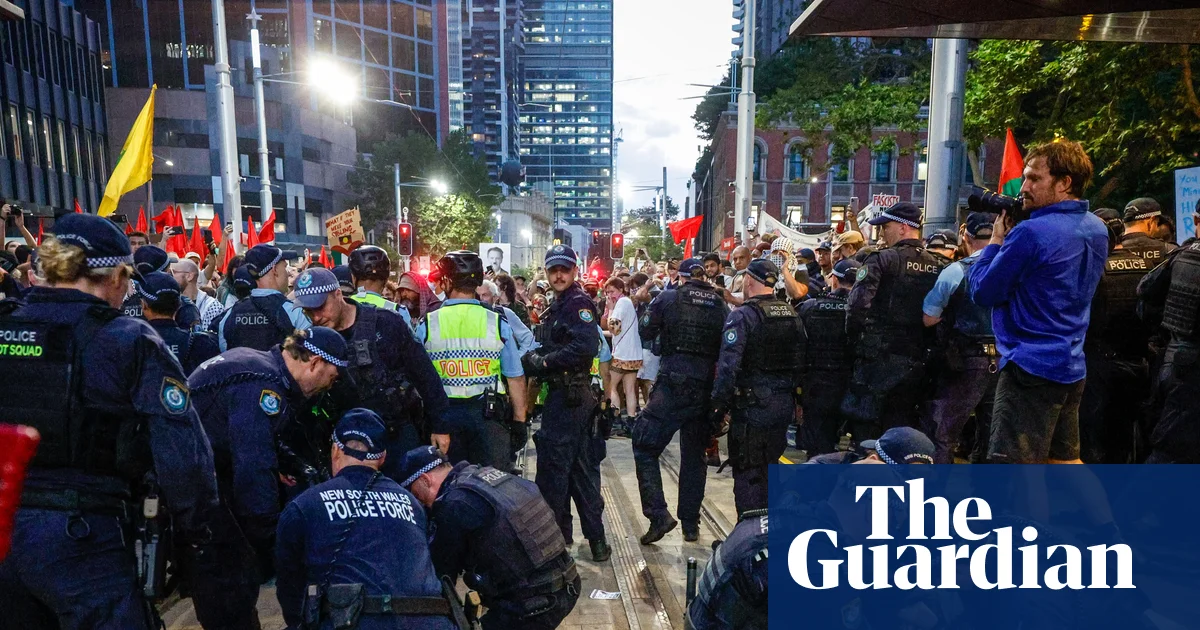

Chris Minns backs police in tough spot amid viral video of officers’ clash with protesters

In recent days, Australia has become a focal point of international controversy surrounding civil liberties, security measures, and the geopolitical ripples emanating from conflicts in the Middle East. The protests in Sydney against the visit of Israel’s president, Isaac Herzog have sparked fierce debates about police conduct, the limits of public assembly, and the influence of domestic political decisions on international diplomacy. The police’s aggressive response, including pepper spray and physical assaults on protesters, has drawn condemnation from local figures and raised questions about the blurring line between maintaining order and infringing on rights.

At the core of the unrest are broader security measures enacted in response to the Bondi terror attack, which left 15 victims. NSW Premier Chris Minns justified the police’s actions, asserting they were operating under a “difficult situation” created by restrictions on protests — themselves a reaction to the threat of terrorism. This highlights how **counter-terrorism strategies** can justify heightened police powers, often at the expense of civil liberties. Such measures reflect a growing trend where governments, citing security concerns, impose restrictions that can escalate tensions and infringe upon the rights of dissenting citizens. As analysts warn, this approach risks eroding democratic norms and setting dangerous precedents for the use of force in peaceful protests.

International observers, including human rights groups and political analysts, recognize the geopolitical impact of these events. The confrontation in Australia echoes similar patterns seen elsewhere — where domestic security concerns are leveraged to justify aggressive law enforcement, often with the tacit approval or complicity of political leaders. Green MPs in NSW and independent voices have accused Minns of deliberately creating a “pressure cooker” environment, exacerbating tensions rather than diffusing them. This domestically charged climate not only affects how societies respond to dissent, but also influences international perceptions of Australia’s stance on human rights and civil liberties. As international organizations like Amnesty International increasingly scrutinize such police actions, the risk remains that domestic crackdowns could serve as a blueprint, emboldening similar tactics in other nations facing internal dissent or protests rooted in geopolitical conflicts.

Furthermore, the handling of pro-Palestine protests during Herzog’s visit signals a troubling intersection between local policies and broader geopolitical conflicts. The police’s forceful tactics, documented in multiple videos, have intensified international concerns about the escalation of police-state dynamics in nations ostensibly committed to democratic principles. Historians warn that such episodes, if repeated across different regions, can accelerate a global shift towards authoritarianism disguised as security. Meanwhile, global institutions and allied nations are watching closely, questioning whether Australia’s approach signifies a rare reaction or a dangerous trend that could ripple across other democracies. This unfolding clash exemplifies the ongoing tension between security and liberty — a debate that will define the global order for decades to come, as the narratives of resistance and repression become increasingly intertwined.

As history continues to unfold, the events in Sydney underscore the fragile balance between safeguarding a nation’s security and preserving its democratic fabric. The actions of law enforcement on the streets have reverberations far beyond their immediate borders, touching on fundamental questions of human rights, sovereignty, and the very essence of free societies. The world waits, holding its breath, as these stories—etched into the annals of history—serve as a stark reminder that the fight for liberty is ongoing, and the outcome remains uncertain. How nations choose to respond today will determine whether we move closer to an era of authoritarian control or a renewed commitment to the enduring values of freedom amidst the turbulent currents of history.

Author Chris Kraus on Conquering Fame, Navigating Drugs, and the Cultural Power of I Love Dick — An Honest Reflection

In an era saturated with distraction and cynicism, the writings of Chris Kraus serve as a compelling reminder of culture’s vital role in shaping identity, tradition, and society. Her works—particularly I Love Dick—are more than autofiction; they are acts of radical disclosure that anchor us in the complex tapestry of human experience. Kraus’s candor exposes the raw underbelly of personal and collective life, transforming personal struggle into a form of cultural reportage. Just as Ortega y Gasset emphasized that “I am myself and my circumstances,” Kraus’s honest narrative frames her life within the broader societal currents that infiltrate every human endeavor. Her storytelling demonstrates that personal memory is a vital thread in the fabric of societal identity, and that through it, we glimpse both our history and our potential future.

Much like the cultural upheavals of the past that have reset societal norms, Kraus’s work recognizes that contemporary culture is a battleground of memory and prophecy. Her recent publication, The Four Spent the Day Together, delves into her own harrowing experiences—marriage, addiction, loss, and the brutal violence that pervades American working-class communities—reflecting a society plagued by nihilism and despair. Here, Kraus uses her journalistic rigor not merely to tell her story but to spectrally comment on the underlying currents shaping our collective destiny. As T.S. Eliot observed, “The past’ness confronts us uncomfortably, since it makes us realize that our present is layered upon the ruins of what was.” Kraus’s narrative practice distills this truth, reminding us that society’s foundation rests upon the memories we choose to confront and express, shaping the future we dare to imagine.

  • Culture as memory: Kraus’s meticulous use of diaries, photographs, and court transcripts anchors her stories in tangible reality, embodying a tradition of experiential truth that echoes Chesterton’s view that “the test of a good culture is whether it endures through the ages.”
  • Culture as prophecy: Her fearless engagement with the darkest aspects—addiction, violence, societal depravity—provides a prophetic warning about the illusions of progress and the importance of confronting uncomfortable truths.
  • Historical parallels: Kraus’s illumination of the American cultural landscape echoes Tocqueville’s insights into the democratic spirit—an ongoing struggle between individual authenticity and collective self-deception, where the language of culture becomes a tool for resistance or capitulation.

In her reflections, Kraus reminds us that culture is neither static nor inert. It is the memory of what was, and the prophecy of what might be, woven into the very fibers of society’s narrative. Her work challenges us to recognize our stories as essential acts of cultural resistance—an affirmation that human life, even in its most fractured and painful moments, is meaningful. As G.K. Chesterton famously urged, “A dead thing can go with the stream, but only a living thing can go against it.” And it is through this act of cultural defiance—by bearing witness, by telling the unvarnished truth—that we forge the continuity of tradition and light the way toward future horizons. For in the end, culture remains both a memory of humanity’s profound past and a prophecy of the enduring spirit yet to come—an eternal echo and an unending call to remember and create anew.

Social Media Auto Publish Powered By : XYZScripts.com



