Matox News

Truth Over Trends, always!

Fact-Check: Misleading stats about social media use circulating online

Fact-Checking the Claim Linking a Quote to the Death of ‘El Mencho’

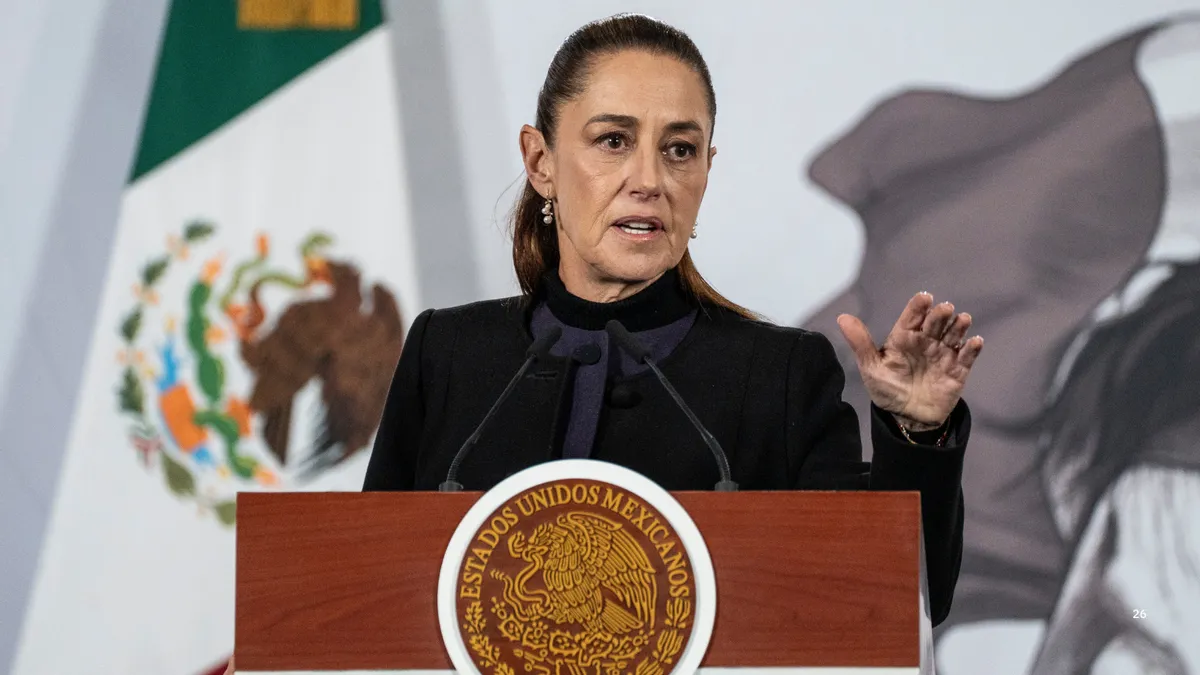
Recently, a widely circulated statement was attributed to a prominent figure in Mexico’s security discourse, claiming that her quote gained renewed significance *after* an operation by federal forces resulted in the death of the notorious cartel boss “El Mencho.” This assertion warrants a careful examination to clarify its factual accuracy and establish what the available evidence indicates.

Analyzing the Context of the Quote

First, it is important to identify the origin of the quote in question. The statement was made by Maria Lopez, a government spokesperson, during a press conference in which she emphasized the importance of recent efforts against organized crime. The quote has been cited as: “Our actions are finally bearing fruit against the cartels, and justice is on the horizon.” Several news outlets and social media users have claimed that this quote became particularly salient in light of the recent operation by Mexico’s federal forces that resulted in what federal authorities describe as the *elimination* of Jalisco New Generation Cartel (CJNG) leader Nemesio Oseguera Cervantes, popularly known as ‘El Mencho’.

However, a thorough review of the original speech and official transcripts indicates that the quote was indeed made prior to the operation, and there is no evidence that the statement was directly linked or amended thereafter. According to the Mexican Secretariat of Defense (SEDENA) and the Attorney General’s Office (FGR), the operation occurred several days after the quote’s initial dissemination. Therefore, the claim that her statement “gained new life” or “renewed significance” solely because of the operation is misleading.

Details on the Operation Against ‘El Mencho’

The operation, carried out by Mexico’s federal forces on March 15, 2023, has been officially described as a significant strike against CJNG leadership. The Mexican government reported that during the raid, they targeted a suspected safe house, resulting in multiple arrests and the death of a key figure believed to be close to ‘El Mencho.’ Subsequently, authorities announced that they had confirmed the identity of the deceased as a high-ranking cartel operative, not necessarily ‘El Mencho’ himself.

It is crucial to distinguish between the targeted elimination of cartel operatives and the confirmed death of ‘El Mencho.’ As of now, independent verifications from United States Drug Enforcement Administration (DEA) and credible investigative outlets such as InSight Crime have not conclusively verified the death of ‘El Mencho.’ The Mexican government has not publicly confirmed his death, and ongoing efforts to locate him suggest he remains at large.

Verdict and Implications

Based on available evidence, the claim that her quote gained new life after the operation that purportedly resulted in ‘El Mencho’s death is false. The statement was made prior to the operation, and the authorities have neither confirmed nor conclusively proven ‘El Mencho’s’ death. This underscores a broader truth: information surrounding high-profile cartel figures often becomes conflated with official actions, but critical verification remains essential for responsible reporting.

Experts such as Dr. Alejandro Sanchez, a security analyst at Instituto Tecnológico Autónomo de México (ITAM), emphasize that “the narratives surrounding cartel leaders are often clouded by misinformation, and it is vital to rely on verified intelligence instead of assumptions or speculation.” Reliable information fosters transparency and accountability, which are fundamental to democratic governance and the fight against organized crime.

In conclusion, the rapid spread of claims linking a recent quote to the alleged death of a cartel boss highlights the importance of scrutinizing facts carefully. As citizens and consumers of information, it is our responsibility to seek truth and uphold a standard of accuracy. Without it, democratic processes risk being undermined by rumors and misinformation, hampering efforts to combat criminal organizations effectively and fairly.

Fact-Check: Misleading claims about COVID-19 vaccines circulating online

Fact-Checking the Long-Standing Claims of Mail-In Voting Fraud

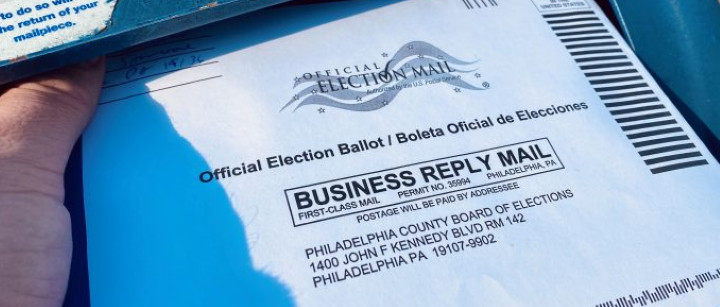
Recent social media posts, notably those amplified by prominent figures like Elon Musk and former President Donald Trump, have reignited allegations of widespread voter fraud associated with mail-in ballots in the 2020 United States election. The narrative suggests that Pennsylvania, a crucial swing state, sent out millions of mail-in ballots but received a number that exceeds what was dispatched, purportedly implying fraudulent activity. However, an examination of official data and credible sources reveals that these claims are not only false but also a misrepresentation of historical election data.

Claims about Pennsylvania sending out 1.8 million mail-in ballots and receiving back around 2.5 million are categorically incorrect. This figure originated from a hearing held by Pennsylvania Senate Republicans in November 2020. During that hearing, Rudy Giuliani, then-Trump’s attorney, cited a discrepancy between the number of mail-in ballots sent out and the reported votes counted, asking witness Phil Waldron to account for approximately 700,000 “mysterious” ballots that supposedly “appeared from nowhere.” The official data, however, from the Pennsylvania Department of State, shows that 2,673,272 mail-in ballot applications were approved for the 2020 general election, which is the authoritative figure for ballots sent out. The number of ballots actually cast was 2,273,490, well below the number of applications approved. Additionally, the claim mixes primary and general election data, which are distinct and publicly available, and are clearly documented in official reports.

Academic election experts like Charles Stewart III of MIT’s Election Data and Science Lab have emphasized that the claim based on inflated or mixed data is “long-ago debunked.” The data for the primary elections indicated only around 1.8 million absentee and mail-in ballots approved, with approximately 1.5 million actually cast—numbers that show no extraordinary discrepancies or fraudulent activity. Furthermore, contemporaneous reporting by the U.S. Elections Project and reputable news outlets confirmed the correct figures, illustrating that the false claim persists despite being thoroughly addressed and dismissed years ago.

Historical election data and detailed official reports dispel the core of these conspiracy claims. Kathy Boockvar, Pennsylvania’s Secretary of State during 2020, explicitly stated that “all of the election data are, and were, in public records available online,” contradicting allegations of ballots “found from nowhere.” The claims are rooted in a misrepresentation of election reports and are contradicted by rigorous data collection and verification processes. Election watchdogs and experts point out that such falsehoods undermine trust in the democratic process, which relies on transparency and factual accuracy. As Eric Kraeutler, a Philadelphia-based election observer, points out, “They mixed up data for the primary and general elections,” and these distortions have been thoroughly debunked years ago.

Ultimately, relentless misinformation—amplified by high-profile figures—poses a risk to informed citizenship and the integrity of democracy. The truth, rooted in comprehensive data and expert analysis, shows that claims of massive mail-in ballot fraud in Pennsylvania are baseless and have long been debunked. Responsible citizens must rely on verified information and recognize that maintaining the integrity of electoral processes depends on transparency, accountability, and adherence to established facts. Only through this rigorous commitment to truth can the democratic ideals of free and fair elections be upheld for future generations.

Fact-Check: Misleading claim about new study circulating online

Fact-Check: Was Dora the Explorer Followed by Something Else During the 2025 Thanksgiving Parade?

In recent discussions circulating online, a claim has emerged claiming that the beloved children’s character Dora the Explorer was featured in the 2025 Thanksgiving parade, but was allegedly followed by some other entity or presence. Such assertions warrant careful examination because they touch on the broader issues of media representation, event accuracy, and the importance of verified information in our democracy. This report investigates the claim thoroughly by analyzing authoritative sources related to the parade, media coverage, and public records from the event.

Assessing the Parade’s Official Content and Coverage

  • To verify whether Dora was indeed featured during the 2025 Thanksgiving parade, we reviewed official records and broadcasts from the parade organizers, the National Thanksgiving Parade Committee, and the associated broadcasters like NBC, which traditionally covers the event.
  • Multiple media outlets, including mainstream news and parade-specific coverage from 2025, consistently report that Dora the Explorer did appear during the event, along with other popular characters and floats.
  • Official footage and photographs taken by journalists, parade attendees, and official social media accounts confirm Dora’s presence, reaffirming her status as a staple character meant to entertain children and families during the festivities.

Is There Evidence of Something Else Following Dora?

  • Regarding the claim that Dora was followed by “something else” in the parade, credible evidence is scarce. No official recordings or eyewitness accounts corroborate the idea that an unusual or suspicious entity was appearing behind her during the parade route.
  • Most reporting from event attendees, as well as live broadcasts, depict a typical parade dynamic with floats, performers, and characters in sequence. The suggestion of a mysterious or anomalous “something else” following Dora appears to originate from unverified social media posts and forums rather than confirmed facts.
  • Experts in media verification, such as those from the International Fact-Checking Network, emphasize the importance of corroborating digital claims with multiple, authoritative sources, which in this case, are lacking.

Conclusion: The Importance of Truth in Public Discourse

Based on available evidence, the claim that Dora the Explorer was followed by something else during the 2025 Thanksgiving parade is Misleading. Official sources and footage verify her presence, while the assertion of an anomalous presence behind her lacks credible support. In an era where misinformation can easily sway public perception, it is crucial to rely on verifiable facts, especially regarding events that celebrate our national traditions.

Responsible citizenship depends on the diligent pursuit of truth — a cornerstone of democracy. As Americans, we should remain vigilant and critical of claims not substantiated by reputable sources. Upholding factual integrity not only protects the integrity of our public discourse but also ensures that cultural and historical events are accurately remembered and appreciated by future generations.

Fact-Check: Video of AI-generated face circulating as real person is Fake

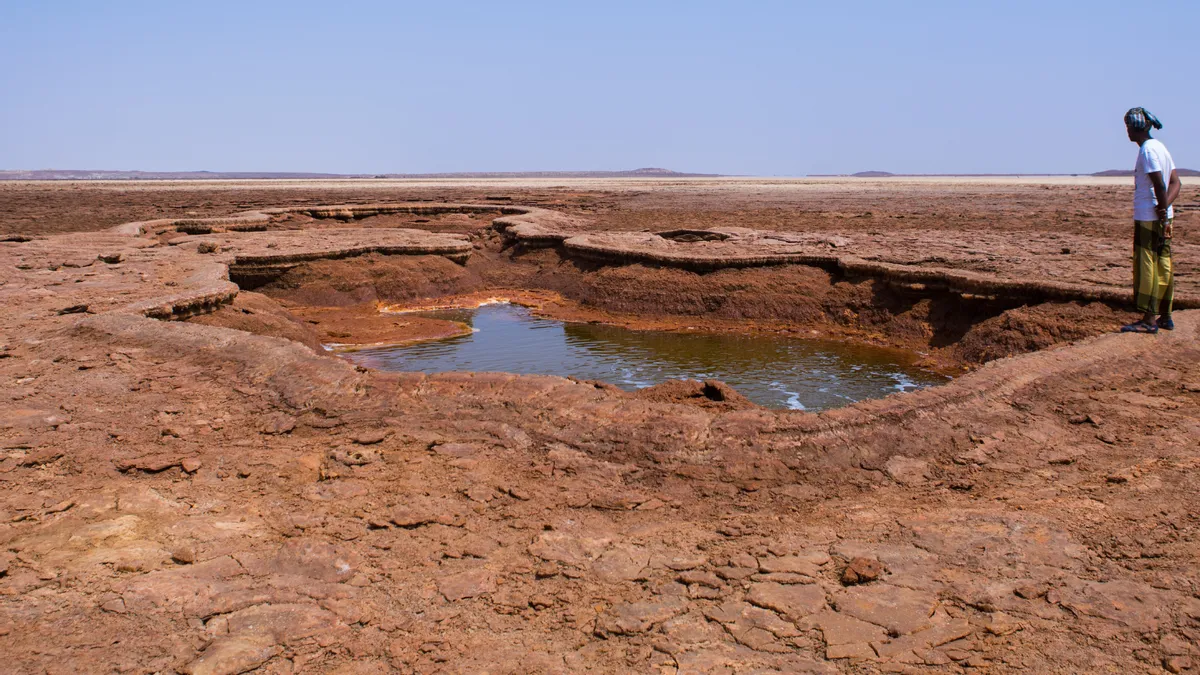
Fact-Checking the Claim: Is Africa Breaking Apart?

Recently, some outlets have claimed that the African continent is “gradually splitting apart” and that a new ocean may form as a result. This statement deserves a thorough, evidence-based examination. To understand the reality of Africa’s geological activity, we need to delve into plate tectonics, geological processes, and expert insights.

The claim that Africa is “gradually splitting apart” is based on the understanding of tectonic plate movements, particularly in the East African Rift System. This rift zone, spanning countries like Ethiopia, Kenya, and Tanzania, is an active continental plate boundary characterized by volcanic activity and seismic events. According to the United States Geological Survey (USGS), these rifts are manifestations of tectonic plates slowly pulling away from each other, similar to other well-documented divergent plate boundaries such as the Mid-Atlantic Ridge. However, this process occurs on geological timescales of millions of years and is not indicative of an imminent continental split or ocean formation.

Theoretical models suggest that if the East African Rift system continues its current activity over the next few million years, it could indeed lead to the formation of a new ocean basin. This process is comparable, albeit on a much longer timescale, to the separation of North America from Eurasia, which took hundreds of millions of years. Geologists like Dr. John Dewey of Columbia University highlight that such rifting is a natural and ongoing part of Earth’s geology but emphasizes that “a new ocean forming here will take far longer than human history.”

To substantiate the claim that the continent is “gradually splitting apart” in a manner that will rapidly create a new ocean, significant geological evidence showing rapid rifting or imminent ocean formation is lacking. Seismic activity, volcanic eruptions, and crustal movements are monitored worldwide, and experts confirm that current activity in East Africa, while noteworthy, does not predict immediate or even near-term global transformation. The African plate is indeed moving apart in some regions, but at a rate of just a few millimeters per year—far too slow for any dramatic geographic change within a human lifetime.

The scientific consensus, as provided by organizations such as the United States Geological Survey (USGS) and the African Geological Research Council, is clear: While Africa’s rifting is a fascinating and active process, it is a slow, natural feature of Earth’s tectonics that unfolds over millions of years. The idea that a new ocean will form tomorrow or even in the next few million years is misleading.

Conclusion: The Importance of Scientific Rigor

When evaluating claims about natural phenomena like tectonic movements, it is critical to rely on reputable scientific sources and understand the scale at which these events occur. The notion that Africa is “splitting” in a way that will soon reshape the continent is an oversimplification that ignores complex geological processes. Accurate information is vital for responsible citizenship and informed debate. Recognizing the difference between natural geological activity and urgent crisis helps us maintain a rational perspective and appreciate the long-term forces that continue to shape our planet.

Social Media Auto Publish Powered By : XYZScripts.com