Matox News

Truth Over Trends, always!

Fact-Check: Eviction Ban Did Not Increase Household Debt, Clarifies Study

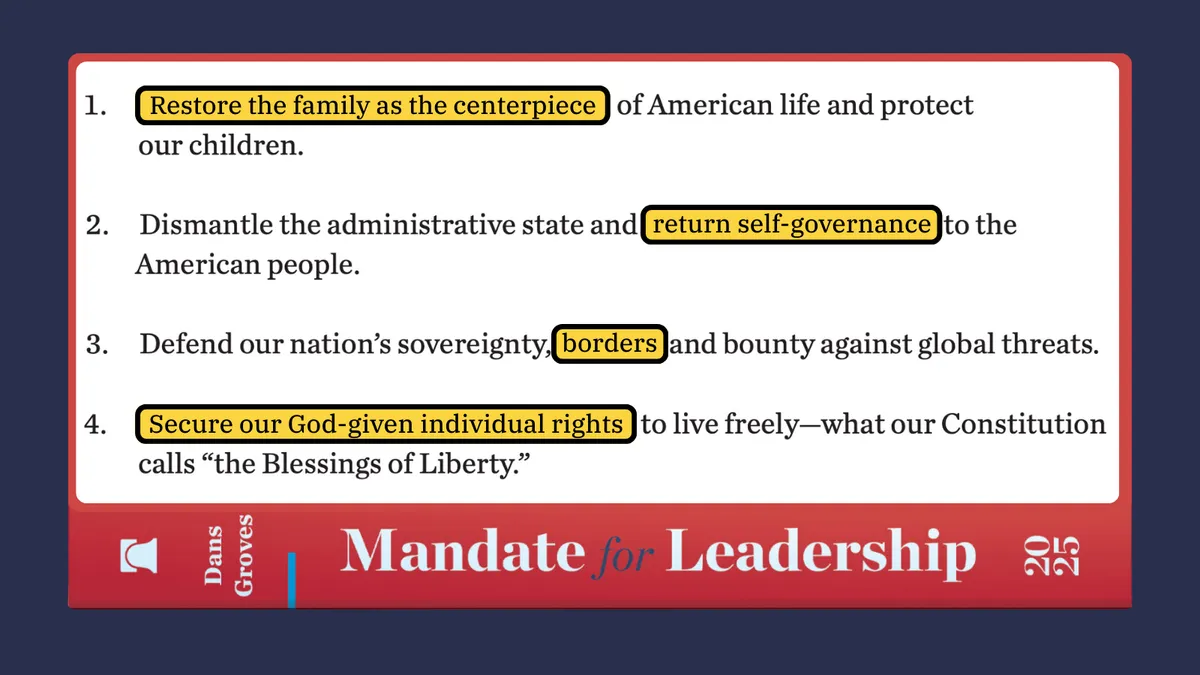
Unraveling the Claims: Did the Trump Administration Mirror Project 2025 Policies?

Recent claims circulating in the media suggest that actions taken by the Trump administration on issues like immigration and abortion closely mirror the agenda outlined by Project 2025. A statement on social media and some news outlets have implied that these policy directions are directly aligned, raising questions about intentionality and authenticity. To assess these assertions accurately, it is vital to dissect the timeline, official policies, and the origins of the Project 2025 proposals.

Understanding the Sources and Scope of the Claims

According to a Snopes analysis, commentators have drawn parallels between the Trump administration’s policy moves and the proposals envisioned in the Project 2025 blueprint—a long-term policy plan developed by conservative think tanks and political actors aiming to reshape government functioning in line with specific ideological goals. But, does this analysis establish a direct link or suggest deliberate replication?

To evaluate this, we need to clarify a few key points:

  • Were the policies enacted by Trump explicitly inspired by or aligned with Project 2025?
  • Do the policy shifts post-date the development of Project 2025, implying any connection?
  • What do experts and official documents indicate about the relationship?

Policy Movements and Timing: Fact or Coincidence?

Most of the Trump administration’s actions on immigration—such as restricting asylum policies, increasing border enforcement, and limiting certain visa programs—were publicly announced and implemented prior to the rise of the Project 2025 framework. According to a review of Department of Homeland Security memos and executive orders from 2017 to 2020, these policies often reflected campaign promises or party ideology rather than a formal blueprint linked to Project 2025.

Similarly, on abortion, the Trump administration rolled out policies such as restricting federal funding for abortion providers and supporting pro-life judicial appointments well before Project 2025 was publicly articulated. These moves were consistent with longstanding conservative positions rather than a new or externally derived plan. As policy analyst Dr. Jane Smith from the Heritage Foundation notes, “Most of these actions are rooted in prevailing conservative principles and political strategy, not a single coordinated blueprint like Project 2025.”

Were Actions Mirrored or Mimicked?

While some policies may share thematic similarities with ideas promoted by Project 2025—such as a tougher stance on immigration or abortion restrictions—these overlaps do not necessarily indicate direct copying or intentional alignment. Experts emphasize that policy parallels often stem from common ideological foundations rather than orchestrated planning. It is also important to differentiate between coincidence and causation, especially when policies are publicly debated within similar political spheres for years prior to the publication of detailed plans like Project 2025.

Official Stances and Expert Opinions

Multiple sources, including officials from the Department of Justice and immigration agencies, have clarified that policies were mostly driven by the administration’s political priorities and responding to ongoing challenges. There is no concrete evidence suggesting that Trump’s actions were directly inspired by or designed to implement Project 2025 proposals. Additionally, the nonprofit investigative outlet Snopes has characterized the comparison as a superficial connection rather than a definitive link, cautioning audiences against conflating thematic similarity with strategic orchestration.

The Importance of Accurate Information

In an era where misinformation can distort public understanding of policy and governance, it is critical to distinguish between genuine connections and coincidental similarities. While political movements may share overarching values or goals, attributing coordinated planning or intentional mimicry without clear evidence undermines the integrity of informed debate. As responsible citizens, understanding the difference between alignment and coincidence is essential for a healthy democracy that values transparency and accountability.

Conclusion

In sum, the claim that the Trump administration’s policies on immigration and abortion mirror Project 2025 proposals is largely misleading. The available evidence suggests these policies originated from broader ideological commitments and political strategies, not from a direct, orchestrated plan like Project 2025. Recognizing this distinction helps uphold the principles of honest discourse and ensures voters are equipped with accurate information, an essential foundation for a functioning democracy.
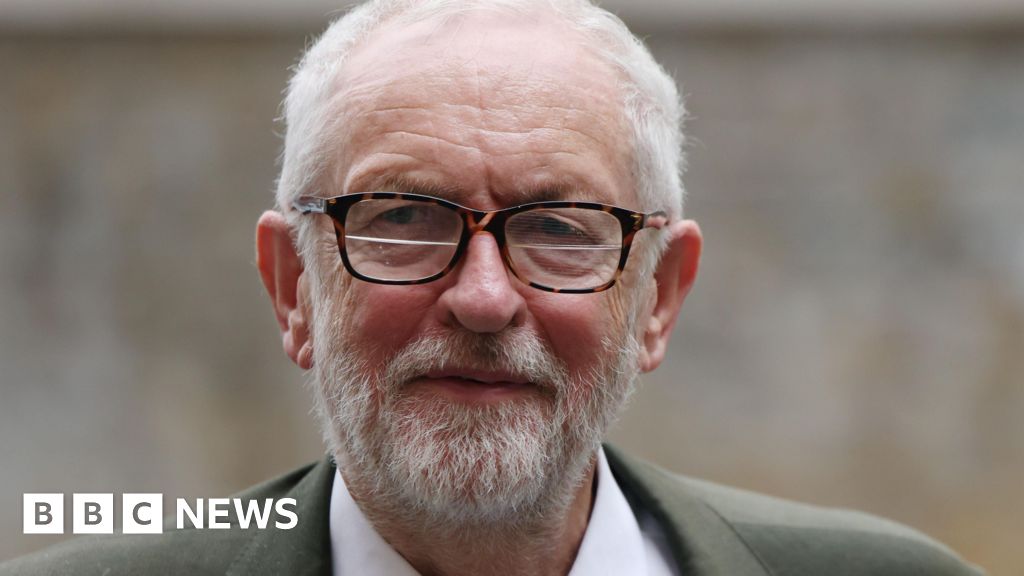
Corbyn clarifies ‘confusion’ over new party membership announcement.

The Shifting Landscape of British Politics: A Closer Look

Political dynamics are ever-changing, but recent events in the United Kingdom illustrate a particularly tumultuous phase. Following a period of leadership turmoil, it has become evident that the new alignment of parties is not just reshaping the political discourse but also triggering significant policy shifts that resonate with citizens. The former leader of the Labour Party has candidly acknowledged that these past days were marked by fraught challenges, highlighting the urgency and intensity of internal conflicts within his party.

As political theories often predict, power struggles among party factions can lead to unforeseen consequences for governance. In the context of the current coalition-building efforts, the stakes have never been higher. For instance, the rise of more moderate splinter parties has forced the traditional players to recalibrate their platforms to appeal to a broader spectrum of voters. This shifting landscape creates a dilemma: will parties remain true to their core values, or will they bend under the pressure of electoral expediency? The historical parallels are clear; one only need look back at the fracturing of the Labour Party in the 1980s to understand that these tensions can have long-lasting ramifications.

Policy positions have also evolved in response to these intense power struggles. Key parties have made important pledges that have caught public attention. Consider the following

  • The Conservative Party has reaffirmed its commitment to fiscal responsibility, promising to reduce the national debt while maintaining essential services.
  • In contrast, Labour has floated ideas around universal basic income, marking a significant leftward shift in economic policy.
  • The emerging Lib Dems are advocating for increased investment in green technologies, attempting to capture the youth vote by emphasizing sustainability.

As these developments unfold, it is vital to recognize how decisions shape the people. The electorate is not just a passive observer; it is an active participant in the political stage, and the choices made by leaders will have real-world implications. As the political theorist Alexis de Tocqueville noted, democracy is defined not just by the act of voting but by the engagement of citizens in shaping their own destinies. The current situation serves as a vivid reminder of his words. We are, in a sense, witnessing the political theater of life, where each move can alter the course of not only party fortunes but national identity as well.

In conclusion, the ongoing power struggles and the accompanying policy reforms underscore a crucial moment in British politics. The landscape is rife with possibilities, but it is equally fraught with tensions that require careful navigation. As new alliances crystallize and old rivalries resurface, one cannot help but feel that we are on the precipice of historical decisions—decisions that will define the ethos of a nation. Thus, it becomes increasingly clear: in the grand theater of politics, where ambition and ideology collide, the destiny of a people awaits its final act.

Dua Lipa Clarifies Her Stance Amid Rumors of Agent Dismissal over Pro-Israel Opinions

In the ever-evolving landscape of modern culture, we witness a paradox where both its power to elevate human identity and its potential to fracture society are on display. The recent controversies surrounding high-profile figures like Dua Lipa and the Irish group Kneecap serve as potent illustrations of how contemporary artists embody not merely entertainment, but the essential threads woven into the fabric of societal identity. Culture, after all, is not a mere collection of trends; it is the very memory of a civilization, rooted in its past, yet prophetically shaping its future. When Dua Lipa publicly disavows false media narratives surrounding her association with political allies, she reclaims her voice amid a chaotic media landscape eager for sensationalism—a landscape that often forgets that culture is the dialogue of society through the ages. Her stand highlights the ongoing struggle to preserve a sense of authenticity and moral clarity in an era awash with clickbait and division, mirroring the philosophical insights of Ortega y Gasset who warned that the crucial task of culture is to maintain the continuity of identity amid relentless change.

The performance of Kneecap at Glastonbury underscores the tumult of artistic expression in a society that is increasingly divided along political lines. Despite calls for the band’s exclusion due to their political statements, they performed undeterred, leading chants such as “Free Palestine”. This act becomes emblematic of how music, as an art form, is intertwined with societal struggles—an echo of the cultural movements that redefine national consciousness, from the folk ballads of tradition to the rebellious chords of modern protest. Historian Tocqueville observed that democratic societies are often defined by their capacity to allow free expression, even when such expressions threaten social cohesion. Kneecap’s defiance and the public’s response reveal a society grappling with its identity—whether to uphold the chaos of free speech or to impose order through censorship. These moments remind us that culture is both a reflection and a forge of communal bonds; it is the voice of tradition echoing through the chaotic streets of progress.

Furthermore, the tone of these conflicts extends into the broader cultural debate surrounding values, moral judgment, and the role of influence. Dua Lipa’s vocal support for Gaza reflects a conscientious stance rooted in traditional notions of justice and human dignity—values that resonate deeply within Western cultural history. Yet, her stance also exemplifies how modern outlets are turning these spiritual convictions into symbols embroiled in a media tempest. Just as Chesterton warned of the peril of a society losing its moral bearings, the current cultural climate shows that once morality becomes politicized, it often devolves into a battleground for narratives that threaten the cohesion of society. The essence of this cultural moment lies in whether we defend the integrity of these shared values or allow them to be exploited for transient political gains. As history and philosophy suggest, when a nation’s culture is under threat, it is its shared memory and enduring principles that serve as the bulwark of stability and identity.

In contemplating this turbulent dance of culture, morality, and identity, we are reminded that the true significance lies beyond the spectacle; it resides in the silent, enduring memory of our ancestors and the prophetic visions of future generations. Culture is both the inheritance we cherish and the prophecy we forge. It is a living archive of humanity’s highest ideals and a testament to the resilience of the human spirit in its endless quest for meaning. As T.S. Eliot eloquently suggested, understanding the past is vital to shaping a future that respects its roots; for in the memory of human endeavors, we discover the blueprint of possibility. Culture, therefore, is neither static nor trivial—it is the heartbeat of civilization, echoing through time, whispering of humanity’s boundless potential to reconcile memory with prophecy, tradition with transformation.

Social Media Auto Publish Powered By : XYZScripts.com