
Matox News

Truth Over Trends, always!

France tightens rape laws, making consent clear after Gisèle Pelicot case

France’s Landmark Legal Shift on Consent and Sexual Assault

The French parliament has recently taken a historic step by officially ratifying an amendment redefining the legal framework surrounding sexual assault and rape. Previously, laws in France defined rape as “any form of sexual penetration committed with the use of violence, coercion, threat or surprise.” This definition, while comprehensive, left room for legal debates and weaknesses, specifically concerning the element of consent. The new legislation explicitly recognizes that all sexual acts performed without consent constitute rape, marking a significant metamorphosis in how the law perceives and prosecutes sexual violence.

This reform emerged after years of intense parliamentary debate, driven by the social and political fallout from high-profile cases such as last year’s Pelicot rape trial. In that case, 50 men were convicted of raping Gisèle Pelicot while she was drugged unconscious by her husband, Dominique. Defense lawyers argued that since the accused were unaware of her state, they couldn’t be guilty of rape. This case symbolized the gaps and ambiguities in existing laws and spurred advocates to push for a clearer, more precise legal definition of what constitutes non-consensual sexual acts. The new framework stipulates that consent must be “free and informed, specific, prior, and revocable”, and emphasizes that consent cannot be inferred from silence or a lack of reaction—standing as a critical reassurance for victim protection across Europe and beyond.

The legal shift also reflects broader geopolitical and cultural implications. France’s move aligns with a continent increasingly attuned to protecting individual freedoms and rights; countries such as Sweden, Germany, and Spain already implement consent-based laws, and advocacy groups like Amnesty International France have hailed this change as a “historic victory” in the fight against sexual violence. This evolution in law is not simply symbolic; it reshapes the societal landscape, making clear that sexual autonomy is inviolable. As analysts argue, such measures bolster the rule of law while challenging traditional notions about criminal intent—raising questions about how culpability is determined where consent is compromised. The European legal trend signals a wave of reform that could influence other nations grappling with similar issues, with regional and global ramifications for how sexual violence is understood and prosecuted.

Yet, critics voice concern that this reform could lead to unintended consequences. Some argue it might turn sexual relations into contracts and demand victims provide concrete proof they did not consent, complicating the pursuit of justice. Others worry it could lend itself to a legal environment where accusations become difficult to prove, especially in cases involving ambiguity or lack of evidence. Still, France’s highest court, the Conseil d’État, reaffirmed the legislation, stating that it underscores the fundamental *right to personal and sexual freedom*—a powerful statement that echoes across the continent. As societal norms shift and the legal landscape evolves, the question remains: how will societies reconcile the need for justice with the realities of human intimacy?

In a world where the battlegrounds of morality and legality continue to clash, France‘s decisive move toward consent-based law signals a broader reckoning with the very nature of personal freedom. The decision impacts not only domestic policy but also challenges traditional notions of authority and individual sovereignty in a rapidly changing cultural landscape. As history unfolds in these legislative halls, the weight of this moment hangs heavily—an enduring reminder that the fight over justice, liberty, and human dignity is ongoing and far from over. The tide of change has now begun, and the world watches as the balance of power between societal norms and individual rights is remade before our very eyes.
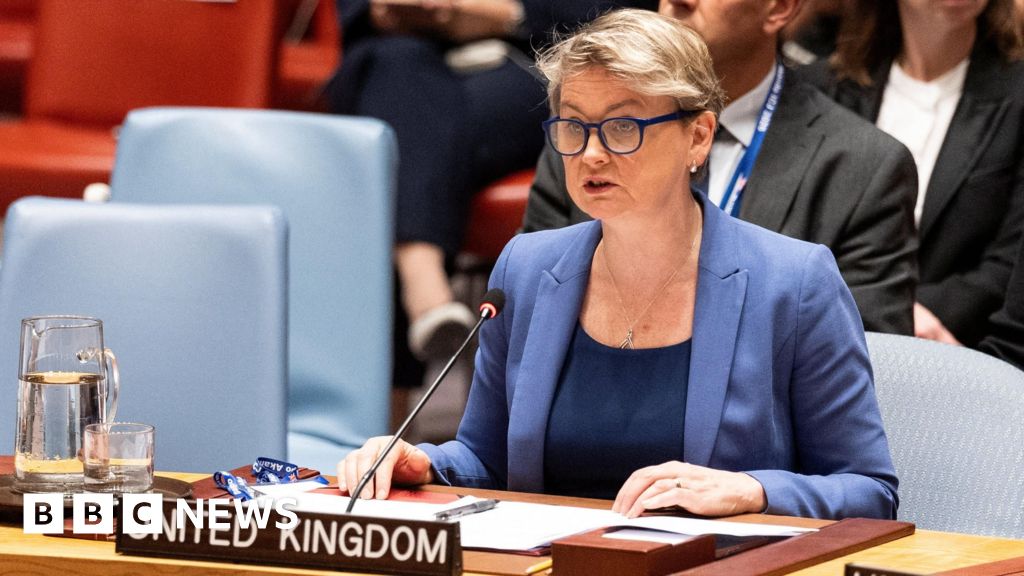

Iran sanctions return, a decade after the nuclear deal — a clear message on stability and security

Reinstatement of UN Sanctions on Iran: A Critical Moment in Global Geopolitics

The international landscape is once again teetering on the brink of escalation as UN economic and military sanctions have been reimposed on Iran, nearly a decade after the landmark Joint Comprehensive Plan of Action (JCPOA) was signed in 2015. This move, triggered by the European signatories – the UK, France, and Germany – underscores the high-stakes game of diplomacy and power politics in the Middle East. Their decision to activate the “snapback” mechanism, citing Iran’s continued nuclear escalation and non-cooperation, signals a pivotal divergence from the initial optimism that once surrounded the deal. As the European nations accuse Tehran of violations, the sanctions aim to curb Iran’s nuclear activities, which they argue threaten regional and global stability.

The situation escalated further after Iran suspended inspections of its nuclear facilities—an obligatory component under the 2015 agreement—following devastating Israeli and American airstrikes in June on Iran’s nuclear sites and military bases. These strikes, led by the US and Israel, were intended to reverse Iran’s nuclear advancements and punish its support for regional proxies. However, many analysts, including voices from the International Atomic Energy Agency (IAEA), question whether such military actions have significantly hindered Iran’s capabilities, or if they merely escalate tensions without solving underlying issues. Iran’s President Masoud Pezeshkian insists that his country harbors no ambition for nuclear weapons, framing the reimposition of sanctions as “unfair, unjust, and illegal”. But the global community remains divided, with Western powers worried that Iran’s nuclear program has strayed far beyond peaceful development into the realm of weaponization.

The geopolitical impact of these decisions is profound. The reimposition of sanctions strengthens the US and Israeli narratives that Iran’s nuclear ambitions pose an existential threat. Meanwhile, Iran warns that these measures undermine diplomatic efforts and threaten regional stability. The European allies, despite their hopes for renewed negotiations, expressed “no choice but to trigger the snapback,” citing repeated breaches by Tehran—notably its failure to cooperate with the IAEA and its refusal to disclose its stockpile of high-enriched uranium. These moves could potentially isolate Iran further, but they also risk deepening the cycle of hostility and mistrust—a game where today’s sanctions could set the stage for tomorrow’s conflict. International organizations like the United Nations warn that, absent fruitful diplomacy, the risk of a regional war or nuclear proliferation increases exponentially.

As Iran dismisses the sanctions as “illegal” and “unjustified,” it signals a refusal to capitulate, further complicating international efforts for a peaceful resolution. The Iranian government has also vowed to respond firmly to any actions that undermine its sovereignty, warning that attempts to weaken its rights could lead to “appropriate responses.” The current standoff marks a critical juncture—one that could decide the future trajectory of Middle East stability. Historians and geopolitical analysts emphasize that these escalations are not isolated incidents but part of a larger pattern of emerging superpower struggles, where alliances are tested and global order is under relentless strain. How these decisions ripple across borders and societies will ultimately define the next chapter of 21st-century history—an unfolding saga of diplomacy, defiance, and the relentless pursuit of security.

Kimmel stands his ground with bold message to Trump, sending a clear call to the youth and values we hold dear

In the shifting currents of contemporary culture, the significance of art, media, and entertainment extends far beyond mere amusement; they stand as the living pulse of our collective identity. As Ortega y Gasset famously observed, “A society is always as strong as its cultural memory.” Today, figures like Jimmy Kimmel and Robert De Niro serve not only as entertainers but as voices in the ongoing dialogue about truth, freedom, and societal norms. Their confrontations with political figures and institutions highlight a profound truth: culture is both the mirror and the torch of society’s values. This culture—whether it lives in the nuances of late-night monologues or in the underlying principles of national discourse—remains an indelible part of our heritage and a prophecy of our future trajectory.

In recent weeks, Kimmel’s return to television amidst controversy exemplifies the deliberate effort to preserve the space for free speech—an enduring pillar of Western democracy. His refusal to entirely apologize for his comments about Charlie Kirk’s tragic death underscores a vital aspect of cultural resilience. As Chesterton once argued, “The true object of a joke is not to make you laugh, but to make you think.” His bold stance challenges the rising tide of censorship, which some critics argue is fueled by government or corporate interests, seeking to silence dissent under the guise of civility. Kimmel’s critique of the FCC, with humorous yet pointed sketches featuring Hollywood icon Robert De Niro, condemns the misuse of authority and mob tactics that threaten individual expression. This belligerent stand reveals that culture is not static but a battleground—where the preservation of tradition meets the demands of modernity, often at odds with each other.

  • Milestones in cultural battles: From Chesterton’s rallying cry for tradition to Eliot’s recognition of the poet as “the memory of mankind”.
  • Key themes: The importance of historical context, the defense of free speech, and the critical role of cultural icons in shaping societal values.
  • Contemporary reflection: Figures like Kimmel and De Niro epitomize the modern struggle—balancing entertainment, political commentary, and the defense of civil liberties.

Yet amidst these clashes, the essence of culture remains rooted in its dual role as memory and prophecy. It is a repository of our shared past—celebrating heroism, lamenting follies, preserving tradition—and a guidepost for the future, orienting society amid the chaos of change. As Tocqueville noted, “America’s strength lies not only in its institutions, but in the moral fabric woven by its culture.” Today, we stand at a crucial juncture: to uphold the values that forge our identity and prevent the erosion of our civil liberties. Culture, then, is the spiritual inheritance that roots us in history yet propels us towards our destiny. It is both the echo of humanity’s voice through the ages and the prophecy inscribed in the ideals we choose to defend. In this undying dialogue, humankind’s enduring hope rests—a hope that culture will always be both memory and prophecy, guiding us through darkness into the dawn.

Social Media Auto Publish Powered By : XYZScripts.com



