Matox News

Truth Over Trends, always!

Peloton, time to stay in your lane—focus on innovation, not distractions

Peloton’s Reinvention: Innovation and Disruption Reshape the Fitness Industry

In a bold move indicative of industry disruption and strategic innovation, Peloton is shifting its business model under the leadership of Peter Stern, a former Apple executive known for pioneering features like Fitness Plus. This transition marks a pivotal moment for the $6,695 exercise equipment powerhouse, signaling a departure from its traditional home-focused hardware success to a broader focus on wellness.

Recent campaigns, notably featuring celebrity Hudson Williams, showcase a strategic rebranding away from the iconic Peloton bike, emphasizing diverse workouts in spacious gyms rather than sleek home apparatuses. This shift reflects a fundamental industry value: adaptability. According to Gartner analysts, such agility in product positioning serves as a critical differentiation in an increasingly crowded digital fitness market. Peloton’s pivot aligns with a broader trend—moving beyond mere equipment to integrate AI and personalized wellness solutions. However, their AI-driven features, including the much-hyped Peloton IQ, have so far underwhelmed, with users reporting disappointments in AI’s ability to deliver truly personalized plans, especially given the complexity and uniqueness of individual health needs.

The company’s strategy to expand into realms like strength, stress management, sleep, and nutrition suggests an attempt to disrupt traditional fitness paradigms by amalgamating multiple wellness dimensions into a single platform. According to MIT research, this integrated model could potentially serve as a benchmark for the entire industry, provided Peloton manages to execute its vision effectively. Yet, the skepticism remains: many experts believe that AI’s capacity to personalize health plans authentically at scale is still in its infancy. For example, early testing reflects a recurring pattern of generic, regurgitated advice, hardly the tailored solutions users demand. Such shortcomings threaten to stall Peloton’s disruption ambitions, underscoring an overarching industry warning: beware of hype cycles that detach product evolution from genuine user needs.

Looking ahead, Peloton’s renewed focus on partnerships beyond the home—collaborating with gyms and lifestyle brands—position it to challenge the entrenched gym conglomerates and wellness giants alike.

  • Emphasis on treadmills over bikes, signaling a strategic diversification of core hardware products
  • Implementation of AI features aimed at personalized coaching, yet currently limited in real-world effectiveness
  • Expansion into health areas like nutrition and stress management—a move blending traditional fitness with holistic wellness

Industry analysts from institutions such as Gartner and MIT emphasize that Peloton’s innovation-driven disruption is a double-edged sword. Success hinges on executing these ambitious transformations with genuine technological breakthroughs, not just buzzwords. The firm’s history—marked by viral commercials and subsequent challenges—serves as a cautionary tale about the dangers of overreliance on hype without substantive product evolution. Nonetheless, the company’s strategic pivot signifies a {window of opportunity} for those willing to adapt fast, as the global wellness industry enters an era where AI, wearable tech, and integrated health solutions will define the new normal.

Ultimately, Peloton’s next chapters will determine whether it becomes a true wellness disruptor or just another victim of the hype cycle. As the industry stands on the cusp of radical change, one thing is clear: the race to redefine fitness and health is relentless, and those who innovate with purpose—and precision—will lead the future.


Room for the Moon pushes boundaries with thrilling, experimental pop vibes

Emerging Cultural Shifts Signal Broader Innovation in Tech and Business

The recent resurgence of lunar-themed creativity, epitomized by the avant-garde album Room for the Moon by Russian artist Kate NV, underscores a broader pattern of disruption in both cultural industries and technology sectors. While much attention in recent years has been directed toward mission-driven space exploration—think NASA’s Artemis Program—the artistic response suggests a cultural pivot, leveraging innovative storytelling and audio design inspired by the moon’s mystique. This blend of nostalgia, whimsy, and technological experimentation points to a future where entertainment and tech are increasingly intertwined, fueling new markets and redefining consumer expectations.

In the realm of audio-visual innovation, artists like Kate NV push boundaries by combining whimsical storytelling with cutting-edge production techniques. Her album, influenced by Russian and Japanese pop from the 70s and 80s as well as children’s media, exemplifies an emerging trend—the fusion of retro aesthetics with modern electronic soundscapes. This trend aligns with predictions from industry think tanks like Gartner, which forecast that entertainment platforms integrating immersive sound and visual experiences will be key drivers of consumer engagement in the coming decade.

  • Features include proggy synths, reverberated drum machines, and eclectic instrumentation.
  • Creates immersive “fairytale” worlds accessible through digital streaming and VR technology.
  • Encourages developers to integrate artistic storytelling with interactive interfaces.

Moreover, these creative developments carry significant business implications. Companies that harness such *innovative content* will have the opportunity to lead in niche markets, while *large tech firms* seeking to innovate their content delivery will look to artists and creators whose work disrupts traditional boundaries.

The influence of these artistic innovations extends beyond culture into the strategic realms of tech development, where echoes of the ‘moonshot’ mentality continue to reshape industries. Innovators like Elon Musk and Peter Thiel emphasize how disruptive technology—such as AI, blockchain, and synthetic media—are revolutionizing existing markets. By positioning lunar and space-themed narratives as metaphors for technological aspiration, these developments serve as a rallying point for new business ventures, encouraging startups and established companies alike to pursue exploratory ambitions that were once confined to science fiction.

This convergence of artistic expression and technological disruption signals an urgent need for firms to adapt quickly, or risk obsolescence. As industry leaders continue to push the boundaries with innovations in autonomous systems, virtual reality, and AI-driven content, the underlying message remains clear: those who leverage disruptive ideas inspired by lunar and space themes will have a competitive edge in capturing the next generation of consumers and investors. The breakthrough artistic expressions symbolized by Kate NV’s album may seem niche, but they embody a fundamental shift—a signpost pointing at a future where creativity itself is an engine of technological progress and business agility.

In conclusion, the cultural and technological currents driving today’s innovation landscape demand urgent attention from industry stakeholders. As the line between art, science, and business continues to blur, embracing disruptive ideas—both on Earth and beyond—will be essential for leaders aiming to capitalize on the next wave of growth. The lunar metaphor extends beyond inspiration; it epitomizes humanity’s relentless pursuit of progress, urging us to confront tomorrow’s challenges with the same bold innovation that characterizes today’s emerging artistic and technological frontiers.

OpenAI’s economic ideas spark debate in D.C.—what young innovators need to know

In the rapidly evolving landscape of artificial intelligence, OpenAI has recently taken a notable stance with the release of a comprehensive 13-page policy paper outlining its vision for AI’s impact on the American workforce. Touted as a blueprint for responsible progress, OpenAI proposes a series of disruptive innovations designed to reshape the economic framework and accelerate the integration of AI into society. Among the proposed initiatives are a public wealth fund, a four-day workweek financed through “efficiency dividends,” and government-led transitional programs focused on shifting human labor into “human-centered” domains. These measures, theoretically, aim to harness the abundance brought by AI, fostering a future of prosperity and resilience. However, industry insiders and critics alike question whether such proposals are actionable or merely aspirational—highlighting the vital importance of innovation that disrupts traditional business models while aligning with a pragmatic regulatory landscape.

The timing and credibility of OpenAI’s policy initiatives, however, are under scrutiny. The very day the document was published, a meticulous New Yorker investigative report exposed a pattern of deception by Sam Altman and his leadership team, casting doubt on their sincerity in promoting responsible AI governance. The article details how Altman’s public advocacy for federal oversight has often clashed with hidden efforts to suppress legislation that would impose necessary safety standards. Critics point to a history of clandestine lobbying and legal tactics aimed at diluting regulatory efforts—further fueling fears of business-driven disingenuousness.

  • While the policy paper features forward-thinking ideas—such as reliance on AI-generated abundance and government-supported worker transition programs—its viability remains uncertain amidst past corporate behaviors.
  • Experts like Malo Bourgon of MIRI warn that visionary statements risk becoming “just a piece of paper” unless actual political and corporate influence aligns with these promises.
  • Additional skepticism stems from OpenAI’s complex history with regulatory engagement—initial advocacy for oversight contrasted by clandestine efforts to weaken legislation once political winds shifted.

The broader implications for business disruption are immense. Industry giants and startups alike are racing to harness AI’s potential, but regulatory mooring is more critical than ever. The disruption of established work paradigms—from automation to universal income ideas—demands entrepreneurs to move swiftly. As renowned analysts from Gartner and MIT emphasize, the next decade will be crucial for deploying AI ethically and effectively, lest global markets become destabilized by a lack of coordinated governance. Underpinning this urgency is a field characterized by relentless innovation, where firms like OpenAI threaten to redefine sector boundaries, yet are often hindered by political treachery and corporate greed.

Looking ahead, the trajectory of AI regulation and business integration will define the coming era. The window of opportunity to harness AI’s disruptive power — without succumbing to unchecked corporate or political machinations — is narrowing. For visionary entrepreneurs and resilient policymakers, the challenge remains to translate aspirational policy into tangible results amid the chaos of conflicting interests. Accelerating innovation, demanding transparency, and fighting for pragmatic regulation will be pivotal. The tech world stands at a crossroads: the decision made today will echo through the decades, determining whether AI becomes America’s ultimate toolkit for prosperity or its most potent source of instability. Time is of the essence, and urgency is essential — the future belongs to those who act decisively to seize AI’s disruptive promise while safeguarding societal integrity.

Pete Hegseth’s Pentagon AI crew: Ex-Uber exec and private equity titan join the squad

AI and Geopolitics: Pentagon’s Disruptive Move Toward Private Sector AI Dominance

In recent developments that signal a seismic shift in military-grade artificial intelligence, the Pentagon’s negotiations with leading AI developers underscore a new era of disruption and strategic vulnerability. The Department of Defense (DoD) has engaged in intense contract negotiations with Anthropic, whose advanced language model, Claude, is at the center of the controversy. This situation exemplifies how innovation-driven disruptions in AI are rapidly affecting national security frameworks—placing the traditional defense procurement model under unprecedented strain. With pent-up demands for secure, classified AI systems, the Pentagon’s push to secure multi-vendor contracts and mitigate single-supplier vulnerabilities reflect a clear adoption of best practices in tech risk management, yet reveal profound implications for the future of AI sovereignty.

The negotiations have drawn international attention, largely because of Pentagon’s urgency to establish at least two cleared AI vendors capable of handling classified data. Interestingly, despite current contracts with Google’s Gemini and xAI’s Grok, the security and capability differential among these models is stark. Google’s Gemini, considered a close competitor to Anthropic’s Claude, is on the verge of being cleared for classified deployments, while xAI’s Grok is viewed as less reliable. This “model shuffle” points to a broader industry consensus: the supply chain for classified AI models is fragile, and the risks of dependency on any single, possibly compromised, vendor could be catastrophic—especially as critics and analysts such as Gartner emphasize that “concentration risk remains the Achilles’ heel of AI deployment in high-stakes environments.”

The real business implications of this crisis are significant. Disruptive entries such as Anthropic have established themselves as indispensable—even as concerns about their morals and security practices persist. As Axios reports, Pentagon officials are explicitly aware that they are dependent on Anthropic’s AI precisely because “they are that good.” This paradox illustrates the core challenge for future defense procurement: balancing the need for cutting-edge innovation against security vulnerabilities. The negotiation process also demonstrates a broader shift where the private sector’s aggressive pursuit of AI dominance directly influences, and sometimes complicates, military strategy.

This evolving landscape foreshadows a future where the disruption of traditional defense models becomes inevitable. As the Biden administration emphasizes diversification of AI supply chains per new national security guidelines, the Pentagon’s procurement of multiple models—including discussions around the deployment of Gemini and potential exclusivity with Anthropic—emphasizes a move towards an AI-driven arms race. With tech giants and defense contractors like Emil Michael—whose controversial history at Uber signals the ruthless nature of business-driven tech innovation—now navigating a complex nexus of geopolitics and security, the industry is primed for a turbulent, hyper-competitive evolution.

Looking ahead, the implications for the broader tech ecosystem are clear: disruption is accelerating, and industry players with the most advanced models will wield outsized influence—not only in national security but also in the global power balance. The urgency surrounding diversifying AI vendors underscores the necessity of swift innovation, surgical risk management, and strategic alliances. Failure to adapt could result in catastrophic vulnerabilities, while those who lead the charge will dominate the emerging AI-augmented geopolitical landscape. As experts like Peter Thiel warn, “The future belongs to those who can manipulate the fabric of AI and national infrastructure faster than their rivals.” The question is no longer if disruption will come; it’s whether industry and government can harness it before they are overtaken by the relentless wave of technological revolution.

Discover Laurie Spiegel’s groundbreaking early ambient album—must-listen for young tech enthusiasts

Exploring the Intersection of Innovation and Disruption in Music Technology

Recent insights into the pioneering work of Laurie Spiegel, a trailblazer in electronic composition, underscore the rapid evolution of music technology and its profound implications for the industry. Spiegel’s 1980 masterpiece, The Expanding Universe, exemplifies a blend of synth experimentalism with nascent algorithmic composition techniques—a precursor to today’s AI-driven music creation. Her pioneering approach challenges traditional notions of instrumentation and composition, signaling a paradigm shift that continues to influence contemporary artists and tech innovators.

Within this context, we observe a broader disruption in how music is produced, consumed, and monetized. The absence of percussion in much of Spiegel’s work, juxtaposed with tracks like “Clockworks”—which ventures into proto-industrial and noise aesthetics—illustrates a departure from mainstream norms. Remarkably, the track’s elements suggest potential for unlicensed sample-free generation and repurposing within platforms like Underground Hip-Hop. This phenomenon signifies a potential for innovative artists and tech firms to leverage AI-powered algorithms for creating proprietary sounds, bypassing traditional copyright constraints and redefining value in digital music ecosystems.

Industry analysts, including Gartner and MIT researchers, emphasize that this wave of technological disruption is set to overhaul the music industry’s economic model. Companies such as OpenAI, Google, and Apple are investing heavily in AI-driven generative tools. These innovations promise to democratize music creation—reducing the barriers for aspiring artists—whilst presenting challenges for legacy labels heavily reliant on licensed recordings. Moreover, the rise of algorithmic works raises questions about authorship, ownership, and intellectual property in digital platforms, compelling stakeholders to rethink existing policies.

As disruptive technologies continue to mature, industry insiders warn that failure to adapt could lead to obsolescence for traditional players. The shifting landscape demands a forward-looking approach—embracing blockchain, AI, and real-time data analytics to remain competitive. The evolution from Spiegel’s experimental synths to cutting-edge neural network compositions encapsulates a larger trend: innovation is erasing the boundaries of creative production. Futures of music and tech are converging towards an era where artificial intelligence not only augments but potentially surpasses human creativity, requiring industry leaders and entrepreneurs to act swiftly or face obsolescence.

In conclusion, the current trajectory signals a period of unprecedented opportunity and threat. The rapid integration of AI and algorithmic techniques into music underscores the importance of strategic foresight. Key players—be they established giants like Apple or agile startups—must harness this momentum to shape the future of cultural creation. As industry icons like Elon Musk and Peter Thiel advocate for relentless innovation, the window to influence this transformative wave narrows. The relentless march of technology underscores one enduring truth: those who adapt today will define the soundscape of tomorrow.

Don’t Miss Out: The Mind-Bending Cult Classic ‘Possession’ Is a Must-See for Young Tech Fans

The Future of Tech Innovation: Disruption on the Horizon

In an era marked by rapid technological advancement, companies like OpenAI, Tesla, and Google are pushing the boundaries of perception, transforming the landscape of artificial intelligence, transportation, and online services. These firms exemplify how relentless innovation fuels disruption, forcing industries to adapt at an unprecedented pace. For the analytical minds at Gartner and MIT, this wave of change signals a fundamental evolution—one that prioritizes agility, sophistication, and market redefinition.

At the forefront of this disruption is the emergence of autonomous systems and generative AI, fundamentally altering how businesses operate and compete. OpenAI’s GPT models demonstrate how artificial intelligence can augment human decision-making, streamline operations, and even redefine content creation. As Peter Thiel highlights, such innovations threaten legacy industries by lowering barriers to entry and democratizing access to advanced tools. Meanwhile, Tesla’s autonomous vehicle technology exemplifies hardware-software confluence that challenges traditional automotive paradigms, opening new avenues for consumer value and business scalability.

Yet, the implications extend beyond mere disruption. Industry incumbents must reevaluate their strategies or face obsolescence. The disruption driven by these innovations exemplifies a broader trend: the erosion of monopolistic complacency. For young innovators and startups, these breakthroughs represent unique opportunities to carve out market share in a landscape that is increasingly unsettled by disruptive entrants. As industry analysts warn, delay in adaptation could lead to marginalization as new tech giants rise.

Looking ahead, the relentless march of innovation prompts a crucial question: how will traditional business models respond to this seismic shift? The future belongs to those who embrace disruption—not resist it. Investments in R&D, agile product development, and strategic foresight will be essential to navigate this tumultuous terrain. As the world quickly pivots toward this new paradigm, the urgency cannot be understated. Tech leaders, policymakers, and entrepreneurs must act decisively, harnessing the disruptive power of next-generation technologies to secure a competitive edge in the digital age.

You’ll want to hear Mandy, Indiana’s new record: URGH—fresh, bold, and ready to make waves

In an era where technological innovation is reshaping industries at an unprecedented pace, the music sector remains no exception. Rising bands like Mandy, Indiana are exemplifying how creative disruption, powered by cutting-edge digital tools and bold artistic vision, is redefining the landscape. Their latest release, URGH, not only captures the audience’s attention but also signals a significant shift toward more avant-garde, border-pushing soundscapes that challenge traditional industry norms.

Equipped with advanced production techniques and an unapologetic approach to lyricism—most notably with Valentine Caulfield’s fierce vocal delivery in French—Mandy Indiana leverages technological innovation to amplify emotional and cultural impact. This approach echoes the disruptive strategies heralded by tech giants like Apple and Spotify in their pursuit of personalized and immersive experiences. Within the modern music industry, this translates into a focus on authentic, visceral content that resonates deeply with youthful audiences eager for authenticity and rebellion—traits epitomized in Caulfield’s confrontational lyrics and stark visual aesthetics.

The business implications of such innovation are profound. Disruptors like Mandy Indiana are shifting the paradigm from traditional album cycles toward crowded digital landscapes where rapid content deployment and genre-blurring are key. By harnessing platforms like Bandcamp and leveraging social media for direct artist-to-fan engagement, emerging acts are bypassing established gatekeepers, gaining independence, and capturing market share in ways previously deemed impossible. Industry analysts from Gartner highlight that this democratization accelerates the discovery of fresh talent and fosters a competitive environment ripe for innovation. Concerted efforts to capitalize on this upheaval could redefine revenue models, emphasizing licensing, streaming, and merchandise over conventional album sales.

Looking ahead, the implications are clear: the industry must adapt swiftly or risk being left behind amidst the digital revolution’s relentless tide. As industry veterans and new challengers alike explore technologies such as AI-driven content creation, augmented reality concerts, and blockchain-based rights management, the potential to rewrite the rules of engagement is immense. Forward-thinking companies that accelerate their embrace of innovation will not only survive but thrive in this new era—the question remains whether existing giants will pivot quickly enough or surrender their dominance to the next generation of disruptive creators.

With artists like Mandy Indiana spearheading the movement, the future of music is undeniably one of fierce innovation and disruptive change. As digital tools become more sophisticated and cultural boundaries continue to expand, the industry faces a pivotal moment—one where the ability to innovate will determine who leads and who follows. The urgency to develop new business models, harness emerging technologies, and foster authentic artistic expression has never been greater. As we stand at this crossroads, one thing is certain: the next wave of musical evolution is already underway, and those who recognize its disruptive power will shape the cultural and economic landscape of tomorrow.

Crypto bill’s Congressional push hits a wall—Youth tech still waiting for breakthroughs

Crypto Industry Faces Disruption as U.S. Policy Gridlock Intensifies

Innovation and disruption are constants in the fast-evolving landscape of blockchain technology and cryptocurrencies, but recent developments in Washington threaten to stall vital progress. Major players like Coinbase are closely watching legislative maneuvers that could redefine the regulatory framework for digital assets. As the U.S. Congress nears a pivotal juncture, the industry stands at a crossroads where political partisanship and industry priorities collide, potentially shaping the future of finance for years to come.

At the center of this turbulent scene is the contentious Clarity Act, which aims to establish clear regulatory guidelines for the burgeoning stablecoin sector. Innovation in stablecoins—cryptocurrencies pegged to traditional mediums like the US dollar—has been a turbocharged driver of adoption, with Coinbase offering 3.5% rewards on USDC holdings—a rate vastly eclipsing traditional bank interest. Such rewards act as powerful incentives for retail and institutional holders, hinting at a future where stablecoins could be central to mainstream financial daily routines. However, the banking lobby perceives these rewards as loopholes that could undermine traditional deposit-based models, lobbying hard to limit or prohibit such yields, which delays crucial market structure legislation. If the bill passes, Coinbase anticipates a significant business impact, with stablecoin rewards potentially curtailed, thereby limiting their competitive edge and the transformative potential of DeFi solutions.

The business implications extend beyond Coinbase alone. Industry analysts from institutions like Gartner and think tanks like MIT warn that the ongoing legislative gridlock could disrupt innovation pipelines and slow the adoption of crypto-based financial products. The political battleground is heated, especially with upcoming midterm elections which threaten to bring partisan polarization into even sharper focus. Democrats and Republicans are at loggerheads over the broader market regulation, with Democrats generally more skeptical of crypto’s risks, while Republicans tend to favor the industry’s potential to disrupt traditional financial institutions. The political calculus becomes increasingly complex as key figures—such as Sen. Elizabeth Warren or Maxine Waters—oppose industry-friendly policies, driven by fears of destabilization and concerns over banking incumbents’ dominance. Meanwhile, industry lobbyists are emphasizing crypto’s voter base; crypto holders are seen as highly motivated, single-issue voters whose wallets significantly influence election outcomes.

The industry’s future hinges on strategic legislative momentum. The Senate Agriculture Committee is scheduled for a crucial markup, but hope dims as bipartisan unity frays. As Cody Carbone, CEO of The Digital Chamber, notes, “The longer the partisan battle persists, the more likely crypto will be sidelined in favor of entrenched bank interests. If Democrats control both chambers, legislative prospects dim further, with prominent committee chairs signaling a focus on enforcement over adoption for crypto.” Such a scenario could result in a policy deadlock that stifles innovation and allows entrenched interests to maintain control. However, industry insiders remain cautiously optimistic if bipartisan support can be rekindled swiftly, as crypto advocates argue their voter base is more influential than assumptions suggest. The upcoming weeks are critical—stakeholders must navigate an urgent landscape where policy, business, and politics intertwine to decide whether the next wave of financial disruption will be unleashed or stymied by congressional gridlock.

With the trajectory of crypto regulation hanging in the balance, the industry faces a stark reality: delay breeds risk. As Peter Thiel and Elon Musk warn about the necessity of proactive innovation, the urgency to push forward legislation that fosters disruptive technologies becomes undeniable. The next legislative cycle could either accelerate America’s leadership in digital finance or cede that ground to emerging global competitors. For entrepreneurs, investors, and consumers alike, understanding this high-stakes game isn’t just advisable—it’s essential. The clock is ticking, and the future of financial innovation depends on decisive action now.

You gotta hear Sudan Archives’ viral violin banger for the club

Emerging Innovator Sudan Archives Ushers in a New Era of Sonic Disruption

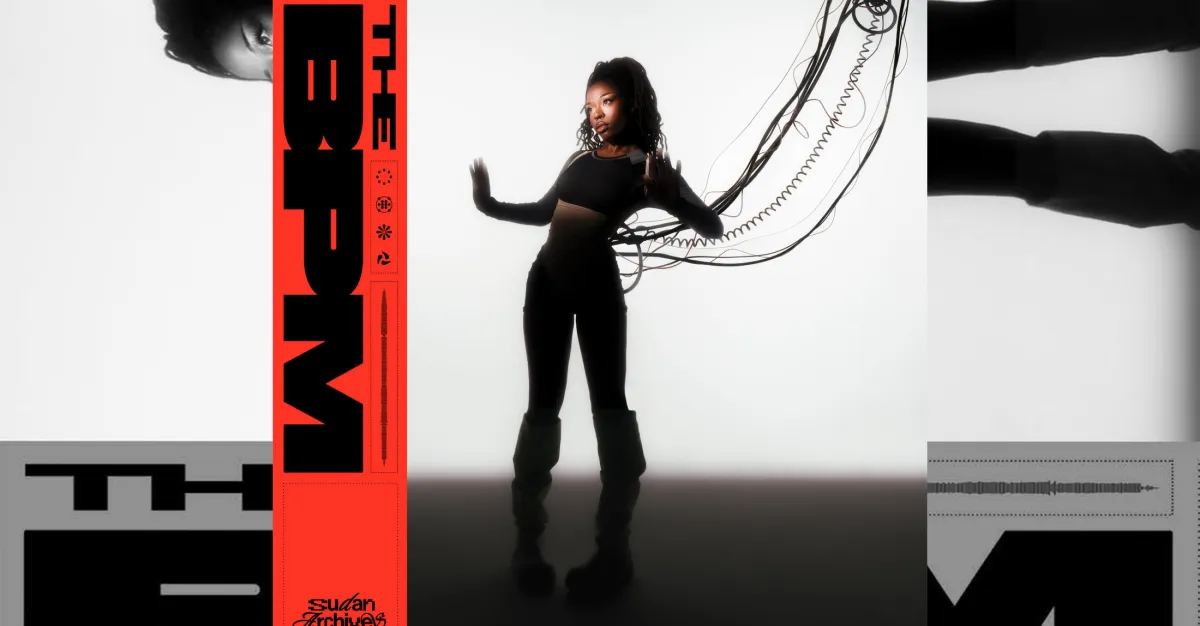
In a landscape where digital technology continually transforms the entertainment industry, Sudan Archives exemplifies how groundbreaking innovation can redefine musical boundaries. Her latest album, The BPM, not only showcases her cutting-edge artistry but also underscores a pivotal trend in the broader shift toward immersive, genre-blurring soundscapes. As industry analysts from Gartner and leading tech think tanks observe, the future belongs to artists who integrate sophisticated electronic elements and unconventional structures—traits that Sudan Archives exemplifies with striking authenticity.

Building on her experimental roots, Archives has continuously expanded her sonic palette, deploying a blend of organic violin passages and modern electronic elements. Her earlier works, such as Athena and Natural Brown Prom Queen, leaned into sound collage, sampling, and experimental pop. But with The BPM, she ventures into fully technological terrains, weaving autotune, drum ’n’ bass breaks, house stabs, and techno synths into her distinctive violin-forward aesthetic. This innovation resonates with the disruptive spirit full of industry shifts towards AI-driven production and algorithmic curation, reflecting a broader move where artists harness tech for unprecedented creative control and sonic depth.

The album The BPM epitomizes the volatile, eclectic essence of contemporary dance music, bouncing unpredictably across genres—four-on-the-floor funk, trap influences, Irish jigs, and more—daringly defying conventional pop song structures. Industry experts note that this approach fosters a hyper-competitive environment, demanding artists innovate relentlessly to engage audiences. If we consider insights from institutions like MIT Media Lab, this kind of sonic experimentation signifies a fundamental disruptor to traditional music paradigms, shifting power from major labels to independent creators empowered by digital distribution platforms such as Bandcamp and streaming giants like Spotify and Apple Music.

Business Implications: A New Paradigm for Disruptive Creativity

  • Decentralized distribution enhances artist control and revenue streams
  • Genre-blurring and sonic unpredictability increase listener engagement, cultivating niche markets
  • Technological innovation, including AI-assisted production and immersive experiences, are becoming standard tools for emerging artists

This evolution signifies more than just artistic experimentation; it signals a fundamental industry shift towards democratization and technological disruption. Emerging talents like Sudan Archives are leveraging these tools to carve distinct identities outside traditional commercial frameworks, aligning with futurists like Elon Musk and Peter Thiel, who champion disruptive innovations spanning beyond automotive and finance into cultural sectors.

Looking ahead, the trajectory suggests that artists who embrace technological adaptability and cross-genre experimentation will become the new vanguard of the industry. In a world where AI, virtual reality, and blockchain technology are redefining value creation and distribution, the pace of innovation accelerates. The urgency for existing industry players to adapt or face obsolescence is palpable. Sudan Archives’ pioneering approach exemplifies a broader trend that promises to reshape not just music, but the entire entertainment and creative economy—an exciting, if tumultuous, frontier dominated by those willing to disrupt entrenched norms and push sonic boundaries.

Don’t Miss Out: His House Is the Modern Horror That’s Redefining Fear for a New Generation

Tech Industry on the Brink: AI and Disruption Reshape Business Landscape

The technology sector is witnessing unprecedented levels of *innovation* and *disruption* driven primarily by advancements in artificial intelligence (AI) and machine learning (ML). Ambitious companies and visionary entrepreneurs, such as OpenAI and Google, are pushing boundaries to redefine what machines can accomplish. According to Gartner’s latest forecast, AI-driven automation will transform nearly 50% of all business processes within the next five years, signaling a fundamental shift in how organizations operate. This surge in AI capabilities isn’t just incremental—it’s revolutionary, fostering an environment where rapid scalability and real-time decision-making become the norm.

One of the most significant industry shifts lies in generative AI models, which are enabling capabilities once considered science fiction—such as human-level content creation, autonomous decision-making, and personalized interactions at scale. OpenAI’s GPT-4 exemplifies this evolution, with analysts highlighting its potential to displace traditional content and service industries, from journalism to customer support. Such innovations are expected to diminish barriers for startups, fostering a new wave of *disruption* that could challenge established giants like Microsoft and Amazon to adapt or face obsolescence.

However, with disruptive technology comes both opportunity and risk. Industry leaders such as Elon Musk and Peter Thiel warn of the *emerging ethical and regulatory challenges* that could hamper AI’s transformative power. Their insights underscore the need for proactive governance structures, lest unchecked AI development amplify biases or create unintended consequences. Nonetheless, the *business implications* are clear: organizations that leverage AI effectively will gain a decisive competitive edge, while those slow to adapt risk being rendered irrelevant.

Looking ahead, *the landscape of innovation is poised for even greater upheaval*. MIT researchers forecast that integration of AI with emerging technologies like blockchain and quantum computing will multiply the disruptive potential tenfold. Industry insiders predict that within the next decade, markets will see *entire sectors—finance, healthcare, transportation—completely reimagined.* As disruption accelerates, entrepreneurs awakening to these shifts must act swiftly, or risk being left behind in a rapidly evolving technological ecosystem. The future is not just approaching—it is here. The question remains: how quickly will organizations harness these emerging technological frontiers to secure their place in tomorrow’s economy?

Social Media Auto Publish Powered By : XYZScripts.com