Matox News

Truth Over Trends, always!

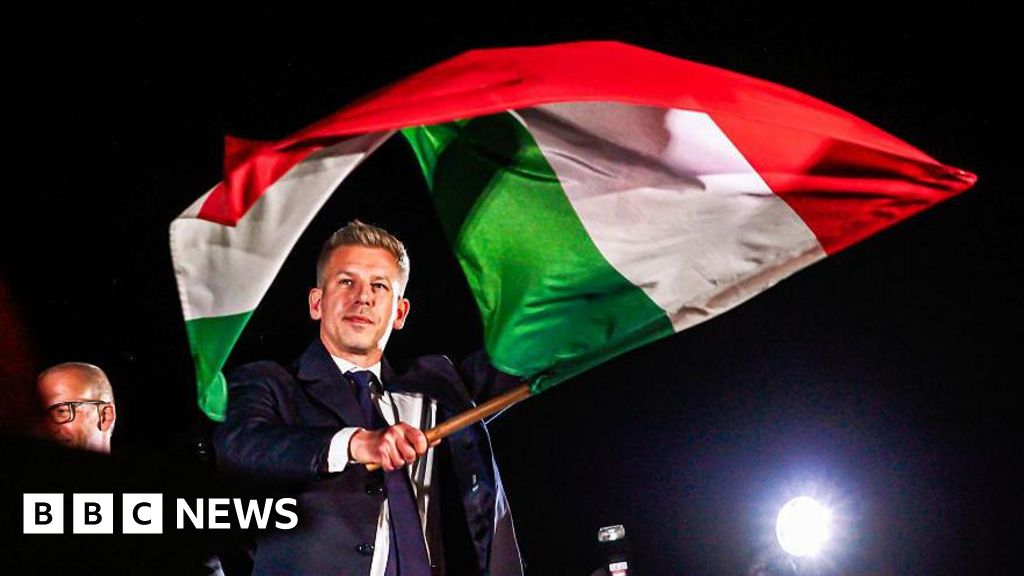
Hungary’s new leader is in a rush as Orbán’s era quickly concludes

As Europe faces mounting geopolitical uncertainties, Hungary’s internal political landscape continues to evolve amidst a backdrop of shifting alliances and national sovereignty debates. Recently, Hungary’s leadership has witnessed a generational tug-of-war, with Prime Minister Viktor Orbán at the epicenter. While Orbán’s tenure has been marked by strategic resilience and a focus on safeguarding national interests, recent developments reveal internal tensions that could ripple across the European Union and beyond.

Two younger figures, Foreign Minister Péter Szijjártó and Transport Minister János Lázár, have emerged prominently at political rallies, often seen standing alongside Orbán. Their appearances are indicative of a strategic attempt to invigorate the party’s image, appealing to a younger electorate and positioning themselves as potential successors. However, political analysts warn that rather than revitalizing the aging leadership, their presence inadvertently underscores Orbán’s waning vitality. Critics argue that this dynamic exposes generational divides within Hungary’s ruling elite, reflecting broader European trends of political aging amidst a rapidly changing international environment.

Historically, Hungary’s leadership has oscillated between technocratic pragmatism and nationalist rhetoric, navigating complex relationships with the EU and Russia. Recent tensions over the rule of law, migration policies, and energy security have pushed Budapest into a delicate balancing act. International institutions such as the European Commission continue to question Hungary’s compliance with shared values, risking financial repercussions and diplomatic isolation. Yet, Hungary’s leadership remains steadfast in asserting its sovereignty, often challenging Brussels’ directives, which it perceives as threats to national autonomy.
Such assertions highlight how decisions centered on sovereignty can trigger profound shifts in regional stability and economic collaboration.

This internal political tension comes at a crucial juncture for Europe, where the strategic contestations involving NATO, Russia, and China are redefining geopolitical alignments. As Hungary consolidates its stance, it influences regional alliances and impacts NATO’s eastern flank security. Notably, analysts from the International Crisis Group warn that conservative leadership in Budapest could complicate efforts for greater EU cohesion or transatlantic unity. The European Union faces a possible fragmentation, as member states increasingly choose sovereignty over supranational directives. Meanwhile, Hungary’s maneuvering under Orbán’s leadership underscores a broader trend: strategic national sovereignty becoming the central battleground in global power dynamics.

Ultimately, the underlying question remains: how will Hungary’s internal power struggles and leadership choices shape the future of European geopolitics? As the echoes of history continue to unfold, the story of Budapest’s resilience—and resistance—stands as a potent symbol of a continent at a crossroads. With each new political move, the balance of influence shifts, and the weight of past decisions presses heavily upon the present. The next chapter in Hungary’s saga will determine not just its own destiny but the future trajectory of European stability—an unfolding drama where history’s judgments await in the wings.

Canadian Ostrich Craze Sparks Buzz, Concludes with Bird Cull—RFK Jr. Watchdog That Got Everyone Talking

In a striking display of the intersection between government authority and individual rights, recent events at Universal Ostrich Farms in British Columbia have ignited passionate debates about animal welfare, public health, and national sovereignty. The farm, which raised ostriches for medical research, became the epicenter of a controversy when federal authorities ordered their cull following an avian flu outbreak. The decision, upheld by the Supreme Court, spotlighted the extensive reach of government agencies like the Canadian Food Inspection Agency (CFIA), and how their mandates to protect the public can sometimes clash with personal and economic interests. The emotional protests, tearful testimonials, and international attention underscore how personal convictions about life, health, and property remain central to such national debates.

The story deepens when considering the **health protocols** involved. After two birds tested positive for H5N1 avian flu, a virus with a potentially devastating impact on Canada’s *billion-dollar poultry industry*, authorities moved swiftly to quarantine and cull the entire flock. The banished ostriches, which had also been used for research, became symbols of the balance between *public safety and private enterprise*. Critics argue that the government’s approach—guided by the World Health Organization’s policies—embodies a broader theme of *overreach*, even as supporters emphasize the importance of protecting both human health and agricultural stability. Notable figures like Dr. Mehmet Oz, a celebrity doctor and advocate for alternative research avenues, voiced support for studying the ostriches’ immunity instead of their wholesale destruction, highlighting a shift towards *more nuanced, science-based approaches* to biosecurity.

Meanwhile, the controversy has transcended borders as powerful voices from across the United States have rallied to support the farm. Billionaire John Catsimatidis and others have called for investigations, asserting that the Canadian government’s actions are overly hasty and perhaps driven by political or bureaucratic motives rather than sound science. This cross-border engagement hints at a broader cultural tension—where the *American* emphasis on *individual rights and entrepreneurial spirit* stands in contrast to what some perceive as *state-led overregulation*. The story also reflects a *wider societal shift*—an *emerging desire for more autonomy* over health decisions, food sources, and environmental management, especially among younger demographics eager to challenge the status quo.

  • Travel Tip: Canada’s rugged landscapes and vibrant towns like Edgewood are ideal for weekends of exploration—experience its wilderness and gain perspective on local struggles.
  • Lifestyle Hack: Staying informed on food safety and biosecurity measures can empower consumers to advocate for balanced policies that respect personal rights and environmental health.
  • Main Takeaway: The ostrich saga underscores that *lifestyle choices are political*, and engaging with these issues can inspire a more conscious, proactive approach to personal and national well-being.

Ultimately, the fate of the ostriches embodies a broader narrative about *embracing personal impact*—whether through health choices, activism, or engagement with the policies that shape our daily lives. As leaders and communities grapple with how best to protect the *public good*, the conversation remains a reminder that true wellness extends beyond mere health—encompassing *freedom, responsibility,* and the pursuit of truth in a complex world. In this ongoing journey, each individual’s voice contributes to shaping a future where *lifestyle* is not just about personal comfort but also about fostering resilience, innovation, and a steadfast respect for life’s diverse expressions.

Social Media Auto Publish Powered By : XYZScripts.com



