Matox News

Truth Over Trends, always!

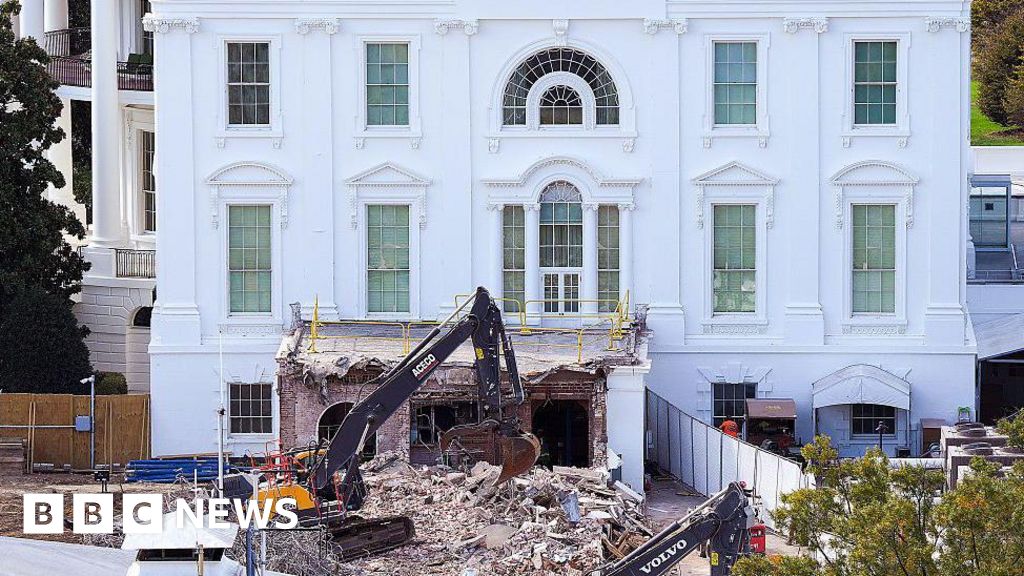
Appeals Court Allows Full Restart of Trump’s White House Ballroom Construction

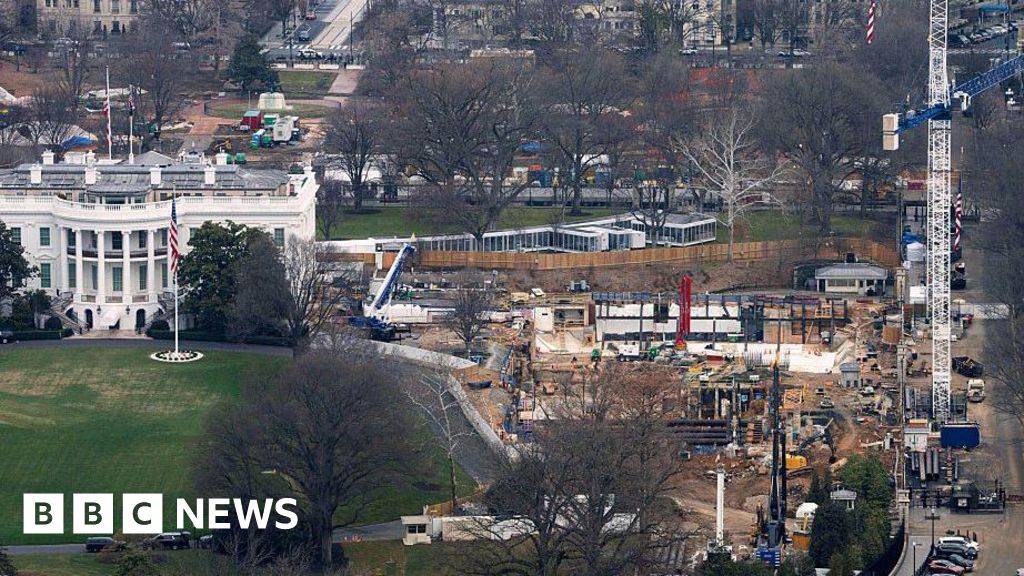
The ongoing construction at the White House signals a significant phase in American architectural and political history, with renovations scheduled to extend until the next congressional hearing in June. This development is more than mere maintenance; it symbolizes the resilience of United States institutions amidst turbulent times. As scholars like Dr. Patricia Newell, a noted historian of American political architecture, suggest, such renovations often serve as a metaphor for the nation’s capacity to adapt and regenerate itself, even under intense domestic scrutiny.

The White House has long been a global icon, representing the ideals of democracy and governance. Yet, its ongoing construction coincides with a period marked by mounting political polarization and international uncertainties. Analysts warn that this delay could be emblematic of larger bureaucratic and ideological struggles within Washington D.C.. Importantly, international bodies such as the United Nations and G7 have observed increased instability in American domestic politics, cautioning that internal strife can ripple outward, impacting diplomatic relations and global security. The delay isn’t just about architecture; it underscores ongoing debates over leadership, transparency, and the future direction of U.S. policy both at home and abroad.

Moreover, the ongoing construction has attracted attention from foreign governments and geopolitical analysts. Some view this as a strategic pause—an opportunity for America to reflect on its national priorities amid a rapidly shifting international order. In particular, the rise of China and assertive moves by Russia have intensified the stakes. The European Union’s latest security assessments highlight that internal distractions, such as delayed renovations, could weaken U.S. leadership on the world stage. As the International Crisis Group warns, a distracted nation risks ceding influence to emerging powers eager to fill the void left by uncertainty and internal discord.

Therefore, the significance of this seemingly mundane construction extends beyond mere bricks and mortar. It underscores questions about how American society and its government will navigate the turbulent waters of domestic politics and international competition. While the timeline points to a June deadline, many experts caution that this delay may ripple into broader uncertainties—both symbolically and practically. Historians observe that moments of national reconstruction, whether symbolic or concrete, often serve as turning points, warning of potential upheaval or renaissance. As history unfolds, future generations will look back at this period as a defining chapter—an era caught between tradition and transformation, with the weight of history still unfolding beneath the scaffolding that shields the seat of American power.
Judge blocks Trump’s White House ballroom construction in setback for the project

In a landmark decision that underscores the ongoing tensions within the U.S. legal and political systems, a Republican-appointed judge recently issued a ruling delineating the distinction between leadership and ownership of the White House. The court asserted that former President Donald Trump was to be regarded as the “steward” rather than the “owner” of executive authority, emphasizing the separation of personal influence from institutional governance. This decision marks a renewed chapter in the battle over executive power and accountability, echoing debates that resonate across democracies worldwide.

The ruling, while seemingly confined to domestic jurisprudence, sends ripples through the international arena. It signals a broader recognition of the limits of executive privilege and accountability measures—topics scrutinized heavily by transnational organizations like the United Nations and European Union. As global analysts interpret this court decision, many argue that it highlights the importance of institutional integrity over individual political ambitions, especially in a geopolitical climate simmering with uprisings, authoritarian incursions, and fragile democracies. Such judicial clarifications could influence how other nations interpret the balance of power, especially those with institutions strained by political polarization.

Historian and political analyst Dr. Samuel Hart points out that this ruling could act as a precedent in international legal practices. “It reaffirms the notion that no leader, regardless of their influence or electoral mandate, should hold unchecked power,” Hart notes. “In an era where power vacuums and populist movements threaten to overturn established norms, reaffirming the rule of law becomes vital for maintaining stability and democratic legitimacy,” he adds. Such perspectives underscore the geopolitical impact of the ruling—potentially prompting other nations to revisit their own legal frameworks concerning executive authority and checks and balances.

  • The ruling emphasizes that even influential leaders must operate within institutional constraints, which may influence international diplomatic dynamics.
  • Global institutions are expected to scrutinize national actions more carefully, especially in countries with authoritarian tendencies.
  • Shifts in legal narratives could embolden reformers worldwide seeking stronger rule-of-law frameworks, thereby shaping future governance models.

As South Asian, African, and Latin American nations observe the unfolding developments, the underlying lesson remains clear: the corridors of power must be scrutinized, and accountability enforced. The decision’s implications reach beyond American borders, stirring debates about sovereignty, civil liberties, and the nature of leadership. The weight of history continues to press down on this era of tumult, where the boundaries of authority are being tested and redefined. The question remains: how will the international community respond as the blade of justice swings, carving a new shape for the future of governance?

Trump plans White House gathering with GOP senators amid shutdown and construction chaos

In a landscape defined by relentless internal strife and mounting geopolitical challenges, the actions of the United States under President Donald Trump continue to reverberate across the global stage. Recent developments reveal a nation embroiled in constitutional crises, military deployments, and economic confrontations, which threaten to reshape the international order.

The internal chaos reached a new peak as the US government extended its longest shutdown in history into its 21st day, with no resolution in sight. As the Senate repeatedly failed to pass a funding resolution, millions of federal workers and critical services remain disrupted. Prominent Republican figures, such as House Speaker Mike Johnson, defend the shutdown as a strategic move against Democratic opposition—particularly over healthcare policy. Meanwhile, grassroots protests erupt nationwide, pressuring lawmakers and fueling political polarization. Many analysts view this as a critical turning point—a test of the resilience of American institutions amid turbulent times.

Amid the domestic turmoil, President Trump has taken decisive steps with undeniable geopolitical impact. Construction crews have begun demolishing parts of the White House East Wing to make way for a $250 million ballroom, stirring widespread controversy. Critics decry the renovation as a blatant indulgence at a time of national crisis, while opponents argue it symbolizes a deeper neglect of national priorities. Trump’s active engagement in this internal renovation underscores a broader trend—the consolidation of power and the spectacle of showmanship, often at odds with the global responsibilities the U.S. bears.

  • In a legal victory that further consolidates his authority, Trump’s administration secured a ruling allowing federal troops to deploy to Portland, Oregon, amidst ongoing protests.
  • Oregon’s governor, Tina Kotek, has called on the courts to review this decision, emphasizing concerns over federal overreach and the erosion of local sovereignty.
  • The tensions escalate as the Ninth Circuit Court of Appeals considers whether to rehear the case, a move that could broaden the legal framework permitting federal intervention in domestic protests—a concerning precedent with long-lasting consequences for civil liberties.
  • Simultaneously, in a disturbing display of partisan divergence, figures like James Comey seek to dismiss serious charges, exemplifying the judiciary’s partisan battleground and stripping away the veneer of legal impartiality.

Amidst these developments, international reactions are shaping the new geopolitical landscape. Trump’s endorsement of the AUKUS pact with Australia and PM Anthony Albanese signals a strategic pivot in alliance politics. The deal, emphasizing nuclear submarine cooperation and critical mineral exports—especially aligned against China’s tightening grip—underscores the shift toward militarized diplomacy and economic brinkmanship. While Trump praises Albanese’s leadership, behind closed doors, American military and diplomatic officials are reportedly seeking to clarify ambiguities in the controversial nuclear deal, reflecting an era of high-stakes stratagems.

Across the Atlantic and Eurasia, the postponement of President Trump’s planned Budapest summit with Vladimir Putin hints at mounting tensions with Russia—an indicator of how internal instability in America cascades outward, destabilizing international diplomacy. As nations watch with a mixture of skepticism and trepidation, the world faces an uncertain future where the decisions made within American borders echo across continents, sparking new alliances, rivalries, and conflicts—destined to influence the course of global history.

In this epoch of uncertainty, historians and international analysts warn that the choices made by U.S. leaders today will either sustain or fracture the fragile global order. As the nation faces unprecedented internal battles, the wheels of history continue to turn—often unnoticed by the masses—yet undeniably shaping the future of nations and societies alike. The unfolding drama remains a stark reminder that beneath the spectacle of power, the course of history is written with the ink of decisive, often tumultuous, action—a story still being authored, with humanity’s future hanging in the balance.

Social Media Auto Publish Powered By : XYZScripts.com



