
Matox News

Truth Over Trends, always!

US military: 11 killed in strikes on suspected drug boats—tough crackdown continues

In recent months, a disturbing wave of violence has emerged across parts of Central and South America, with reports indicating that more than 130 individuals have been killed in supposed “narco-trafficking operations” allegedly spearheaded by the United States. These actions, which have been characterized by some analysts as aggressive counter-narcotics campaigns, are raising serious questions about their legal, ethical, and geopolitical implications. The toll on local communities and political stability underscores a critical juncture for regional sovereignty and international law.

International observers and regional authorities are divided in their responses. While some praise the efforts to combat drug cartels that threaten societal order, others caution against the overreach of foreign military and law enforcement agencies that risk violating national sovereignty. According to renowned geopolitical analysts, these operations could serve to destabilize governments, exacerbate existing violence, and foster anti-American sentiment that may ripple throughout Latin America. The U.S. government asserts that its actions are necessary to dismantle powerful criminal networks, yet critics argue this approach often results in unintended humanitarian consequences and undermines local legal processes.

From a broader perspective, the geopolitical impact of this escalation extends beyond regional borders. By engaging in aggressive anti-drug campaigns, the United States may be unintentionally fueling a narrative of interventionism that hampers diplomatic relationships with other emerging powers, such as China and Russia. International organizations like the United Nations have called for a *comprehensive, multilateral approach* to narcotics control—yet, many argue that unilateral military actions, cloaked as anti-drug efforts, undermine the very foundations of international cooperation. Historically, such strategies have often led to a cycle of violence and instability, revealing the inherent risks of substituting diplomatic solutions with force.

As histories of past conflicts remind us, the true turning point lies in understanding the complex socio-economic roots of narcotics trafficking and addressing them through sustainable development and law enforcement reforms. The growing death toll and accusations of extrajudicial killings serve as a stark warning: the pursuit of a drug-free society cannot justify disregarding human rights or sovereignty. Nations across the world watch eagerly, aware that each decision made today could shape the future stability of entire regions. The story of these violence-laden campaigns is still unwritten, yet its current chapters echo through halls of international authority—a testament to the enduring, often tragic, struggle of nations to forge peace amid chaos and to define their destiny amid the shadows of unresolved conflicts.
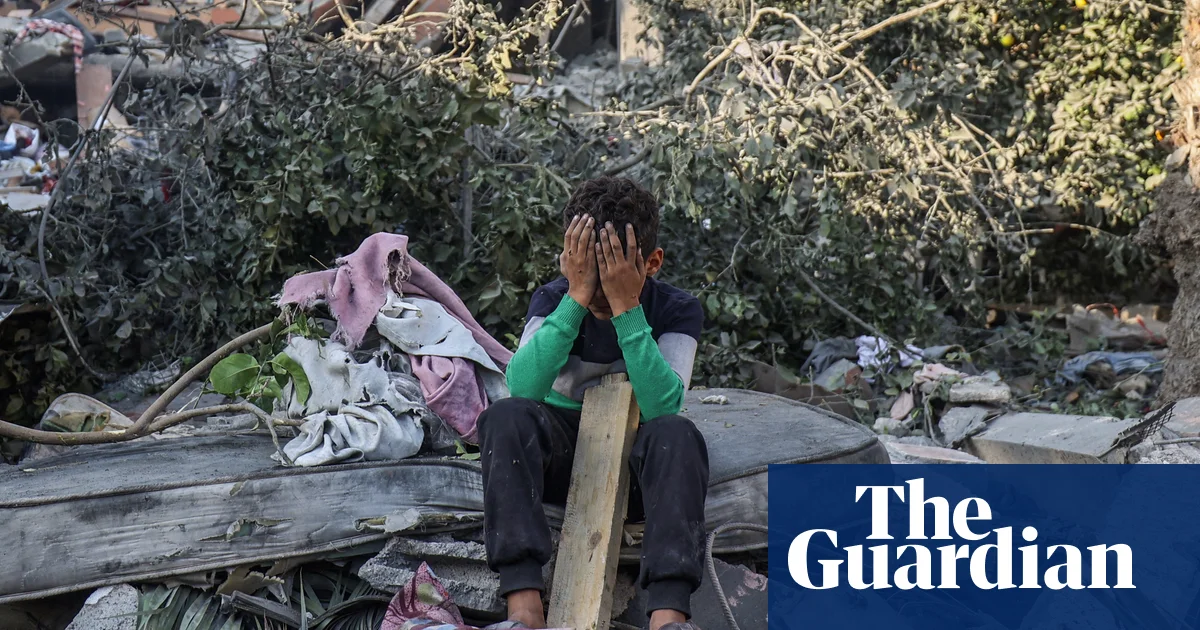

Gaza’s Chaos Continues: Promises of Peace Broken as Violence Rages On

Global Impact of Gaza Conflict and Ceasefire Realities

The recent conflict in Gaza has once again exposed the fragile veneer of diplomacy and the stark realities faced by civilians caught in the crossfire. Despite declarations of a ceasefire in October, the situation on the ground remains as volatile as ever. Reports from humanitarian agencies and international analysts reveal a disconcerting paradox: while official rhetoric suggests a lull in violence, the death tolls tell a darker story. On average, Israeli forces continue to kill seven Palestinians per day in Gaza, a rate that many would consider active warfare rather than an end to hostilities. The imagery of families like Hala Abu Assi’s, mourning the loss of her young boys Jumaa and Fadi, symbolizes the grim toll wrought by what is purportedly a pause in fighting. These tragedies underscore how decision-makers’ claims of peace often mask enduring violence and suffering.

The geopolitical landscape surrounding Gaza has reset into a tense and uncertain partition. Israel’s government, backed by its strongest allies, is solidifying a de facto division along the so-called “yellow line”, with recent construction of concrete outposts and the bulldozing of Palestinian neighborhoods on the Israeli-controlled side. While the Trump-planned peace process envisions a phased withdrawal, an international stabilisation force, and a technocratic Palestinian governance structure, these plans remain entrenched in ambiguity. Major questions persist: Who will control Gaza’s critical land and resources? Will the Palestinian residents have a meaningful say, or are they destined for further displacement? The emerging landscape resembles a modern apartheid in the making, with Palestinian communities being herded into scattered enclaves under international supervision. Historians and policy analysts warn this strategy could entrench the separation, embedding a new reality where ethnic and territorial divisions threaten to outlast the current violence.

The international community’s role remains deeply conflicted. European and Arab nations aligned with the Trump initiative argue they support the peace efforts to prevent a broader regional escalation and to foster stability. However, critics highlight that these political calculations often serve as a cover for maintaining strategic interests rather than genuine resolution. The UN’s recent resolutions, which drew support from some nations, plan for the disarmament of Hamas and the return of hostages—yet substantial obstacles remain. Hamas has returned most missing bodies and expressed willingness to discuss surrender of offensive weapons—but only outside of Israeli or Israeli-backed entities. Moreover, absent substantial troop contributions from countries like Indonesia or Pakistan, the envisioned @disarmament under international supervision remains a distant dream. Without a genuine Palestinian authority, efforts to rebuild or establish security are hamstrung, compounding the sense of inevitability regarding Gaza’s continued fragmentation.

The Humanitarian Toll and the Weight of Injustice

Marking a tragic chapter, Gaza’s population of over 2 million Palestinians now inhabits less than half of their original territory—confined to the barren “red zone” amid ruins and chaos. The recent floods, coupled with ongoing bombings, have devastated what little infrastructure remains, leaving families in tents with no adequate shelter before winter’s cold. Aid supplies, though increased, have yet to meet the need; the UN reports that fewer trucks are entering Gaza than prewar levels, and many Palestinians live on the brink of starvation. The international aid effort, hamstrung by diplomatic disputes and Israeli bans on organizations like UNRWA, struggles to address the scale of destruction. The plight of Gaza’s children, families, and the elderly reflects a humanitarian crisis that-growing figures warn could morph into a chronic catastrophe if international pressure wanes. Such conditions vividly illustrate a world that prudently calls itself “concerned,” but fails to act decisively. The ongoing destruction and suffering challenge global leaders and institutions to confront the moral cost of their policies—adventures in diplomacy that risk leaving Gaza as a symbol of unresolved injustice for generations to come.

As the quiet of the ceasefire festers into a new era of enduring division, the silence of true peace grows heavier. The stories of families like Faiq Sakhani’s, living just metres from the “yellow line” and daily fearing death, are the somber echoes of a story still unresolved. The specter of history—of nations divided and peoples oppressed—looms large over a volatile region in which every decision could ignite yet another cycle of war or forge a fragile hope for lasting peace. The world watches, but only time will reveal whether this chapter will be remembered as a step toward liberation or a prelude to darker days. The pages of history remain unwritten, yet one thing is certain: Gaza’s suffering is a stark reminder that peace, if not rooted in justice, is merely a brief interlude in an ongoing tragedy.

Icons Week Continues Amid Transition as Tess Daly and Claudia Winkleman Exit

In a cultural landscape saturated with transient spectacles and fleeting trends, the BBC’s flagship dance show, Strictly Come Dancing, stands out as a testament to our enduring connection with tradition, artistry, and shared memory. As the beloved presenting duo Tess Daly and Claudia Winkleman prepare to bid farewell after two decades of guiding viewers through the glittering ballroom, we are reminded that culture is more than entertainment—it is the fabric of societal identity. Their departure marks not merely a change of faces but signifies a turning point that invites reflection on how television, and by extension our collective cultural identity, evolves amidst modern challenges.

The significance of such long-standing cultural phenomena is reminiscent of Ortega y Gasset’s notion that a society’s identity is woven through its shared narratives and cultural symbols. For twenty-one years, Daly and Winkleman became the custodians of countless memories, anchoring generations in a tradition that celebrates rhythm, dance, and human connection. Even in times of controversy or controversy, the show’s capacity to draw millions demonstrates its role as a cultural anchor. Their impending exit—highlighted by the subdued tone of the BBC’s chief content officer—suggests that even institutions deeply embedded in our social fabric are subject to the natural cycle of renewal and redefinition, echoing Tocqueville’s insights on the resilience inherent in democratic institutions that must adapt to survive.

Curiously, the inevitability of change plays into the symbolic importance of rebranded narratives, reminiscent of Chesterton’s argument that tradition is the democracy of the dead—an ongoing dialogue between past and present. The absence of Daly and Winkleman from future series leaves a gap both literally and metaphorically. Yet, it also opens a space for innovation—an acknowledgment that culture is both the memory of humanity and the prophecy of what is yet to come. Names like Fleur East, Roman Kemp, Hannah Waddingham, and others are already being whispered as potential torchbearers—figures who can carry forward the narrative of resilience, vitality, and societal cohesion. The show stands at a crossroads, where tradition and reinvention collide, reminiscent of Eliot’s notion that the future of society depends on our ability to reconcile the old with the new.

It is profound to consider that the culture of dance and storytelling is fundamentally a reflection of our identity—personal and collective. When we watch these performances, we partake in an act of shared memory, connecting us to our ancestors’ passions and aspirations. As the great cultural critics remind us, this dance with continuity and change is what sustains societies through upheavals. Whether the show rebrands or shifts its creative direction, the core truth remains that our culture—like a living organism—must continually evolve while remaining rooted in its history. This resilience is what transforms mere spectacle into a symbol of human persistence and hope amidst the chaos of modernity.

At the heart of this transition is a poetic reminder that culture is both prophecy and memory; it is the echo of the past and the whisper of the future. When the curtain falls on Daly and Winkleman’s era, it does not close the book—it writes the next chapter. Just as the dance moves to a new rhythm, so too does society find renewal through the artistry of those who dare to imagine anew. The beauty of this ongoing cultural symphony is that it reminds us: in the great hall of human achievement, our stories continue to dance, step by step, into the dawn of what is yet to come.

Social Media Auto Publish Powered By : XYZScripts.com



