
Unfolding Crises and Strategic Dilemmas: Australia’s Role on the Global Stage
In an era marked by turbulent geopolitical currents, Australia finds itself at a crucial crossroads amidst internal crises and external pressures. Recent developments reveal a nation grappling with economic vulnerability, security threats, and the daunting task of balancing national sovereignty with international commitments. While the Australian government publicly downplays the possibility of fuel rationing or drastic price caps, the underlying tensions expose the fragile state of the country’s supply chains and economic resilience. This unfolding scenario demands a careful evaluation of how decisions made today will echo through the corridors of global influence for generations to come.
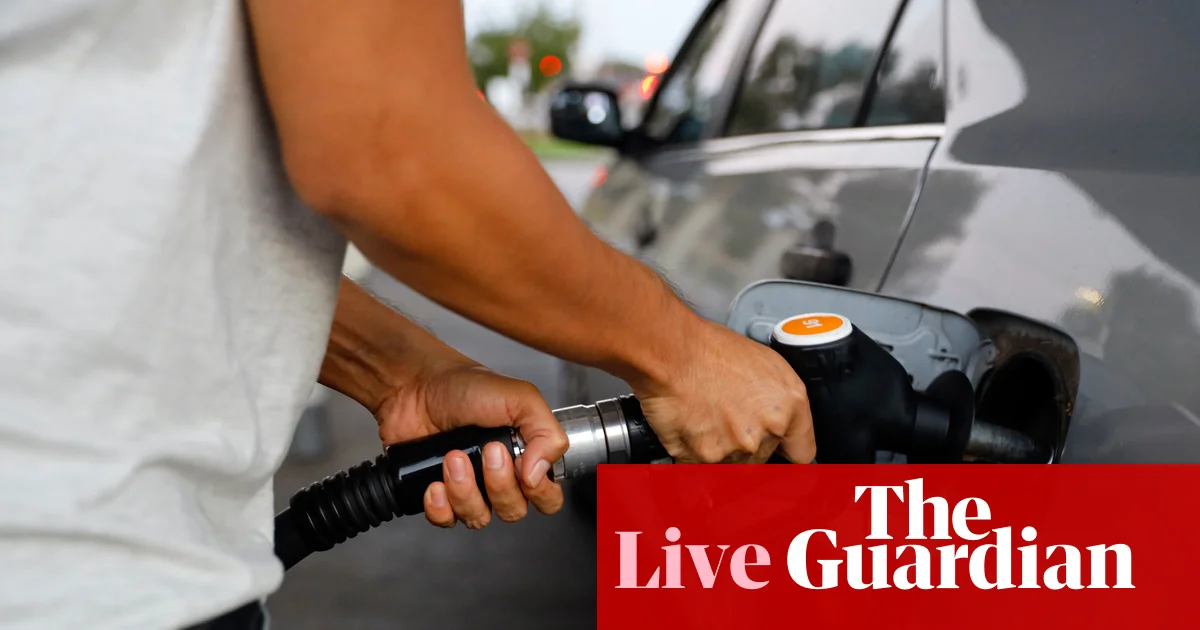
Amid mounting concerns over fuel shortages and rising prices, Canberra has employed measures to bolster supply, including relaxing fuel standards and contemplating increased ethanol integration—a move supported by regional stakeholders like the NRMA. The government’s careful public stance—emphasizing that “it’s too soon to talk about rationing”—belies the mounting pressure from economic analysts who warn that persistent inflation, driven in part by regional conflicts such as the ongoing crisis in the Middle East, could cripple the economy if swift, strategic action is not taken. Critics argue that such measures are only postponing the inevitable, highlighting the urgent need for long-term energy independence.
Security Concerns and Domestic Instability
Security experts and international observers signal that **Australia’s internal stability is being tested by covert threats and ideological radicalization**. The recent thwarting of a terrorist attack at an Invasion Day rally—an incident revealing a homemade explosive device weighted with screws and ball bearings—has rekindled debates about national security strategies. *Tony Burke*, the home affairs minister, expressed a somber tone, noting that “we were incredibly lucky” that no harm was inflicted. Such incidents underscore that the threat matrix has fundamentally shifted, with radicalization increasingly occurring online rather than in traditional training camps.
World analysts like Dr. Lucinda Harris, a geopolitical security specialist, caution that Australia’s vulnerabilities are emblematic of a broader regional instability. As alliances are tested and the Middle East’s turmoil pushes oil prices upward, **the country’s internal security and social fabric face compounded stress**, threatening to erode public confidence. These developments are casting a shadow on Australia’s international reputation—raising profound questions about how sovereignty can be safeguarded in an interconnected, risky world.
Trade, Energy, and Divergent Visions for the Future
The recent agreement to deepen trade relations with the European Union—dubbed a “win-win” by *Trade Minister Don Farrell*—epitomizes Australia’s attempt to diversify its economic partnerships. Yet, critics argue the deal primarily favors European markets, leaving Australian producers and regional industries vulnerable to the volatile energy landscape. Notably, support for the Australian Tomago aluminium smelter—a critical node in regional economic stability—receives a lifeline through a $2bn taxpayer subsidy aimed at maintaining its viability into the future. Such investments are strategic, seeking to protect key industries from the unpredictable winds of international geopolitics.
Internationally, Australia’s stance on energy independence and resource development remains ambiguous. While publicly dismissing ideas like a $40 fuel cap, the government quietly considers broad reforms—ranging from tax concessions to windfall gas levies—that seek to balance fiscal responsibility with regional growth. Historical analysts like Dr. Robert Gibbs warn that “oscillating between resilience and reform shapes a nation’s geopolitical destiny”. As regional powers and traditional allies reconsider their commitments, Australia’s ability to chart a stable course amidst tumult will ultimately determine its future role on the world stage.
Conclusion: The Weaving Tapestry of History
As the wheels of history continue to turn, the choices of today carve the contours of tomorrow’s global landscape. Australia’s internal battles—fuel shortages, security fears, economic reforms—are a mirror for the complex, interconnected chessboard on which global power is contested. With each policy decision, the nation writes a new chapter in its story, a narrative shaped by resilience, caution, and the relentless pursuit of sovereignty amidst the shadows of rising regional and global conflicts. This is not merely a tale of national survival but an epic saga of a country striving to forge its destiny amid the thunderous march of history’s relentless advance.