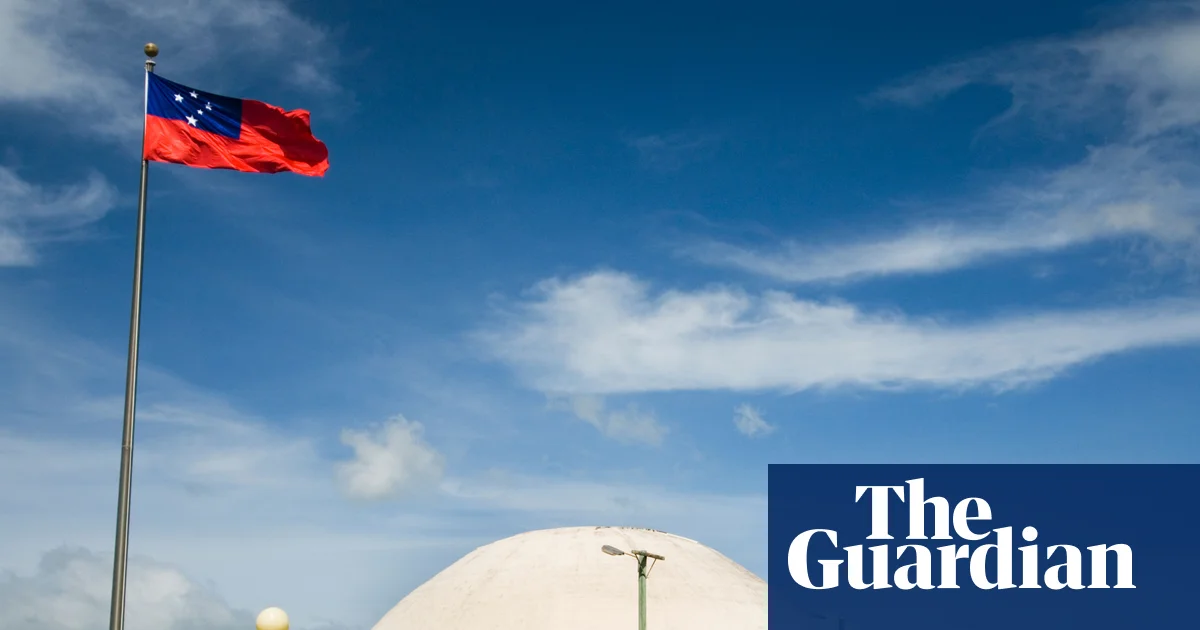

Samoa, often regarded as a model democracy within the Pacific region, now finds itself at a critical crossroads that could redefine its political landscape. The recent decision by Prime Minister La’aulialemalietoa Leuatea Polataivao Fosi Schmidt to ban Samoa’s only daily newspaper, the Samoa Observer, from attending press briefings signals a troubling shift towards authoritarianism cloaked as leadership. The move, reportedly in response to alleged inaccurate reporting during the prime minister’s medical absence in New Zealand, raises profound questions about how governments manipulate media to stifle accountability and transparency. Such actions serve as a stark warning to global observers: in the pursuit of consolidating power, democratic norms—particularly the freedom of the press—are under siege.
Historically, robust journalism has been the cornerstone of democratic governance, holding leaders accountable and providing citizens with vital information. In Samoa’s case, critics and international watchdogs, including the Pacific Freedom Forum, argue that this unprecedented ban is an effort to silence critical voices. Samoa’s government justifies the move by citing examples of alleged misinformation, yet many analysts contend that the timing reveals a calculated attempt at information control. The Samoa Observer’s editorial explicitly rejected the accusations, emphasizing its independence and commitment to public-interest journalism. Leaders and international observers warn that such restrictions threaten to weaken the very fabric of democracy, reinforcing a pattern seen in authoritarian-leaning regimes globally.
The ramifications extend beyond Samoa’s borders, influencing regional stability and international relations. Decisions to suppress media coverage can set dangerous precedents, emboldening other governments in the Pacific and beyond to crack down on press freedom. The Samoa Alliance of Media Practitioners for Development (Sampod), along with other regional bodies, highlighted the peril of undermining media independence. “Restricting access to critical scrutiny disarms citizens’ ability to hold leaders accountable,” explained Sampod’s representative, Lilomaiava Maina Vai. If unchecked, such measures risk normalizing hostility toward journalists, diluting democratic accountability, and fostering environments where dissent is considered a threat rather than a vital component of political discourse.
Outside Samoa, opposition figures have voiced their condemnation. Fiame Naomi Mata’afa, leader of the Samoa Uniting Party, and Tuilaepa Aiono Sailele Malielegaoi, former Prime Minister, both accused the government of attempting to suppress transparency. The controversy has ignited a debate about how leadership accountability is intertwined with media independence—an issue resonating throughout the Pacific region and many emerging democracies. As Samoa navigates this turbulent chapter, its internal struggles mirror a much larger narrative about the fragility of democratic institutions in a world where information has become the most potent currency.
The story remains unwritten, but the consequences are immediate and far-reaching. Samoa’s internal debate over press freedom exemplifies a pivotal question facing many nations in an era of misinformation and digital hostility: Can democracy survive when the very organizations meant to uphold truth are silenced? History will judge whether Samoa’s leaders recognize that true strength lies in transparency and accountability or continue down the path of silence and control. As the world watches, the echoes of this unfolding story serve as an urgent reminder: the battle for free information is the frontline in safeguarding the future of democracy, and its outcome may very well determine the legacy Samoa leaves behind in the annals of history.