Matox News

Truth Over Trends, always!

Louisiana issues warrant for California doctor over mailing abortion pills—state’s crackdown on reproductive rights heats up

Society at a Crossroads: The Impact of Restrictive Abortion Laws on Families and Communities

The ongoing legal battles surrounding abortion access in the United States have revealed deeply rooted societal tensions that extend far beyond the courtroom. Recently, Louisiana has issued a warrant for a California-based doctor accused of mailing abortion pills to residents in a state where virtually all abortions are banned. This development highlights the crumbling boundaries of state authority and underscores how social issues intersect with family life, education, and community stability. The case of Louisiana and other states enforcing strict anti-abortion measures illustrates a broader cultural shift that threatens to fracture the social fabric that holds families and communities together.

At the center of this legal and moral tug-of-war is the question of individual rights versus state restrictions. Sociologists such as Charles Murray have emphasized that when a society imposes rigid controls on personal choices—particularly those as morally charged as reproductive decisions—it risks alienating and stigmatizing families. The recent case of Rosalie Markezich, who decided to keep her pregnancy despite being pressured by her former partner to take abortive drugs, exemplifies how stringent laws and inaccessible healthcare create dangerous situations. Markezich’s account reveals that when women are denied moral agency and access to proper medical consultations, their health and autonomy suffer. Her story resonates as a moral reminder that society’s obligation extends to protecting the rights and safety of individuals, especially vulnerable women caught amid ideological conflicts.

Legal experts and social commentators warn that the escalation of these legal conflicts, with states like Texas and Louisiana actively pursuing or indicting doctors such as Dr. Remy Coeytaux and Dr. Margaret Carpenter, may lead to a fracture in federalism. These ongoing battles threaten to jeopardize the social stability of communities and challenge the moral foundations of American society. On one side, advocates argue that states have the right to define moral boundaries; on the other, defenders contend that the rights of individuals—families and women included—must be safeguarded against state encroachment. The potential for these disputes to reach the Supreme Court signifies a pivotal moment where societal values collide with constitutional principles. What hangs in the balance is not only access to medical care but also the future of community cohesion and the moral health of our society.

As these societal divisions deepen, the question remains: can society reconcile conflicting values while fostering environments where families thrive and communities remain resilient? Many sociologists, like Robert Putnam, warn that social trust erodes when communities are polarized by issues rooted in morality and individual rights. Nonetheless, hope exists in the form of moral resilience and societal reform. The history of social progress demonstrates that through open dialogue, respect for diverse perspectives, and the safeguarding of fundamental rights, communities can forge pathways toward justice, healing, and renewal. Society’s greatest challenge is not the legislation alone but our collective commitment to uphold the dignity of every human life and the moral integrity of the communities we cherish. As society stands at this crossroads, the future hinges on our ability to choose pathways rooted in compassion, respect, and unwavering hope for a society where families are empowered and communities are united by shared moral purpose.
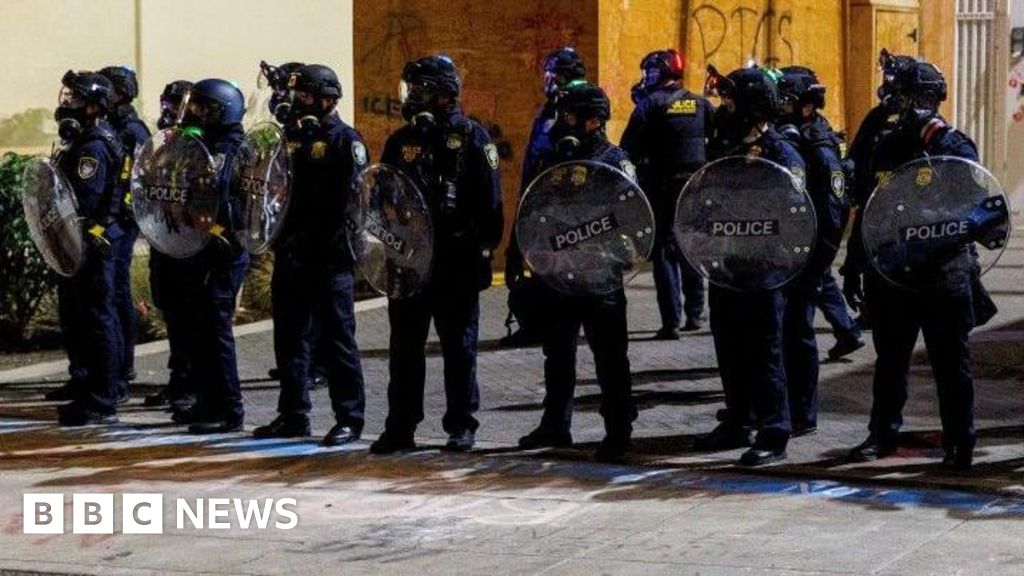
Trump sends troops to Portland, promises 'full force' in crackdown
Trump sends troops to Portland, promises ‘full force’ in crackdown

United States Faces Rising Internal Tensions as Federal Troops Deployed to Portland

The United States is once again at a pivotal crossroads, with President Donald Trump ordering the deployment of federal troops to the city of Portland, Oregon. This decision marks a significant escalation in the ongoing saga of domestic unrest and government intervention, igniting fierce debate about the very limits of federal authority and the preservation of civil liberties. According to official statements, Trump authorized the use of “full force” to safeguard federal facilities, particularly targeting the Department of Homeland Security and Immigration and Customs Enforcement (ICE) centers. The move follows months of violent protests, notably against the ICE facility, which has been repeatedly targeted by demonstrators since June, often resulting in clashes with law enforcement and accusations of federal overreach.

Political Fallout and Strategic Concerns

Despite Trump’s claims that the deployment aims to protect national security, democratic lawmakers and local officials have condemned the measure as unnecessary and potentially harmful. Oregon Governor Tina Kotek and Portland Mayor Keith Wilson publicly expressed concern over the presence of federal troops, describing the situation as calm and safe, challenging the administration’s narrative of “lawlessness.” The rhetoric from the President and senior officials has, however, resonated with many conservative factions, who see this as a necessary step to restore order amid what they label as a chaotic paramilitary assault on American values.

Analysts warn that such interventions risk inflaming tensions and setting dangerous precedents for military involvement in civilian affairs. Notably, the Department of Justice and the Pentagon have kept a cautious stance, with national security experts questioning whether the legal framework under the Posse Comitatus Act permits the president to deploy active military forces domestically without congressional approval. Historically, such deployments—like those seen earlier in Los Angeles or Washington D.C.—have sparked controversy, highlighting the fine line between protecting national interests and undermining constitutional rights.

Undermining Social Unity and International Stability

On the international stage, U.S. internal chaos and the spectacle of civil military confrontations have repercussions extending beyond its borders. Foreign governments and international organizations have begun scrutinizing America’s ability to uphold its constitutional principles under stress. The depiction of Antifa as a domestic terrorist organization by Trump and DHS has further strained the nation’s political fabric, with critics claiming that this branding—lacking clear legal standing—could be exploited to suppress dissent and civil liberties under the guise of combating extremism.

As historians like Samuel P. Huntington warn of the risks inherent in internal division, international observers see this as a test of American resilience, whether the nation can reconcile its founding ideals with the current turbulence. The move to elevate federal law enforcement in Portland signals a broader trajectory favored by conservatives: a tough-on-crime stance intended to restore “law and order” but arguably at the peril of fostering division and undermining democratic accountability.

Conclusion: The Unfolding Epilogue of a Nation Divided

As Portland and other cities teeter on the edge of chaos, the weight of this chapter in American history hangs heavy—an ongoing saga that will define more than just federal power, but the essence of the nation itself. Will this hardened stance mend society’s fractures or deepen them? Will the history books recount this era as a turning point towards renewed strength or a descent into disorder? Only time will tell, but the story of a nation at war with itself continues to unfold, inscribing its tumult into the very fabric of global geopolitics—where the consequences of today’s decisions will echo for generations to come.

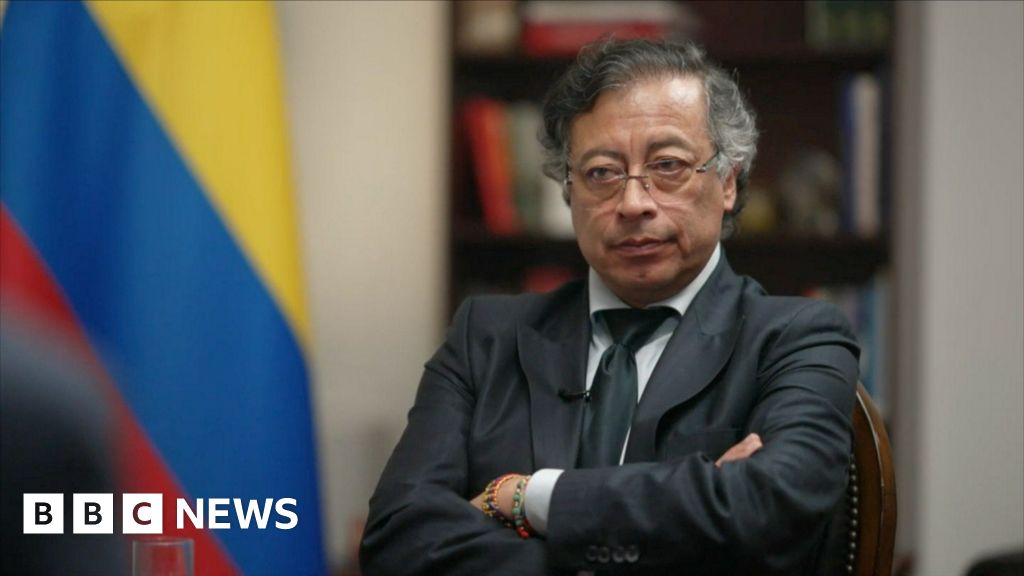
Colombia’s president slams U.S. crackdown on drug boats as a tyrannical move

The recent US military strikes in the Caribbean Sea have ignited a fierce international debate over sovereignty, legality, and the future of U.S.-Latin American relations. The Biden administration, continuing a contentious policy from the previous Trump era, launched airstrikes targeting alleged drug-trafficking vessels in what they frame as a necessary crackdown on narcotics entering the United States. However, Colombia’s President Gustavo Petro has denounced these strikes as an “act of tyranny,” warning that such unilateral military actions threaten regional stability and violate international laws. His outspoken opposition underscores a broader sense of Latin American mistrust toward U.S. interventions, especially when international norms appear to be sidestepped in pursuit of drug interdiction goals.

This confrontation is not merely about drug traffickers but reflects a deeper battle over sovereignty and the rule of law across the hemisphere. The Biden administration’s secrecy around the operation—failing to disclose targets, identities of those killed, or legal justifications—has prompted outrage among international legal experts and lawmakers. Many question whether such targeted killings in international waters contravene international human rights laws or if they constitute extrajudicial executions, as flagged by UN authorities. The lack of transparency fuels accusations that the U.S. is prioritizing aggressive tactics over diplomatic efforts, risking to alienate critical regional allies.

Analysts from various international organizations warn that these actions could set a dangerous precedent, transforming the Caribbean Sea into a theatre of shadow warfare where sovereignty is disregarded in the name of combating narcotics. Historians point out that the United States’ history of military interventions in Latin America has often led to long-term instability, interference that has historically favored strategic interests over regional welfare. The question remains: How will such policies reshape the geopolitical landscape? Already, Venezuela and other neighboring nations voice increasing apprehension, seeing the strikes as provocative attempts to destabilize their governments and economic systems.

Meanwhile, President Petro has clearly framed this conflict as an assault on national sovereignty. His call for criminal investigations into U.S. officials involved in these strikes underscores a broader warning—interventionism breeds resentment and undermines mutual trust. As tensions intensify, the implications extend beyond immediate security concerns: they threaten to fracture regional alliances, fueling anti-American sentiment and strengthening nationalist narratives. The international community, including dissenting voices within the UN, is watching closely, with some experts warning that this escalation could unravel decades of diplomatic progress and usher in a new phase of proxy conflicts and rivalries.

As the world grapples with this unfolding crisis, the echoes of history remind us that such decisive moments often _determine the fate_ of nations for generations to come. With the weight of sovereignty, legality, and societal stability hanging in the balance, the geopolitical impact of these decisions will ripple across continents. Public sentiment in Latin America, influenced by a legacy of intervention and resistance, hints at a rising tide of nationalistic resilience—an obstacle that the United States now faces as it navigates an increasingly complex and divided world stage. The pages of history are being written at this very moment—with each strike, each diplomatic rebuff, shaping a future where control is contested not just in the halls of government, but in the minds of nations and peoples threatening to forge their own destinies amid the chaos of international power struggles.

Social Media Auto Publish Powered By : XYZScripts.com