Matox News

Truth Over Trends, always!

From Glamorous Department Store to Cannabis Crackdown: Newport’s Wildings Shake Up the City’s Style Scene

Reviving the Spirit of Wildings: A Reflection on High Streets and Heritage

Once a glamorous hub of retail and community life, Wildings in Newport, Wales, stood as a testament to the golden age of department stores. For over 140 years, it was not just a shopping destination but a cultural landmark—a place where fashion shows, Christmas displays, and a sense of *theatre* made retail more than just transactions. Today, the building sits eerily silent, its marble façade boarded up, a symbol of broader economic shifts that have reshaped Britain’s high streets. Yet, behind this decay lies an opportunity, a chance to reimagine what our urban spaces could become in an era where wellness and community are increasingly prioritized.

With the decline of traditional retail, sites like Wildings have become battlegrounds of economic decline and potential revival. According to recent reports, the number of retail outlets has shrunk drastically—by 38% since 2019—with department stores suffering the most. Research underscores that areas like Newport have been hit particularly hard, with vacancy rates soaring compared to thriving cities like London or Cambridge. Yet, there is a growing consensus that the future of high streets depends less on mere retail and more on a *holistic approach*—one that merges residential living, entertainment, and buzzing community spaces. Visionaries like Peter James advocate for reshaping old department stores into mixed-use developments, introducing flats on the upper floors while maintaining vibrant ground-floor retail—an approach that marries heritage conservation with modern demand.

This shift toward *embracing change* is not without its challenges. The story of Wildings also reveals the darker side of urban decline—abandoned buildings repurposed into illicit farms and secret skate parks by wandering explorers or ne’er-do-wells. As recent police raids uncovered, these spaces can fall into disrepair or become canvases for illegal activity, illustrating the need for **proactive civic planning**. Still, the narrative is not solely one of loss. It’s also a reminder that these spaces are part of our shared history—tangible links to a bygone era of success and civic pride. Moving forward requires a delicate balance: respecting the past while fostering innovative, safe, and vibrant communities that promote both health and **well-being**.

In contemplating these stories, it becomes clear that high streets are more than just shopping districts—they are living stories, waiting to be rewritten. Places like Newport might have lost their traditional retail heart, but they still carry the soul of a community eager to rejuvenate that spirit. The challenge, then, is to see beyond the boarded-up windows and broken facades—to recognize the potential for, as Vrettos describes, “making Newport great again,” but in a way that preserves its history and nurtures its future. To cast aside nostalgia as mere sentiment is to miss the broader lesson: true revival begins with embracing heritage, fostering local enterprise, and cultivating spaces that enhance our lives physically, socially, and culturally. In this delicate dance of transformation, the high street is not a relic but a canvas—a story waiting for us to write anew.

KP Sharma Oli, ex-PM, detained over suspected role in deadly protest crackdown in Nepal

Nepal’s Political Landscape Shifts as Former Prime Minister KP Sharma Oli Faces Justice

The arrest of KP Sharma Oli, Nepal’s former prime minister, marks a profound turning point in the country’s ongoing struggle for justice and political accountability. Oli, who has served three terms in office, was detained early Saturday morning on charges related to his alleged role in the deadly crackdown against youth-led protests that erupted last year. The protests, largely driven by Gen Z activists upset over social media bans, corruption, and nepotism, left dozens dead, with the political climate reaching a boiling point. Oli’s detention, along with that of his former home affairs minister Ramesh Lekhak, underscores a growing international and domestic consensus that impunity for state violence cannot be tolerated. This dramatic move signals a possible dawn of accountability in Nepal, an essential shift in a nation long plagued by political turbulence and weak rule of law.

The recent developments come scarcely days after Balendra Shah—widely known as Balen—was sworn in as Nepal’s new prime minister, in a victory triumphing over entrenched veteran politicians. Shah’s campaign was rooted in promises of justice for the September protests, which led to violent clashes, arson, and the collapse of the previous government. His rise is being viewed by analysts as a revolt against the corrupt old political guard—a coalition that had long controlled Nepal’s political scene amidst widespread allegations of nepotism and mismanagement. Influential think tanks and international observers emphasize the geopolitical impact of this fresh political wave, seeing Nepal’s shift as part of a broader regional push against corruption and authoritarian tendencies. Still, the specter of state violence and political repression hangs heavy, prompting cautious scrutiny from global watchdogs about the rule of law in the Himalayan nation.

The arrest of Oli, a figure deeply entangled in Nepal’s recent troubled history, is also a reflection of the country’s intense internal struggle for justice. The government-backed report, leaked publicly, accuses Oli, Lekhak, and police leadership of negligence—recommending severe prison sentences for their alleged failure to prevent the deadly shootings. The warning from police spokespeople that the arrests follow an investigation commission’s recommendations illustrates an emerging precedent: holding former leaders accountable, even decades after their tenure. Such actions resonate globally, echoing the recent movements in other post-authoritarian states where historical violence is confronting long-standing immunity. The international community, including regional powers like India and China, is watching closely, aware that Nepal’s internal stability and how it handles the justice process will influence the geopolitical balance in South Asia for years to come.

In the wake of these upheavals, Shah’s government faces monumental challenges that extend beyond domestic politics. The conciliation between old and new, the rebuilding of trust, and the enforcement of justice are critical for the country’s future stability. The fate of Oli and those involved in the deadly crackdown will reverberate far beyond Kathmandu’s borders, serving as a potent reminder that history often demands a steep toll before justice can be served. As Nepal stands at this crossroads, the country’s path remains uncertain—an unfolding narrative with the potential to redefine regional geopolitics, but also a stark warning: when the pursuit of justice collides with entrenched power, the resulting storm can shape the course of history itself.

What Young Tech Enthusiasts Must Know About the US’s Foreign Router Crackdown

FCC Moves to Secure America’s Digital Backbone: A Deep Dive into the New Foreign-Produced Router Ban

In a bold move aimed at fortifying national security in an increasingly connected world, the Federal Communications Commission (FCC) has instituted a ban on the sale of new consumer internet routers manufactured outside of the United States. This decision signals a decisive shift in the industry landscape, emphasizing innovation with a strategic disruption that could reshape global supply chains and cybersecurity standards. While existing routers in homes and those already on the market remain unaffected, the rule overhaul has placed an emphasis on scrutinizing the origins of new hardware, potentially catalyzing a wave of innovation—particularly in domestic manufacturing and trusted supply chains.

The FCC’s rationale hinges on mounting security concerns: foreign-made routers, especially those from China, have allegedly been exploited by malicious actors for espionage and cyberattacks, targeting critical U.S. infrastructure and jeopardizing national interests. According to the agency, these devices have been linked to attacks such as the Volt, Flax, and Salt Typhoon cyber operations. By instituting a ban on new imports and sales, the FCC aims to eliminate vulnerabilities at the network’s edge, urging market players to develop homegrown, secure technologies. This policy change is disruptive for major manufacturers like Netgear, TP-Link, and Asus, forcing a reevaluation of their supply chains, especially for products manufactured abroad.

The implications extend far beyond just cybersecurity. Industry analysts from Gartner and MIT note that this move could accelerate domestic tech innovation, prompting U.S.-based companies to invest heavily in local manufacturing capabilities to meet new standards. The ban’s focus on “foreign-made” devices—particularly those designed or assembled outside the U.S.—may inadvertently spur a paradigm shift in global semiconductor and electronics manufacturing. Many of these routers, including popular brands like TP-Link and Asus, will need to secure conditional approval before entering the U.S. market anew, fueling what some experts describe as a “localization renaissance” in hardware production. This disruption not only redefines supply chain risk but might also establish a new de facto security standard—one rooted in trust, transparency, and resilience.

As market dynamics evolve, the industry’s response will be critical.

  • US-based brands like Netgear and emerging startups are poised to fill the gap with secure, domestically assembled products.
  • International manufacturers must navigate complex regulatory hurdles to continue their operations, potentially leading to a surge in mergers or rebranding efforts.
  • Consumers could ultimately see higher costs, but arguably benefit from enhanced protection against cyber threats and geopolitical risks.

Meanwhile, questions linger about the true scope of “foreign-made”—with some experts warning that manufacturers could still exploit legal loopholes involving components or assembly in the U.S. to evade restrictions. The FCC has clarified that devices fabricated with foreign components but assembled domestically are not automatically classified as “covered,” opening avenues for strategic supply chain adjustments.

Looking ahead, industry leaders and policymakers face the urgent challenge of fostering innovative, secure hardware solutions that can withstand geopolitical pressures and evolving cyber threats. This move by the FCC underscores a broader trend: the necessity for technological sovereignty in America’s digital infrastructure. If effectively executed, it could set a precedent for other critical sectors, from semiconductor fabrication to cloud computing, closing the gap between national security imperatives and technological innovation. In a rapidly shifting geopolitical landscape, those who adapt swiftly will shape the future of global tech dominance—challenging complacency and demanding a new era of resilient, homeland-crafted digital infrastructure. The clock is ticking, and the next wave of innovation is on the horizon—ready or not.

Iran under heavy crackdown and strikes: youth face mounting fear

Recent reports from Tehran underscore a situation fraught with danger and uncertainty, revealing a city caught between a sharpened conflict. According to local residents speaking with the BBC, the atmosphere in the Iranian capital is tense as Tehran faces the dual threat of increasing military pressure from the United States and Israel, while its own government endeavors to restore its authority amidst internal and regional upheaval. These developments are emblematic of a broader geopolitical confrontation that has intensified over the past few years, threatening to reshape the Middle East’s delicate balance of power.

Washington and Jerusalem’s strategic moves have been relentless, involving targeted drone strikes and covert operations in an attempt to curb Iran’s regional influence and nuclear ambitions. Experts like Dr. Laura Baker, a renowned Middle East analyst, warn that the U.S.-Israel alliance is intensifying a campaign that risks spiraling into open conflict, with Tehran retaliating through asymmetric warfare, cyber operations, and support for regional proxies. This escalation diminishes the prospects for diplomatic engagement and underscores a global trend towards confrontation rather than dialogue. Meanwhile, Tehran remains resolute in asserting its sovereignty, even as international sanctions and internal protests highlight a regime trying to consolidate power in a tumultuous landscape.

The Iranian regime’s efforts at reassertion of authority and responding to internal dissent have complicated matters further. As internal unrest swells, many analysts point to Iran’s leadership seeking to project strength externally to distract from domestic challenges. Historically, such regimes have employed ethnic nationalist rhetoric and military brinkmanship to unify their populace and deter external threats. The danger, however, lies in the potential for miscalculation. International organizations, including the United Nations, have repeatedly called for restraint, but the strategic interests of global powers often overshadow diplomatic solutions, pushing the region deeper into instability.

  • Key events include recent missile launches and increased military exercises in the Persian Gulf, signaling Tehran’s defiance against external pressures.
  • Diplomatic efforts such as the JCPOA negotiations appear stalled yet remain a critical arena for future conflict resolution or prolongation.
  • Regional repercussions are evident as neighboring countries brace for potential spillover, facing economic instability and political upheaval fuels often driven by external interference.

Historians and analysts warn that these rising tensions could fast evolve into a broader regional or even global conflict if stops are not taken. The Geopolitical Impact of the current moment is profound: nations must grapple with how decisions made today could shape the fate of generations. The U.S., Israel, Iran, and their respective allies find themselves at a pivotal juncture, with the prospects of peace slipping further away amid relentless militarization and diplomatic stalemate. The world watches as this chapter of history is written in the shadows of drones and diplomatic silence, each escalation echoing the complex legacy of a region once again teetering on the brink—an uncertain dawn beckons, holding the weight of history yet to be determined.

War bets spark outrage, fueling calls to crackdown on Kalshi and Polymarket

In recent weeks, international focus has intensified on the rapid proliferation of digital trading applications, which some critics argue pose significant threats to national security and economic stability. Governments and policymakers across the United States, European Union, and Asia are grappling with the implications of these platforms, which increasingly influence the global financial landscape. As the digital sphere becomes a battleground for influence and control, the debate over regulation and oversight has taken on urgent new dimensions.

One of the primary concerns voiced by critics involves the facilitation of unseemly, and potentially illegal, activities such as war profiteering. Investigations suggest that certain apps are used to manipulate markets, generate insider trading opportunities, and enable corruption on a scale that erodes societal trust in the financial system. These allegations have prompted calls for a concerted crackdown, with analysts warning that these platforms could serve as vectors for destabilizing geopolitical influences. The Financial Stability Board and INTERPOL have both issued statements underscoring the importance of international coordination to combat these emerging threats.

Furthermore, the US Justice Department and the European Commission are exploring legislative and regulatory measures aimed at curbing illicit activities facilitated by digital trading apps. Critics contend that these platforms, while innovative, have often operated in regulatory grey areas, enabling cybercriminals, rogue states, and internal actors to exploit emerging vulnerabilities. The interplay of digital sovereignty and national security has become central, with some nations warning that unchecked activity might compromise vital infrastructure and diplomatic relations. The ongoing debate underscores the crucial need for a new framework—one that balances innovation with oversight—lest society become prey to unseen manipulations hiding behind technological facades.

Experts like renowned geopolitical analyst Dr. Emily Carter warn that these patterns foretell a future where digital platforms serve as battlegrounds for power, influence, and control. Historically, unchecked technological advancements have often heralded either unprecedented prosperity or profound instability; the current trajectory suggests this is no exception. As international organizations, national governments, and the private sector navigate this complex terrain, the decisions made—or deferred—will shape the geopolitical map for decades to come. The question remains: will they seize the opportunity to forge a more secure digital future, or will they allow new vulnerabilities to deepen our collective peril?

In the silent corridors of power, where decisions are often shrouded in secrecy, the story of the digital age’s true battle for sovereignty is still being written. The stakes could not be higher, for the aftermath may well determine whether nations remain stewards of stability or fall prey to the chaos of unchecked ambition.

Indonesia plans crackdown: banning social media for under 16s to protect the youth

In a move that signals a significant shift in the global digital landscape, Indonesia has announced an unprecedented plan to restrict access to major social media platforms for minors. Platforms such as YouTube, TikTok, Facebook, Instagram, Threads, X, Bigo Live, and Roblox are poised to face new age-based limitations, marking what officials describe as a pioneering effort among non-Western nations. This decision underscores a broader trend of emerging economies asserting greater control over digital spaces within their borders, blending concerns over cultural sovereignty with national security.

According to Hafid, Indonesia’s digital minister, the proposed ban will commence with platforms popular among youth, effectively delaying children’s access based on age. The cryptic phrase that Indonesia will become “the first non-Western country to delay children’s access to digital spaces according to age” highlights an emerging global realignment of digital sovereignty, contrasting with the laissez-faire approach traditionally championed by Western digital giants. The move is not only about safeguarding societal values but also about asserting sovereignty in an era where technology has often outpaced regulatory frameworks—and where Western standards of digital freedom face mounting scrutiny outside of their home regions.

International analysts and historians see this as a critical turning point. Several experts suggest that U.S.-led Silicon Valley giants must reckon with increasing geopolitical pressure, especially from nations eager to craft digital policies aligned with their cultural and security priorities. Organizations such as the International Telecommunication Union and the World Economic Forum have long debated how to harmonize technological innovation with national interests. Yet, Indonesia’s stance signals a departure from the global consensus on open access, emphasizing instead a cautious, states’ rights-oriented approach that could ripple across developing nations. This burgeoning trend hints at a future where digital sovereignty becomes a key front in geopolitical conflicts, with nations reclaiming control over their digital borders.

As the world watches, the decision holds ramifications far beyond Indonesia’s borders. How other nations respond will shape the next chapter in the ongoing struggle between global technology giants and sovereign states. The move also raises profound questions about the societal impact on youth—who, in a world increasingly driven by digital engagement, may find their access to information and opportunity curtailed or manipulated by state interests. The debate is now as much about cultural preservation as it is about technological control. With each policy shift, history continues to be written—an unfolding narrative of power, identity, and the incessant pursuit of sovereignty in a borderless digital age. As Indonesia boldly asserts its domestic authority over the digital realm, the geopolitical stage is set for a new era—one where nations must navigate the treacherous waters of global digital influence, with history awaiting their next move.

Anthropic takes DOD to court over supply chain crackdown

Anthropic Challenges Pentagon’s AI Supply Chain Risk Designation: Disruption at the Heart of National Security Tech

The AI landscape is witnessing a consequential clash between innovation, government regulation, and national security interests, as Anthropic, a leading AI firm founded by former OpenAI researchers, announces plans to contest the Department of Defense’s recent classification of the company as a “supply chain risk.” This move underscores the growing tension between emerging AI capabilities and entrenched military policies, with profound implications for disruption in defense technology procurement and strategic autonomy.

According to Dario Amodei, Anthropic’s CEO, the designation is not only legally unsound but also threatens the firm’s core operations and innovation pipeline. Amodei emphasized that most of Anthropic’s customer base remains unaffected, asserting, “the risk designation applies only to AI use within specific Department of War contracts.” This nuanced distinction highlights the industry-wide challenge of balancing government oversight with evolving AI innovation—a challenge that, if unresolved, could stifle private sector endeavors in critical technology sectors. The legal contest aims to redefine the scope of government-mandated restrictions, potentially setting a precedent for other AI firms eager to innovate while navigating complex military oversight.

The contentious issue revolves around how much control the Pentagon seeks over AI systems. The department advocates for unrestricted access to AI tools for “all lawful purposes,” including potentially mass surveillance and autonomous weaponry, which opponents like Anthropic argue contravene fundamental rights and ethical standards. The controversy surrounding Anthropic’s leaked internal memo, in which CEO Amodei criticized OpenAI’s cooperation with the Defense Department as “safety theater,” signals a broader industry debate over security, ethics, and the military’s role in shaping AI standards. This discord reveals an industry at a crossroads—where safeguarding innovation from intrusive regulations is becoming increasingly urgent to maintain competitive advantage and technological sovereignty.

The complexities extend beyond legal and ethical kerfuffles: business implications are profound. With the Pentagon shifting its support to OpenAI—signing a major deal to replace Anthropic—industry insiders warn that government contracts will increasingly favor firms aligned with national security priorities. As noted by analysts from Gartner and MIT, “companies that can demonstrate robust security and compliance protocols will likely dominate defense-related AI markets,” emphasizing that disruption in government partnerships could redefine industry leadership. Meanwhile, Anthropic’s commitment to continue supporting U.S. military operations “at nominal cost” underscores the importance of agility and resilience in a landscape where futures are determined by legal battles and strategic alliances.

Looking forward, the implications extend beyond the U.S. borders. Emerging markets and global competitors are closely watching these developments, recognizing that the enforcement—and potential loosening—of such regulatory policies could shape the global AI arms race. Leading voices like Elon Musk and Peter Thiel warn that “regulatory overreach” risks throttling innovation at a time when technological supremacy may determine geopolitical dominance. The industry stands at a pivotal juncture where the challenges of embedding ethical oversight into disruptive AI systems are surging alongside the race to dominate the next era of warfare and economic power. For stakeholders across tech, defense, and policy realms, the urgency is clear: more than ever, strategic agility and innovation-driven disruption are essential to shape a future where AI not only advances prosperity but also secures national sovereignty amidst rising global rivalry.

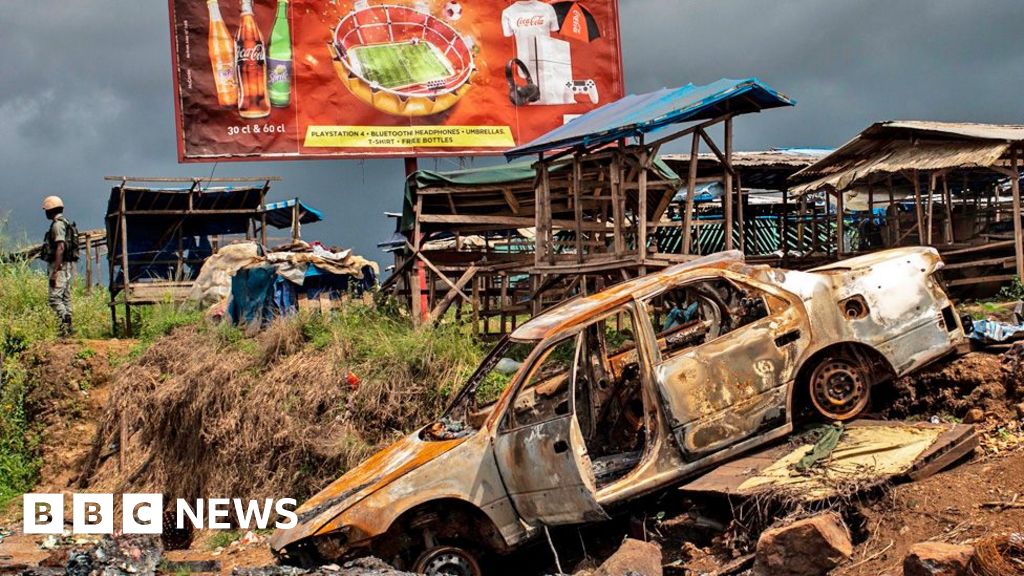
Belgium arrests three suspected Cameroon separatists in crackdown on war crimes

In recent developments, international authorities have uncovered allegations that various entities, believed to be connected to clandestine networks, are actively raising funds to sustain an armed struggle. Prosecutors from multiple jurisdictions have documented evidence suggesting that these groups are mobilizing financial resources to support ongoing conflicts, which bear significant implications for regional stability and global security. The international community watches with mounting concern, recognizing that such activities threaten to destabilize fragile peace accords and revive entrenched conflicts.

The strategic ramifications of this financial mobilization are profound. Analysts and historians warn that funding for armed conflicts tends to escalate violence, prolonging chaos and undermining diplomatic efforts. While some argue that these groups claim to fight for ideological or territorial goals, the undeniable consequence is the erosion of sovereign stability in the affected regions. Institutions like the United Nations have called for heightened vigilance and coordinated international action. Their recent reports emphasize that unchecked financial flows extend the life of conflicts, complicate ceasefire agreements, and deepen humanitarian crises.

From a geopolitical perspective, nations directly involved or neighboring conflict zones are likely to experience ripple effects that threaten their security. Various countries may be compelled to increase military spending, tighten border controls, and scrutinize financial transactions—actions that often strain diplomatic relations and stretch national resources. Moreover, the funding networks may intertwine with illicit activities such as trafficking, arms smuggling, and money laundering, further complicating the task of law enforcement agencies globally. International organizations, including Interpol and regional security alliances, are already intensifying efforts to trace and dismantle these financial pipelines, yet the challenge remains formidable.

As the world faces these mounting tensions, some voices in the diplomatic and strategic communities underscore that the decisions made today will define the trajectory of regional and global peace. Underlying conflicts are rarely purely ideological; they are fueled by economic interests, local grievances, and international power play. Historical lessons from the 20th century warn that unchecked financing of armed groups can spiral into protracted conflicts that devastate societies and derail progress. As world leaders grapple with these realities, the narrative of history is still being written—where the choices for peace or further chaos hang delicately in the balance. Yet, one thing remains certain: the weight of the future is now in the hands of those who control the flow of money and power.

ICC Policeman: Duterte’s Firm Hand at the Core of Philippines’ Drug Crackdown

International Court Begins Proceedings Against Former Philippine President Duterte Over ‘War on Drugs’

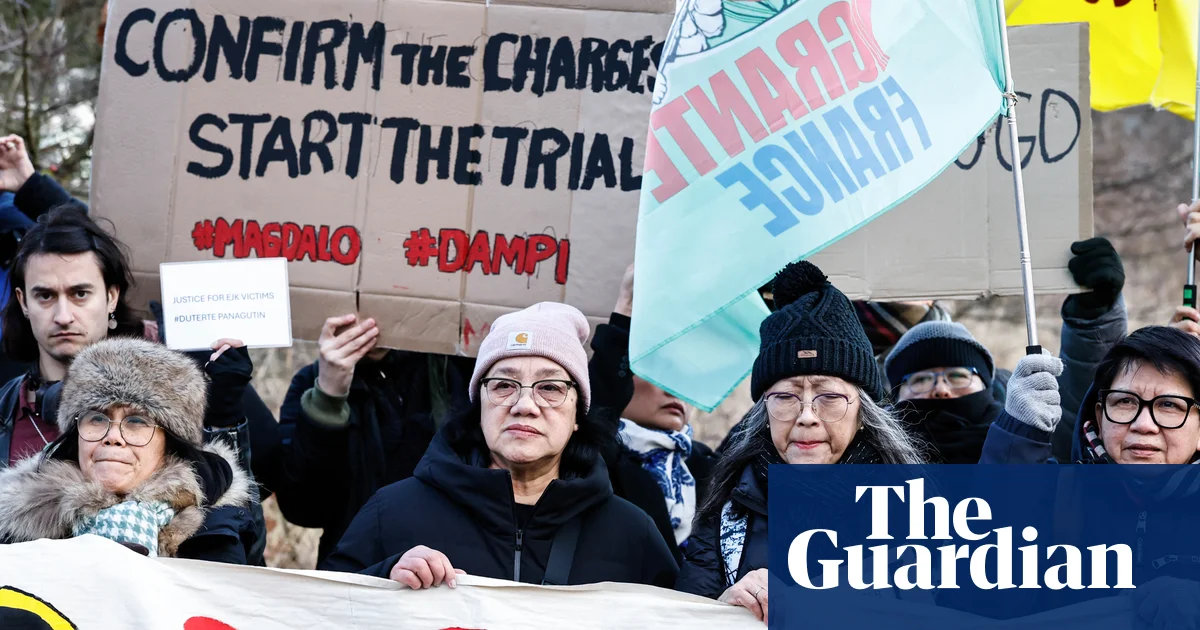
The International Criminal Court (ICC) has initiated a groundbreaking step in international justice, setting the stage for a historic trial of Rodrigo Duterte, the former leader of the Philippines. Accused of crimes against humanity stemming from his brutal anti-drugs campaign, Duterte’s case underscores a significant international reckoning with a controversial method of law enforcement that claimed tens of thousands of lives. Prosecutors allege that during his presidency from 2016 to 2022, Duterte wielded ultimate authority—orchestrating a policy that turned the nation into a battleground of violence, with a genocide-like campaign targeted at the urban poor.

This high-profile move highlights the escalating role of the ICC in addressing domestic atrocities by powerful leaders. Prosecutors, led by ICC Deputy Prosecutor Mame Mandiaye Niang, have presented a compelling case that Duterte was “at the very heart” of a systematically lethal campaign. The accusations include 49 incidents involving 78 victims of murder and attempted murder, with allegations that these are merely fragments of the broader “war on drugs” that saw between 12,000 and 30,000 civilians killed. These figures, reported by analysts and human rights advocates, reflect what many view as a gross violation of international human rights norms. The case also exposes how state-sponsored violence directly affected societal stability, especially among marginalized populations.

While Duterte continues to deny the charges, asserting his ailing health and frailty as reasons for his absence at the pre-trial hearing, victims’ families and international observers see this as cowardice in the face of justice. The court proceedings serve not only as a legal process but also as a powerful symbol of accountability—challenging the impunity often enjoyed by autocrats. Experts like historian Mark Twain and political analysts warn that international standards are evolving, and leaders wielding authoritarian tactics are increasingly vulnerable to prosecution. The court’s role in this process signifies a broader shift towards upholding justice, even for those at the highest levels of power—an essential development in holding leaders accountable for crimes committed in the name of law.

Amidst the legal battles and fierce courtroom debates, the broader geopolitical impact cannot be overstated. Duterte’s case resonates beyond the Philippines, reinforcing a global message: no ruler is above international law. The international community, divided yet gradually unified, faces a critical choice—permit violence and impunity to flourish or stand for justice and human dignity. The proceedings at The Hague evoke echoes of historic trials, reminding the world that the weight of history depends on whether nations embrace accountability or let its dark chapters remain unaddressed. As the case unfolds, it leaves a haunting question—how many more voices will be silenced before the tide of justice finally turns?

US military: 11 killed in strikes on suspected drug boats—tough crackdown continues

In recent months, a disturbing wave of violence has emerged across parts of Central and South America, with reports indicating that more than 130 individuals have been killed in supposed “narco-trafficking operations” allegedly spearheaded by the United States. These actions, which have been characterized by some analysts as aggressive counter-narcotics campaigns, are raising serious questions about their legal, ethical, and geopolitical implications. The toll on local communities and political stability underscores a critical juncture for regional sovereignty and international law.

International observers and regional authorities are divided in their responses. While some praise the efforts to combat drug cartels that threaten societal order, others caution against the overreach of foreign military and law enforcement agencies that risk violating national sovereignty. According to renowned geopolitical analysts, these operations could serve to destabilize governments, exacerbate existing violence, and foster anti-American sentiment that may ripple throughout Latin America. The U.S. government asserts that its actions are necessary to dismantle powerful criminal networks, yet critics argue this approach often results in unintended humanitarian consequences and undermines local legal processes.

From a broader perspective, the geopolitical impact of this escalation extends beyond regional borders. By engaging in aggressive anti-drug campaigns, the United States may be unintentionally fueling a narrative of interventionism that hampers diplomatic relationships with other emerging powers, such as China and Russia. International organizations like the United Nations have called for a *comprehensive, multilateral approach* to narcotics control—yet, many argue that unilateral military actions, cloaked as anti-drug efforts, undermine the very foundations of international cooperation. Historically, such strategies have often led to a cycle of violence and instability, revealing the inherent risks of substituting diplomatic solutions with force.

As histories of past conflicts remind us, the true turning point lies in understanding the complex socio-economic roots of narcotics trafficking and addressing them through sustainable development and law enforcement reforms. The growing death toll and accusations of extrajudicial killings serve as a stark warning: the pursuit of a drug-free society cannot justify disregarding human rights or sovereignty. Nations across the world watch eagerly, aware that each decision made today could shape the future stability of entire regions. The story of these violence-laden campaigns is still unwritten, yet its current chapters echo through halls of international authority—a testament to the enduring, often tragic, struggle of nations to forge peace amid chaos and to define their destiny amid the shadows of unresolved conflicts.

Social Media Auto Publish Powered By : XYZScripts.com