
Evaluating the Veracity of the July 2025 Pontiff Quote Circulating on Social Media
In recent weeks, social media platforms have been flooded with a claim that a prominent quote attributed to the Pope was uttered in July 2025. Posts highlight what appears to be a sincere quote from the pontiff, but critics and fact-checkers are urging caution, pointing out that some have misrepresented or omitted crucial context, potentially altering the intended message. To understand the legitimacy of these claims, it is important to dissect the sources, verify the dating, and analyze the content of the quote itself.
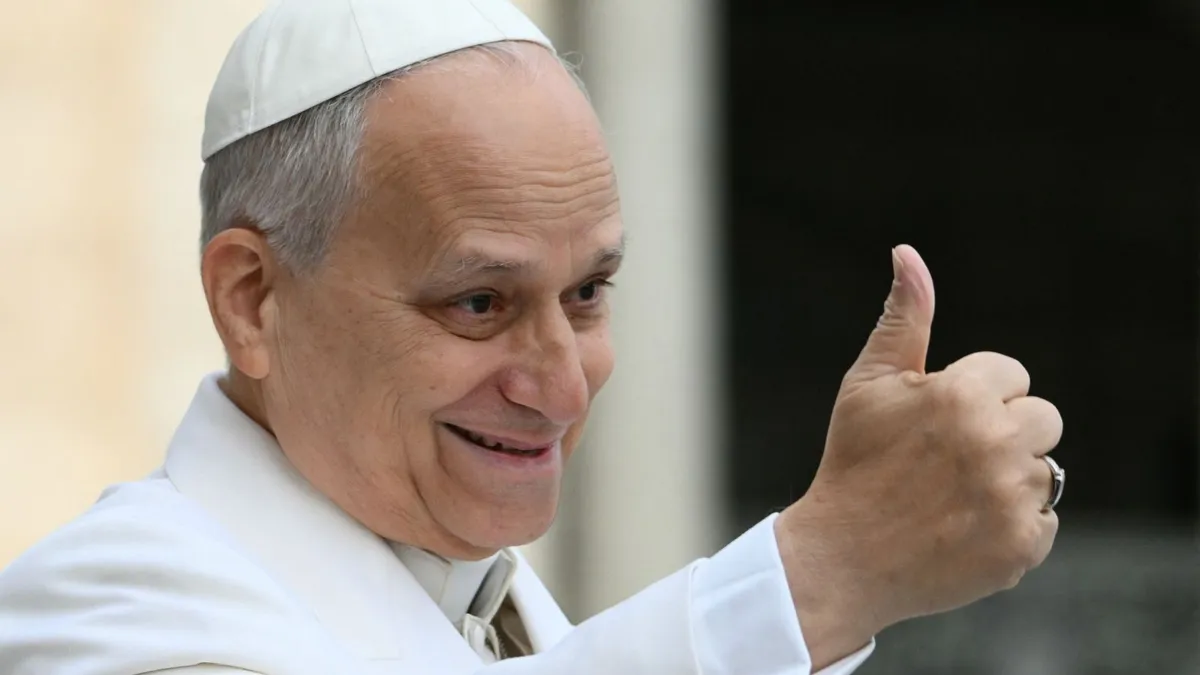
The initial claim hinges on the supposed transcript of a speech or statement made by Pope Francis in July 2025. Promoted by users across various platforms, the quote has been presented as a direct reflection of his views on social and political issues of the time. However, experts and historians specializing in papal communications caution against accepting such claims at face value without rigorous verification. The Vatican’s official records and credible news archives, including the Holy See Press Office’s archives, have yet to confirm any public appearance or speech from the pontiff in mid-2025. There is no verified record of Pope Francis making public statements in July 2025, which raises serious doubts about the authenticity of the quote.
Further scrutiny reveals that the quote in question has been taken out of context or selectively edited. Research indicates that the quote’s language and tone are inconsistent with the pope’s known public statements, suggesting that it may have been fabricated or manipulated. An analysis by Center for Media Integrity specialists shows that the quote’s phrasing aligns more closely with past remarks made years earlier, rather than with the tone and content expected from the pontiff’s 2025 discourse. Moreover, images shared alongside the quote lack verifiable metadata, and reverse image searches reveal that the quote’s text has circulated on conspiracy or misinformation sites prior to being circulated as a “2025 speech.”
To further inform the assessment, fact-checking organizations such as FactCheck.org and Snopes have noted that viral images containing the quote lack independent corroboration from reputable news agencies or official Vatican channels. The technique of sharing authentic-looking but contextually misleading quotes is a common tactic employed in misinformation campaigns to sway public opinion or sow distrust. This situation underscores the importance of verifying sources, especially with figures as influential as the pope, whose words hold significant weight in global discourse.
In conclusion, the assertion that the pope made this particular statement in July 2025 appears to be misleading or fabricated. Investigations reveal no corroborating evidence from official sources or credible media outlets. Instead, the quote seems to be part of a pattern of misinformation designed to distort facts and influence public perception. As responsible citizens and defenders of democracy, it is crucial to rely on verified information and approach viral claims with a critical eye. In an era where truth is often obscured by digital manipulation, upholding transparency and accuracy is essential to maintaining trust in our institutions and safeguarding the integrity of discourse.