Matox News

Truth Over Trends, always!

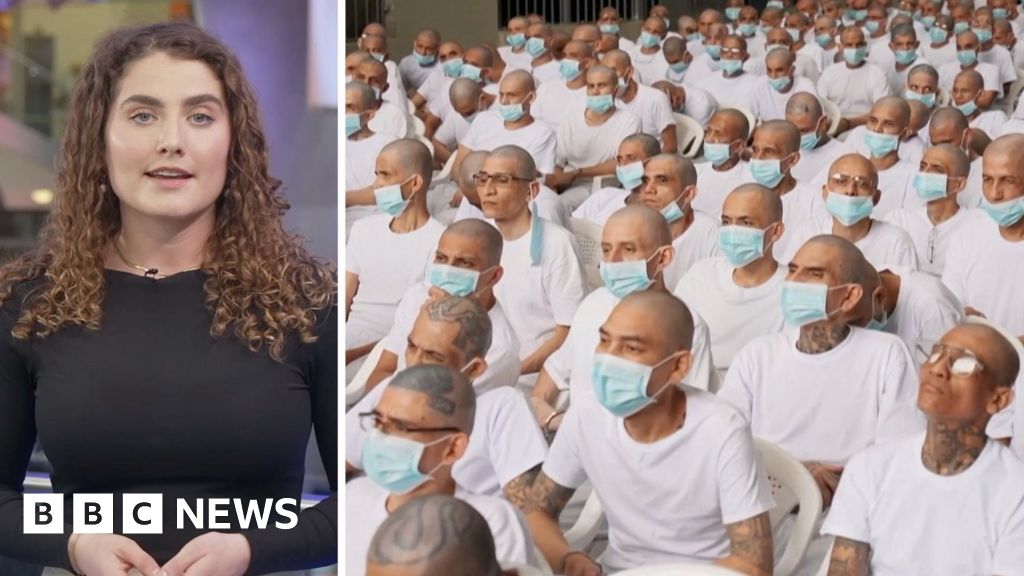
El Salvador starts major trial for 486 suspected gang members—standing up against crime and chaos

In a decisive move that underscores El Salvador’s relentless campaign against organized crime, the country’s authorities have initiated a mass trial involving 486 suspected members of the MS-13 gang. This unprecedented judicial effort marks a pivotal chapter in the nation’s ongoing struggle to reclaim stability and safety amidst years of violence and criminal dominance. The attorney general’s office revealed that the accused collectively stand accused of over 47,000 crimes spanning a decade—including murder, extortion, drug trafficking, and arms smuggling—highlighting the brutal scale of the gang’s influence within the country.

Footage from the trial, broadcast via video link, shows large groups of detainees in prison, illustrating the size and scope of law enforcement efforts. *Such mass proceedings, however, raise *serious concerns among international observers and human rights advocates.* The United Nations experts have criticized these tactics, asserting that mass trials “undermine the exercise of the right to defence and the presumption of innocence of detainees.” This critique points to a broader debate: can swift, severe justice truly justify the potential erosion of fundamental rights? El Salvador’s government remains resolute, asserting that they possess “compelling” evidence capable of imposing “maximum penalties” on those convicted, emphasizing their commitment to justice over international criticism.

Historically, the push for aggressive anti-gang measures in **El Salvador** reflects a wider ideological shift within parts of the global south—favoring tough-on-crime policies that prioritize security over process. Analysts argue that the Salvadoran government’s approach is a response to the failure of softer policies and a recognition that criminal corporations like MS-13 wield significant socio-economic power that can only be countered with assertive action. Nevertheless, critics warn that such strategies risk setting dangerous legal precedents, potentially sacrificing due process for short-term security gains. The United Nations and numerous human rights organizations highlight the danger of overlooking civil liberties in the pursuit of order, arguing that the long-term social costs of undermining legal safeguards could prove disastrous.

  • El Salvador’s government defends its crackdown as essential in dismantling deeply entrenched criminal networks that threaten civil order.
  • International bodies express concern over the fairness and legality of mass trials, cautioning against setting a precedent that could be exploited elsewhere.
  • The global perception of **El Salvador** as a nation willing to sacrifice constitutional protections raises profound questions about the balance between security and liberty.

As global analysts analyze this turbulent chapter—where justice and human rights seem to collide—the situation underscores a broader geopolitical impact: increasingly, **Latin American** nations and others plagued by similar crises are contending with the limits of sovereignty versus international standards. The actions of **El Salvador** are watched carefully, not just for the immediate results but for what they portend for the future of law and order in fragile democracies. With international organizations sharpening their critiques and rights groups mobilizing, the specter of a new paradigm—one where security trumps process—looms large. In this intensity, history remains unwritten, edging toward an uncertain future, as **El Salvador**’s government transforms its response into a test case with implications for the entire Western Hemisphere.

How China Tried to Hack Alysa Liu and Her Family: The Shocking Spy Story

Tech Innovation Meets Global Geopolitics: A New Era of Disruption

In the rapidly evolving landscape of technological innovation, recent revelations surrounding Chinese-connected figures operating within the United States underscore a shifting paradigm—who controls technology, and at what cost? The arrest of Frank Liu and Matthew Ziburis on charges related to illicit foreign influence highlights significant challenges to national security and sovereignty. Their alleged activities, including harassment and stalking of dissidents—a tool for political manipulation—serve as a wake-up call, revealing how complex and intertwined disruptive technologies are becoming with geopolitical agendas.

Meanwhile, the story of Liu—who founded the World Harmony Foundation—illustrates an era where **soft power** becomes intertwined with effective brand building and influence operations. His use of symbolic gestures like the ‘Harmony Bell,’ a seemingly benign peace initiative, masks deeper strategic ambitions that leverage cultural diplomacy for clandestine ends. This merging of soft power with cyber-enabled influence campaigns foreshadows a landscape where digital diplomacy and hybrid warfare are increasingly central in global power competition. Industry analysts from Gartner and MIT warn that such tactics represent a broader trend of opaque influence operations that threaten the foundation of open, democratic institutions.

Disruption Driven by Innovation in Cyber and AI Domains

As these geopolitical maneuvers unfold, cutting-edge innovations in AI, blockchain, and cybersecurity are reshaping how nations and corporations defend against covert influence and data breaches. The push towards decentralized digital currencies and secure communication platforms reflects an urgent response to authoritarian attempts at control. Disruption in these fields is not just about technological progress but fundamentally alters the business implications for global players. Companies investing heavily in AI-powered threat detection, cryptographic resilience, and automated counterintelligence are positioning themselves as critical pillars of national and economic security.

  • Leading firms such as Microsoft and Palantir are pioneering tools that auto-detect and counteract influence campaigns.
  • Startups and established industry giants are exploring blockchain for transparent transaction auditing to curb illicit funding flows.
  • Developments in AI are increasingly used for surveillance, identity verification, and real-time response to cyber threats.

In this context, industry giants and governments alike recognize that the next epoch belongs to those who can harness disruptive technology with precision and strategic foresight. Influential voices from Elon Musk to Peter Thiel emphasize that **technological supremacy** will dictate future geopolitical and economic dominance.

The Road Ahead: Innovation as the Ultimate Battlefield

Looking toward the future, the convergence of disruptive tech, cyber capabilities, and international influence operations signals a pivotal shift in global power dynamics. Speed is of the essence; the race to dominate these emerging domains will define the winners of the 21st century. As figures like Liu demonstrate, soft power will be complemented—and sometimes overshadowed—by hard-edged technology in shaping narratives and controlling influence. For entrepreneurs and policymakers, embracing this dynamism is vital; those who innovate boldly and respond swiftly will secure their footing in an increasingly uncertain world.

In conclusion, the unfolding interplay of disruptive technology and geopolitical strategy demands an urgent recalibration of priorities. The integration of AI, blockchain, and cybersecurity into the fabric of national defense and economic stability will determine who leads in this new era of digital dominance. The time to innovate is now—away from complacency and toward a future where control of technology equates to control of global influence.

Family of US man who died after officer's knee to back files lawsuit against police | US crime
Family of US man who died after officer’s knee to back files lawsuit against police | US crime

The recent case emerging from Kansas exemplifies the ongoing struggle for accountability and transparency within law enforcement, a challenge that resonates beyond national borders into the broader realm of global justice. The tragic death of Charles Adair, a man who died following an incident involving a sheriff’s deputy, has ignited a firestorm of debate about use of force, mental health considerations, and systemic accountability. Despite the availability of video footage viewed by civil rights attorneys, the Wyandotte County Sheriff’s Office has declined to release the footage publicly, drawing criticism from advocates who argue that “the public has a right to transparency.” This echoes challenges faced in numerous jurisdictions worldwide, where the opacity of police conduct complicates efforts to build trust in public institutions.

Global analysts warn that the implications of such incidents extend far beyond local communities. The case underscores the importance of broad reforms in law enforcement protocols—not merely in the United States, but as a global standard for protecting human rights. Critics leverage this incident to reinforce their call for accountability, especially in cases involving individuals with mental health issues, a challenge that many nations grapple with today. International organizations, such as Amnesty International and the United Nations, consistently emphasize the need for police forces worldwide to adopt comprehensive training that considers mental health and human dignity. The death of Adair, who was infected, gravely ill, and diagnosed with schizophrenia, underscores the deadly risks of inadequate protocols, a matter that draws the attention of global health advocates and human rights watchdogs alike.

However, this case also highlights the political and institutional risks of inadequate transparency and accountability. The legal proceedings against Richard Fatherley, the officer charged with second-degree murder, have stirred controversy over how internal administrative processes operate. Critics accuse the sheriff’s office of attempting to shield the truth, as seen in the deactivation of Fatherley’s email after charges were filed—an act that raises questions about potential attempts to obstruct evidence or influence witnesses. Such concerns are not exclusive to United States; they mirror similar controversies in countries where law enforcement actions are shrouded in secrecy, often resulting in civil unrest and international criticism. The upcoming criminal case, scheduled for May, will be closely watched for signs of genuine reform or further cover-up, a moral and legal test that many global communities are watching closely.

Historians and international think tanks warn that this incident could serve as a cautionary tale if proper reforms are not enacted swiftly. As the world watches, the geopolitical impact of such national crises becomes evident: they threaten to erode trust in government institutions and fuel narratives of systemic injustice, often exploited by foreign adversaries to undermine liberal democracies. Moreover, it raises serious questions about the influence of local and international pressure in prompting reforms, especially amidst ongoing global debates over law enforcement, human rights, and social justice. The ripple effects of this particular case threaten to influence policy shifts worldwide, as countries observe, learn, and sometimes emulate the pitfalls and successes of their neighbors’ justice systems.

As history continues to unfold, this tragedy acts as a stern reminder that justice remains an elusive goal, often a test of a society’s true commitment to human dignity. Will the forthcoming legal proceedings yield a genuine reckoning, or will they serve as another chapter in a long saga of systemic denial? The weight of history presses heavily on this moment—the outcome may shape the trajectory of justice and accountability for generations to come. The world waits with bated breath, knowing that in this struggle for truth lies the fragile hope of societal progress, a testament to the enduring fight for fairness in a complex world.

Chinese national gets year in prison for smuggling Kenyan ants—stupid crime, big punishment

Unexpected Diplomatic Tensions: The Case of Zhang Kequn and the Global Security Landscape

In a development that underscores the unpredictable nature of international security and environmental regulations, Zhang Kequn, a Chinese national, was arrested in March while attempting to travel to China with over 2,000 live ants. This incident, seemingly trivial at first glance, has ignited a broader debate on the interplay between international wildlife regulations, trade policies, and national security concerns, illustrating the complex web of factors influencing today’s geopolitics.

Analysts point out that the arrest signals more than just a case of illegal wildlife transport. It highlights the increasing scrutiny of unconventional items that carry potential biosecurity risks—an issue gaining prominence amid rising global concerns over pandemics and ecological stability. Experts from organizations such as the World Customs Organization warn that such seemingly minor violations can have far-reaching consequences, serving as indicators of deeper geopolitical tensions or economic disputes. While the incident involves a relatively small quantity of living creatures, it underscores a larger trend where environmental and health security are intertwined with international diplomacy, especially in regions with fraught political histories.

The implications extend well beyond the immediate border security. The incident sends ripples through international relations, especially between China, the world’s second-largest economy, and neighboring nations who remain vigilant about ecological and biosecurity threats. It also comes at a time when Western countries and China are engaged in ongoing strategic dialogues—and sometimes tensions—over trade, technology, and regional influence. Environmental regulations and biosecurity measures have become a new battleground, where control over seemingly trivial items—such as live animals or biological specimens—can be wielded as leverage or as symbols of broader diplomatic stance.

Moreover, global institutions have expressed concern over such incidents, emphasizing that how nations handle violations can either diffuse tensions or escalate them into wider conflicts. Officials and analysts note that these events reflect a larger pattern of how decisions on environmental regulation enforcement influence national image and international cooperation. For instance, the arrest of Zhang Kequn may be perceived differently across borders: as strict enforcement of international standards or as an overreach used to pressure China on other diplomatic issues. Such perceptions can profoundly shape diplomatic dialogues and mutual trust—key components in maintaining stability in rapidly shifting geopolitical landscapes.

As history continues to unfold, this seemingly minor incident embodies the broader dynamics at play: the collision of environmental concerns, national sovereignty, and international law. It serves as a stark reminder that, in today’s interconnected world, actions deemed trivial by some carry the weight of history—and the potential to either bolster cooperation or ignite conflicts. With each event, the delicate balance of global security—often hinging on the smallest of details—becomes clearer. The question remains: how will nations navigate this new terrain, where even a few insects can symbolize the fragile threads that hold the modern world together?

Telegram Still Hosts $21B Sanctioned Crypto Scam Black Market

Telegram Faces Growing Scrutiny Over Hosting of Illicit Market Xinbi Guarantee

In a stark demonstration of the challenges posed by unregulated digital platforms, Telegram continues to grapple with its failure to contain the notorious black market, Xinbi Guarantee, despite international sanctions. Since late March, when the UK government designated Xinbi as a facilitator of human trafficking, the messaging giant has yet to remove the accounts associated with the operation, allowing illicit transactions to flourish. According to analytics from cryptocurrency tracing firm Elliptic, Xinbi processed over $505 million within just 19 days following the sanctions, further expanding its network of buyers and sellers to nearly 500,000. This persistent presence exemplifies the profound disruptions that unregulated tech platforms can facilitate in global illicit economies, positioning Telegram at the center of a burgeoning—or perhaps reckless—digital black market industry.

The business implications of Telegram’s neglect are significant, signaling a potential shift in how enforcement agencies and market participants perceive platform accountability. As disruptive blockchain-based marketplaces continue to undermine conventional controls on illegal activities, there’s mounting evidence that Telegram’s stance on hosting these markets—originally justified as protecting user privacy and circumventing authoritarian controls—may inadvertently embolden organized crime syndicates. This approach raises critical questions about the long-term viability of digital privacy claims when the platform increasingly serves as a conduit for human trafficking, money laundering, and other illicit actions. Industry analysts, including Gartner and cybersecurity experts like Gary Warner, argue that such open hosting of criminal activity demonstrates a dangerous erosion of accountability, threatening to undermine trust in digital communication tools widely adopted by youth and professionals alike.

Moreover, the industry’s response to these developments may drive a market shift towards more vigilant oversight. The disruption caused by illicit marketplaces on platforms like Telegram underscores the need for new paradigms in platform regulation—balancing digital privacy with the responsibility to curb criminal activity. Despite Telegram’s claims that their services facilitate financial autonomy and protect against oppressive regimes, recent intelligence reports, including those from MIT and Ellicott, reveal that Xinbi serves primarily as a money laundering hub, with links to human trafficking operations across Southeast Asia. The UK sanctions, which condemn Xinbi’s operation of scam centers that enslave victims and perpetuate forced labor, highlight the increasing international momentum to impose stricter controls on digital black markets. This emerging paradigm setter challenges existing tech regulation frameworks, demanding innovation in law enforcement and platform accountability.

The future trajectory of this ongoing saga hinges on whether platform providers like Telegram will evolve their policies or continue to enable the dark side of digital innovation. With major institutions and governments growing increasingly alarmed, the need for a tech industry revolution that enforces transparency without compromising privacy has never been more urgent. As organized crime harnesses cutting-edge technologies and decentralized networks to outpace authorities, only those companies prepared to disrupt their own paradigms—by integrating advanced AI moderation, blockchain analytics, and accountable governance—will be positioned to lead the next wave of digital transformation. The window for decisive action is closing fast; the choices made now will shape the battleground for digital freedom and security for years to come.

Schools in knife crime zones to receive targeted crisis training for students

Government Launches Initiative to Tackle Knife Crime in Schools

In a decisive move to address the rising concern of knife-related violence among youth, the government has announced a new partnership aimed at providing comprehensive training for school leaders. This initiative underscores the recognition that schools serve not only as educational institutions but also as vital community anchors. By equipping educators with the tools to identify and mitigate risks associated with knife crime, policymakers aim to foster safer environments where young people can learn and grow free from the threat of violence. Yet, such measures also highlight deeper sociocultural shifts and systemic challenges that demand a broader societal response.

Social Tensions and the Erosion of Community Bonds

Historically, communities have played a crucial role in shaping the moral fabric and social cohesion of young people. However, many areas experiencing socioeconomic decline have seen a breakdown of these communal bonds, creating fertile ground for youth to become embroiled in gang culture and illegal activities. Sociologists like Robert Putnam have documented how social capital—the networks of trust and cooperation—has diminished in disadvantaged neighborhoods. This erosion leaves at-risk youth more vulnerable to peer pressure and violent influences, ultimately impacting families and the wider social fabric.

Educational Challenges and the Role of Schools

Schools are often considered the frontline in the fight against youth violence, but they face complex challenges rooted in educational inequalities and resource limitations. Many educators report feeling ill-equipped to handle these issues without proper training or support systems. The new program seeks to arm school leaders with insights into risk indicators and intervention strategies, emphasizing that prevention begins with understanding the social contexts students navigate daily. Historical patterns show that when educational institutions are disconnected from community realities, efforts to curb violence are less effective—underscoring the need for holistic, community-inspired approaches.

Challenges and Prospective Solutions for Society

  • Developing integrated community programs that combine education, mental health services, and social support networks.
  • Enhancing youth engagement initiatives to foster leadership and positive social identity.
  • Supporting families through outreach and parenting programs that reinforce community values and resilience.
  • Addressing the root causes of youth disenfranchisement, such as unemployment, inequality, and limited access to quality education.

The contemporary challenge is not solely about reactive measures but about healing the societal wounds that have deepened over decades. Thought leaders like sociologist Charles Murray have argued that a culture of responsibility and opportunity is essential to reversing trends of youth violence. As communities grapple with demographic shifts and cultural tensions, it becomes imperative for society to adopt a comprehensive approach—one that emphasizes not only law enforcement but also moral education, social cohesion, and economic empowerment. Ultimately, safeguarding our youth requires that we reflect on the societal values we uphold and the future we seek to build—a future where safety and opportunity are accessible to all.

China strikes again: Executes four Myanmar mafia members to crack down on crime

In a dramatic move with significant geopolitical repercussions, China has publicly executed four members of the notorious Bai family mafia, a criminal syndicate responsible for running widespread scam centers across Myanmar. This decisive action signals a clear stance from Beijing against transnational organized crime and underscores the country’s broader efforts to consolidate control over regional stability.

The Bai family’s criminal enterprise, according to official reports, operated a vast network engaged in advanced financial scams, leveraging Myanmar’s relative legal and political ambiguities. These scam centers targeted vulnerable populations across Southeast Asia and beyond, draining billions of dollars from unsuspecting victims. The crackdown, culminating in the execution, illustrates how China is stepping up its law enforcement outreach beyond its borders, aiming not only to dismantle criminal syndicates but also to project strength within the strategic corridors of Southeast Asia.

International analysts, including specialists at the South China Sea Policy Institute and global crime watchdogs, interpret this move as part of a broader strategy to safeguard China’s economic interests and regional influence. By explicitly targeting this notable criminal organization, Beijing seeks to present itself as the defender of stability and order in a volatile neighborhood. The Chinese government has indicated that such actions align with its commitments to regional peace and the fight against transnational crime—an assertion underscored by recent joint operations with Myanmar authorities.

Yet, the decision to execute members of the Bai family mafia also raises critical questions about international law and human rights standards. Critics argue that capital punishment, especially in high-profile cases involving foreign criminal syndicates, risks escalating tensions and complicating diplomatic relations. Nevertheless, advocates within China and aligned allies contend that firm measures are essential to counter organized crime’s corrosive influence on society and sovereignty.

Looking ahead, this bold move from Beijing exemplifies how national security and legal sovereignty are increasingly intertwined with global regional stability. The ramifications extend far beyond the immediate crackdown, shaping China’s reputation as a law-and-order power while also resonating through the corridors of international diplomacy. As the dust settles over this high-profile execution, the story of the Bai mafia’s fall is just another chapter in the unfolding narrative of a nation eager to redefine its role in the global order, with history watching intently at the perilous crossroads of power and justice.

Six Hurt in Louisiana Mardi Gras Parade Shooting—Youth Crime Sparks Outrage

In a stark illustration of ongoing domestic unrest, a tragic mass shooting erupted during a local Mardi Gras celebration in Clinton, Louisiana, leaving six individuals wounded, including a child. This incident, occurring near the town’s courthouse in the heart of a tight-knit community, underscores the persistent challenges facing the United States regarding gun violence and its societal impacts. According to local officials, authorities swiftly responded, arresting one suspect and initiating a search for the vehicle believed to be used in the attack, highlighting the emergency response protocols in place amidst rising violence.

The incident is part of a disturbing trend that has alarmed both domestic and international observers. As of this year, there have been at least 24 mass shootings in the US, according to data from the Gun Violence Archive. This organization defines a mass shooting as any event in which four or more victims are wounded or killed, a threshold that underscores the scale of the crisis. Such violence not only devastates local communities but also fuels debates about the efficacy of current gun control laws, with critics arguing that congressional inaction perpetuates a cycle of insecurity. Historians and analysts warn that if the trend continues, the social fabric of American society risks further unraveling, with implications for national stability and global perception.

The failure of Congress to adopt more comprehensive gun legislation reflects broader geopolitical and societal issues. Many international partners and organizations, including the United Nations, have called for stricter gun regulations worldwide, portraying firearms as a pressing global concern. Yet, the US remains uniquely plagued by deep partisan divides and cultural entrenchment around the Second Amendment. As legislation stalls and mass shootings multiply, how decisions made at the federal level will alter the future security landscape remains uncertain. The international community watches as the US grapples with this internal crisis, highlighting a dissonance between American internal policy and the global push for peace and stability.

Across the Atlantic, European nations and Asian powers observe America’s struggles with a mixture of concern and skepticism, often contrasting their own more restrictive gun laws with the US’s persistent inaction. Some analysts warn that the inability of the world’s most powerful nation to effectively curb its gun violence could undermine its moral authority on human rights and security issues. As global institutions like the World Health Organization emphasize the importance of preventative measures, American policymakers face the profound question: will they choose to prioritize societal safety over entrenched interests? Meanwhile, the bloodshed in Clinton stands as a sober reminder of unresolved divisions and the urgent need for decisive action.

With history unfolding daily in the streets of small towns and big cities across the nation, the narrative remains clear and tragic: a society on the brink, teetering between constitutional rights and the need for security. The echoes of this latest tragedy continue to resonate, a stark reminder that the true cost of internal division extends beyond borders, shaping the fate of nations near and far. As history’s pages turn, the world is left to ponder whether the tide can be turned or if the dark chapter of American gun violence will write itself into the annals of unresolved conflicts—an enduring testament to a nation still striving, still fighting to define its future amid the shadows of its own making.

Judge Pauses Minnesota ICE Action Amidst Illegal Punishment Concerns

Federal Enforcement Actions in Minneapolis Fuel Legal Battles and Civil Discontent

In an unprecedented display of federal authority, recent operations in Minneapolis have ignited a fierce debate over the limits of government power, civil liberties, and the future landscape of law enforcement technology. The deployment of thousands of armed agents during federal raids—aimed at curbing crime but marred by tragic incidents—has raised fundamental questions about the disruption of local sovereignty and the potential overreach of federal operations. Experts like those from MIT’s Cybersecurity Institute warn that such interventions might set dangerous precedents, risking a precedent where federal agencies operate with near-impunity within state borders, potentially unleashing an era of unchecked coercive power.

Legal battles currently dominating the headlines highlight the tension between federal authority and local autonomy. Judges such as Judge Menendez have expressed concern over the scale and scope of these operations, questioning whether federal agencies are crossing constitutional lines. The legal claims focus on whether the federal government, in its effort to combat crime, is effectively coercing or even overriding local officials’ ability to manage their jurisdictions. The core worry among legal scholars is how these large-scale operations could erode the constitutional protections of states and municipalities, forcing them into crisis mode—diverting resources, disrupting local law enforcement, and destabilizing entire communities. This scenario has significant business implications for private security, surveillance tech firms, and emergency response industries, which stand to benefit from increased demand driven by federal initiatives.

Adding fuel to the fire are recent tragic incidents in Minneapolis involving federal agents—specifically, the deaths of Renee Nicole Good and Alex Pretti. The killings, both involving armed federal agents and operating in the context of seemingly unrelated raids, have turned public opinion sharply against federal enforcement tactics. Official narratives such as allegations that Pretti posed a “lethal threat” have been challenged by citizen footage and autopsy reports, underscoring a growing gap between government claims and on-the-ground realities. These events serve as stark reminders that disruptive law enforcement technology—including surveillance and armed response tools—must be wielded with precision and accountability, or risk undermining the trust necessary for future innovation.

Looking ahead, the industry’s response to these shifts will be critical. Disruptive technologies like AI-powered surveillance, real-time tracking, and autonomous law enforcement drones are poised to revolutionize public safety. However, the legal and ethical dilemmas highlighted by Minneapolis’s recent turmoil signal that without robust safeguards, such technological advances could accelerate a trajectory toward authoritarianism or civil unrest. Key industry players and policymakers are now racing to develop frameworks that balance innovative disruption with respect for civil liberties—a task that’s becoming ever more urgent.

As the battle lines between federal authority and local sovereignty sharpen, the next wave of tech-driven enforcement will define the limits of American liberty and security. Industry leaders like Elon Musk and Peter Thiel emphasize that the future of safe, accountable law enforcement depends on proactive innovation paired with strict regulatory oversight. The coming months will be pivotal: failure to strike a sustainable balance could see unchecked federal expansion transforming into a technology-enabled surveillance state. In this high-stakes game of innovation versus regulation, those who act swiftly and decisively will shape the future of justice, security, and innovation—setting the course for a nation that must navigate this new frontier with clarity and resolve.

Crypto mogul Do Kwon gets 15 years behind bars—big win for accountability

South Korean Crypto Entrepreneur Do Kwon Sentenced to 15 Years in U.S. Court Amid Industry Disruption

In a landmark ruling that underscores the high-stakes nature of cryptocurrency innovation and the risks tied to speculative assets, Do Kwon, the South Korean crypto pioneer and founder of Terraform Labs, was sentenced to 15 years in prison by a U.S. federal court in Manhattan. This case not only marks a significant legal milestone but also signals a stern warning to emerging disruptive financial technologies that threaten to reshape traditional markets. Kwon’s conviction was rooted in the collapse of TerraUSD (UST), a supposedly algorithm-backed stablecoin that aimed to revolutionize digital finance but ultimately became a cautionary tale of overconfidence in unregulated innovation.

The fallout from the breakup of TerraUSD in May 2022 was catastrophic—wiping out an estimated $40 billion from the crypto ecosystem and destabilizing numerous startups and investors worldwide. Kwon’s aggressive marketing of UST, a stablecoin purportedly pegged to the U.S. dollar via a complex algorithm involving the LUNA token, exemplifies what industry analysts describe as the misplaced trust in algorithmic financial mechanisms. By offering a supposedly tamper-proof peg, Terraform Labs promised a new frontier of stable digital assets. Instead, the system’s failure exposed vulnerabilities inherent in decentralized finance (DeFi), revealing the hazards of unchecked entrepreneurial zeal.

  • Disrupted Market Dynamics: The collapse led to market panic, triggering a cascade that affected dozens of crypto firms and investors.
  • Regulatory Clarity: The case marks a pivotal step towards more rigorous oversight, as authorities aim to curb fraud and promote responsible innovation.
  • Innovation vs. Risk: The incident emphasizes the importance of balancing disruptive advancements with sustainable, transparent frameworks—an area where industry leaders like Elon Musk advise caution.

Among industry observers, analysts at Gartner and MIT emphasize that this high-profile case could accelerate regulatory actions worldwide, compelling blockchain developers to adopt more rigorous security standards and compliance protocols. The case also ignites a broader debate on the future of stablecoins, which are seen as vital for mainstream adoption of digital currencies and decentralized financial services. However, critics warn that the reliance on complex algorithms without adequate safeguards can lead to systemic failures, threatening the integrity and sustainability of the crypto economy.

The sentencing underscores a challenging but inevitable trajectory for crypto innovators—those who push the boundaries of digital finance must now reconcile with growing regulatory scrutiny and the imperative for sound risk management. The industry’s future hinges on the ability of entrepreneurs and institutions to learn from these failures, fostering innovation that not only disrupts but also endures. As the sector heads into a new era marked by increased oversight and technological maturation, stakeholders are urged to act swiftly—those who adapt and innovate responsibly will lead the next wave of digital transformation, while complacency risks catastrophic fallout. The next chapter in crypto innovation will be shaped by how the ecosystem responds to this historic judgment, with urgency and strategic foresight taking center stage.

Social Media Auto Publish Powered By : XYZScripts.com