Matox News

Truth Over Trends, always!

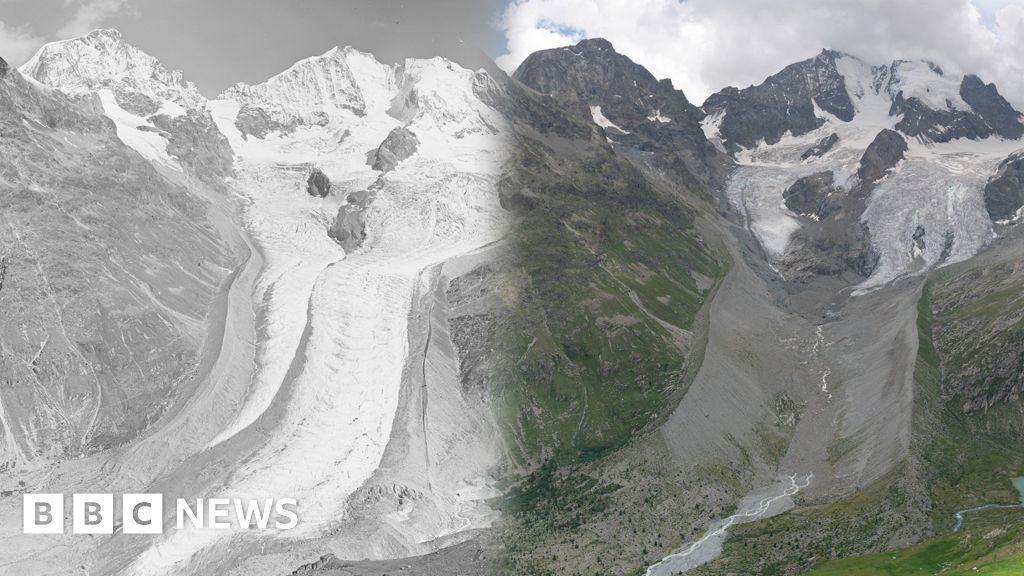
Before and after photos reveal glaciers' rapid disappearance—our climate crisis in focus
Before and after photos reveal glaciers’ rapid disappearance—our climate crisis in focus

Global Glaciers in Rapid Retreat: A Warning from the Frontlines of Climate Change

Across the globe, the once-mighty glaciers that have shaped mountain landscapes for centuries are vanishing at an unprecedented rate. In Switzerland, a country renowned for its alpine beauty and climate resilience, the retreat of glaciers like the Rhône and Great Aletsch has become a symbol of a warming planet. Matthias Huss, director of Glacier Monitoring in Switzerland (GLAMOS), vividly recalls his childhood memories of glaciers that once stretched deep into the valleys—memories now replaced by distant, receding ice and growing lakes. The stark reality is that, according to a recent World Meteorological Organization report, glaciers outside the Greenland and Antarctic ice sheets lost a staggering 450 billion tonnes of ice in 2024 alone, enough water to fill 180 million Olympic pools.

Scientists globally warn that the rapid loss of glaciers is a direct consequence of human activity. Prof. Ben Marzeion of the University of Bremen emphasizes: “They are sitting in a climate that is very hostile to them now because of global warming.” The pattern is relentless. Satellite imagery and ground observations from the Alps reveal that some glaciers, previously thought to lose only 2% of their ice annually—considered “extreme”—are now hemorrhaging nearly 6% in a single year. Such accelerated loss underscores how natural glacier fluctuations, once considered slow and cyclical, are being overridden by anthropogenic climate change. The melting is not just a regional problem; it has far-reaching geopolitical impact, threatening fresh water supplies for hundreds of millions in Asia, Africa, and beyond.

In the context of global politics, the melting glaciers serve as stark warnings and call for urgent international cooperation. Asia’s so-called “Third Pole,” the Himalayan mountain range, harbors enough ice to impact nearly 800 million people dependent on meltwater for agriculture, drinking water, and hydropower. Professor Regine Hock from the University of Oslo warns that the “biggest vulnerability” lies in these drier regions, where meltwater is often the sole source of water during summer months. Yet, despite the alarming evidence, some nations continue to prioritize economic growth over environmental stewardship, complicating international efforts to mitigate climate impacts. Historians and analysts concur that the contemporary rapid glacial retreat, especially over the past four decades, is unequivocally linked to the rise of global fossil fuel consumption since the Industrial Revolution.

Decisions Today Will Shape the Glacial Future

The interplay between natural variability and human-made climate change has created a scenario where glaciers are lagging behind current temperatures, with much of their future melt already inevitable. As Prof. Marzeion states, “A large part of the future melt of the glaciers is already locked in.” This means even if global efforts succeed in stabilizing temperatures tomorrow, many glaciers will continue to diminish for decades due to delayed response mechanisms. Yet, some hope persists—research published in *Science* indicates that limiting global warming to 1.5°C above pre-industrial levels could save half of Earth’s remaining mountain ice. Conversely, at the current trajectory of approximately 2.7°C warming, projections suggest that up to 75% of glaciers may ultimately succumb to melting, dramatically reshaping landscapes and societies.

This ongoing retreat portends profound consequences beyond geography; it threatens to destabilize ecosystems, alter river flows, and escalate sea-level rise, which endangers coastal cities worldwide. Provinces like the Himalayas, often dubbed the “Third Pole,” stand as testament to the human toll—where Himalayan glaciers feed rivers vital for agriculture and industry, their loss could trigger water scarcities affecting billion-dollar economies and vulnerable populations alike. This is a crisis that transcends borders, calling on international organizations and world leaders to confront the stark reality of climate inaction—a challenge where history is still being written, and the pages are being turned with every melting glacier and rising sea.

The weight of history presses heavily as glaciers continue to vanish

As the glaciers vanish—once seen as eternal in the eyes of ancient communities—the modern world faces an epochal dilemma: whether to heed the warnings etched into icy scars or to ignore the call to preserve Earth’s irreplaceable cryosphere. In the crucible of mounting evidence and irreversible change, the choices made now hold the power to either forge a sustainable future or condemn generations to witness the relentless advance of a warming world. The echoing cry of the glaciers, frozen in time but melting in reality, reminds us that while the natural cycle of ice and fire has persisted for millennia, human influence now shapes the course of Earth’s history itself—leaving us to linger on the precipice of an uncertain future, where every melting drop writes the beginning of an inevitable transformation.

Israel warns Gaza aid flotilla to reroute amid navy intercepts — Middle East crisis escalates

The Middle East, long a powder keg of geopolitical tensions, is witnessing yet another flashpoint that threatens to destabilize an already fragile situation. Recent developments reveal a significant escalation involving the Israeli military and a pro-Palestinian aid flotilla attempting to breach the maritime blockade of Gaza. Around 75 miles off the coast, at least 20 Israeli vessels intercepted the Global Sumud Flotilla, which included notable figures such as Greta Thunberg and Nelson Mandela’s grandson, Mandla Mandela. This flotilla, composed of nearly 50 boats and 500 activists, was carrying a symbolic amount of humanitarian aid with the explicit goal of breaking what they viewed as an unjust blockade. The incident underscores the ongoing struggle over control of the Gaza Strip, a conflict that continues to draw international attention and concern. According to analysts at International Crisis Group, such confrontations are designed to spotlight global perceptions of injustice, yet they risk further inflaming hostilities in a region already marked by recurring violence.

The Israeli government’s response has been unequivocal. The Foreign Ministry asserted that the navy had contacted the flotilla and asked them to alter course, citing the approaching active combat zone and a lawful naval blockade. They reiterated an offer to facilitate aid transfer through “safe channels” into Gaza—an offer that activists have repeatedly rejected, viewing it as a mere pretext for suppression. Social media footage from activists shows Israeli naval vessels ordering boats to turn off engines, with some participants claiming they have been intercepted in international waters. The situation has rapidly evolved into a complex maritime standoff, with live feeds going dark amid reports that some activists have been detained, potentially against their will. The incident refocuses international debate on the legitimacy of Israel’s blockade, which critics argue constitutes collective punishment, while supporters emphasize the need to prevent weapons smuggling—an ongoing source of tension.

The geopolitical impact of this confrontation extends far beyond the immediate hostile waters. European nations, including Spain and Italy, initially sent naval escorts to support the flotilla, recognize the humanitarian intent while cautioning activists to avoid dangerous escalation. Nonetheless, accusations from Israel linking flotilla participants to Hamas—without solid evidence—are seen by many analysts as attempts to justify potential military actions and inflame regional divisions. This dynamic risks drawing in broader international actors, potentially sparking a wider conflict. The United Nations has called for restraint, yet the underlying issue remains unresolved: to what extent can aid effectively reach Gaza without serving as a stage for geopolitical combat? As historians warn, such interventions, if mishandled, can set long-term precedents that shape the narrative of resistance and oppression for decades to come. The unfolding events hint at a near-certain escalation that could see this maritime showdown evolve into a symbol of international neglect or intervention, depending on how world powers choose to respond.

In the shadows of this tense standoff, voices from within human rights circles are raising alarms. Pre-recorded videos from activists detained by Israeli forces reveal fears of kidnapping and calls for diplomatic intervention—an indication of how swiftly the situation can spiral from a peaceful humanitarian mission to a crisis of international proportions. The U.S. and European diplomatic desks face mounting pressure to navigate their alliances carefully, balancing support for Israel’s security while condemning actions perceived as excessive or provocative. The controversy ignites debates about sovereignty, international law, and the moral responsibility of major powers in a region still plagued by cycles of vengeance. As the world watches this unfolding narrative, the fate of those onboard the flotilla sustains a grim reminder: history is watching, and every decision today stamps the future of tomorrow with its indelible mark. The pages of history continue to turn—each chapter more critical than the last, shaping a conflict that may well redefine the geopolitical map of the Middle East for generations to come.

Optus CEO Faces Tough Days After Singtel Meeting Amid Outage Crisis, Says Anika Wells

Australia’s Telco Crisis Illuminates Geopolitical Stakes in Critical Infrastructure

The recent series of outages plaguing Optus, one of Australia‘s largest telecommunications providers, has sparked immediate national concern and highlighted broader issues surrounding critical infrastructure resilience. The Australian government’s intervention — calling for an external review after two major triple-zero outages within a fortnight — underscores the fragile trust in essential services that underpin civilian safety and national security. Prime Minister Anthony Albanese publicly condemned Optus for “letting down its customers and the nation,” marking a significant moment where private enterprise’s failures impact the entire societal framework.

What elevates this domestic issue to a matter of geopolitical significance is the role of Singtel, Optus’s parent company based in Singapore. The communications minister, Anika Wells, engaged directly with Singtel’s leadership, signaling the importance of international corporate accountability—particularly in an era where digital infrastructure increasingly intertwines with national sovereignty. Analysts argue that such outages, and the subsequent inquiries, serve as a litmus test for whether Singapore’s corporate interests align with Australian security and resilience. Historically, foreign-based companies operating critical infrastructure in allied nations have often become channels through which broader geopolitical tensions are expressed or mitigated.

Deciphering Systemic Challenges & International Ramifications

The outages exposed at least one significant technical vulnerability: a firewall upgrade on September 18th unintentionally disabled emergency call capabilities across multiple regions, including South Australia and Western Australia. Despite assurances that individual human errors contributed, concern remains whether Optus and its parent will undertake comprehensive reforms needed to restore faith. The Australian Communications and Media Authority’s investigation aims to quantify whether such failures are systemic or isolated cases, with Wells warning of “significant consequences” if lapses persist.

In the broader geopolitical context, these events serve as a reminder that critical infrastructure is a battleground where sovereignty and national stability are continually tested. Countries worldwide are increasingly wary of reliance on foreign corporations or jurisdictions that may have competing strategic interests. As geopolitical analysts have pointed out, trust in foreign technology providers can become a vulnerability, especially when national security is at stake. The push for legislation to appoint a triple-zero custodian reflects an urgent desire for sovereignty over emergency services and critical communications—highlighting a critical turning point in Australia’s approach to managing and safeguarding its national infrastructure.

Unfolding Crisis & Lessons for the Global Community

Despite the government’s resistance to larger inquiries, the tone of Australian officials suggests that the outages could have far-reaching consequences. The Labor government’s calculated move to fast-track legislation indicates a clear recognition: trust once broken in essential services can have profound social and political repercussions, both domestically and internationally. The controversy surrounding Wells’s leadership and the ongoing investigation are emblematic of a wider debate about the firm’s ability to uphold national security protocols in an era where technological vulnerabilities can translate into geopolitical vulnerabilities.

As historians and security analysts warn, this episode could serve as a pivotal moment in how nations balance the pragmatism of foreign investment with the imperatives of sovereignty. The looming uncertainty surrounding Optus and Singtel’s future underscores that when the foundations of civil trust are shaken, the course of nations may be altered—for better or for worse—by the decisions made in boardrooms and government chambers alike.

Now, as Australian society grapples with the immediate fallout, the weight of history presses heavier—to remind us that the integrity of our infrastructure isn’t merely a matter of corporate accountability, but a defining frontier in the international contest for influence, security, and sovereignty. The escalating crisis offers a stark warning: in the relentless march of modern geopolitics, invisible lines are being redrawn, with support and resilience of national systems hanging precariously in the balance. The question remains—how many more such moments will it take before the world recognizes that in the shadows of seemingly trivial outages, the future of sovereignty itself is being written?

Social Media Auto Publish Powered By : XYZScripts.com



