
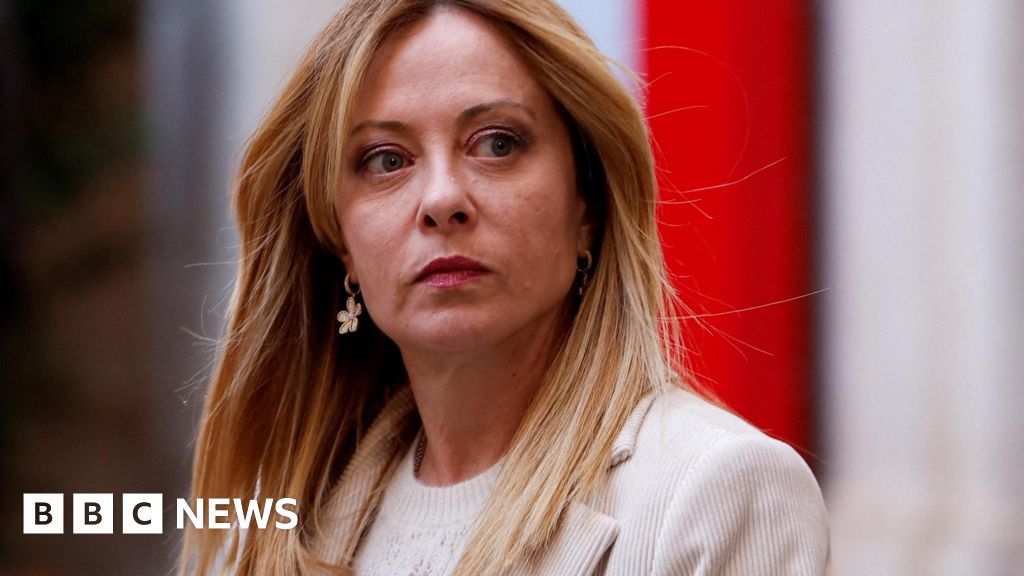

The intricate web of international relations remains under intense scrutiny as recent developments highlight the ongoing rift between key global powers and longstanding alliances. Italy’s Prime Minister and the United States President continue to maintain a strategic partnership rooted in shared geopolitical interests, yet recent diplomatic tensions threaten to reshape the delicate balance of influence in Europe and beyond. Central to this emerging conflict is the unresolved dispute with Pope Leo XIV, whose authority and moral standing are now being challenged by the US leadership’s refusal to issue an apology.
The controversy centers around an episode in which President Trump, representing the United States, declined to issue an apology to the pope, whom he described in unflattering terms as “very weak.” This defiance has enraged elements within the Vatican, and analysts warn that such a stance risks inflaming longstanding tensions between secular state interests and the religious authority of the Holy See. Historically, the Vatican’s diplomatic influence has transcended formal politics, shaping moral and ethical debates within international forums. Trump’s refusal signals a broader shift toward unapologetic nationalism and a reluctance to defer to institutional moral authority on global stages, a move that some observers warn could undermine diplomatic norms established in the post-World War II era.
Meanwhile, Italy’s Prime Minister has found himself caught in the crossfire, bridging the interests of a committed Western alliance and the political realities of maintaining good diplomatic ties with the Vatican. Italian officials, known for their historically close ties to Catholic institutions, have expressed disappointment over Trump’s attitude, emphasizing the importance of maintaining respect for religious sovereignty. Political analysts suggest that this episode underscores the shifting landscape of international diplomacy, where alliances are tested by cultural and moral clashes as much as by strategic interests. The European Union and **NATO** members watch anxiously as the US’s stance toward religious institutions and diplomatic protocol begins to reshape alliance dynamics.
The global geopolitical impact of this controversy extends beyond just Italy and the Vatican. The refusal to apologize signals a potential realignment in diplomatic posture—marked by a willingness among Western powers to prioritize national interests over longstanding diplomatic courtesies. This shift could embolden other nations to challenge traditional norms, risking greater instability in international relations. Historians caution that this episode may be remembered as a turning point—an era where the foundations of diplomatic diplomacy, based on mutual respect and tradition, are fundamentally challenged. It poses serious questions about how global institutions such as the UN or the World Court will respond to the erosion of diplomatic decorum that has historically served as the bedrock of international peace and cooperation.
As history continues to unfold, a stark reality remains—the decisions made in these tense moments will resonate for generations. The weight of that history is not merely measured in diplomatic cables or official statements but in the lives of ordinary citizens whose futures hang in the balance of shifting alliances and unyielding national pride. The world watches with bated breath as the pages of a new chapter are written, where old alliances are tested, and new divides are etched into the geopolitical landscape. Whether history will see these events as a catalyst for inevitable fragmentation or a prompt for renewed dialogue remains uncertain—but one thing is clear: in the great narrative of global power, this is a crucial turning point.”






