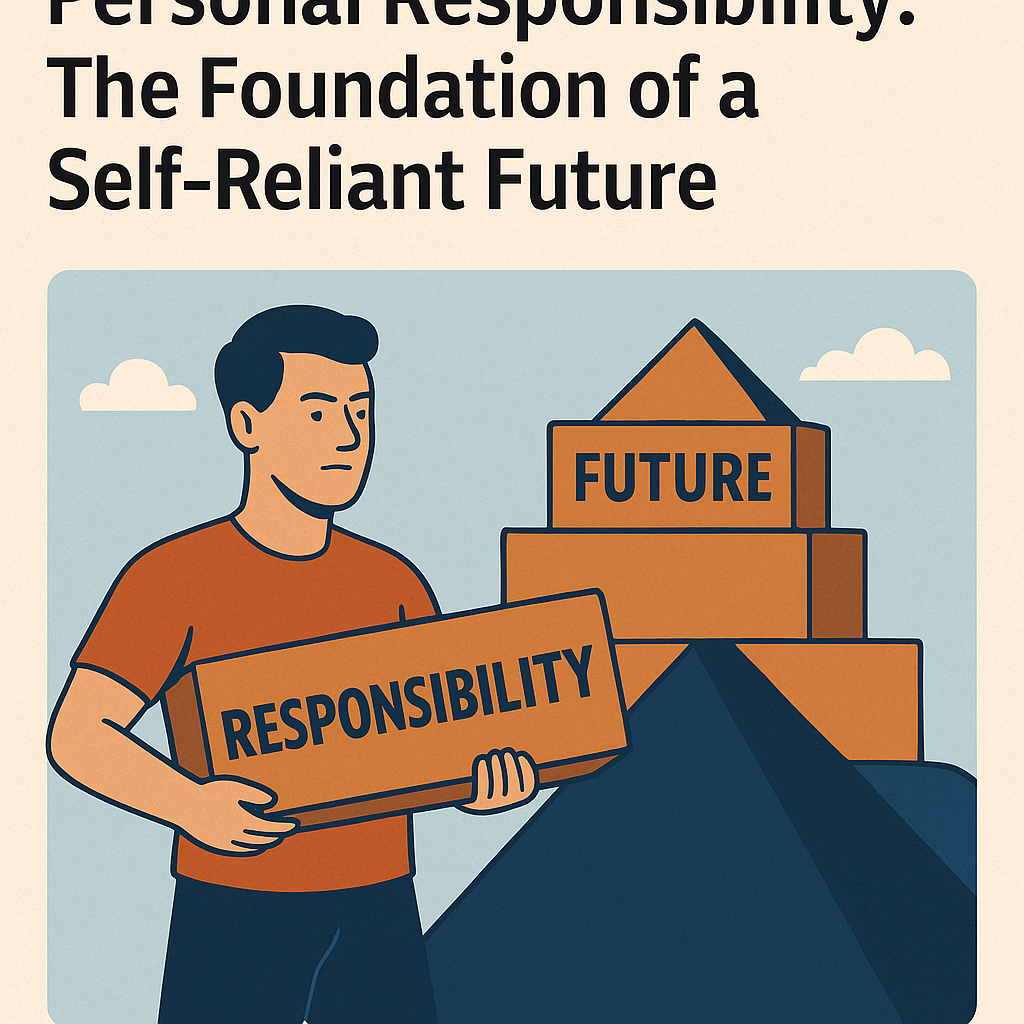

At the heart of a thriving, resilient society lies a fundamental principle often overlooked in modern discourse: personal responsibility. As critics of prevalent victimhood culture argue, the path to genuine independence and societal progress is paved with individuals embracing their duties rather than relying on external entities. In an age marked by economic uncertainty, social mobility challenges, and global upheavals, fostering a culture of self-reliance emerges as not merely an individual virtue but a societal imperative. From the principles of classical liberalism to contemporary economic analyses, scholars emphasize that the stability and prosperity of nations are directly tied to how well their citizens internalize and practice personal responsibility.
Many economists and historians, such as Henry Hazlitt and Friedrich Hayek, have long underscored that self-reliance is the backbone of free markets and limited government. Hazlitt famously argued that individual effort and personal accountability set the foundation for economic prosperity, suggesting that when individuals recognize their role in societal success, they are less dependent on government intervention. In contrast, over-dependence fosters a cycle of dependency and government overreach, draining resources and stifling entrepreneurship. Today’s youth, shaped by pervasive narratives of entitlement, must understand that true empowerment arises from taking charge of their actions, choices, and futures—values that built the strong societies of the past.
- Accountability in personal finance guides responsible decision-making, fostering stability rather than chaos.
- Work ethic propels innovation and economic growth when paired with individual initiative.
- Community resilience is cultivated when citizens actively participate in and nurture their local environments through responsible actions.
Critically, critics of modern social policies argue that over-reliance on government programs impoverishes individual agency and stifles the innate drive for achievement. As economist Thomas Sowell notes, “The most basic question is not what is best, but who shall decide what is best.” When individuals become passive recipients of handouts rather than active architects of their lives, the fabric of society frays. Building a self-reliant future thus requires nurturing a cultural mindset that values effort, accountability, and resilience—traits that shape not just individual destinies but the destiny of nations.
Ultimately, the weight of responsibility beckons each generation to forge a legacy rooted in integrity and resolve. As history’s great epochs have demonstrated, societies that uplift their citizens in cultivating personal responsibility forge chains of strength and independence that echo through eternity. The challenge ahead is immense: to inspire youth to see themselves as architects of their destiny, not mere passengers or beneficiaries. Because in this grand mosaic of human progress, it is the unwavering commitment to one’s duties that transforms potential into legacy—an enduring testament that, in a self-reliant future, the seed of greatness lies within each individual’s own hands, awaiting only the courage to take root and grow.”