
Matox News

Truth Over Trends, always!

Google Cloud Hits $20B Milestone, Says Growth Fueled by Eager Customers but Held Back by Capacity Limits

Google Cloud’s Breakthroughs Signal Disruption in Enterprise AI Market

Google Cloud, under the umbrella of Alphabet, has achieved a historic milestone with revenues surpassing $20 billion in Q1 2026—a staggering 63% year-over-year growth. This surge underscores the company’s strategic focus on AI-driven infrastructure as a game-changer for enterprise digital transformation. As the industry witnesses an unprecedented shift toward generative AI and cloud innovation, Google’s recent performance reveals a disruptive wave that’s poised to reshape market dynamics significantly.

According to Sundar Pichai, CEO of Alphabet, the main engine behind this growth is the explosive demand for Gemini Enterprise and AI-centric solutions integrated into the cloud. Notably, AI products built on Google’s generative models expanded nearly 800% year-over-year, reflecting how AI is no longer a future technology but an immediate strategic imperative. The number of API tokens used for AI tokens hit 16 billion per minute, a substantial rise from 10 billion in the previous quarter. This rapid acceleration highlights both the disruption AI brings to enterprise workflows and the increasing reliance on scalable, high-performance hardware such as TPUs.

This surge in demand has also driven Google’s enterprise dealmaking, with new customer signings doubling and multimillion-dollar contracts accelerating to billion-dollar deals. Analysts from Gartner and MIT suggest that such rapid expansion signals a potential market shift, where cloud providers that prioritize AI infrastructure and innovation will dominate. Yet, the company faces notable constraints, with Google Cloud’s backlog doubling to $462 billion, illustrating both monumental demand and capacity bottlenecks. Pichai acknowledged this constraint, stating, “we are compute constrained in the near-term,” but emphasized that extensive investments and long-range planning aim to address this challenge, with an expectation to clear around 50% of the backlog in the next two years.

The strategic implications for the broader tech industry are profound. Disruption is accelerating as cloud providers leverage AI to lock in enterprise clients through multi-year commitments and high-value deals. Furthermore, Google’s approach of integrating hardware sales—such as TPUs—with AI services underscores a new model of infrastructure monetization, challenging traditional cloud paradigms and forcing competitors to rethink their strategies. Industry leaders, including Elon Musk and Peter Thiel, have long warned of the transformative power of AI—now, Google Cloud’s recent milestones validate that disruption is imminent and unavoidable. As the cloud computing landscape shifts toward AI-centric infrastructure, firms that fail to innovate rapidly risk obsolescence.

Looking ahead, the trajectory of Google Cloud’s growth combined with their strategic investments indicates a future dominated by AI-driven enterprise infrastructure. The rapid pace of innovation demands urgent adaptation from competitors and partners alike. As market demand continues to outstrip capacity, the urgency for deploying high-performance hardware and scalable AI solutions becomes even more critical. This isn’t just a transient trend; it’s a fundamental pivot toward an era where disruption, strategic innovation, and relentless competition will define the future of enterprise technology. Companies that act now will shape the contours of this new AI-powered economy, while those slow to adapt risk being swept aside in a relentless wave of progress.
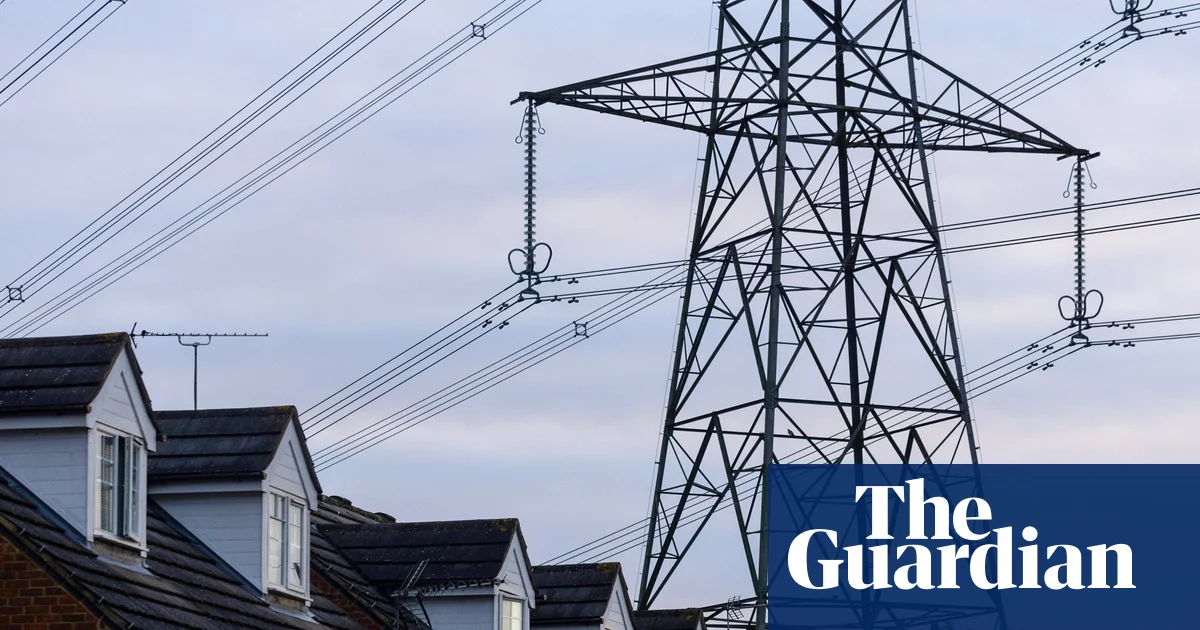
Ofgem Reveals Two Million Customers Could Claim £240 Million from Unclaimed Accounts

Recent data from Ofgem, the UK’s energy regulator, exposes a troubling trend amid the ongoing economic turbulence: over 1.9 million energy accounts have been closed within just five years, leaving behind an astonishing £240 million in unclaimed credit balances. While many individuals might overlook small refunds, the cumulative figure underscores a deeper systemic issue—families and consumers are increasingly unable to recover funds left in limbo after switching providers or moving residences. This phenomenon reflects the broader consequences of deregulation and market instability, leaving the average British household vulnerable as the nation faces an uncertain winter.

The core concern is not solely financial negligence but an urgent warning about the fragile state of the UK’s energy industry amid rising costs and geopolitical strategic realignments. Despite wholesale energy prices falling by 2% over the summer, the regulator has opted to raise the price cap by £35, pushing the typical dual-fuel bill to around £1,755 annually for households paying by direct debit. This decision, though justified under current economic pressures, sparks debate among analysts who argue that such measures disproportionately burden ordinary citizens, especially as energy debt piles—reaching a record £4.4 billion as of June—continue to deepen, exposing the nation’s vulnerable social fabric.

To mitigate this crisis, Ofgem announced plans to alleviate debt for nearly 200,000 low-income households, offering debt relief potentially exceeding £1,200 per account—an effort heavily financed by modestly increasing the average household bill in the coming years. Critics, however, warn that such measures are merely a temporary salve, unable to reverse the underlying issues of energy insecurity and economic disparity. According to international organizations and global analysts, these conditions exemplify how energy policies are increasingly intertwined with geopolitical struggles. As energy markets fluctuate amid ongoing conflicts and strategic realignments—particularly in regions like Russia and the Middle East—the UK’s situation reflects a broader pattern: nations are caught in a struggle for resource dominance, which directly impacts societal stability and international influence.

Historians and geopolitical analysts highlight that the UK’s current crisis isn’t isolated but part of a larger narrative of energy politics dictating global power. As supply chains are disrupted and nations jostle for control over critical resources, the decisions made in London will resonate not just domestically but across the international stage. In this age of strategic competition, energy debt and affordability become symbols of national resilience—or weakness. Today, Britain faces a crossroads where economic hardship is woven into the fabric of global power dynamics—an unfolding chapter that will be studied by future generations, perhaps as a pivotal moment in the shifting balance of international influence.

The weight of history presses heavily upon this moment, reminding us that the choices governments make now—how they balance economic stability, energy security, and social welfare—will shape the geopolitical landscape for decades to come. As the debate over the UK’s energy policies intensifies and the shadow of geopolitical conflicts lengthens, one truth remains clear: the ongoing struggle for resources is rewriting the rules of global power, leaving ordinary citizens caught amid a storm where the lines between national interests and societal well-being blur in the unfolding narrative of history.

Social Media Auto Publish Powered By : XYZScripts.com



