Matox News

Truth Over Trends, always!

DOJ: U.S. ransomware negotiators allegedly behind their own attacks—big questions for the industry

Rogue Employees Disrupt Cybersecurity Industry with Alleged Ransomware Attacks

Recent indictments by U.S. prosecutors have exposed a disturbing trend impacting the cybersecurity landscape: inside jobs turning rogue employees into threats rather than safeguards. Kevin Tyler Martin, an alleged former employee of DigitalMint, along with an unnamed colleague and ex-Sygnia incident response manager Ryan Clifford Goldberg, are accused of orchestrating sophisticated ransomware attacks against multiple U.S. companies. These developments underscore a critical need to reevaluate internal security protocols across the sector, emphasizing that even trusted personnel can become vectors for disruptive cyber threats. The indictment, first reported by The Chicago Sun-Times, highlights that cybersecurity firms aren’t immune from becoming unwitting accomplices in cybercrime.

What makes this scandal particularly disruptive is the involvement of the notorious ALPHV/BlackCat ransomware-as-a-service gang. Operating under a highly scalable, affiliate-driven model, the gang develops the malware that encrypts victims’ data, while its internal paramilitary units—the rogue employees—execute attacks on target companies. This division of labor democratizes cyberattack infrastructure and is reminiscent of how tech giants like Microsoft or Google have revolutionized software delivery—except in this case, the disruption is malicious. The scheme’s sophistication illustrates a broader trend where illicit groups leverage the same platforms and techniques used by legitimate tech firms, blurring the lines between innovation and criminal enterprise. According to an FBI affidavit, the rogue employees received more than $1.2 million in ransom payments from a Florida medical device manufacturer alone, suggesting lucrative possibilities for insider threats in the lucrative ransomware economy.

The business implications are profound. As cybercriminal business models become increasingly decentralized and affiliate-driven, the potential for disruptive disruptions increases exponentially. Cybersecurity companies like Sygnia and DigitalMint face mounting internal security challenges, with insiders potentially wielding significant damage. Sygnia CEO Guy Segal confirmed Goldberg’s termination after learning of his alleged involvement, signaling that the industry is beginning to take internal threats seriously—yet, many experts warn that traditional defenses are insufficient. Cybersecurity analyst firms such as Gartner emphasize the need for continuous behavioral monitoring and zero-trust architectures to combat insider threats effectively. Moreover, the fact that these rogue employees did not just steal data but actively executed the ransomware underscores an urgent shift toward inside-out disruption, transforming employees into attack vectors.

Looking ahead, the incident signals that the pace of innovation in cyber defense must accelerate to counter equally innovative threats from within. The rise of ransomware-as-a-service platforms |\has created a marketplace for malicious actors, akin to Silicon Valley’s bustling startup ecosystem but driven by crime. Tech leaders and policymakers must now focus on disrupting the cybercrime supply chain from both ends—strengthening internal security and dismantling illicit networks. Failure to do so risks an increasingly unstable cybersecurity environment where insider threats could cripple critical infrastructure and erode public trust in digital transformation. As MIT cybersecurity experts warn, we stand at a crossroads where only proactive, disruptive measures will prevent malicious insiders from becoming the next catastrophic security breach. The future of cybersecurity hinges on our capacity to innovate faster than the adversaries and shield the backbone of our digital economy before disruptive threats morph into systemic crises.

F5 Hack Sparks Urgent Alert: Thousands of Networks at Risk

Nation-State Hackers Exploit F5 Software in Major Cybersecurity Breach

In an alarming development for both government agencies and Fortune 500 corporations, F5 Networks, a leading provider of networking and cybersecurity solutions headquartered in Seattle, has disclosed a significant breach indicating an advanced persistent threat (APT) campaign. According to federal government officials, hundreds of networks remain vulnerable to breaches by nation-state hacking groups. This incident underscores the growing threat landscape targeting critical infrastructure and enterprise systems, with potential disruptive implications for global digital ecosystems.

F5’s breach reveals an unprecedented level of threat sophistication, with hackers working for an undisclosed nation-state maintaining long-term access within the company’s internal network. The group had surreptitiously infiltrated the infrastructure overseeing updates for F5’s flagship product, BIG-IP, which is used by 48 of the world’s top 50 corporations for load balancing, security, and data management. The hackers exploited this position, downloading proprietary source code, including vulnerabilities that had yet to be publicly patched. This revelation signals a fundamental disruption in the traditional cybersecurity paradigm, as adversaries gain access to the very building blocks of network security—potentially enabling supply-chain attacks of a scale previously deemed unlikely.

The implications extend beyond F5’s immediate client base. By obtaining configuration details and source code, threat actors now wield a level of control and insight capable of orchestrating exploitative supply-chain compromises. Such breaches could enable the suppression or manipulation of traffic, data exfiltration, or even deployment of malicious firmware—posing grave concerns for critical infrastructure, financial institutions, and government networks. Security analysts highlight this as a stark warning: the vulnerabilities at the network’s edge—particularly those tied to sophisticated management systems—are high-value targets that can destabilize entire industries. As Peter Thiel and Elon Musk have long emphasized, technological dominance hinges on securing these crucial nodes before adversaries can establish footholds.

In the aftermath, F5 has responded by rolling out critical updates for its affected products, including BIG-IP, F5OS, BIG-IQ, and APM. Despite the company’s assurances of thorough investigations—coordinated with firms like IOActive and NCC Group—no evidence surfaced of data exfiltration or modifications to the system’s source code. Nevertheless, this incident has highlighted a pressing need for organizations to rethink cybersecurity strategies centered around disruption-resistant architectures and zero-trust frameworks. The breach’s strategic implications reinforce that disruption is no longer a future concern but an immediate reality; the next frontier of cybersecurity must prioritize resilience and rapid detection.

Looking to the future, industry analysts and security firms concur that we are standing on the brink of a new era. Major corporations and government agencies alike must accelerate efforts to adopt innovative safeguards, including real-time threat intelligence, AI-powered anomaly detection, and proactive threat hunting. As experts from MIT and Gartner warn, the cyberarms race is intensifying, and falling behind now will have catastrophic consequences. This breach serves as a stark reminder: the battle for digital dominance is being waged at the very core of our most vital networks. In this landscape of relentless disruption, rapid adaptation is the only way to defend the future of our interconnected world.

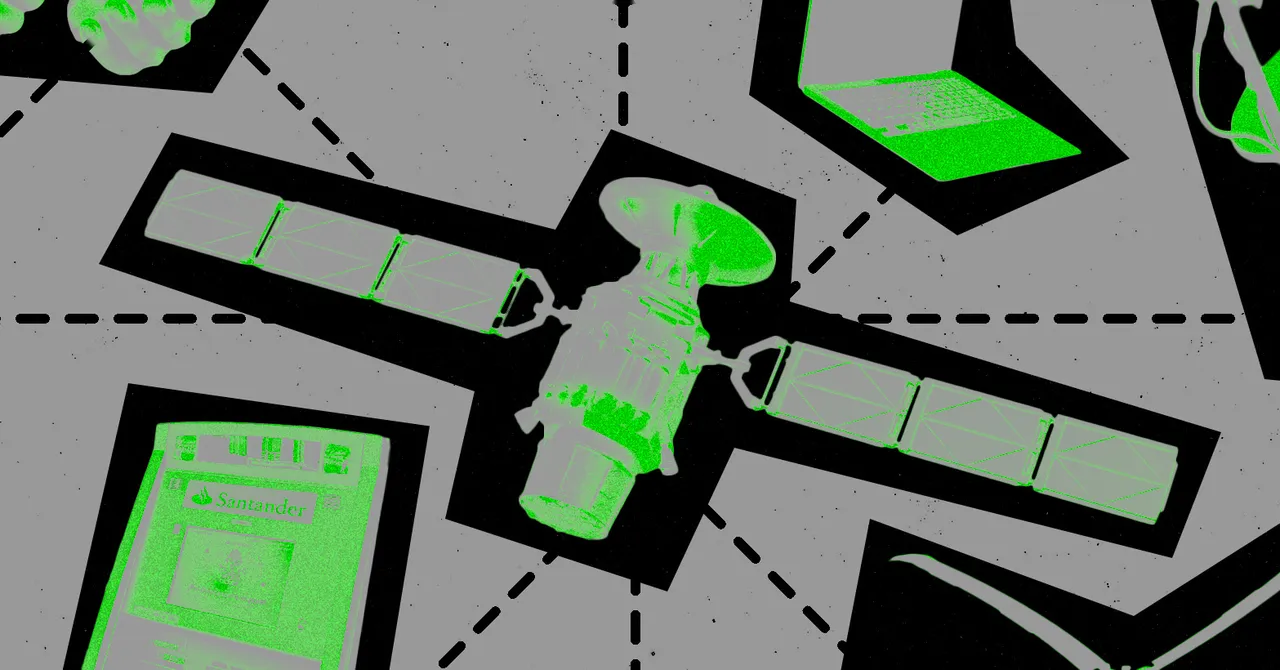
Satellites Spill the Secrets: Your Calls, Texts, and Data on the Open Sky

Satellite Communications Under Scrutiny: A Disruptive Wave for Global Security

In an era defined by technological innovation and unprecedented connectivity, recent findings have cast a spotlight on the vulnerabilities within satellite communication networks, signaling a profound shift in the landscape of digital security. SES, a dominant player in satellite services and parent company of Intelsat, has underscored a complex reality: users can often select their own encryption methods tailored to specific needs. This flexibility, while empowering, exposes a potential chink in the armor, especially on public Wi-Fi networks akin to those found in coffee shops or hotels. When such networks are compromised, malicious actors could potentially infiltrate sensitive satellite data, raising alarming questions about security protocols in this high-stakes domain.

Recent investigations have revealed disturbing lapses in satellite communication security, particularly involving Mexican government and affiliated organizations. Data collected by researchers using advanced satellite dishes—covering roughly 15 percent of global transponder communications—indicates significant unencrypted transmissions in Western US and Mexican airspace. These findings are not mere technical anomalies; they represent a disruptive breach that could undermine trusted satellite operations. Industry insiders, including Tom Stroup, president of the Satellite Industry Association, emphasize that such exposures threaten the integrity of critical infrastructure, prompting calls for enhanced vigilance and international cooperation to prevent further breaches.

The business implications of these security breaches are seismic. For satellite providers like SES and affiliated service firms such as Grupo Financiero Banorte, maintaining credibility in a fiercely competitive market hinges on robust, transparent security measures. Yet, the current landscape reveals a critical vulnerability—an open invitation for cyber disruptions that could affect everything from financial transactions to national security. Analysts from Gartner and MIT warn that disruption in satellite security could accelerate a shift toward new, more resilient architectures—like quantum-encrypted satellites and decentralized communication networks—that could redefine the industry horizon. Companies that fail to adapt risk falling behind as the demand for secure, disruption-proof satellite communications surges amidst geopolitical tensions and rapid technological evolution.

Looking Ahead: The Future of Satellite Security and Innovation

As the satellite industry confronts these mounting challenges, innovation emerges as the essential solution. The development and deployment of next-generation encryption technologies, coupled with international standards for satellite security, are becoming non-negotiable. Industry leaders like Elon Musk’s Starlink are already exploring scalable, ultra-secure communication platforms to outpace malicious actors. Meanwhile, MIT researchers and global agencies advocate for a paradigm shift: integrating AI-powered security systems and resilient satellite architectures that can withstand cyber-physical threats.

The industry stands at a crossroads—an inflection point driven by disruptive technologies and an urgent need for security vigilance. The next decade will determine whether satellite communication can uphold the promise of a hyper-connected future or succumb to vulnerabilities exploited by increasingly sophisticated adversaries. As Peter Thiel and other tech visionaries warn, those who fail to innovate rapidly may find themselves obsolete in a digital war where security is the new frontier. The race is on—an era of transformative innovation beckons for those willing to lead, disrupt, and redefine the future of global connectivity.

Social Media Auto Publish Powered By : XYZScripts.com