Matox News

Truth Over Trends, always!

Tesla’s Robotaxi Revolution Hits Dallas and Houston—Are Cities Ready?

Tesla Accelerates Urban Mobility Disruption with Robotaxi Expansion into Texas Markets

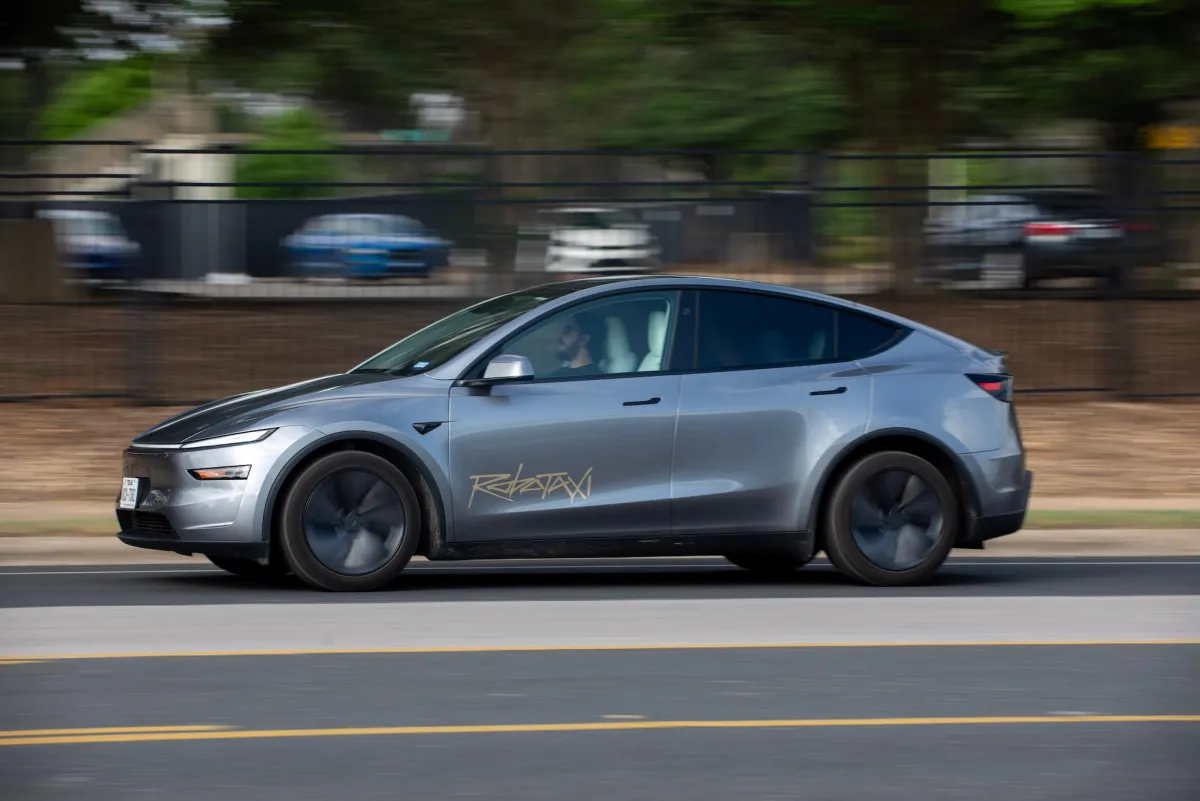
In a bold move demonstrating technology innovation and industry disruption, Tesla has extended its autonomous robotaxi service to the major Texas cities of Dallas and Houston. Announced via a concise social media post, the deployment features Tesla vehicles operating without human monitors or drivers, marking a significant milestone in autonomous vehicle deployment. This move signals Tesla’s continued push toward transforming urban transportation ecosystems, building upon earlier successes in Austin and the Bay Area.

The company’s expansion illustrates an evolving industry landscape where traditional ride-hailing models face revolutionary competition. Tesla, leveraging its proprietary Full Self-Driving (FSD) software and extensive data collection, is positioning itself to compete directly with legacy mobility giants like Uber and Lyft. Unlike the conventional ride-sharing approach, Tesla’s driverless fleet represents a new paradigm—disruptive, scalable, and potentially more profitable—potentially radically lowering urban transit costs while increasing safety and efficiency. Industry analysts from Gartner and MIT emphasize that Tesla’s persistence in this field could accelerate the industry-wide shift toward autonomous urban mobility, fundamentally altering how cities manage transportation infrastructure.

Implications for Business Models and Industry Standards

The deployment of Tesla’s robotaxis in multiple Texas markets emphasizes business model innovation. By aiming for a market saturation where robotaxis could work alongside or replace traditional taxis, Tesla is not only creating a new revenue stream but also setting the stage for a disruption of urban transit regulations. The company’s move into Dallas and Houston, after launching in Austin last year, highlights strategic geographical targeting—leveraging regional regulatory environments that might be more receptive to new mobility paradigms. However, recent reports indicate that Tesla’s fleet in these markets remains sparse—only a single vehicle in each city, according to crowdsourced data from Robotaxi Tracker—highlighting the challenges of scaling autonomous fleets quickly and safely.

Narrow deployment and ongoing safety concerns, with 14 reported crashes since Austin’s launch, reveal the resilience and prudence needed for widespread adoption. Despite these hurdles, Tesla is pushing ahead with permitting efforts to expand service to associated markets, including limited ride-hailing services in the San Francisco Bay Area. The strategic focus on urban centers with high ride demand and evolving regulatory frameworks demonstrates Tesla’s commitment to positioning itself as a dominant disruptor in this space. Industry leaders and analysts warn that the real challenge for Tesla lies not only in technology but in navigating policy landscapes, customer acceptance, and safety standards commensurate with autonomous operation.

Future Outlook: Ride-Hailing, Safety, and Market Disruption

As Tesla’s robotaxi operations grow in scope, industry observers anticipate a profound transformation of urban transportation over the next decade. With innovation accelerating at a pace driven by industry titans like Elon Musk and supported by MIT research initiatives, the trajectory suggests autonomy will soon become an indispensable component of mobility infrastructure. Disruption in this industry, while promising enormous benefits, demands unwavering focus on safety, regulatory compliance, and customer trust. Tesla’s expansion points to an urgent imperative for existing players to innovate or risk obsolescence—if they haven’t already.

Ultimately, the success or failure of Tesla’s autonomous mobility initiatives will shape the future of transportation, making it more accessible, safer, and more efficient. What remains clear is that technological innovation is no longer linear but exponentially disruptive—an era where those first to adapt and innovate will dominate the cities of tomorrow. Stakeholders across industries must heed this rapid evolution—because in the race for autonomous mobility, only the agile survive and thrive in the unfolding future.
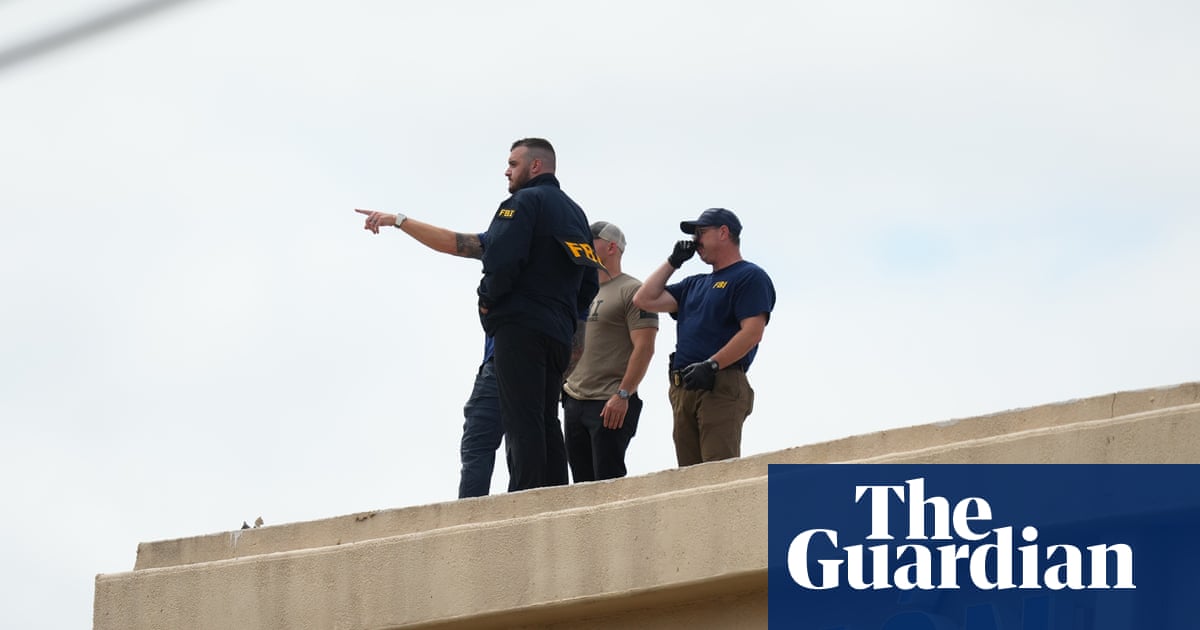
Dallas Ice shooting suspect planned attack, FBI warns—youth warned to stay alert

In recent days, the United States has faced a stark reminder of the rising tide of political violence and internal strife. The shocking attack on an Immigration and Customs Enforcement (ICE) detention facility in Dallas underscores the deepening divisions within American society—a nation torn between lawlessness and the rule of law. The FBI disclosed that the suspect, identified as 29-year-old Joshua Jahn, meticulously planned the assault, even deploying a ladder and a high-powered rifle with sniper capabilities. Such details reveal an alarming degree of premeditation, emphasizing that the incident was not an impulsive act but a calculated strike against the very institutions meant to uphold national sovereignty and law enforcement integrity. As analysts from think tanks warn, these acts threaten to destabilize America’s internal security and fuel further polarization, which, if left unaddressed, could usher in an era of increasing chaos and societal fracture.

The geopolitical impact of this domestic crisis extends far beyond U.S. borders. As the Biden administration struggles to manage a surge in political extremism, international observers from Russia to China, along with global organizations such as the United Nations, are watching with concern. The incident comes amid a backdrop of strained global relations, where weak governance in the USA fuels skepticism about American leadership and stability. The rhetoric surrounding the attack, with former President Donald Trump and right-wing commentators framing it as a consequence of what they label as “radical left” policies, exemplifies how domestic issues are increasingly intertwined with international perceptions of American strength. The potential for such violence to influence foreign policy and global stability remains a key concern, particularly as nations contend with their own internal conflicts and the erosion of traditional security paradigms.

Notably, this attack appears to be a manifestation of rising militant tensions fueled by intense partisan conflicts and an emboldening of radical elements. Historians caution that in times of social upheaval, acts of targeted violence against government institutions are often precursors to broader destabilization. Various analysts from NATO to the European Union have warned that the ongoing polarization within the USA may serve as a blueprint for others who seek to undermine Western cohesion. The suspect’s expressed hatred for the federal government, along with notes indicating an intent to instill terror among ICE agents, reveal troubling ideological undercurrents that could inspire copycat violence internationally. These dynamics threaten to ripple outward, challenging the stability of democracies around the world. As the global community observes the U.S. domestic crisis unfolding, the need for decisive leadership becomes undeniable.

Ultimately, the Dallas shooting encapsulates a pivotal moment—an ongoing chapter of history still being written. With each act of violence, the fragile fabric of societal trust is further frayed, pushing nations to confront uncomfortable truths about internal divisions and external instability. The world watches breathlessly, aware that such acts of terrorism, rooted in hatred and ideological extremism, have consequences far beyond national borders. As leaders debate solutions, the weight of history presses down: will the United States emerge resilient, or will this be a harbinger of a new era of chaos? The answer remains unwritten, but the shadows cast by this violence will surely shape the pages of history for generations to come.

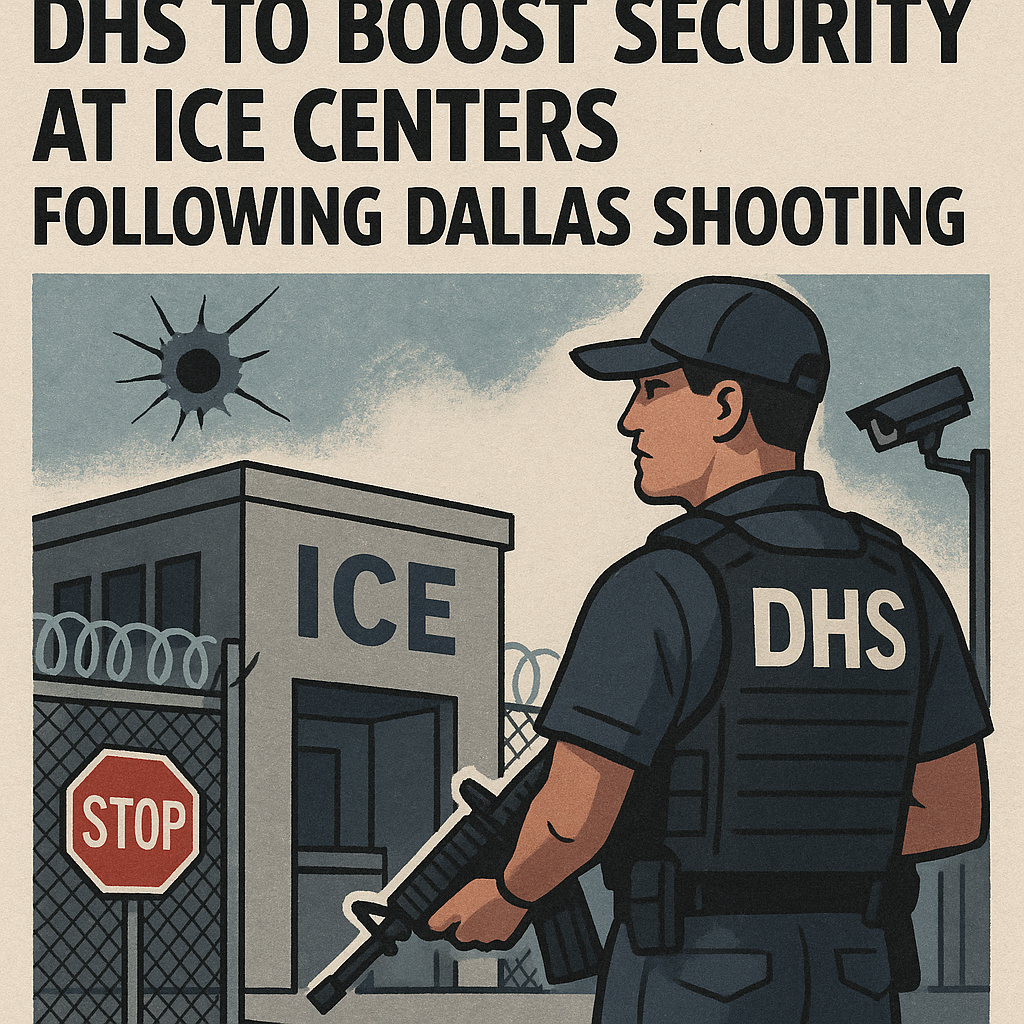
DHS to Boost Security at ICE Centers Following Dallas Shooting

The recent deadly shooting at an ICE facility in Dallas has ignited a surge of responses from the Department of Homeland Security (DHS), signaling a shift in the federal government’s approach to national security and immigration enforcement. In the aftermath of this tragic event, DHS announced it would “immediately increase security” at Immigration and Customs Enforcement (ICE) facilities nationwide, a move that underscores the ongoing power struggles between a government committed to border security and factions advocating for more lenient immigration policies. This escalation reflects a broader political confrontation, where decisions made in the halls of power directly impact law enforcement tactics and the safety of personnel working on the front lines.

The attacker’s motivations, reportedly driven by hatred for ICE, underscore the volatile atmosphere surrounding immigration enforcement agencies. This incident, a rare but alarming act of violence, has been exploited by hawks who argue for tougher security measures and stricter immigration policies, framing the shooting as a consequence of perceived governmental leniency or failure. On the other side, critics question whether this act of violence is being used as a pretext to justify draconian reforms and increased militarization. Constitutional experts and political analysts have long debated the balance of power when it comes to federal agencies like ICE, emphasizing the importance of safeguarding individual rights without compromising national security—a delicate tug-of-war that echoes throughout American history, reminiscent of debates during the early Cold War era.

Within the ideological fissures driving today’s politics, the right-wing factions see the DHS’s new directives as essential to defending the sovereignty of the nation and protecting American citizens from threats that are often marginalized in mainstream discourse. Campaign promises by leadership often included sentiments of restoring law and order and equipping agencies with the tools to combat what they deem an era marked by chaos and lawlessness. Conversely, those on the left caution against an approach that risks turning immigration enforcement into a militarized apparatus that erodes civil liberties. These conflicting visions of security mirror profound power struggles over the soul of American democracy—whether it is a nation of open opportunity or a fortified fortress determined to guard against external and internal threats.

As history’s currents continue to shift, it becomes clear that such moments are recorded as more than isolated incidents—they are defining chapters in the narrative of a nation wrestling with its identity. Decisions made today at DHS and across the political spectrum are not mere policy shifts but mirror the deeper contest of how freedom and security are balanced. In this ongoing saga, politics remains the grandstage where the destiny of the republic is scripted, with each movement and counter-movement setting the course for generations to come. Ultimately, the true power lies in the choices made now—choices that will shape the very fabric of society, for politics is where history’s pen finds its ink.

Anti-ICE rhetoric sparks controversy over ammo after Dallas shooting kills detainee

United States continues to grapple with a troubling surge of politically motivated violence targeting Immigration and Customs Enforcement (ICE) facilities, highlighting the profound, destabilizing effects of rhetoric on societal security. Today’s attack in Dallas, Texas, marks yet another grim chapter in this disturbing pattern. A rooftop sniper, driven by ideological motives, opened fire at an ICE office—an action that underscores rising tensions within the country’s polarized political landscape. The incident resulted in the death of one detainee and critically injured two others, deeply unsettling a nation already divided over immigration policies and immigration enforcement tactics.

The attack was characterized by law enforcement officials as an act of targeted violence. FBI Director Kash Patel revealed that the gunfire was accompanied by anti-ICE messages, with ammunition casings bearing the phrase “ANTI-ICE.” While initial reports mistakenly indicated multiple fatalities, the current official account confirms that the shooter died from a self-inflicted gunshot. This incident is part of a broader escalation in violence against federal agencies, fueled by relentless political rhetoric that equates ICE with oppressive regimes, such as the Nazi Gestapo, as publicly condemned by **Homeland Security Secretary Kristi Noem**. Such narratives, analysts warn, dangerously blur the lines between lawful opposition and violent extremism, threatening the stability of the nation’s law enforcement apparatus.

Experts and international observers are warning that these attacks are not isolated acts but symptoms of a deeper social fracture that politicians and media personalities have exacerbated through inflammatory language. The Department of Homeland Security has indicated that the shooter’s actions were ideologically motivated, reflecting a broader climate of polarization and radicalization. Previous incidents include shootings at ICE offices in Texas—San Antonio and Alvarado—where no injuries occurred, yet the constant barrage of threats and violence continue. How nations respond to this trend will significantly shape their societal cohesion and their capacity to uphold law and order as they navigate the complexities of immigration, security, and political discourse.

Across the political spectrum, voices such as **Texas Senator Ted Cruz** and **Governor Greg Abbott** emphasize that violence and threats against law enforcement threaten to undermine national stability. Cruz urged the public to resist demonizing political opponents, warning that such divisive rhetoric has tangible, deadly consequences. Meanwhile, the incident in Dallas reignites debates over the impact of political rhetoric, with lawmakers warning that pre-election hostility could erupt into further violence, destabilizing already fragile social fabrics. International organizations and security analysts emphasize the importance of addressing these attacks promptly, warning that the erosion of civility and respect is a precursor to a more dangerous descent into societal chaos.

As the weight of this violence accumulates, the country faces a pivotal moment where the choices made today could echo through generations. The ongoing saga of escalating attacks, hateful rhetoric, and ideological extremism threatens to redefine the landscape of domestic stability and international credibility. With each shot fired, history records a stark reminder: the battlefield of ideas has become a battleground of blood. The unfolding story in Dallas— and beyond—serves as both a warning and a call to action. How the United States chooses to confront this modern scourge will determine whether it remains a beacon of liberty or descends further into chaos, a nation haunted by the shadows of its own division, teetering on the edge of a precipice from which there may be no return.

Social Media Auto Publish Powered By : XYZScripts.com