Matox News

Truth Over Trends, always!

Outback Tragedy: Man and Woman Shot Dead in NSW Wilderness

Fatal Underground Explosion at Australia Mine Shakes Community and Global Industry

The recent tragic incident at the Endeavour mine in New South Wales marks a sobering chapter in Australia’s mining history, reminding the world of the enduring risks faced by workers in resource extraction industries. Two lives were lost in an underground explosion—an event confined to the remote town of Cobar, but one with implications that resonate far beyond the Australian continent. The incident—first since 2015—raises critical questions about safety protocols, corporate accountability, and the ongoing balance between economic development and worker protection.

According to authorities, an underground explosion claimed the lives of a man in his 60s and a woman in her 20s, with another woman sustaining minor injuries. Emergency responses revealed a community gripped by tragedy, as local officials, including Cobar Mayor Jarrod Marsden and NSW Premier Chris Minns, extended heartfelt condolences. The response from government and industry highlights an understanding that such fatalities are not only tragedies but stark reminders of the vital importance of safety standards in dangerous sectors that underpin national economies. Authorities have announced a comprehensive investigation, including a report for the coroner, emphasizing that, despite improvements in safety protocols, the risks endemic to mining remain ever-present.

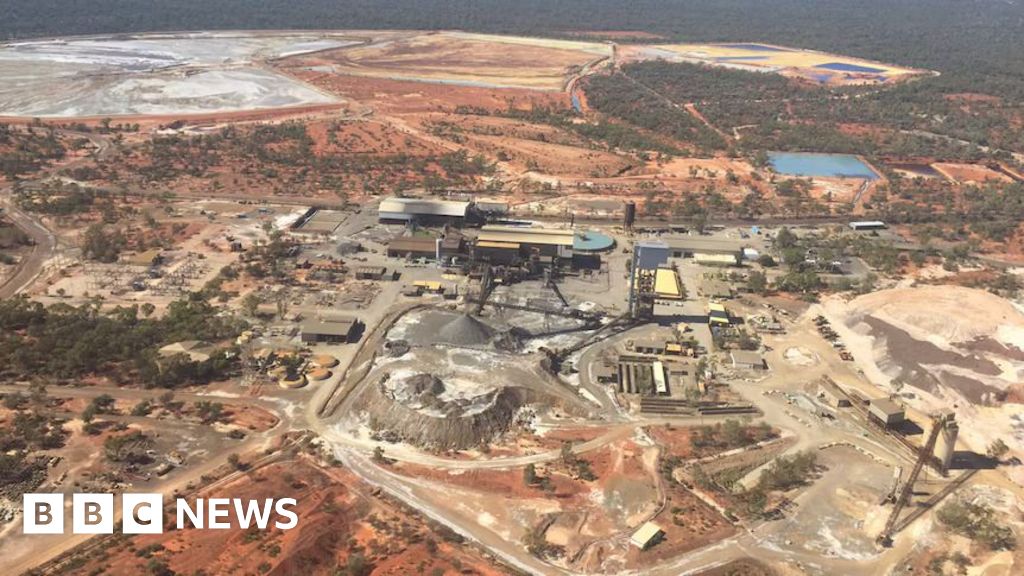
Historically, Australia has maintained a generally low fatality rate in mining, with fatalities rarely occurring since the last major incident in Queensland in 2015. The Endeavour mine—with a history dating back to 1982 and now under new ownership by Polymetals Resources—had resumed operations earlier this year, focusing on precious metals such as silver, zinc, and lead. The mine’s extensive infrastructure—a 7 km decline and 300-meter shaft—underscores the scale and danger of underground extraction. As the Australian government’s Workplace Safety Authority prepares to investigate, analysts warn that the incident could serve as a temporary setback for international confidence in Australia’s mining safety reputation. Many experts point to the fact that despite technological advancements, the inherently hazardous nature of underground mining demands relentless vigilance.

From a geopolitical impact, this tragedy underscores a broader global narrative—one where the demand for critical minerals fuels international competition and economic shifts, often at the expense of worker safety. As nations like China, the United States, and Germany ramp up their resource extraction to secure supply chains for electric vehicles and renewable energy technologies, the safety of workers must remain a core concern. International organizations such as the International Labour Organization emphasize that sustainable development cannot be achieved without safeguarding lives in risky industries. Meanwhile, analysts argue this incident could potentially ripple across global markets—prompting increased regulation and safety measures—affecting how resource-dependent nations strategize their industrial growth.

In a broader, more symbolic sense, this event leaves the world at a crossroads—a place where history continues to unfold with each tragedy and triumph. As communities mourn and authorities vow accountability, the weight of the past presses heavily into the future. Will this tragedy serve as a wake-up call leading to enduring reforms, or will the relentless pursuit of resources once again overshadow the fundamental necessity of worker safety? The unfolding chapters of this incident will determine whether Australia, and by extension the global industry, can forge a safer, more responsible path forward. In the shadow of this explosion, the world is left to ponder whether the sacrifices made underground will ultimately lead to a brighter, safer dawn or whether history’s dark lessons will be ignored once more.

Intel’s Tick-Tock is Dead: What it Means for Tech and Young Minds

Intel Reinforces Focus on AI and Next-Gen Chip Innovation Amid Industry Disruption

In its Q3 2025 earnings report, Intel marked a critical milestone: its first profit in nearly two years. This turnaround underscores the company’s strategic pivot towards high-margin AI server chips, signaling a significant disruption in the semiconductor landscape. With supply chain shortages expected to peak early next year, Intel CEO Lip-Bu Tan emphasized prioritizing capacities for AI applications over traditional consumer processors. This shift highlights the industry-wide acknowledgment of AI’s transformative potential and demands a rethinking of supply chain strategies to capture emerging market opportunities.

Looking ahead, Intel’s ambitious plans to release new AI GPUs annually follow the footsteps of industry heavyweights Nvidia and AMD, who have already disrupted the traditional product cadence. As Tan revealed, maintaining competitive relevance in AI hardware is crucial, and Intel is positioning itself to meet the surging demand. However, this aggressive schedule raises questions about the company’s ability to balance innovation with supply chain resilience, especially within the context of ongoing component shortages. These decisions could define whether Intel maintains its trajectory toward innovation-led growth or gets sidetracked by supply constraints.

At the core of these developments is Intel’s advanced 17A and 18A process nodes. The company continues to invest heavily in these next-generation manufacturing nodes, promising to power “at least the next three generations” of client and server products. Yet, persistent yield issues at 18A threaten to delay mass adoption; CEO Zinsner admitted yields are “adequate,” but not yet at a level to sustain robust margins. This acknowledgment is a stark reminder that technology disruption in semiconductor manufacturing is not without challenges; the industry’s push for smaller, more powerful nodes is fraught with complex engineering hurdles. The proposed Intel 14A node, potentially crucial for future competitiveness, is now under renewed confidence thanks to customer support, with Zinsner suggesting that it is outperforming initial expectations.

  • Innovation: Intel’s focus on AI hardware and advanced manufacturing
  • Disruption: Industry-wide shift towards AI chip cadence, challenging traditional tick-tock models
  • Business implications: Supply chain realignment, strategic prioritization, and large-scale investment in next-generation nodes
Israel confirms: Red Cross removes another dead hostage from Gaza battlefield

The ongoing conflict between Israel and Hamas continues to shape the geopolitical landscape of the Middle East, revealing the fragility of ceasefire agreements and the profound human toll inflicted by decades of unresolved tensions. Recent developments highlight a complex diplomatic and military calculus, as the Israel Defense Forces (IDF) announced the return of another coffin containing the remains of a hostage, now back in Israel. This resumption of human remains exchange underscores the persistent struggle to honor commitments amid wartime chaos, even as the broader conflict persists unabated.

Analysis by international specialists suggests that these hostages and dead bodies are central to both the moral and strategic objectives of each side. The International Committee of the Red Cross (ICRC) reported it had taken measures to handle the remains with dignity, handing them over to Israeli forensic authorities for identification. Meanwhile, the Israeli government strongly urges the public to wait for official information, denying any desire to incite rumors or mislead the international community. The tension over the incomplete return of bodies—despite a recent ceasefire agreement—has sparked fury within Israel, with critics arguing that Hamas’s reluctance to return all remains undermines trust in any negotiated peace process.

The ceasefire deal—brokered by the United States—was supposed to facilitate the humane exchange of hostages and the return of bodies, but discrepancies have emerged. Hamas claims it remains committed to handing over all remaining remains, accusing Israel of obstructing this process by blocking access to conflict zones with heavy machinery. Israel, on the other hand, insists that Hamas must fulfill its obligations under the agreement. This standoff highlights a crucial turning point: whether the current diplomacy will hold or escalate into further violence. The international community, including various historians and analysts, warns that such unresolved issues threaten to plunge the region into a protracted cycle of violence, with ripple effects felt far beyond Middle Eastern borders.

Meanwhile, the broader geopolitical impact of this conflict is stark. The US, while visibly supporting Israel, maintains that the ceasefire and subsequent negotiations aim to prevent regional destabilization. However, the deteriorating humanitarian situation in Gaza—where over 67,000 deaths have been reported—continues to fuel international concern about the long-term consequences of this war. Israeli Prime Minister Benjamin Netanyahu vows to continue fighting terrorism, emphasizing that the mission is far from over. Yet, critics argue that these military actions come at the expense of global moral authority, complicating efforts to assemble an international consensus for peace. The unfolding negotiations, the exchange of bodies, and the strategic standoff are all a testament to the enduring complexity of this conflict, where every decision may have seismic consequences for international stability.

As the world watches with bated breath, the fate of hostages, the handling of remains, and the fragile ceasefire serve as stark reminders that history is still being written in blood and hope. The next chapter will test the resilience of diplomacy, the morality of war, and the persistent desire for peace—echoing through the halls of power and the quiet hearts of countless families caught in the crossfire. Here, in this crucible of history, the future remains uncertain, teetering on a knife’s edge as the specter of ongoing violence looms over the region and beyond.

Trump: U.S. Strikes Drug-Linked Boat Near Venezuela, Six Dead

The United States continues to assert its military presence in the Caribbean Sea, with recent actions signaling a shift in its approach to combating drug trafficking and associated drug-terrorist organizations. On Tuesday, President Donald Trump announced that the US military had conducted a targeted strike against a small vessel off the coast of Venezuela, claiming the vessel was involved in drug smuggling and carried six individuals linked to narcoterrorism. This incident marks the fifth deadly US strike in the region over recent months, exemplifying the administration’s increasingly assertive stance in what officials call a non-international armed conflict with major cartels such as Tren de Aragua, a designated foreign terrorist organization. According to a memo obtained by The New York Times, Trump has declared drug cartels as non-state armed groups, legally framing their actions as an armed attack against the US.

  • Such military actions are justified by officials as necessary means to substantially disrupt the flow of narcotics into the US, arguing that these groups have evolved into sophisticated, organized threats comparable to armed insurgencies.
  • Lawmakers and human rights advocates, however, question the legality of these unilateral strikes, claiming they risk violating international law and could lead to extrajudicial killings.
  • The United Nations experts have publicly condemned these strikes as extrajudicial executions, emphasizing that criminal activities must adhere to the principles of justice, investigation, and international cooperation. They warn that circumventing legal processes could undermine global norms and set dangerous precedents.

Adding another layer to this complex geopolitical puzzle, Colombia President Gustavo Petro recently claimed there were “indications” that one of the targeted vessels might have been Colombian, with Colombians onboard. The White House responded swiftly, dismissing Petro’s statement as “baseless and reprehensible,” further escalating tensions between the neighboring countries. This dispute underscores how military actions in sovereign waters ripple through regional alliances and influence domestic politics, with the US positioning itself as a decisive arbiter of security in an area historically plagued by instability.

From the perspective of international analysts, these developments reflect a decisive pivot by the Trump administration, which now regards drug cartels not merely as criminal organizations but as armed threats that warrant military intervention. Dr. Mariana Lopez, a geopolitical expert, warns that such policy shifts could redefine the US’s role in Latin America, blurring lines between law enforcement and military action. Similarly, the Center for Strategic and International Studies highlights that these aggressive tactics could intensify regional tensions, making diplomatic resolutions more elusive. Meanwhile, the failure of the US Senate to pass legislation limiting the President’s authority to conduct future strikes indicates bipartisan support for a more aggressive posture. Almost all Republicans, along with Senator John Fetterman, opposed the measure, signaling a willingness among congressional leaders to prioritize security measures over strict legal oversight.

As history continues to unfold in real-time, the question persists: will these strikes quell the relentless tide of narcoterrorism, or will they provoke broader conflicts with unpredictable consequences? The Caribbean region, a vital nexus for international trade and geopolitical influence, now teeters on the brink of a new era—one in which the line between law and war is increasingly blurred. With every missile fired and each diplomatic statement, the weight of an evolving global order presses down on societies across the Americas. The decisive moments are yet to come, but what remains certain is that history is forging its new chapter—one marked by resilience, controversy, and the enduring struggle for sovereignty amid external interference.

Four Dead in Mississippi Homecoming Shooting — Community Shocked

In a tragic relentless wave of violence, a small town in Mississippi has been rocked by a deadly shooting during a high school celebration, sending shockwaves across the nation and raising urgent questions about domestic security and social stability. The incident, which unfolded late Friday night in Leland, a modest city with a population under 4,000, resulted in the loss of four lives and injuries to 16 others, including critical casualties airlifted to local medical facilities. The carnage took place on a main street where families and local youths had gathered to celebrate the homecoming game, a historic cornerstone that, in this instance, became the backdrop for violence that has shaken the very fabric of the community.

The Mississippi Bureau of Investigation has launched a full inquiry into the shooting, yet few details have emerged about its perpetrator or motives. Initial reports suggest the attack occurred during a post-game gathering, a stark reminder of the persistent threat posed by urban violence and the failure of law enforcement mandates to contain it. As local officials and state representatives grapple with the aftermath, the incident underscores a growing concern: how rising crime rates in the United States threaten not only public safety but also the stability of social institutions and community trust. Analysts warn that without strategic federal and state interventions, such tragedies may become an unsettling norm rather than an exception.

Historically speaking, incidents like these serve as stark indicators of deeper societal fissures — from economic inequality to systemic misjustice — that continue to fuel unrest across America’s rural and urban divide. Commentators from organizations such as the Council on Foreign Relations and security experts worldwide caution that the ripple effects extend beyond domestic borders. As global observers watch in concern, the United States faces mounting pressure to address the root causes that lead to lawlessness and societal decay. Meanwhile, some voices within the political sphere call for more stringent gun control measures and community-based programs, emphasizing that a failure to act decisively risks giving free rein to chaos.

  • Monday’s investigation revealed no suspects yet, leaving the community in a state of shock and uncertainty.
  • National debates intensify over gun rights and crime prevention, with policymakers under pressure from voters demanding action.
  • International organizations have called for clarity, emphasizing that the stability of free societies depends on addressing internal threats swiftly and effectively.

As history books will document this moment, the tragic loss of life in Leland becomes a microcosm of a broader crisis — a nation seeking to safeguard its values amidst a persistent tide of violence. With each incident, the weight of history grows heavier, reminding the world that the choices made in boardrooms and political halls today will determine if society can withstand the storm or succumb to chaos. The unfolding story is a stark warning: nations must confront their internal weaknesses before they explode into catastrophe, drawing a line in the sand where history and destiny collide.

13 Dead as Hospital in Blockaded Sudan City Comes Under Shelling, Reports Say

In the heart of Sudan, the city of el-Fasher, once a symbol of stability in the turbulent Darfur region, has become a battleground that exemplifies the devastating toll of what many analysts are calling a war of attrition. The ongoing conflict between the government-controlled army and the paramilitary Rapid Support Forces (RSF) has plunged the region into chaos, risking a humanitarian catastrophe that threatens to eclipse previous crises. The recent brutal attack on one of the last functioning hospitals in el-Fasher has claimed at least 13 lives and injured dozens more. This assault, carried out by RSF forces, is being condemned worldwide as a flagrant breach of international law, echoing broader questions about the conscience of modern warfare.

UN officials and humanitarian organizations have warned that el-Fasher is now teetering on the edge of collapse. Satellite images analyzed by Yale University’s Humanitarian Research Lab reveal that the RSF has constructed an extensive earthen wall—stretching over 57 kilometers—to tighten their siege on the city. This barricade effectively seals off all major exit routes, trapping thousands of civilians inside with dwindling resources. The siege has caused a complete breakdown of medical infrastructure, with most healthcare facilities shuttered and aid supplies blocked or rerouted by belligerents. The attack on the Saudi hospital is just the latest example of the escalating brutality—implying that no safe haven remains for the vulnerable amidst this relentless struggle for control.

The geopolitical impact of this crisis extends beyond Sudan’s borders, with experts warning that regional stability could be profoundly affected. The conflict’s roots lie in a complex web of ethnic tensions, political power struggles, and international neglect. Western powers, including the United States and European Union, have called for urgent ceasefires and humanitarian access but have struggled to exert meaningful influence over the conflict’s deep-seated martial currents. Meanwhile, neighboring countries such as Chad and Libya have expressed concern over spillover violence and refugee flows, which threaten regional security. International organizations like the United Nations have issued stark warnings about the potential for widespread famine, disease, and death, urging global actors to intervene before it’s too late. Yet, history demonstrates that such conflicts often become protracted, with peace remaining elusive—not unless decisive international action is undertaken.

  • Continued RSF advances threaten to seize el-Fasher entirely, risking a repeat of past Darfur crises marked by immense human suffering.
  • The construction of the berm and ongoing siege tactics exemplify a strategic effort to undo any prospects of negotiated peace, instead opting for total domination.
  • Global reaction remains divided amid geopolitical interests, with many fearing that the international community’s hesitance could turn this humanitarian emergency into a new chapter of irreversible tragedy.

As the world watches, the narrative of el-Fasher looms as a stark reminder of the fragile morality of international intervention and the devastating consequences of unchecked violence. Marshaled by analysts, historians, and international bodies alike, the question remains: how long can the world’s inaction sustain a humanitarian disaster of such tragic dimensions? Each passing day writes a new chapter of suffering that, unless halted swiftly, risks becoming a stain on the conscience of humanity itself. The battle for Darfur is more than a local skirmish; it is a mirror held up to the global community—a sobering testament that, in the age of interconnected nations, the failure to act bears the weight of history’s darkest moments yet to come.

24 Dead as Army Paraglider Bombs Buddhist Festival—A Call for Accountability

In recent months, Myanmar has spiraled deeper into chaos, illustrating the devastating consequences of a military coup that dethroned a democratically elected government in 2021. As the nation becomes a battleground of persistent conflict and humanitarian disasters, the use of brutal airstrikes and paramilitary tactics by the ruling junta underscores the escalating severity of the crisis. The latest tragedy, where at least 24 civilians—predominantly children—were killed and dozens injured in a shocking air assault on a peaceful gathering, has prompted international alarm and renewed scrutiny of regional responses. This massacre, triggered during a candlelight vigil protesting military conscription and demanding the release of political prisoners, symbolizes the regime’s failure to distinguish between combatants and civilians—an echo of darker times in world history.

The geopolitical impact of Myanmar’s internal collapse extends far beyond its borders. Key regional powers, including China and Russia, have reaffirmed their support for the military government, providing aerial drones, technical expertise, and strategic backing, thereby emboldening the junta’s tactics. China, in particular, plays a dual role—peacekeeping along its border while enabling the regime’s military expansion through the provision of advanced weaponry and drone technology. Analysts point out that this assistance has allowed Myanmar’s military to intensify campaigns of airstrikes and heavy bombardments—a tactic that has subdued insurgent gains but at an incalculable cost to civilians. The international community, chiefly ASEAN, faces mounting pressure to intervene, yet most of its members avoid direct confrontation, instead issuing tepid condemnations amidst geopolitical interests.

The Myanmar crisis also magnifies the fragile state of regional stability, where the shifting power dynamics have significant implications for neighboring countries and global security. The international organization Human Rights Watch and activists suggest that the regime’s recent weaponization of paramotors marks a new, disturbing trend. Amnesty International characterizes these tactics as “grisly,” reflecting a disturbing pattern of escalating brutality amidst resource constraints—highlighted by the junta’s reliance on unsupported drones due to shortages of jets and fuel. The conflict’s expansion threatens to create a breeding ground for regional destabilization, as displaced populations seek refuge or entangle neighboring countries—potentially igniting yet broader conflicts or fostering insurgencies that threaten to spill into Southeast Asia. These developments underscore an urgent need for a cohesive international approach that transcends rhetoric, demanding targeted sanctions and sustained diplomatic pressure.

Across the world, historians and analysts warn that Myanmar’s ongoing collapse is not merely a regional tragedy but a pivotal chapter in the contemporary history of authoritarian resilience. The regime’s ability to survive amid increasing international isolation, coupled with the brutal suppression of civil liberties, serves as a stark reminder of how modern conflicts are no longer confined to traditional battlefield confrontations but are fought in the shadows of urban and rural communities alike. As truth emerges from the devastation wrought on the Thadingyut festival, the weight of history remains heavy. The choices made today—whether through diplomacy, sanctions, or military intervention—will determine whether Myanmar reverts into chaos or begins a long, arduous journey toward reconciliation. The world watches as the silent voices of the fallen demand justice—an enduring testament that, in the unfolding theater of geopolitics, history’s pen never truly rests.

Four Dead in US Navy Strike Against Suspected Drug Run Near Venezuela

US Military Operations in Latin America: A Step Toward {External Enforcement and Conflict Escalation}

The recent U.S. strikes against suspected drug trafficking vessels off the coast of Venezuela mark a significant escalation in regional military engagement, raising questions about the evolving geopolitical landscape in Latin America. According to Defense Secretary Pete Hegseth, these operations are conducted in international waters and target boats allegedly transporting massive quantities of narcotics destined for the United States. The U.S. claims such actions are integral to protecting its citizens from the devastating impact of drug violence—yet they also ignite global legal and diplomatic disputes, which could fundamentally reshape regional stability.

Critics, including international lawyers and regional governments like Venezuela and Colombia, have condemned these strikes as potential breaches of international law. The legitimacy of unilateral military actions in international waters remains fiercely debated among experts such as Harvard international law professor Mollie Roberts, who warns that such operations might undermine existing treaties dedicated to preserving sovereignty and avoiding unlawful escalation. The U.S. government’s recent move to frame drug trafficking as a form of armed attack, especially through a leaked memo announcing a “non-international armed conflict” with drug cartels, signals an alarming shift toward legally dubious grounds for military intervention. This move could grant the U.S. expansive powers beyond traditional law enforcement, possibly setting a precedent for future conflicts worldwide.

Consequences of {Military Overreach} and {Regional Sovereignty}

The geopolitical impact of America’s aggressive tactics in Latin America extends far beyond mere law enforcement. By positioning drug cartels as terrorist organizations, the U.S. has given itself sweeping authority—effectively recategorizing criminal enterprises as threats comparable to conventional warfare, a move that critics argue erodes sovereignty and invites further regional destabilization. The response from Nicolás Maduro and other regional leaders has been one of sharp condemnation, emphasizing their commitment to defend <> from perceived aggression. Such adversarial stances threaten to deepen divisions, potentially leading toward a new Cold War dynamic across the continent.

International bodies like the United Nations have yet to take decisive action amid reports that the U.S. plans further military strikes. Analysts warn that continuous escalation could trigger unforeseen consequences, including the destabilization of fragile democracies and a surge in anti-American sentiment across Latin America. The region, historically buffeted by external powers, now finds itself at a crossroads—struggling with the delicate balance between sovereignty and external influence, with many citizens questioning whether these military operations serve their best interests or merely advance geopolitical ambitions.

Stakes for the Future and the Weight of History

As history unfolds on these treacherous waters, the actions of America and regional nations will likely echo for generations. The categorization of drug trafficking as a warfare threat signals a profound shift in the narrative—one that risks turning a fight against crime into an open-ended conflict that could rewrite international norms. The recent strikes, while framed as self-defense, push the boundaries of legal justification and raise fundamental questions about the limits of military power in pursuit of domestic security. As international organizations and legal experts watch anxiously, the weight of history looms—it may be remembered as the turning point from a century of cooperation to a new era of geopolitical confrontation.

In the end, the ongoing saga in Latin America’s waters serves as a stark reminder of the thin line separating order and chaos. The decisions made today—whether to pursue aggressive unilateral policies or seek multilateral solutions—will undoubtedly shape the destiny of nations and societies. With each strike, the world watches a narrative written in real-time, a stark reminder that history’s pen is never silent—only waiting for the next chapter to be written in the uncertain book of global power.

Scores feared dead as school building collapses, authorities warn

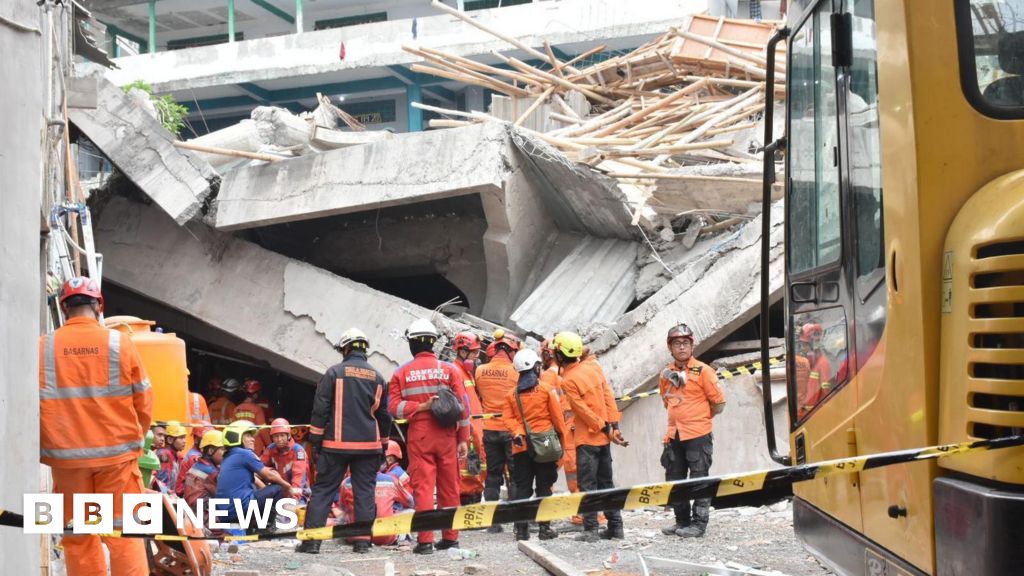
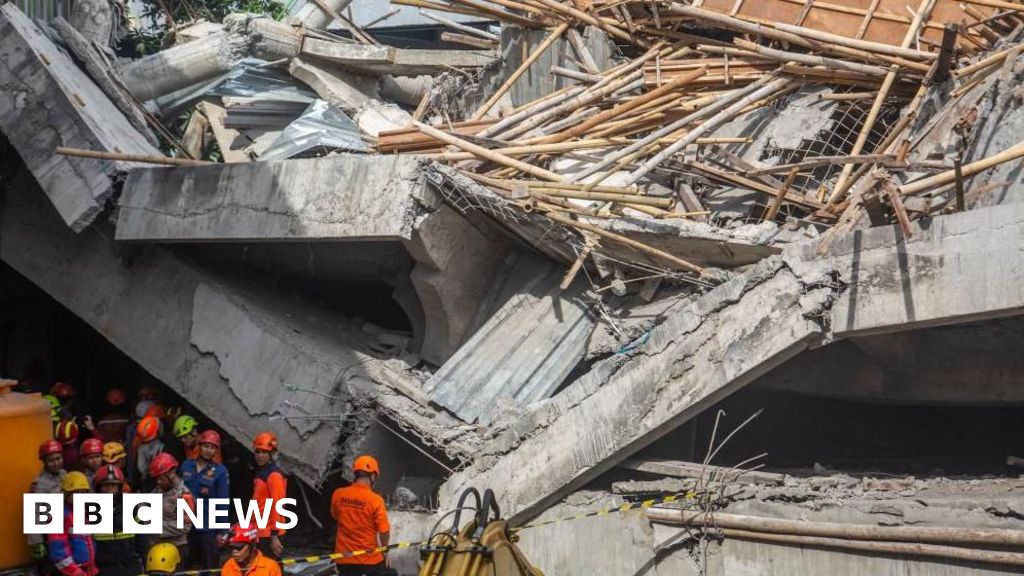
The recent tragedy in Indonesia, where a collapsed Islamic boarding school has left at least five students dead and over 100 injured, underscores a critical moment in the nation’s ongoing safety and governance struggles. The incident, centered in the town of Sidoarjo, reveals the dangerous consequences of unchecked construction practices and regulatory failures. The building’s collapse, caused by the addition of two unsafe floors to an under-constructed foundation, highlights the larger issues Indonesia faces in terms of infrastructure development and regulatory oversight, issues that resonate across many developing nations in Southeast Asia.

Despite the international outcry and efforts of rescue teams using thermal drones and heavy machinery, the possibility of finding survivors has diminished. The disaster management agency (BNBP) announced that *no signs of life* were detected in the debris, a heartbreaking entry point into the larger conversation about safety standards and government accountability. Experts and analysts warn that such tragedies reflect deeper systemic flaws—poor enforcement of building codes, corruption, and the prioritization of economic gains over safety—threatening societal stability and the legacy of governance in the region. The incident also serves as a stark reminder of the. *fragility of human life* amidst rapid urban proliferation and construction without appropriate oversight.

On a broader geopolitical level, the incident in Indonesia acts as a clarion call to regional institutions and international partners. While those involved are primarily concerned with immediate rescue operations, critical analysis from organizations like the World Bank and international human rights groups emphasize that long-term safety reforms are necessary for social progress. Such disasters threaten to undermine the legitimacy of local authorities and fuel public distrust in state institutions, which are often seen as ineffective or corrupt. These events have repercussions beyond national borders; they feed into regional narratives about governance, sovereignty, and the need for vigilant oversight as urban populations swell. How nations respond—by tightening regulations, improving safety standards, and ensuring transparency—will determine their standing on the global stage.

Historian and policy analysts stress that this incident is no isolated event but part of a broader pattern affecting many countries committed to rapid development amid legacy issues of governance and accountability. The tragic collapse in Indonesia symbolizes a moment where history is still being written—where the choices to reform or ignore safety standards could have lasting consequences. As rescue teams turn their tools towards removing debris, the world watches and waits, acutely aware that the true test lies ahead: whether this tragedy will catalyze meaningful change or become yet another chapter of neglect in the overarching narrative of progress and safety. In this unfolding history, every decision, every policy, and every effort to secure the safety of the vulnerable will leave an indelible mark on the fabric of society.

School Collapse Traps Dozens, Three Dead: Warning Signs Ignored

Indonesia School Collapse: A Stark Reminder of the Underlying Risks in Global Construction and Oversight

In a tragic event that has resonated across the international community, East Java, Indonesia has witnessed a devastating school collapse that has left dozens of young victims trapped under rubble. The incident occurred at the Al Khoziny Islamic Boarding School, a traditional pesantren in the Sidoarjo region, where 38 students remain feared missing amid a pile of collapsed concrete and twisted steel. With the death toll rising and rescue operations hampered by unstable debris, this catastrophe highlights a persistent issue: the perilous state of Indonesia’s construction sector, notorious for safety violations and lax oversight, as documented by organizations such as the International Labour Organization.

Geopolitical Impact: How Indonesia’s Domestic Crisis Reflects Broader Regional Challenges

The geopolitical implications of this tragedy extend far beyond local concerns. Indonesia, as Southeast Asia’s largest economy, has long struggled with balancing rapid development with safety standards. Critics, including leading historians and analysts, point out that a largely unregulated construction boom—often driven by informal, semi-legal projects like the pesantren—creates systemic vulnerabilities. The fact that authorities like the Sidoarjo town’s regent have admitted that the school lacked necessary permits for its expansion underscores a broader pattern of weak enforcement and the endemic informalism that hampers national safety initiatives. These issues can foster regional instability when neighboring nations perceive Indonesia’s inability to control hazards as a failure to meet international safety standards, thereby weakening diplomatic confidence.

International organizations like the United Nations and regional bodies have repeatedly warned about the social and economic costs of neglecting infrastructure safety. The collapse echoes earlier warning signs, where similar accidents in West Java resulted in multiple casualties earlier this month. Such events serve as a stark reminder to the global community that unchecked development and insufficient regulation can quickly lead to tragedy, undermining societal stability and the perceived strength of national governance.

Effects on Society and Policy: The Human Toll and Lessons for Governance

As rescue teams scramble amid dangerous debris, the personal stories emerging from survivors and relatives add a somber tone to this tragedy. Young students recount frantic escapes, while families mourn loved ones, exemplifying how these incidents do not only jeopardize physical safety but also destabilize community trust in governmental institutions. The school’s caretakers’ poignant admission, blaming the incident on “God’s will”, highlights a troubling tendency to obfuscate accountability rather than address systemic failures. Historians warn that without decisive reforms, Indonesia risks further calamities that will compound social fragility.

The incident also exposes the peril of operating **informal** educational institutions that often lack oversight, a problem prevalent across many developing nations where rapid expansion frequently outpaces regulatory capacity. The collapse underscores a dire need for stricter enforcement of safety standards, comprehensive inspections, and international cooperation to establish resilient infrastructure—especially in sensitive sectors like education. The global dialogue must now pivot from reactive rescue to proactive reform, as Indonesia’s tragedy exemplifies how neglect in governance can turn into a catastrophe with lasting consequences.

How the disaster’s aftermath unfolds will likely serve as a pivotal test for Indonesia’s leadership and its ambition to modernize infrastructure responsibly. For the world, the question remains: When history looks back on this moment, will it be remembered as a wake-up call or a catalyst for urgent change? The weight of history—still unwritten—hangs heavy over the unfolding chapters of this tragedy. The sands of time continue to shift, and in their wake, the lessons of accountability, safety, and governance echo louder than ever.

Social Media Auto Publish Powered By : XYZScripts.com