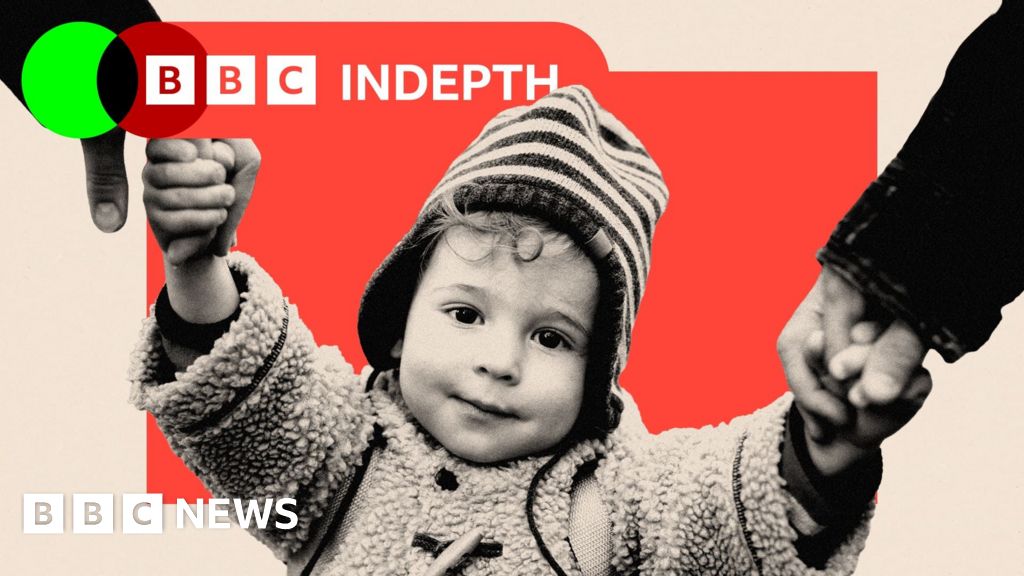

Society’s Shifting Fertility Landscape and Its Impact on Families
In recent years, demographic changes across the Western world reveal a concerning trend: a declining birthrate and evolving family structures. According to the Office for National Statistics, the fertility rate in England and Wales last year plummeted to 1.41 children per woman—its lowest on record for three consecutive years. This decline is part of a global movement identified by the United Nations as a “global fertility slump”. Sociologists like Alain Girard argue that this shift reflects more than just individual choice; it signifies the societal pressures, economic anxieties, and shifting gender roles that are reshaping the very fabric of families and communities. Families, once the backbone of social cooperation, are now navigating a landscape where financial and social barriers often overshadow the desire for children.
This era of economic uncertainty, characterized by skyrocketing living costs, unreasonably demanding careers, and inequitable gender expectations, has led many to question the sustainability of larger families. Families with only one dependent child have grown from 42% in 2000 to 44% today, with statistics indicating that the notion of a “standard” two-child family is increasingly out of reach for many. The UN Population Fund emphasizes that many are not “turning their backs” on parenthood but are being denied the freedom to start or expand their families due to economic constraints and persistent gender inequality. This reality underscores a moral crisis—families are no longer driven solely by love and legacy but are often dictated by prudent financial calculations and societal expectations that now seem out of reach for many.
Bridging the ‘Fertility Gap’: Societal and Policy Responses
To combat this troubling trend, policymakers are increasingly aware of the need for supportive measures to bridge the ‘fertility gap.’ Education Secretary Bridget Phillipson recently highlighted the expansion of funded childcare in England as a step toward reviving what she termed “dashed dreams”. Although nursery costs have fallen for the first time in 15 years—averaging around £12,425 for children under two—they still place a heavy burden on many families, especially when considering the broader economic climate. Moreover, studies from University College London indicate that while two-fifths of 32-year-olds express a desire for children, only a quarter actively pursue conception, suggesting that the barriers go beyond just costs—addressing social, emotional, and organizational issues must also be part of a comprehensive strategy.
- Implementing targeted parental leave policies and flexible work arrangements that align with modern gender roles
- Ensuring affordable, accessible childcare to ease the economic burden of parenthood
- Promoting societal narratives that support a diversity of family choices, moving away from stereotypes like the “spoiled only child” myth
Social commentator Dr. Adriean Mancillas challenges long-held myths suggesting that only children are selfish or maladjusted, citing research that demonstrates educational advantages and emotional development opportunities within single-child families. This evidence points toward a societal responsibility to reframe perceptions around family size and quality of life, ensuring that policies nurture family units rather than stigmatize them.
The Societal Impacts and a Call for Moral Reflection
The decline in birth rates does not only threaten the present but casts long shadows over future societal stability. An aging population spells increased strain on public services and pensions, with demographers warning of a “demographic time bomb.” Yet, amidst these challenges, the societal narrative must become one of hope, resilience, and moral clarity—recognizing that families are the moral backbone of society. As Lauren Sandler, author of *One and Only*, reflects, “families are not just economic units, but moral communities where love, care, and shared values nurture society’s soul.”
Society faces an ongoing reckoning: will we continue to let economic and social barriers define the future of family life, or will we foster an environment where the desire to nurture and to belong can flourish freely? The choices we make today, inspired by both policy and moral conviction, will echo through generations. As families like Natalie Johnston’s exemplify—children are not just products of choices but symbols of society’s capacity for compassion and hope. In this ever-changing landscape, society’s true measure lies in our collective resolve to rebuild the moral foundations that uphold family, education, and community—transforming societal fears into a shared vision of renewal and resilience.