Matox News

Truth Over Trends, always!

Australia updates: Hybrid car sales surge as youth shift from petrol; Iranian footballer departs despite asylum offer

In a compelling turn of events, Australia finds itself at the crossroads of shifting geopolitical and societal dynamics, as recent reports reveal a significant increase in the adoption of hybrid and electric vehicles, paralleled by the controversial departure of Iranian women’s football squad members seeking asylum. The latest data from the Australian Automative Association (AAA) underscores a transformative moment in the nation’s motor industry, with hybrid vehicles reaching record sales—a clear testament to the global push towards greener mobility. In the final quarter of 2025, hybrids accounted for 19.13% of all new light vehicle sales, outperforming traditional petrol cars which now constitute a mere 66.3% of the market, down from over 70%. Such figures are emblematic of Australia’s broader aim to lead in environmental transition while grappling with its geopolitical obligations, especially amidst surging fuel prices attributable to regional tensions in the Middle East.

Parallel to this shift, the geopolitical impact becomes starkly evident in the recent decision by several Iranian women’s football team members to leave Australia after being granted asylum—an act illustrating the nation’s delicate positioning on human rights, international diplomacy, and domestic security. The Australian government, led by Catherine King, publicly expressed that these women faced “enormous pressures” both from their homeland and global circumstances, which compelled them to make “incredibly hard” decisions. historians and analysts suggest this episode reflects shifting international expectations around asylum policies and human rights, especially as nations face increased scrutiny over their response to politically sensitive issues. The dilemma underscores how decisions by athletes—once confined to sporting arenas—now serve as microcosms of a larger geopolitical narrative, wherein societal values and foreign policy intersect with the personal stories of those seeking refuge.

Amid these tensions, Australia prides itself on strategic preparations to mitigate global turmoil. Minister Catherine King reassures that the country is well-positioned to withstand potential disruptions in energy markets, with reserves totaling 37 days of petrol, 30 days of diesel, and nearly 29 days of jet fuel. Such measures are a response to recent global fears triggered by unrest in the Middle East, which temporarily inflated fuel prices and prompted the government to release nearly 20% of its fuel stockpile. This strategic reserve is designed to balance the nation’s energy security against an increasingly volatile international environment, a move that demonstrates the nation’s resolve to safeguard its economy and social stability at a time of international flux. As analysts highlight, these preparatory actions reveal how a society’s resilience hinges on prudent international engagement and internal policy strengths—factors that could determine whether Australia continues its trajectory of stability or succumbs to the chaos brewing elsewhere.

In the grand tapestry of current events, the unfolding story of Australia’s energy transition and human rights stance may well be the prologue to future history—a chapter penned by decisions that will resonate across generations. As the world watches, these developments embody a broader truth: the balance of power and morality in a rapidly shifting geopolitical landscape hinges on the decisions of those in government and society, enduring challenges that threaten to redefine global order. The weight of history presses upon this moment, and the outcome remains unwritten, a testament to the perpetual struggle of nations striving to secure their future amid uncertainty.

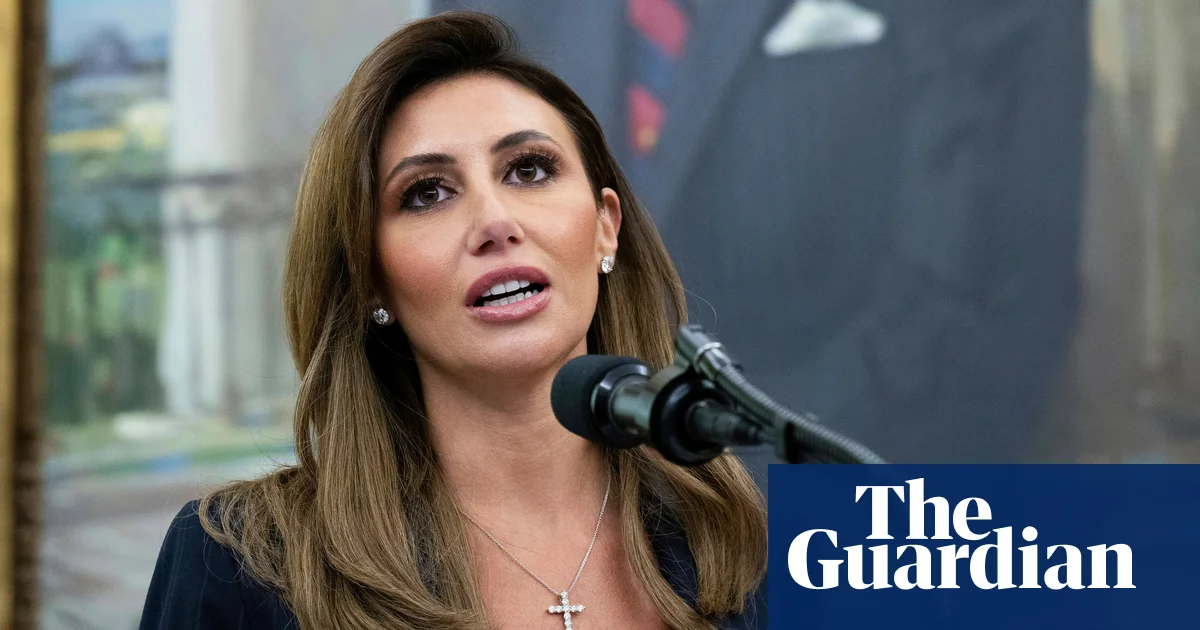
Former Trump lawyer Alina Habba departs as NJ federal prosecutor, signaling shift from Trump era

The recent resignation of Alina Habba, the former lawyer for Donald Trump, from her position as a federal prosecutor in New Jersey underscores a troubling trend in the U.S. justice system’s politicization. Her departure follows a series of judicial rulings that deemed her appointment unlawful—a move that highlights ongoing struggles over administrative legality and executive authority. Despite maneuvering by the Trump administration to preserve her role even after her interim appointment expired, the judicial branch reaffirmed limits on political interference in federal appointments. This development signals deeper conflicts over the role of law and order in America’s current partisan landscape and raises questions about the implications for the rule of law across the nation.

This episode is not merely about one individual but reflects a broader power struggle between incoming and outgoing administrations. Federal judges in New Jersey stepped in to rectify what they considered an unlawful appointment, forcing the Department of Justice to reconsider its approach to political staffing.

  • Michael Bitzer, a political analyst, warns that such judicial rulings could set a precedent that limits partisan appointments, possibly paving the way for increased judicial oversight in federal staffing decisions.

Meanwhile, Trump voiced his concern over the breakdown of the “blue slip” — a tradition allowing home-state senators to vet judicial nominees—claiming it has been exploited to block Republican appointees. His remarks point to an increasingly polarized confirmation process that complicates the functioning of federal institutions and further destabilizes the balance of power.

On a broader international scale, this internal U.S. debacle reflects the increased geopolitical consequences of internal political instability. The United States remains a pivotal actor on the global stage, and its ability to project power hinges on its internal coherence. The reluctance or outright refusal to confirm qualified judicial and executive appointees is viewed by many overseas analysts as a sign of weakening American governance. This perceived decline could embolden rival powers like China and Russia to challenge U.S. influence, especially in regions where American credibility depends on its adherence to legal and institutional norms. Historically, internal dysfunction has often been exploited by emerging powers seeking strategic advantages in a multipolar world.

As historians and international organizations warn of the dangers inherent in politicized institutions, the culminating events in Washington serve as a stark reminder that the course of history is still being written. The decision whether to uphold the rule of law or succumb to partisan expediency will determine not only the fate of America’s legal order but also its capacity to serve as a beacon of stability and justice worldwide. In this moment, the world watches as the foundational pillars of American democracy are tested—could this be the beginning of a new chapter marked by resilience, or a descent into chaos, the echoes of which will resonate across generations?

Apple’s AI setback: Top exec departs as rivals surge ahead

Apple’s Leadership Shake-up Signals New Chapter in AI Strategy Amid Global Tech Competition

In a move that underscores the intensifying global race for dominance in artificial intelligence (AI), Apple announced the departure of its head of AI, John Giannandrea. After a seven-year tenure marked by incremental advances, Giannandrea’s exit coincides with a broader challenge facing the Silicon Valley giant: its lag behind competitors like Google and Microsoft in delivering cutting-edge generative AI features. Although Apple debuted its AI product suite, Apple Intelligence, in June 2024, industry analysts note that the company’s AI development remains significantly behind industry leaders, raising questions about its future strategic direction amid a fiercely competitive ecosystem.

Despite its long-standing reputation for innovative hardware and user-centric design, Apple appears to be playing catch-up on AI, a sector now considered pivotal for technological supremacy. The company has implemented some AI-powered features, such as real-time language translation in AirPods and a fitness app with AI-driven voice chats, yet these innovations are largely incremental rather than transformative. Notably, efforts to revamp Siri with a more personalized and robust AI interface have been repeatedly delayed, a sign that the company’s **AI ambitions** are still in development, and its previous promises have yet to materialize. During its recent developer conference, Craig Federighi, Apple’s software engineering vice president, said that “the work [on Siri] needed more time to reach our high-quality bar,” hinting at internal struggles to match the AI capabilities of rivals like Google Assistant and Amazon Alexa.

The appointment of Amar Subramanya, a veteran AI researcher with extensive experience at Microsoft and Google, signals Apple’s recognition of the need to accelerate its AI strategy. Subramanya’s background as the former head of engineering for Google’s Gemini AI Assistant and Vice President of AI at Microsoft positions him as a key figure in Apple’s quest for AI leadership. Analysts, including those from the International Institute of Technology Policy, suggest that this leadership shift represents a deliberate effort by Apple to tighten its focus on building competitive AI systems capable of competing on the global stage.

Global Geopolitical Impact: AI as the Next Warfront

In the broader context, this AI race is now viewed as the next vital battleground for global influence. China, the United States, and the European Union are investing billions into AI research, recognizing its potential to shape economies, security, and military dominance. Decisions made by corporations such as Apple inevitably ripple out, influencing national policies and international power dynamics. The United States, long considered the leader in tech innovation—with institutions like the National Institute of Standards and Technology (NIST) and private companies fiercely competing—has seen a shift in momentum with China’s rapid advancements in AI capabilities. Some analysts warn that the current delays and internal struggles at Apple reflect a broader systemic challenge: legacy tech giants are feeling pressure to innovate or fall behind in this geopolitical contest.

Furthermore, the U.S. government and European Union are increasingly calling for regulation and safeguards around AI, emphasizing the importance of maintaining technological sovereignty and ethical standards. Historically, nations that lead AI development gain unrivaled leverage in international diplomacy, military strategy, and global markets. As Apple rethinks its AI roadmap, it acts as a microcosm of the larger battle shaping the future of global influence—where decisions made today could determine the rise or fall of world powers in the coming decades.

What Lies Ahead: The Weight of History in the Making

With Apple’s strategic shift and leadership change, the unfolding narrative reflects more than corporate ambitions—it symbolizes a larger epochal shift. The coming years will reveal whether Apple can surmount internal challenges to reassert itself as a leader in AI, or if it will become a secondary player in a high-stakes global rivalry. The decisions made now by industry giants and governments will echo through history, shaping economies, societies, and international power structures for generations to come. As the drama of technological evolution unfolds on the world stage, one truth remains clear: the very definition of influence in the 21st century is being written in code, and the outcome will determine who sets the rules of the game for the world’s future.”

Social Media Auto Publish Powered By : XYZScripts.com