
Matox News

Truth Over Trends, always!

Ireland’s Irish Airport Used for ICE Palestinian Deportation Flights Sparks Concern

Deportation Flights and Ireland’s Role: The Geopolitical Ripple Effect

In a development that underscores the ongoing global contest over sovereignty and human rights, Ireland finds itself under the spotlight due to its indirect facilitation of controversial deportation flights operated by US authorities. Contrary to initial official statements, recent investigations reveal that planes associated with the Donald Trump administration, specifically private jets owned by wealthy donors, refueled at Shannon Airport en route to deport Palestinians from the United States to Israel. This revelation has ignited a fierce debate within Irish political circles and a stark reflection of how international decisions impact national sovereignty and societal morality.

The flights, operated by a Florida-based aviation company, used a private jet owned by Gil Dezer, a prominent supporter of Trump with close ties to the Republican establishment. The aircraft facilitated multiple deportations, with individuals shackled during flight, allegedly transferred to the West Bank after arriving in Tel Aviv. The Irish government initially claimed ignorance, asserting that the flights did not require prior approval due to their non-traffic purpose. However, opposition voices argue that as a nation that maintains a neutral stance, Ireland must scrutinize the international implications of its airports. Politicians such as Roderic O’Gorman and Patricia Stephenson have called for accountability, warning that, “Ireland cannot in any way be complicit in these ICE flights.”

Geopolitical Impact: A Broader Perspective

While Irish officials emphasize procedural neutrality, this incident exposes a broader, more troubling picture of how transnational agencies are leveraging international infrastructure for controversial policies. Experts and international organizations such as Human Rights First have criticized the deportation of individuals to conflict zones, emphasizing the human rights violations implicated. Dezer’s jet, dubbed his “favourite toy,” has been involved in flights that track to unstable and conflict-ridden regions, raising questions about how border control policies are applied across borders and what role private entities play in implementing government mandates. The geopolitical impact intensifies as other nations observe how established frontiers of sovereignty are being undermined by secretive operations, potentially paving the way for a precedent that global power dynamics are increasingly influenced by private wealth and international loopholes.

Internationally, this controversy feeds into an ongoing narrative about the erosion of moral boundaries in pursuit of national security interests, spurring warnings from historians and analysts who consider these actions a catalyst for future conflicts. As Europe grapples with its own migration policies, critics warn of a trickle-down effect where private actors are used to bypass ethical standards. Meanwhile, U.S. policymakers face mounting pressure from both sides of the ideological spectrum, with civil liberties activists decrying what they see as a dangerous extension of executive power into private operations that evade full transparency and accountability.

Conclusion: An Unfolding Chapter in a Global Struggle

Ultimately, what transpired at Shannon Airport and along the route to Israel underscores a pivotal moment that could redefine international norms. As Ireland navigates the delicate line between neutrality and participation, the weight of history continues to build. Will this small nation stand firm against the tide of clandestine operations, or will it become an unnoticed conduit for the machinations of global powerhouses? The answer remains elusive, yet the realization is clear: the future of international justice and sovereignty hangs precariously in the balance, awaiting the next chapter written by those who dare to shape the course of history itself.

US judge temporarily halts end of deportation protections for Haitian migrants

U.S. Moves to Dismantle TPS Program: A Turning Point in Immigration Policy

The Trump administration has commenced a bold, controversial push to dismantle most Temporary Protected Status (TPS) programs, a move that threatens the futures of hundreds of thousands of migrants from countries including Afghanistan, Ethiopia, Honduras, Myanmar, Nepal, South Sudan, Syria, and Venezuela. This initiative underscores a shift towards stringent immigration enforcement, and its geopolitical ramifications are profound, reverberating across the fabric of international relations and regional stability.

Established decades ago, TPS programs have provided temporary relief to foreign nationals fleeing conflict, natural disasters, or political upheaval. By contemplating their termination, the U.S. government risks unleashing a humanitarian crisis, with potential deportations looming over individuals who have built lives, communities, and economic contributions within American society. Analysts warn that this move could undermine decades of U.S. policy aimed at offering refuge, thereby fueling international criticism and damaging its reputation as a beacon of asylum and global leadership.

International organizations and foreign governments have expressed alarm over the U.S. decision. The United Nations has issued statements cautioning that the measure may exacerbate regional instability, especially for nations already grappling with socio-economic upheavals and ongoing conflicts. Historians argue that such shifts reflect a broader conservative wave emphasizing sovereignty and border security but warn about the long-term costs to international cooperation and global stability. Critics contend that rescinding TPS protections not only endangers vulnerable populations but also destabilizes relations with countries whose nationals reside within U.S. borders, fostering resentment and diplomatic strains.

From a geopolitics perspective, the decision to revamp immigration policies signals an era of rising nationalism in the United States—an approach that increasingly prioritizes sovereignty at the expense of international commitments. The move aligns with a pattern observed in other major powers, emphasizing control over open borders, and reflects a shifting global landscape where nation-states seek greater dominance over their internal affairs. In the wake of this policy change, nations like Mexico and Canada, along with international entities, watch closely, understanding that such unilateral actions can reshape migration flows, economic cooperation, and diplomatic dynamics.

As this policy unfolds, the long shadow of history looms large. Whether future historians will view the dismantling of TPS as a necessary assertion of sovereignty or a tragic retreat from humanitarian commitments remains to be seen. What is certain is that this decision marks a pivotal chapter in America’s ongoing debate over its identity—how it balances security with compassion, nationalism with responsibility. With the echoes of past conflicts and alliances reverberating, the world watches as the United States approaches a crossroads, with the weight of history determined by the choices made today—a future constructed by policies that could alter the course of nations for generations to come.

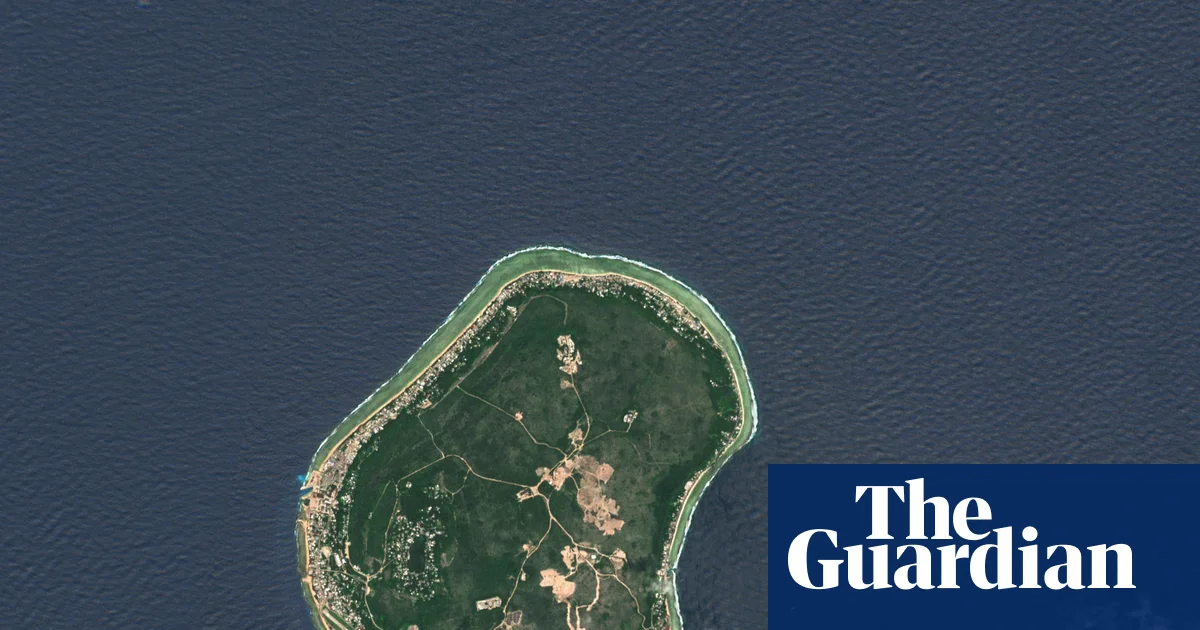
Court warns Australia’s deportation to Nauru could make refugee’s death ‘inevitable’ and preventable

In recent months, Australia has become the focal point of a heated international debate centered around its harsh immigration policies, particularly concerning non-citizens and refugees. The government’s relentless push to deport individuals to remote Pacific islands such as Nauru has raised profound questions about human rights, legal sovereignty, and international relations. The case of an Iranian refugee, identified as TXCM, epitomizes this controversy and exposes the broader geopolitical implications of Australia’s policies. Legal battles over his potential deportation to Nauru—despite clear medical risks—highlight the government’s willingness to prioritize border enforcement over humanitarian considerations, a stance that threatens to destabilize Australia’s standing both regionally and globally.

Under the current government, led by Anthony Albanese, Australia has struck a controversial $2.5 billion deal with Nauru designed to transfer asylum seekers and non-citizens to the tiny Pacific island for long-term detention and visa arrangements. This agreement, enacted in February, serves as a strategic attempt to offload the strain on Australia’s immigration detention system, but it has sparked accusations of moral abdication. Critics, including international human rights organizations and domestic legal experts, argue that this approach “fuels kleptocracy” and dilutes Australia’s moral authority. The decision to extend 30-year visas to those sent to Nauru underscores how the government seeks to normalize indefinite detention, challenging traditional notions of justice and due process within a legal framework that many see as increasingly sidelined.

The legal controversy surrounding TXCM underscores a broader shift in policy and jurisprudence. His case—one of more than 350 non-citizens freed from indefinite detention after the 2023 High Court ruling—illustrates a turning point: the judiciary’s pushback against prolonged detention based on the impracticability of removal. However, recent legislative amendments have sought to undermine this trajectory. The ruling government has swiftly changed the Migration Act to eliminate “natural justice” rights for individuals on removal pathways—effectively stripping non-citizens of fair hearings once deportation is decided. Analysts warn that such measures threaten to embolden arbitrary state power, risking international condemnation and further destabilizing Australia’s diplomatic relations, especially with Iran and other nations whose citizens face deportation.

The geopolitical impact extends beyond Australia’s borders. The Nauru deal—while seemingly a matter of domestic policy—has profound regional consequences. It creates a precedent for other nations grappling with similar migration pressures, potentially emboldening authoritarian regimes to leverage migration controls as tools of strategic influence. European scholars and international organizations have warned that such policies risk fostering “authoritarian resilience” by enabling regimes to manipulate humanitarian norms for political gain. Meanwhile, countries like China observe closely, perceiving Australia’s approach as an example of border militarization that could inspire similar strategies across Asia-Pacific. The unfolding story of TXCM and Australia’s policies serve as a stark reminder that the decisions made now are shaping the future of global governance and sovereignty.

As history continues to unfold, the weight of these decisions cannot be overstated. Australia’s internal debates over justice, morality, and national security are emblematic of a larger global struggle—one where the lines between sovereignty and humanitarian responsibility are increasingly blurred. The coming months are likely to reveal whether Australia’s strict policies will withstand international scrutiny or become a cautionary tale of a nation grappling with its own moral compass. With each legal challenge and diplomatic fallout, the echoes of history grow louder, reminding the world that the choices made today will resonate through generations to come, defining the true character of nations in an uncertain new era.

Social Media Auto Publish Powered By : XYZScripts.com



