
Matox News

Truth Over Trends, always!

US health dept probes 13 states pushing abortion coverage mandates

US Department of Health and Human Services Launches Investigations into States Over Abortion Laws

Washington D.C. has signaled a renewed federal push to enforce its stance on abortion rights, as the US Department of Health and Human Services (HHS) announced investigations into 13 states over their mandated healthcare policies. The HHS Office for Civil Rights (OCR) contends that these states are potentially violating the federal Weldon amendment, a pivotal law enacted to prevent federal funds from supporting discrimination against healthcare entities that do not facilitate or cover abortions. This move underscores an escalating confrontation at the intersection of state sovereignty and federal authority concerning reproductive rights.

The targeted states, which include California, Colorado, Delaware, Illinois, Maine, Maryland, Massachusetts, Minnesota, New Jersey, New York, Oregon, Vermont, and Washington, are accused of contravening the Weldon amendment by requiring insurance coverage for abortion services. The investigation reflects broader tensions within the Biden administration‘s interpretation of federal laws, particularly its reevaluation of the scope of the Weldon amendment. Past administrations have differed in their understanding; while previous HHS officials limited the amendment’s reach to a narrow range of entities, current officials argue that it protects healthcare entities from state-mandated coverage that conflicts with conscience rights.

This federal action has ignited fierce debates across political lines. Critics, such as New Jersey’s governor Mikie Sherrill, dismiss the investigations as a “fishing expedition” designed to waste taxpayer funds and undermine reproductive freedoms. In contrast, proponents argue that federal law must enforce consistency and respect for conscience rights, asserting that healthcare providers should not be compelled to violate their moral beliefs. These developments illuminate a broader contest over who ultimately controls healthcare policy— the federal government or individual states.

International Ripple Effects and the Geopolitical Impact of US Domestic Policy

While this intra-American judicial and political dynamic unfolds, its geopolitical impact resonates beyond borders. International observers, including analysts from the European Union and human rights organizations, are watching closely. Certain nations argue that the US’s internal conflicts over abortion policy could weaken its moral authority on democracy and human rights principles globally. Critics on the international stage contend that sharp partisan divisions and the weaponization of legal frameworks undermine the United States’ image as a beacon of liberty and rule of law, especially when domestic policies influence America’s global standing.

Historian and geopolitical analyst Dr. Samuel Carter notes that decisions like these have long-term repercussions, shaping alliances and influence. Countries with progressive social policies see the US’s internal strife as an ideological battleground that can embolden adversaries or undermine trust with traditional allies. Meanwhile, opponents argue that the Biden administration’s approach may alienate traditional conservative allies and stir up new conflicts over moral and cultural values that extend into international diplomacy.

Looking Ahead: A Critical Juncture in America’s Political Evolution

As the investigations continue and legal battles unfold, the outcome has the potential to redefine the delicate balance between federal authority and states’ rights. The potential rollback of abortion protections in certain states could have profound societal repercussions, from shifting population movements to altering the political landscape ahead of upcoming elections. The confrontation exposes a nation torn between recognizing individual conscience and respecting legislative mandates— a conflict that echoes across political and ideological divides.

The weight of history hangs heavy as America approaches a critical crossroads. The decisions made today will determine not only the future of reproductive rights but also the scope of federal influence over state sovereignty. As international eyes remain fixed on Washington, the world watches closely, realizing that what happens within these borders could shape the global order of values, law, and power for generations to come. The pages of history are still being written, and the struggle over the soul of a nation continues— a vivid reminder that the future is forged in the crucible of present conflicts.
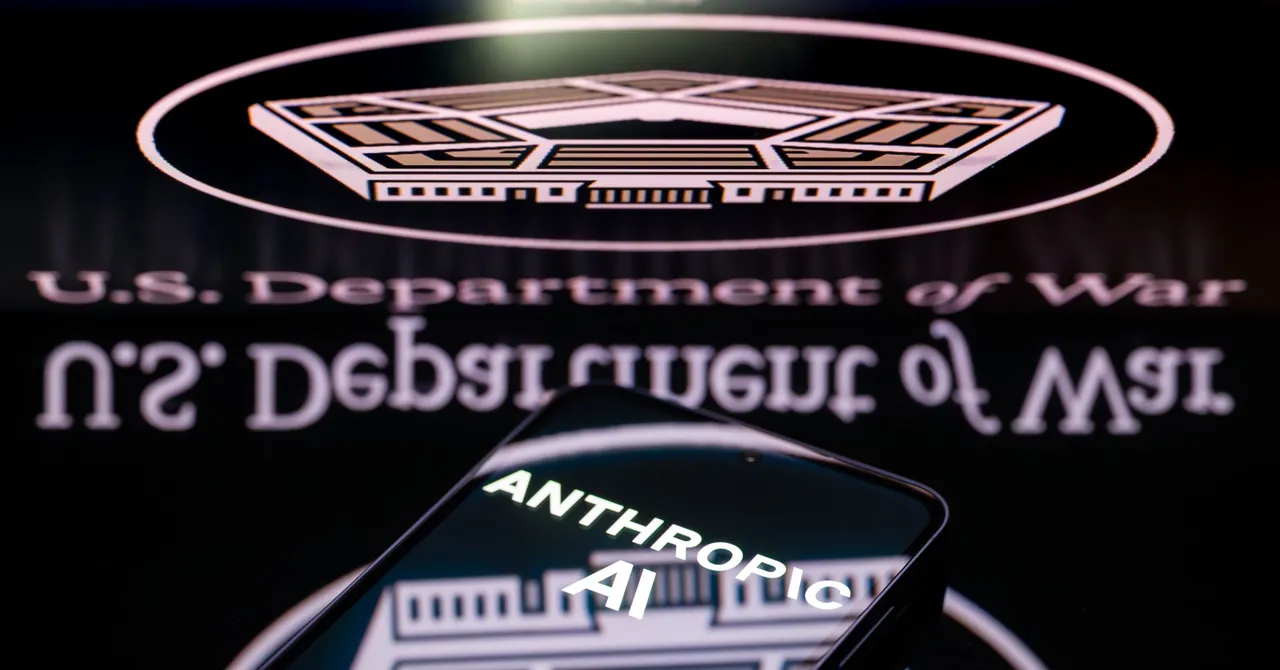
Justice Dept Warns Anthropic on Warfighting Systems—Not to Be Trusted

Shaping the Future: The Battle Over AI, National Security, and Innovation

The current legal clash between Anthropic and the Trump administration marks a pivotal moment in the evolution of AI regulation, set against the backdrop of national security and technological disruption. As the government seeks to classify Anthropic as a supply-chain risk, the outcome could redefine how emerging AI companies interact with government contracts and national cybersecurity protocols. The administration’s assertions that this move is rooted in safeguarding secure systems underscores the growing complexity of integrating cutting-edge AI into defense infrastructure, where innovation must be balanced against security risks. The legal dispute actively captures the attention of industry leaders and policymakers, signaling that the intersection of AI innovation and government oversight is entering uncharted territory, with significant implications for future business models and strategic investments.

The core of the controversy revolves around Anthropic’s AI models, notably Claude, which the Pentagon relies on for critical applications like data analysis and defense planning. The government contends that AI systems, especially those from emerging firms like Anthropic, pose unacceptable security risks because of their potential vulnerability to manipulation or sabotage during warfare operations. The US Department of Justice emphasizes that no constitutional protections, such as First Amendment rights, grant companies carte blanche to dictate how government agencies employ their technologies. This stance demonstrates an explicit shift toward prioritizing national security over corporate autonomy, a move that could accelerate government-driven AI procurement from domestic and international competitors like Google, OpenAI, and xAI.

Disruption in Defense Tech and Business Dilemmas

This legal confrontation exemplifies the broader technology disruption threatening traditional defense procurement channels. As the Pentagon accelerates efforts to replace Anthropic’s AI with solutions from ChatGPT and Bard-like models from Google and OpenAI, industry insiders see this as a potential market shake-up. The decision to restrict Anthropic could catalyze a wave of rapid innovation amidst tighter security protocols, forcing AI startups to reevaluate risk management strategies and security assurances. Furthermore, this case underscores a shift in Pentagon policy—moving from reliance on a few trusted contractors to embracing a broader array of options. Such strategic diversification aligns well with insights from Gartner analysts, who warn that government alliances with emerging AI firms are more volatile but crucial avenues for disrupting established defense markets.

  • Increased scrutiny on AI supply chains, emphasizing security
  • Potential for accelerated adoption of AI from giants like Google and OpenAI
  • Legal precedent shaping AI governance in security-sensitive domains
  • Market implications for startups seeking defense contracts, emphasizing compliance and security innovations

Looking Forward: Disruption, Urgency, and Strategic Imperatives

Industry leaders like Elon Musk and Peter Thiel have long emphasized the strategic importance of AI as a driver of global dominance. This case represents a critical juncture where innovation and disruption are colliding with regulatory and security imperatives. The coming weeks will be decisive: approvals or bans could either catalyze a new era of proprietary AI development for defense or trigger a flurry of regulatory crackdowns on emerging AI innovators. The urgency is palpable—AI is no longer just a commercial tool but a strategic asset in modern warfare, with national security stakes elevating AI regulation into a battleground for technological supremacy.

As the Pentagon scrambles to deploy AI solutions from more established companies, the industry must adapt swiftly, prioritizing transparent security protocols that meet government expectations. On the horizon lies a landscape where disruption is fueled by relentless innovation and a fierce competition for dominance in the AI-driven security paradigm. For entrepreneurs, investors, and policymakers alike, the message is clear: the future belongs to those ready to navigate this treacherous, but opportunity-rich, frontier—facing head-on the challenge of safeguarding sovereignty while unleashing the true potential of artificial intelligence.

US Justice Dept. Under Fire for Withholding Epstein Files on Trump

In a remarkable statement on Tuesday, White House spokeswoman Abigail Jackson proclaimed that President Trump’s recent actions represent a profound commitment to uncovering the truth behind the Epstein scandal. She highlighted the administration’s efforts, including the release of thousands of pages of documents, cooperation with the House Oversight Committee’s subpoena request, and the signing of the Epstein Files Transparency Act. These steps, according to officials, aim to shed light on a murky web of influence and corruption that has ensnared figures across the political spectrum. Jackson emphasized that President Trump has done more for Epstein’s victims than any previous administration, framing his moves as a moral and political stance against abuse and deception that have tainted the highest echelons of power.

The Epstein controversy has long symbolized the intersection of geopolitical intrigue and societal decay. Critics argue that prior administrations and the deep state’s opaque structures allowed a culture of impunity to flourish, overshadowing justice with political interference. However, the recent disclosures and legislative initiatives under Trump’s leadership send a potent message that the tide may be turning. International analysts note the significance of these developments as they challenge entrenched networks of influence, exposing links that stretch beyond national borders. Global institutions, including the United Nations and various human rights groups, are closely watching, wary of the implications for international diplomacy and law enforcement coherence.

Historian and geopolitical analyst Dr. Michael Trent highlighted that these acts are not just about individual accountability but about a broader shift in how nations confront corruption and the abuse of power. He points out that the signing of the Epstein Files Transparency Act signals a crucial step in open governance, a move that could alter the balance of influence among elite networks. The U.S. government’s stance on prosecuting high-profile figures, regardless of party affiliation, reflects a global awakening—one that threatens to undermine alliances built on secrecy and shared complicity. According to international security organizations, such transparency could either pave the way for a new era of accountability or provoke fierce backlash from entrenched interests that prefer shadows over scrutiny.

The unfolding narrative underscores a critical moment in history: the struggle between transparency and concealment that defines modern geopolitics. As President Trump pushes forward with investigations that implicate figures from the Democratic Party and beyond, citizens worldwide are forced to confront uncomfortable truths about influence and justice. The dark underbelly of global power remains a formidable force, yet these efforts suggest a willingness to challenge the old order. The trajectory remains uncertain, but the weight of history presses heavily with each revelation, hinting that this chapter might well be remembered as a turning point—where the pursuit of truth clashes with entrenched secrecy, and the future of justice hangs in the balance.

Social Media Auto Publish Powered By : XYZScripts.com