Matox News

Truth Over Trends, always!

Tide’s Evo Tiles: The Next-Level, Overengineered Spin on the Classic Pod

In an industry historically characterized by mundane chores and incremental improvements, procter & gamble’s Tide is spearheading a disruptive innovation that promises to redefine the future of laundry. With over a decade of meticulous research and development, the company has unveiled Tide Evo Tiles, an advanced single-use detergent technology designed to enhance user convenience, improve ecological impact, and bolster competitive positioning in the bustling $100 billion global laundry market. This breakthrough signals a pivotal shift in how consumers and businesses approach cleaning routines, echoing trends in smart packaging, sustainability, and engineering innovation.

What sets Tide Evo Tiles apart is their groundbreaking engineering, blending sleek design with powerful cleaning technology. Unlike traditional liquids or pods, these dry, fibery tiles dissolve effortlessly in cold water, delivering a robust high pH clean adaptable to various load sizes. According to Tide’s senior director of R&D, Marcello Puddu, “This is really a feat of engineering,” highlighting the complex formulation work involved in creating a user-friendly, eco-conscious product that simplifies laundry routines while maintaining cleaning efficacy. Industry experts like Gartner and MIT researchers emphasize that such innovations exemplify the ongoing trend of disruptive packaging and functional design, positioning Tide as a leader in this transformation.

From a business perspective, the emergence of Tide Evo Tiles exemplifies how established firms can leverage innovation to redefine market standards. Priced between $5 and $20 per box depending on retailer, with roughly 50 cents per tile, the product balances affordability with premium appeal. Its ease of deployment—just a single tile for regular loads—addresses the needs of a broad demographic, including individuals with limited motor skills. Moreover, this product endorses a strategic shift toward eco-friendly, lightweight solutions that reduce plastic waste and energy consumption, aligning with modern consumer values and regulatory pressures for sustainability.

Looking ahead, the rollout of Tide Evo Tiles signals more than just incremental product improvement—it signifies a broader industry wave of innovation driven by heightened consumer demands and technological advances. As companies like Procter & Gamble and competitors invest in novel delivery systems that combine engineering mastery with environmental responsibility, the laundry sector is poised for unprecedented disruption. Forward-thinking entrepreneurs and tech giants alike must scrutinize this evolving landscape, where innovation and ecological considerations are no longer optional but essential for market relevance. The future belongs to entities capable of harnessing smart packaging, sustainable materials, and engineered formulas—a race that will determine the leaders of tomorrow’s cleaning industry.

Renowned Canadian-American Architect Frank Gehry Passes Away at 96 — A Lasting Legacy in Modern Design

In the realm of architecture, few figures have embodied the spirit of innovation and cultural rebellion as Frank Gehry. His passing at the age of 96 marks the end of an era defined by audacious form, emotional resonance, and a relentless quest to redefine the built environment. Gehry’s work transcended mere structures, becoming an almost poetic testament to the enduring power of culture to shape our identity and societal consciousness. His fantastical Bilbao Guggenheim, clad in shimmering titanium and seemingly alive with movement, exemplifies how architecture can serve as both reflection and prophecy—an icon of what the modern age can achieve when bold tradition and radical innovation collide.

Gehry’s influence is undeniable, not only as an artist but as a cultural icon whose work catalyzed what critics label as the Bilbao effect. Like the revolutionary shifts seen in art movements from Surrealism to Abstract Expressionism, Gehry’s architecture challenges the passive observer to confront the visceral and the imaginative. His designs, whether the Walt Disney Concert Hall or the Fondation Louis Vuitton, embody an expressive power reminiscent of T.S. Eliot’s notion that tradition is not a static inheritance but a living dialogue between the past and the present. In a sense, Gehry’s work exemplifies how culture—rooted in tradition yet daring enough to break free—becomes a vital force in fortifying societal identity against the homogenizing tides of commercialism and decay.

Born into humble beginnings in Toronto, Gehry’s journey reveals that artistry often blooms late, fueled by perseverance and a deep-seated desire to challenge the ordinary. His decision to change his surname in the face of prejudice echoes the cultural necessity of self-definition—that in a society rife with hostility, one’s work can be a form of resistance, a reaffirmation of human dignity and heritage. After years of working within the commercial confines of shopping malls and uninspired projects, Gehry turned to his authentic voice at mid-life, embracing an esthetic of chaos and chaos—a metaphor for the tumultuous soul that refuses to be tamed. His transformation underscores Plato’s idea that the true philosopher-artist is one who dares to question, to risk, and thus to discover the enduring truth beneath exterior appearances.

Through the lens of cultural critic G.K. Chesterton’s celebration of the ordinary as extraordinary, Gehry’s architecture consistently reveals that true innovation lies in embracing the imperfect, the asymmetrical, the raw material of human emotion. As much as his buildings dazzle with their form, they serve as echoes of a society that values unique heritage and collective memory, asserting that our shared identity is rooted in the creative act—an act that must be both remembered and prophesized. In this way, Gehry’s legacy affirms that culture is neither stagnant nor purely decorative, but a living memory and a prophetic vision intertwined—a testament that human expression remains the most enduring blueprint for our future.

Canva rolls out new AI tools and its own design model, empowering creators and boosting creativity

Canva Unveils Revolutionary AI-Powered Design Platform, Signaling Industry Disruption

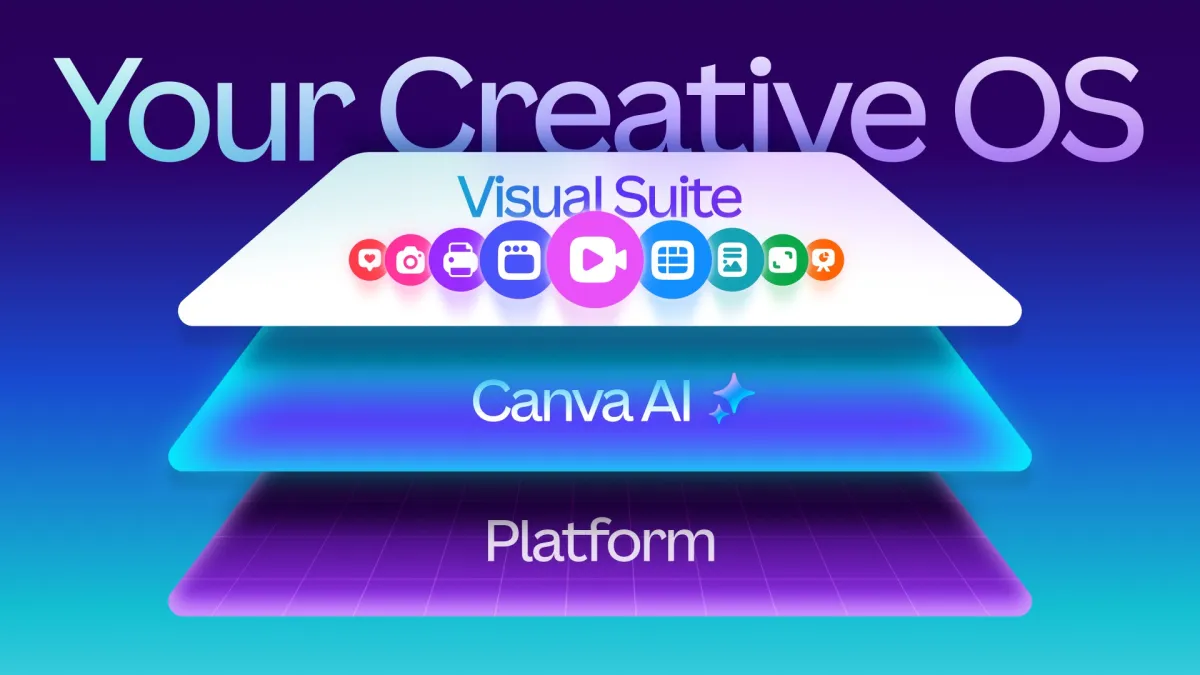
In a bold move that underscores the rapid acceleration of AI-driven innovation in creative software, Canva announced the launch of its own state-of-the-art foundational AI model on Thursday. Moving beyond the era of simple diffusion-based image generation, Canva’s new model delivers **multi-layer, editable designs**—a game-changer for visual content creation. This strategic development exemplifies how tech disruptors are challenging legacy giants like Adobe and Figma, positioning Canva as a serious contender in the $40 billion creative SaaS industry.

The new model, trained on Canva’s extensive element library, enables users to generate versatile, multi-format designs—from social media posts to full-fledged websites—with the ability to manipulate individual layers and objects. “Where traditional diffusion models produce flat images, ours offers **editable, dynamic compositions**, elevating the user’s ability to iterate seamlessly,” explained Robert Kawalsky, Canva’s global head of product. This evolution aligns with industry analysts’ predictions (Gartner, 2023) that future creative tools will prioritize flexibility and user control, disrupting existing workflows and fostering innovation at an unprecedented pace.

Infusing AI Into the Creative Ecosystem: Business Implications & Future Trends

Canva’s integration of AI further extends into interactive features, such as real-time media suggestions, 3D object generation, and design style replication—saving time and reducing skill barriers for users. The platform’s bond with its recent acquisition, Affinity —a professional-grade design suite—illustrates a clear strategy to bridge casual content creation with high-end professional tools, effectively challenging Adobe’s dominance. Canva’s decision to make Affinity free permanently not only enhances value but signals a disruptive shift in the software licensing paradigm, encouraging broad adoption of high-fidelity, non-destructive editing capabilities.

Additional updates bolster Canva’s position as an integrated ecosystem. The introduction of form creation substitutes *Google Forms* for client input, alongside branded email templates designed with AI assistance, deepening the platform’s value for digital marketing. As MIT’s recent study suggests, such multi-functional platforms are steering the industry toward **ecosystem dominance**, where seamless interoperability between tools becomes essential for staying ahead.

  • Innovative features include AI-generated 3D objects and style-mimicry, advancing visual storytelling capabilities.
  • The tight integration of Affinity with Canva’s interface unifies vector, pixel, and layout considerations under one roof—streamlining designer workflows.
  • The ability to transfer objects between tools and leverage AI within Affinity sets a new standard for professional creative suites, blurring the line between amateur and professional design.

Looking Ahead: A Racedur for Market Leaders & Startups Alike

This advancement reaffirms the narrative that **disruption is not merely about innovation but strategic repositioning**, with Canva challenging entrenched industry incumbents through AI democratization and ecosystem expansion. As Elon Musk’s Neuralink and Peter Thiel’s Palantir have demonstrated, early adoption of scalable, AI-driven platforms can redefine market power and influence. Gartner forecasts that by 2026, over 70% of digital content will be AI-enhanced, emphasizing the urgent need for industry players to innovate or face obsolescence.

In a landscape where rapid technological shifts are defining winners from the rest, Canva’s convergence of AI, professional-grade tools, and ecosystem integration signals a clear message: the future belongs to those who can harness disruption as a strategic advantage. Companies and creators alike must adapt swiftly, as the next wave of radical innovation is set to reshape how visual content is designed, understood, and monetized—making it imperative for industry stakeholders to stay alert, agile, and prepared for the inescapable march of AI-driven transformation.

From Fistful of Dollars to Rambo: Celebrating Renato Casaro’s Legendary Movie Posters — A Visual Tribute

In the contemporary landscape of visual culture, few names resonate with the weight of Renato Casaro. His passing at age 89 marks the end of an era where artistry in film promotion was handcrafted, imbued with a soul that digital transformations have often threatened to erase. Casaro’s work represented more than mere promotional material; it was a testament to the enduring power of image-making rooted in tradition, craftsmanship, and the cultural dialogue between cinema and society. By elevating the heroic stature of icons such as Arnold Schwarzenegger and Sylvester Stallone, Casaro lent a mythic aura to modern heroes—echoes of classical heroism reimagined for the heroic age of postwar America and the cultural manifestations of strength, valor, and resilience.

This tradition of handcrafted poster art, a symbol of cultural memory and societal aspiration, encapsulates what Ortega y Gasset might have viewed as the way in which art manifests the collective spirit. As studios transitioned to digital tools in 1998, the tactile and visceral qualities of Casaro’s work began to fade, yet his influence remains a vital marker of cultural heritage. It is not merely about aesthetics but about the role of art in shaping identity and societal values. When Casaro returned to craft posters for Quentin Tarantino’s Once Upon a Time in Hollywood, it signaled a conscious return to that romantic, heroic mythmaking—a refusal to surrender entirely to digital repetition and superficiality.

Throughout history, critics like Chesterton have championed the idea that culture is a battleground for meaning; it is where tradition confronts innovation, where memory solidifies into societal identity. The cultural critic Christopher Lasch argued that in an age of relentless progress, it is the memory of the past that anchors societal coherence. Casaro’s posters, vibrant with heroism, did precisely that—they connected audiences to a shared mythos, imbuing cinematic images with a symbolic purity that transcends the fleeting nature of trends. As Tocqueville warned, the preservation of cultural identity is vital in a democratic society—where uniformity often threatens the uniqueness of tradition. Casaro’s work exemplified the human desire for heroism rooted in tradition, a rallying cry for a society that seeks meaning through its cultural icons.

In the end, the significance of figures like Casaro extends beyond their craft; they serve as custodians of a collective memory and prophecy. Their creations, like the finest poetry or philosophy, remind us that culture is both a reflection of what we are and a vision of what we might become. The tapestry of human history, woven with images and stories, calls us to consider that our deepest identity lies not just in the present but in the echoes of the past and the possibilities of the future—a future illuminated by the enduring light of cultural memory, shining brightly like a hero’s silhouette against a great, timeless horizon.

Sharge’s New SSD: A Magnetic Powerhouse with Built-in USB Hub!

Sharge Unveils the Innovative Disk Pro SSD: A Game-Changer in Data Storage

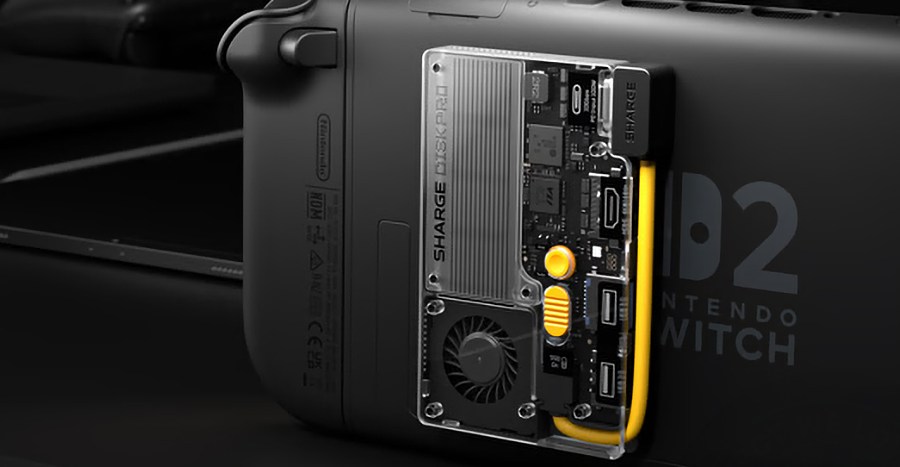
In an era where data management and performance are paramount, Sharge has introduced a groundbreaking external SSD known as the Disk Pro, currently generating buzz on platforms like Kickstarter. This device not only delivers storage solutions but also tackles a common issue among SSDs: overheating. By integrating a cooling fan directly into the design, Sharge stands at the forefront of innovation, highlighting a shift towards more efficient and reliable external storage solutions.

The Disk Pro is available in multiple capacities—1TB, 2TB, and 4TB—priced at discounted rates of $189, $289, and $469, respectively. As solid-state drives (SSDs) evolve, the issue of excess heat has become increasingly critical, especially in slim models lacking appropriate airflow. This can lead to performance throttling when SSDs reach temperatures of 70 degrees Celsius. The built-in fan in the Disk Pro mitigates this risk by offering two operational modes: a *Turbo Mode* that maintains peak cooling at 10,000 RPM, and an *Auto Mode* that adjusts fan speed based on temperature, effectively keeping the drive’s operating temperature around 50 degrees Celsius.

The Tech-Savvy Features of Disk Pro

  • Read/Write Speeds: Up to 10 Gbps
  • Cooling Options: Turbo and Auto modes with temperature regulation
  • Additional Ports: USB-C, USB-A, and HDMI output supporting 4K/144Hz and 8K/30Hz
  • Power Delivery: Can supply up to 80W to connected devices

The implications of the Disk Pro for consumers and businesses alike are significant. This device exemplifies the current drive toward *disruption* in the tech industry, where efficiency and multifunctionality are paramount. By allowing users to connect various accessories like laptops and smartphones while simultaneously managing data transfers, Sharge redefines the external SSD landscape. Major industry analysts, including those at Gartner, affirm that such innovations will likely set trends for future technology, marking a decisive shift towards versatile, all-in-one devices.

However, the introduction of the Disk Pro invites a more critical examination of the industry. With burgeoning competitors keen to enter this market segment, established brands may need to re-evaluate their strategies or risk becoming obsolete. Experts like Elon Musk and Peter Thiel have often noted that the tech sector thrives on relentless innovation and disruption. The current landscape necessitates solutions that not only meet consumer needs but anticipate future challenges, all while navigating the competitive market dynamics.

As the tech world braces for the impact of the Disk Pro, the excitement is palpable. This launch serves as a clear indicator that user-centric innovation is not merely a trend but a necessity. For young professionals and tech enthusiasts, staying informed and adaptable in such a rapidly evolving realm can define success and enable greater business implications. The advancing capabilities of devices like the Disk Pro urge us to ask: what will come next? With incessant technological advancements, the horizon glows bright, and businesses must accelerate their strategies to keep pace or risk falling behind.

Social Media Auto Publish Powered By : XYZScripts.com