Matox News

Truth Over Trends, always!

British Ex-Soldier Detained Over 2012 Kenyan Woman’s Death

British Army Faces International Scrutiny as Extradition of Former Soldier Unfolds

The recent arrest and impending extradition of Robert James Purkiss, a former British soldier, to Kenya in connection with the 2012 murder of 21-year-old Agnes Wanjiru, have reignited debates surrounding accountability, justice, and the geopolitical implications of military conduct abroad. Detained in Wiltshire, Purkiss’s case epitomizes a long-standing struggle for justice by the victim’s family and the broader Kenyan community, questioning the effectiveness of British military oversight in overseas conflicts and the accountability structures of former colonial powers.

According to the National Crime Agency (NCA), Purkiss’s arrest followed a warrant issued in September, as Kenya rigorously pushes for justice decades after the tragic incident near a British army training camp in Nanyuki. Details reveal a disturbing pattern linking British soldiers to misconduct and unresolved crimes, a concern that has led Kenyan authorities yet again to demand international cooperation. This case, underscored by the victim’s family’s assertions of deliberate cover-ups, underscores how the intersections of military presence and local communities can lead to deep-seated trust issues and wider geopolitical consequences.

Historical and Political Contexts Shape the Case

  • The 2018 inquest concluded that Ms. Wanjiru had been unlawfully killed by British soldiers, with subsequent investigations revealing possible confessions from soldiers and alleged cover-ups. Such findings highlight ongoing questions about military accountability in overseas operations.
  • In 2021, a Sunday Times investigation reported a British soldier’s confession to colleagues regarding the killing, resulting in further controversy over the army’s internal discipline and transparency.
  • In response, the British army announced in 2024 it was conducting an internal review into its conduct in Kenya, uncovering at least 35 suspected cases of sexual exploitation, including after the army’s official ban on such conduct in 2022. This move signals an effort to address past abuses, but critics argue it raises questions about how those investigations are coordinated with international justice systems.

International organizations and analysts have warned that unresolved cases like these threaten to undermine Britain’s global reputation and complicate diplomatic ties with African nations. Critics argue that colonial-era attitudes and reluctance to confront past misconduct fuel a culture of impunity, emboldening further abuses. Historians such as Orlando Patterson and organizations like Human Rights Watch suggest that justice for victims, whether in London, Nairobi, or elsewhere, depends heavily on proactive accountability and transparency—premises that remain sorely tested in this case.

Geopolitical Impact and Societal Consequences

The decision to extradite Purkiss carries significant geopolitical impact. For Kenya, this symbolizes a potential shift toward greater judicial sovereignty, asserting that former colonial powers must confront their past misdeeds in new and tangible ways. For Britain, it highlights the challenge of reconciling its historical military presence with contemporary standards of justice and accountability, especially in fragile post-colonial contexts.

This case exemplifies the larger struggle for post-colonial nations to reclaim agency over their histories and seek justice for victims of past abuses. As Kenyan officials press for the suspect’s trial, questions arise about how many other unresolved cases linger behind a façade of diplomatic immunity. The international reaction underscores a growing demand for more robust accountability measures from Western military forces operating abroad, amid fears that past impunity could threaten future stability and international trust.

As history continues to unfold, the case of Agnes Wanjiru becomes more than just a local tragedy; it is a stark reminder that in the complex chessboard of geopolitics, the pursuit of justice can become a catalyst for wider systemic change. With each legal move and diplomatic negotiation, the weight of history presses down, shaping the future of international justice and the moral responsibilities of mighty nations. The question remains: how will the words of justice and accountability echo across continents, or will they fade into the shadows of history, leaving unresolved wounds that threaten to unravel fragile alliances?


Man detained over viral video of alleged assault on Paris train

France’s Safety Crisis Reignited by Viral Train Crime Footage

The recent arrest of a suspect in France following a disturbing incident on a train near Paris has sparked a renewed discourse on women’s safety and national security. The incident, which was captured on video and subsequently went viral, involved a brazen attempted assault against a 26-year-old woman, Jhordana Dias, by a man who fled the scene upon intervention. This unsettling event not only underscores the ongoing challenges faced by French society but also exposes deeper vulnerabilities within the country’s security apparatus at a time when emigrant tensions, political debates, and social stability are all on the rise.

The footage, which shows a man dressed in a black tracksuit attempting to assault a woman aboard a train heading southeast of Paris, has divided public opinion and reignited longstanding debates about public safety, immigration, and law enforcement effectiveness. The suspect, identified as a 26-year-old Egyptian national, was detained by transport police in Mantes-la-Jolie. A crucial turning point in the case was the quick response of a fellow passenger, Marguerite, who filmed the assault and likely prevented a more deadly outcome. Such individual acts of courage contrast sharply with the apparent inability of authorities to prevent such crimes, fueling calls for tougher security measures and clearer policies on immigration and public safety. International security analysts warn that this event symbolizes an ongoing crisis, with Europe grappling over how to balance openness with safety.

Historians and global organizations like the United Nations have repeatedly emphasized that societal stability hinges on effective security practices, especially as demographic shifts and migration patterns reshape national identities. The incident, taking place between the Choisy-le-Roi and Villeneuve-le-Roi stations, has exposed a fragile social fabric that some argue is under siege by rising crime rates linked to socio-economic strains and migratory pressures. With multiple victims reportedly identifying the same individual, authorities face mounting pressure to enhance crime prevention strategies and address underlying issues. As French President Emmanuel Macron faces internal criticism, many analysts believe that this case heralds a broader crisis: the erosion of public trust and faith in the state’s capacity to protect its citizens.

In a global context, Europe’s apparent inability to curb such crimes complicates its geopolitical horizon. Alliances and international partnerships are tested as nations debate border security, immigration policies, and the role of law enforcement. Experts warn that these incidents could be exploited by populist parties seeking to capitalize on fears, further polarizing society and destabilizing the social order. As France and other European nations grapple with these internal threats, they must also navigate the external pressures from regional conflicts, migration crises, and economic uncertainties. Ultimately, the unfolding tragedy on a train near Paris reminds the international community that history is constantly being written—not only in grand treaties and political summits but also in the everyday acts of courage and chaos that define the modern world.

Sikh man with brain tumour detained by U.S. immigration, raising concerns about fair treatment

In recent weeks, United States immigration policies have taken center stage, revealing a complex interplay of national security, legal authority, and human rights controversies. The case of Paramjit Singh, a long-time resident of Indiana and US green card holder since 1994, exemplifies the disturbing human consequences of this policy shift. Detained amid allegations based on decades-old criminal records, Singh’s case underscores a broader pattern of aggressive immigration enforcement under the administration of President Donald Trump. As the US government pushes for the deportation of perceived “undesirables,” critics argue that this approach sacrifices fundamental fairness, particularly targeting individuals with no active criminal record or recent infractions, and ignoring humanitarian concerns such as health crises.

Singh’s detention, which has spanned over two months, is emblematic of a wider crackdown on immigration that oscillates between rhetoric and reality. The Immigration and Customs Enforcement (ICE) has invoked old cases—most notably from 1999 and 2008—to justify his detention, although family and legal advocates argue these allegations are either outdated or mistaken. The case involves Singh’s minor conviction for using a public phone without payment, a conviction that nonetheless resulted in his being barred from obtaining citizenship. More troubling is the assertion by authorities that he faces additional charges, which his family contests, claiming no such fingering exists in the state’s criminal records. This pattern suggests a potential misuse or misinterpretation of legal documents, which, when combined with the detention’s conditions, raises serious questions about procedural justice.

International observers and legal experts warn that such policies threaten not only individual rights but also geopolitical stability, especially as the US seeks to project strength through border enforcement. The detention of Singh occurs against a backdrop of a “zero-tolerance” approach emphasized by the Trump administration, with rhetoric promising the deportation of the “worst of the worst.” However, critics highlight that many non-criminal immigrants, like Singh, find themselves caught in this aggressive net, often without proper recourse. Countries such as India and Pakistan have expressed concern over cases involving alleged wrongful detention of their nationals, positioning these incidents within broader diplomatic tensions. The deportation and detention policies are thus mirrored by a rising global scrutiny, as international organizations warn of the erosion of due process and human rights protections—fundamentals upon which international law is built.

  • The detention of Singh is set for a hearing on October 14, highlighting the ongoing legal tussle that underscores the policies’ unpredictability.
  • The US administration’s emphasis on removing individuals based on historical records, regardless of current activity or health status, signals an evolving immigration paradigm that prioritizes security over fairness.
  • International reactions, especially from India, reflect growing concern over the treatment of their nationals, emphasizing how domestic policies can ripple across borders, heightening geopolitical friction in an already tense global atmosphere.

Historians like Howard Zinn and analysts at international NGOs have long warned that policies championed as “security measures” often serve as smokescreens for deeper societal exclusion and racial profiling. The Singh case is more than an isolated incident; it is a symbol of a nation grappling with its identity amidst the shadows of its immigration laws, where the weight of history—both legal and societal—continues to shape individual fates. As Singh’s case prepares for its next court hearing, the question remains: how will the US reconcile its values of justice and compassion with its choice to pursue an increasingly hardline stance? Sometimes, history seems to turn on a dime, revealing that the true cost of such policies is paid not just in legal doctrine but in the lives of ordinary people—whose stories may only be heard when the pages of history are finally turned.”

Chicago TV reporter assaulted and detained during ICE raid

Rising Tensions in Chicago: Immigration Enforcement and Civil Unrest

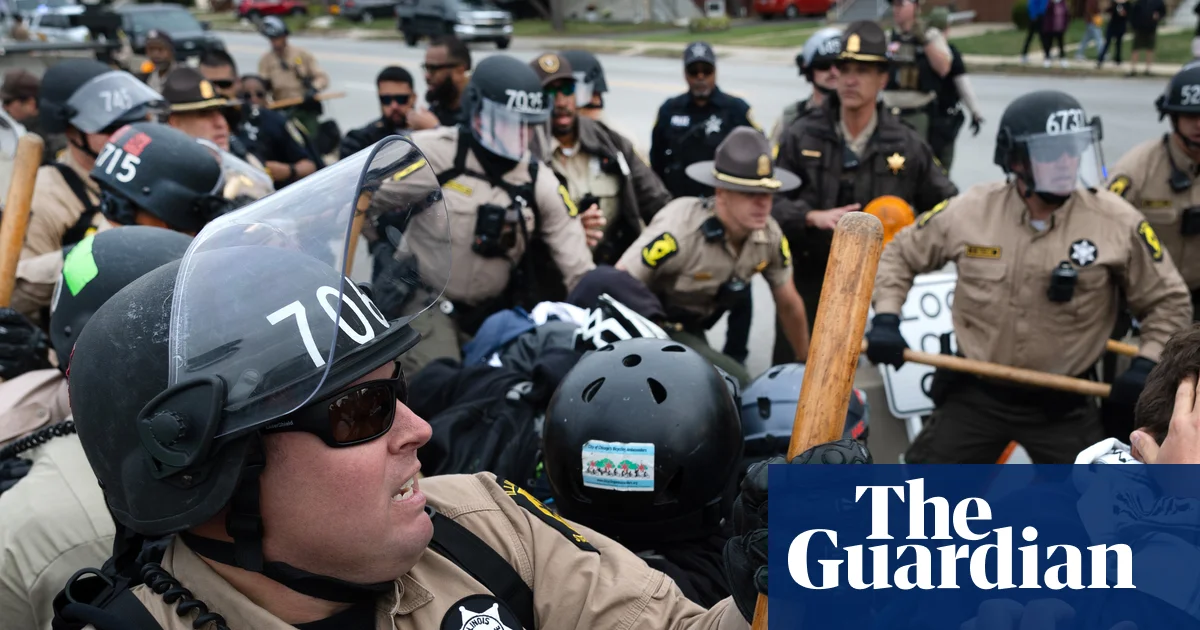
Recent incidents in Chicago have unleashed a wave of public outrage and international concern over the escalation of immigration enforcement tactics within the United States. The violent arrest of Debbie Brockman, an employee of WGN, captured on numerous videos, exemplifies the increasingly aggressive approach deployed by federal agents under the directives of the Biden administration and in coordination with U.S. Homeland Security. Detained amid protests in the city’s Lincoln Square neighborhood, Brockman’s arrest has ignited debates about civil liberties and the geopolitical implications of domestic law enforcement practices in an era of shifting immigration policies.

This incident, where bystanders recorded agents forcibly taking Brockman to a van amidst chants condemning their actions, underscores a broader tension over immigration enforcement—particularly the intensified efforts underway since former President Trump’s administration left a lasting impact on immigration policy. Analysts warn that such aggressive tactics risk fueling social divisions, both domestically and internationally. The operation’s perceived overreach has drawn sharp criticism from civil rights groups and local residents, who described it as “horrifying” and “frightening.” These events are symptomatic of a nation grappling with the consequences of politicized border policies—policies that increasingly resemble the hardline stance of Mexico’s neighbors to the south, or even border conflicts seen elsewhere in the world.

While officials from Homeland Security justify their actions by citing claims that Brockman and others posed threats—accusing her of assaulting officers—the broader geopolitical impact extends beyond mere allegations. The incident occurs amidst a climate of heightened tension over immigration, which oscillates between enforcement and accommodation. International observers, including HR organizations, warn that the unchecked use of force on American citizens jeopardizes the country’s reputation as a beacon of liberty and justice. The unusual timing, shortly after prosecutors dropped charges related to protests outside an immigration detention center, signals a possible shift toward more confrontational tactics reminiscent of authoritarian regimes.

  • The U.S. Federal Government intensifies immigration raids, prompting protests and legal challenges.
  • Local communities in Chicago and across the country express fears of civil liberties violations amid broader anti-immigration sentiment.
  • International institutions like Amnesty International and the United Nations observe and critique these developments, warning of potential human rights concerns.

As historians note, these domestic conflicts are not isolated—rather, they reflect a larger geopolitical realignment that will influence global perceptions of American resolve and values. The decision to prioritize harsh enforcement under the guise of national security reveals a nation at a crossroads, where internal social unrest and external diplomatic stability are intertwined. How the United States navigates this turbulent chapter will leave a lasting mark on the fabric of its democracy—either as a proud defender of freedom or a cautionary tale of descent into division and authoritarianism.

In this high-stakes game of geopolitics and internal sovereignty, history is watching. With each detention, protest, and legal challenge, the narrative of nationhood in the 21st century continues to be written—sometimes by the voices of the oppressed, sometimes by the relentless machinery of state power. The world now stands at the edge of a new chapter, where the choices made in Chicago and across the nation will resonate for generations to come, shaping the legacy of a society torn between security and liberty—and the inexorable march of history.

Australia News Live: Hecs Debt Relief Starts November – Waters Demands More Support for Detained Flotilla Activists

Global Power Play: Navigating Conflicts, Alliances, and Domestic Policy Shifts

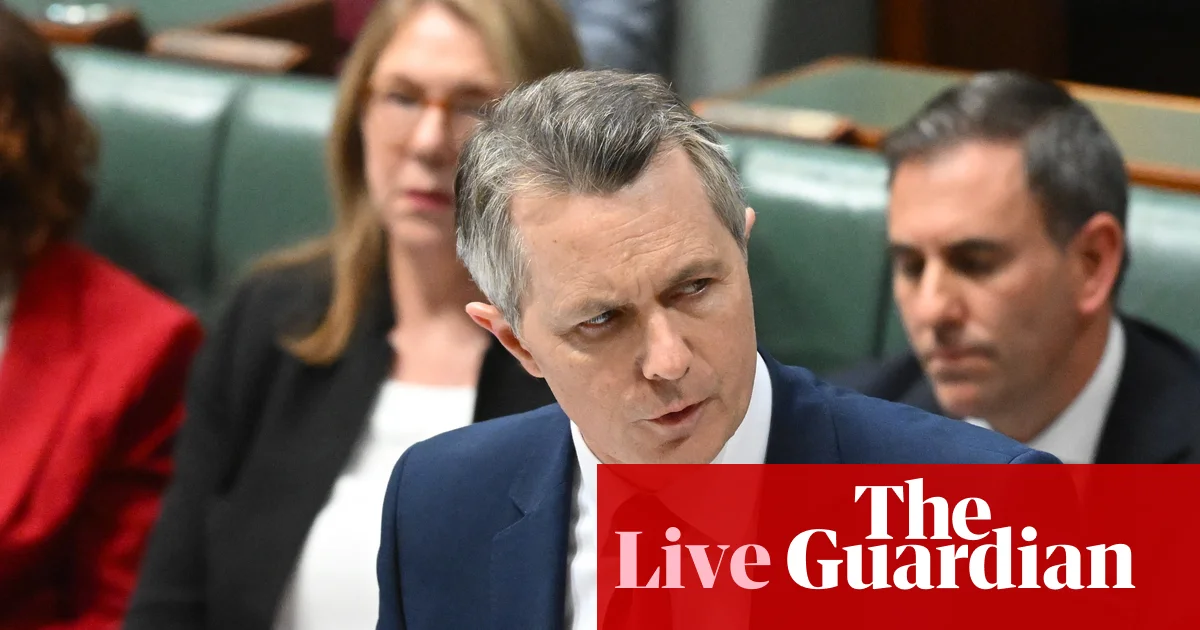
In an era where the geopolitical landscape shifts rapidly, nations are increasingly compelled to reassess alliances and strategic priorities. Australia, under the leadership of Prime Minister Anthony Albanese, exemplifies this dynamic as it grapples with complex international issues—from supporting activists attempting to break the Gaza blockade to navigating climate commitments and domestic policy reforms.

One of the most striking international developments involves the interception of a flotilla attempting to breach the naval **blockade on Gaza**, aimed at delivering critical aid to the beleaguered Palestinian territory. Six Australians who participated face detention by **Israel**, prompting calls from Australian politicians, including opposition figures such as Larissa Waters, for the government to escalate diplomatic efforts. Waters has demanded greater action from Foreign Minister Penny Wong, including “calling on the Israeli ambassador” and even contemplating the expulsion of that ambassador if Australia’s nationals are not treated with due security and respect. The situation underscores the **geopolitical impact** of America’s close alliance with Israel—a relationship that many analysts argue complicates Australia’s ability to adopt a balanced foreign policy amid rising tensions.

Meanwhile, in domestic policy, the Albanese government has announced significant steps to ease economic burdens for Australians. Starting mid-November, the **Higher Education Contribution Scheme (HECS)** debt will be cut by 20%, a move aimed at alleviating the student debt crisis faced by millions. This policy shift, backdated to balances as of June, reflects a broader economic strategy to boost domestic affordability and social mobility. Critics, however, argue that such measures serve political ambitions more than systemic reform, especially as debates around **climate change** intensify. The Greens, led by Larissa Waters, have repeatedly accused the government of ignoring expert advice—asserting that the **62-70% emissions reduction targets** are “low-balled” and favoring coal and gas industries with too lenient policies. This rift demonstrates how domestic policy decisions are deeply intertwined with **global climate commitments**, which, if rushed or compromised, could undermine Australia’s credibility on the international stage.

In the broader arena, the **Green parties worldwide** are pushing hard for environmental protections and a shift away from fossil fuels. Waters has called for an end to native forest logging and stronger environmental safeguards, criticizing the government’s willingness to negotiate with powerful fossil fuel interests—particularly the notorious “go zones” that reportedly include 22 coal projects seeking approval in the Bowen Basin. International organizations like the Climate Change Authority warn that actual commitments are insufficient to meet the looming climate crisis, a concern echoed by Australian experts who emphasize that **how nations choose to act now will define their legacy**. The tension between economic growth’s reliance on fossil fuels and the urgent need for ecological sustainability continues to be a defining feature of Australia’s **geopolitical impact** on global climate efforts.

As these internal and external tensions unfold, history remains at the crossroads. Decisions made in the coming months will resonate across nations—impacting alliances, influencing international perceptions, and shaping the lives of generations to come. From the **growing unrest in Gaza** to the **policy debates within Australia’s halls of power**, it is clear that the true test of leadership is whether a nation can uphold justice, security, and sustainability—all while navigating the turbulent currents of the world’s future. The unfolding narrative is a stark reminder that history’s weight lies not just in the decisions of today, but in the legacy of what is yet to be written.

Social Media Auto Publish Powered By : XYZScripts.com