
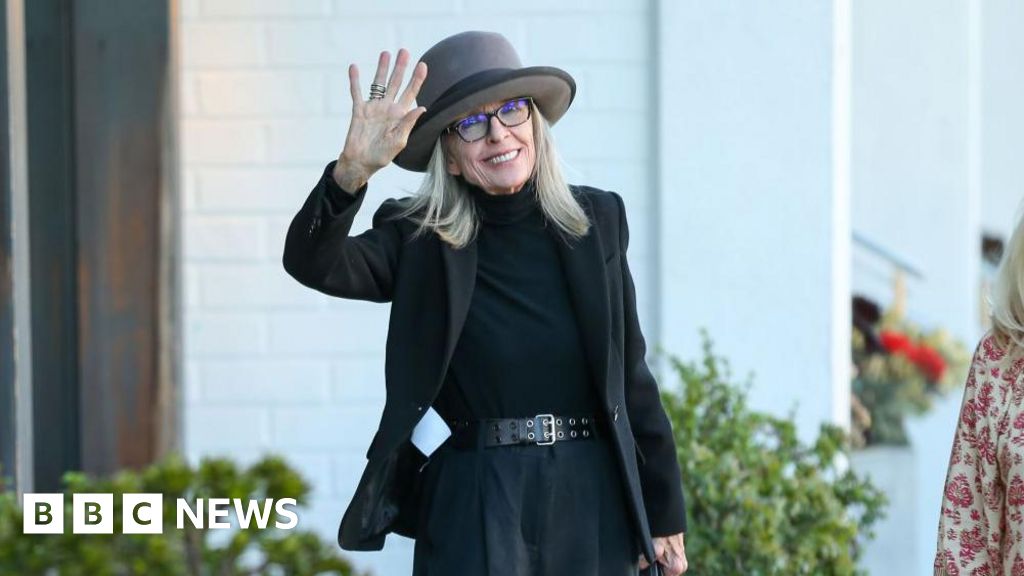

In the landscape of American culture, few figures evoke the essence of timeless artistry and personal authenticity as profoundly as Diane Keaton. Her recent passing at age 79, caused by pneumonia, prompts us to reflect not only on the transient nature of life but on the enduring power of arts and culture as repositories of our collective memory and expressions of societal identity. Keaton’s career, spanning more than five decades, exemplifies how *film*, as a mirror of the human condition, sustains the threads of tradition and innovation that weave our social fabric. Her portrayal of characters grounded in sincerity and wit resonates deeply within the philosophical notion, —as Ortega y Gasset might suggest—— that culture is a ‘horizon’ shaping the pursuit of individual fulfillment.
Throughout her illustrious career, Keaton became a defining icon of a cultural ethos that prizes authenticity, wit, and an unapologetic approach to style—marked notably by her trademark turtlenecks, hats, and thick-rimmed glasses. Her role in Annie Hall, which earned her an Academy Award in 1978, is emblematic of her ability to encapsulate modern existential dilemmas within a comedic, yet profound, cinematic language. Her collaborations with auteurs like Woody Allen—stars in films like Manhattan, Love and Death, and Play It Again, Sam—embody an era where intellectual undercurrents and artistic experimentation redefined American culture. These works serve as living documents of the shifting values, where tradition meets modernity, echoing Tocqueville’s observations about the American penchant for reinvention rooted in cultural foundations.
As the Western world confronts rapid social change, the importance of cultural memory becomes even more evident. Keaton’s influence stretches beyond her performances; her style and wit have become symbols of a resilient tradition that values individual expression and societal continuity. The tributes from her peers—like Goldie Hawn describing her as leaving “a trail of fairy dust,” or Bette Midler calling her “brilliant and extraordinary”—highlight the cultural reverence for those who embody a kind of artistic patriotism. These reflections serve as reminders that cultural icons are not merely entertainers but are custodians of societal values, bearings upon which a community’s identity is constructed. To quote Chesterton, culture is the thoughts we think after we’ve thought them, reaffirming the role of such figures in maintaining the continuity of shared wisdom, humor, and style.
In the end, Keaton’s legacy reminds us that culture is neither a static relic nor a fleeting trend but a living monument—both memory and prophecy. Her films, her style, her wit form a tapestry woven with threads of tradition, innovation, and human aspiration. As we consider her passing, let us hear that whisper echoing through history: culture is humanity’s living memory, a prophecy of the future yet to be realized, a testament to our constant quest for meaning amid the shifting sands of time. In embracing the essence of Keaton’s spirit, we are invited to see our shared humanity anew—not merely as individuals passing through life but as custodians of a cultural legacy that endures, inspiring the generations yet to come.





