
Matox News

Truth Over Trends, always!

House of Lords Approves Phone Ban in Schools, Putting Society’s Discipline First

In recent weeks, the UK Parliament has taken a significant step towards safeguarding the mental and social well-being of its youth by supporting legislation aimed at banning social media usage for under-16s. This legislative move highlights growing concerns among parents, educators, and social commentators regarding the impact of digital platforms on families, education, and broad community cohesion. Critics argue that social media, while a tool for connection, often contributes to increased anxiety, cyberbullying, and distorted perceptions of reality—particularly for impressionable adolescents who are still navigating the complex landscape of identity and self-esteem.

Historically, social critics and sociologists have warned about the destabilizing effects of rapid technological change. Influential figures like Neil Postman emphasized how media shape societal values and moral frameworks, warning that excessive exposure to digital environments could erode traditional community bonds and intergenerational understanding. Today, many argue that the pervasive influence of social media during formative years is undermining the ethical fabric of families and the stability of educational environments. Schools report incidents of cyberbullying, social isolation, and mental health crises that are increasingly linked to online activity, prompting calls for tighter regulation to restore order and safety within the social fabric.

The legislative response reflects a broader recognition of social issues that transcend individual behavior—highlighting how demographic shifts and cultural tensions are reshaping societal norms. Historically, each era of technological innovation has challenged existing social structures. The current digital revolution, however, appears to be accelerating these changes at a pace that leaves many struggling to adapt. Critics voice concerns that unchecked social media use fosters a culture of instant gratification and impairs families’ ability to provide moral guidance. This phenomenon risks creating generations of young people with fragmented social identities, increasingly disconnected from their community roots and shared cultural values.

  • Strengthening family bonds through responsible digital use remains a societal priority.
  • Schools are adopting comprehensive digital literacy programs to equip students with critical skills for navigating online environments.
  • Community organizations are calling for greater parental involvement and oversight in children’s digital lives.

In this landscape of rapid change, social commentators emphasize the importance of restoring balance—recognizing that the social health of a nation depends on empowered, connected communities grounded in shared values and moral integrity. As historian Yuval Noah Harari and others have observed, society’s moral compass is often challenged during times of technological upheaval. It is essential to foster environments where families feel supported and where education reinforces the ethical imperatives necessary for building resilient communities. Efforts to regulate social media for minors reflect an acknowledgment that societal well-being is intertwined with the ethical development of its youngest members.

Ultimately, society stands at a crossroads. The path we choose will determine whether future generations inherit a fractured, digitally-saturated world or a resilient, morally grounded community capable of withstanding the turbulence of the modern age. As communities rally around safeguarding their cultural and social ideals, the hope remains that through thoughtful legislation and renewed family engagement, society can forge a future where technology serves as a tool for connection rather than division—reminding us all that the true strength of any society lies in its capacity to nurture hope, foster responsibility, and uphold shared human dignity.

Caerphilly School Sets Standard with Nearly Perfect Attendance—A Win for Community and Discipline

In the shadows of demographic shifts and cultural transitions, Welsh society grapples with an enduring challenge: declining school attendance rates that threaten the future fabric of community life. Despite some pockets of excellence, like Ysgol Gymraeg Caerffili, which boasts an extraordinary attendance record of 98.2%, the overall picture paints a sobering narrative—one that echoes global social issues about engagement, identity, and well-being among youth. The societal ripple effects reach deep, affecting families, education, and communities, revealing both societal resilience and the pressing need for targeted intervention.

Among sociologists such as James Coleman and Pierre Bourdieu, the importance of social capital and cultural engagement is emphasized as vital for fostering self-esteem and communal belonging. The success stories emerging from schools like Ysgol Gymraeg Caerffili underscore this, where participation in extracurricular activities—ranging from chess to dance—serves as a vital countermeasure against disconnection. Headteacher Lynn Griffiths highlights that “children don’t want to miss out and quite often our parents say ‘they’re not feeling 100% but they want to be in school because they enjoy being in school'”. Such attitudes signal a desire among young people for a platform to develop their identity and competencies, rooted in a supportive environment that values their well-being. Yet, the challenge remains how to replicate this success more broadly across Wales, where rates are stubbornly low—especially among secondary students—raising questions about community cohesion and the significance of sense of belonging in societal health.

The societal impacts reverberate beyond the classroom into families and local communities. For parents like Victoria from Glynneath, managing attendance involves navigating the rising costs of holidays and the understanding that sometimes, a week away during term time is the only affordable way for families to connect. On the other hand, Jenny’s story of her child with a medical condition illustrates the moral dilemma faced by schools and policymakers in balancing discipline with compassion. The Welsh government’s recent efforts to inject £7 million into re-engagement initiatives reflect an acknowledgment: addressing attendance isn’t merely about punitive measures, but about fostering an environment of support and understanding to nurture every child’s right to education.

The Broader Picture: Attendance Statistics and Social Reality

  • Average attendance for Welsh schools stands at 90.9% for 2024-25, trailing behind pre-pandemic figures of 94.3% in 2018-19
  • Primary school attendance surpasses secondary schools, reaching 93.4% compared to 90.3%
  • Persistent absence—pupils missing over 10% of sessions—is a critical concern, especially among disadvantaged populations

This data, analyzed by experts like Estyn, reveals a societal paradox: while schools are making efforts to elevate engagement, the underlying social determinants—such as economic hardship, mental health issues, and cultural alienation—persist. Schools like Osbaston Primary and Raglan Primary demonstrate that targeted interventions, including engaging extracurriculars and flexible attendance policies, can make significant differences. Nonetheless, the critical question remains: how can Wales bridge the gap between equality of opportunity and the reality of persistent disparities? It is a societal challenge requiring a collective effort—one that transcends education into social policy and community development.

In navigating this landscape, the role of parents and community actors becomes crucial. Schools aiming to work in partnerships with families—embracing understanding over punishment—are paving the way forward. Victoria’s account of schools providing regular attendance reports and flexible holiday arrangements exemplifies a broader societal shift towards empathy and collaboration. Such approaches acknowledge that attendance is not merely a measure of school discipline but a reflection of a society working to mend itself, recognizing that the bonds of community and the support systems within families are the bedrock of social resilience.

Society faces daunting social issues; yet hope persists in the small victories—students who wish to be in school, families striving to connect despite economic hurdles, educators dedicated to nurturing potential. Society’s ongoing challenge is to transform these pockets of success into a national movement, rebuilding a shared sense of purpose grounded in support, understanding, and hope. As social commentators and scholars reflect on history, the enduring truth remains that true societal progress emerges when communities come together to reimagine a society where every child, regardless of background, can find a place to belong, learn, and grow—affirming that the future is not fixed, but forged anew, one step at a time.

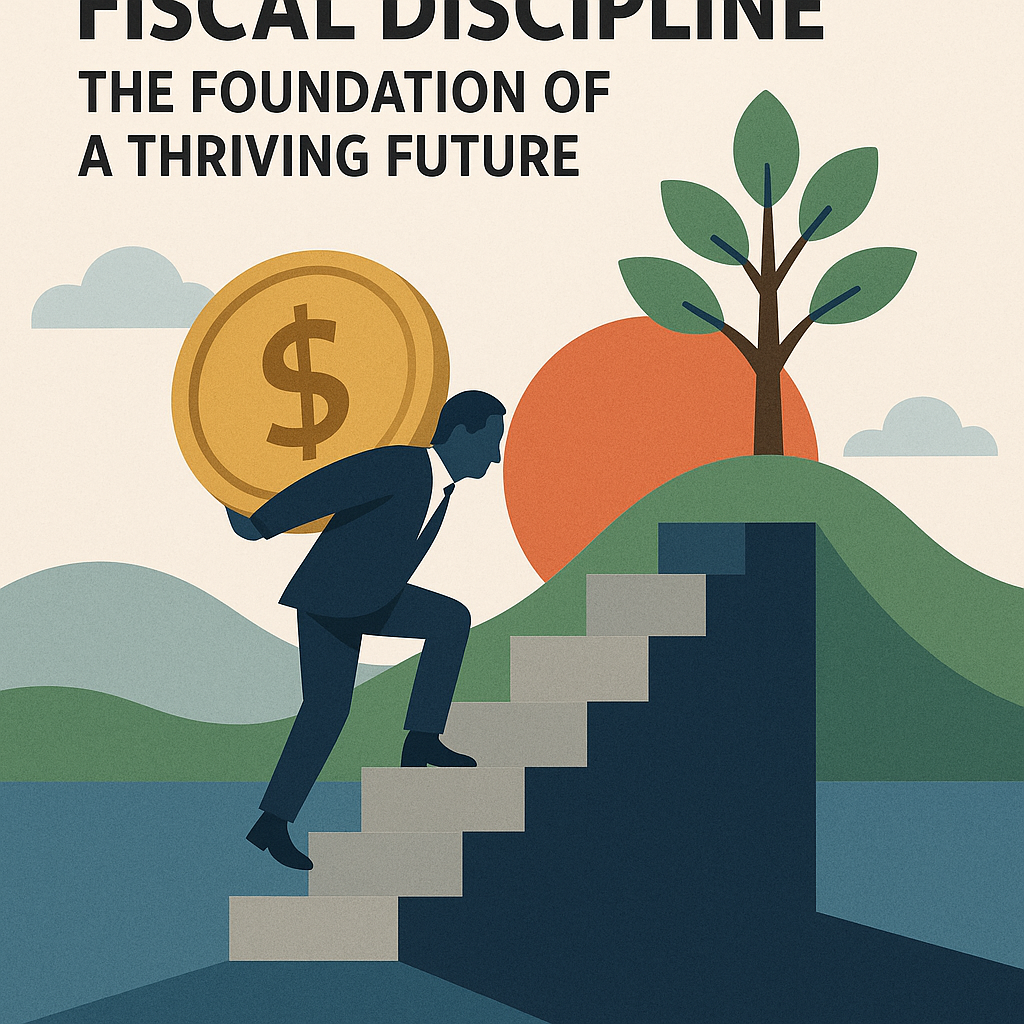
Fiscal Discipline: The Foundation of a Thriving Future

Fiscal discipline stands as the bedrock upon which a prosperous and resilient future is built. In a world of mounting economic uncertainties, governments that prioritize sound financial management can better navigate crises, foster sustainable growth, and secure opportunities for future generations. Critics often argue that expansive spending and loose fiscal policies are necessary to stimulate economic activity; however, history and economic analysis consistently demonstrate that overly ambitious deficits lead to long-term instability, inflation, and diminished investor confidence. As Nobel laureate Milton Friedman asserted, “The well-known fact that inflation is always and everywhere a monetary phenomenon underscores the importance of fiscal prudence in maintaining economic stability.” Ensuring fiscal discipline is not merely a moral choice but a pragmatic one rooted in empirical evidence and economic theory.

Proponents of fiscal discipline highlight key benefits that extend beyond immediate budgetary concerns. These include:

  • Lower interest rates, which reduce borrowing costs for both governments and private sectors.
  • Enhanced investor confidence, fostering an environment conducive to attracting domestic and international capital.
  • Reduced risk of debt crises, shielding economies from the destabilizing effects of excessive public debt—a message echoed by analysts such as Ray Dalio, who insists that debt sustainability is crucial for economic stability.
  • Greater flexibility in policy-making, allowing governments to respond proactively to unforeseen economic shocks without jeopardizing fiscal integrity.

Applying fiscal discipline also aligns with the principles of free-market economics, which emphasize limited government interference and the importance of personal responsibility. Economists like Adam Smith recognized that “the real engine of economic progress is the individual’s pursuit of self-interest”, made possible when governments impose constraints on their expenditure. Countries that have embraced these tenets, such as Hong Kong or Switzerland, showcase how disciplined fiscal policies create fertile ground for innovation, entrepreneurship, and economic resilience. Conversely, nations that indulge in unchecked spending often find themselves mired in cycles of debt and economic stagnation, as laid bare by historical episodes like the Latin American debt crisis of the 1980s. These lessons reinforce that fiscal discipline is a necessary condition—not merely a fiscal virtue—for achieving enduring growth.

Maintaining fiscal responsibility is undeniably a challenging endeavor, especially in an era of populist pressures and short-term political gains. Yet, it demands a strategic vision rooted in the realization that the true strength of a nation lies not just in its resources, but in its ability to manage them wisely. As the future unfolds, the nations that wield fiscal discipline as their guiding principle will be the architects of stability and innovation, forging pathways where others see only obstacles. With each prudent decision, they write a story not only of economic resilience but of hope—a testament to the idea that responsible stewardship can elevate a society from the chaos of reckless spending to the clarity of a thriving, sustainable future. The weight of this responsibility is immense, yet it holds within it the profound promise that, with disciplined fiscal policies, the aspirations of a brighter tomorrow can transcend the confines of today’s uncertainties—transforming fleeting dreams into enduring legacy, as enduring and profound as the very essence of progress itself.

Social Media Auto Publish Powered By : XYZScripts.com



