Matox News

Truth Over Trends, always!

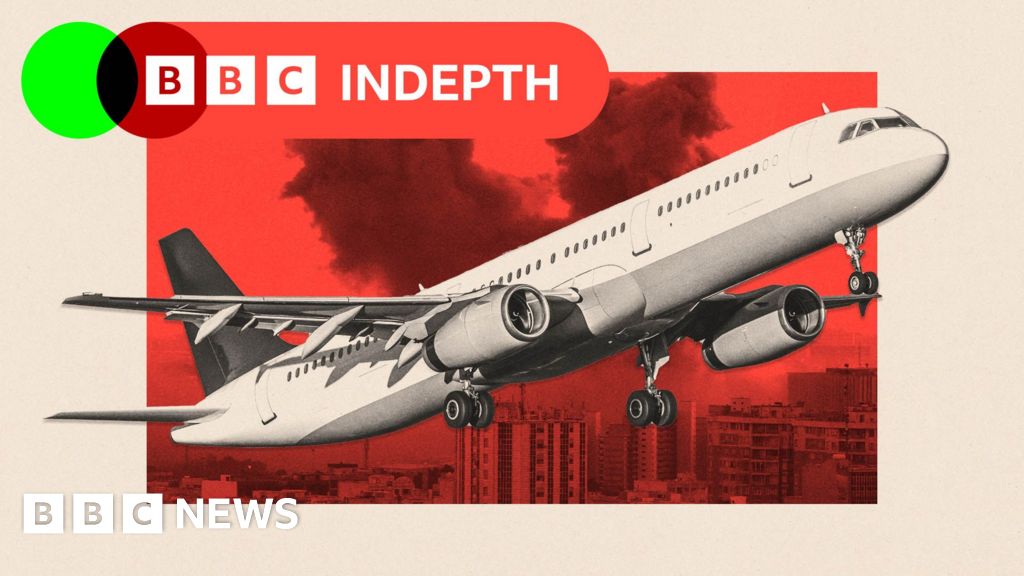
Brace for disruption: Long Middle East conflict could change the way we fly

Once regarded as the epicenters of international aviation, the Gulf’s major hub airports—such as Dubai International Airport, Doha Hamad International, and Abu Dhabi’s Abu Dhabi International Airport—bred a new era of **cheap** and **efficient** long-distance travel. By leveraging regional geopolitical stability and substantial investments in infrastructure, these airports transformed themselves into global transit points, fundamentally reshaping how people across continents connect. The “Golden Triangle” of the Gulf facilitated not only the movement of millions but also catalyzed economic growth and boosted tourism, positioning the region as a crucial nexus in the world’s interconnected network of global commerce.

However, the **future** of these aviation hubs is now increasingly uncertain, as recent geopolitical realignments and global economic pressures threaten to disrupt this carefully balanced ecosystem. Analysts suggest that a combination of rising regional tensions, supply chain disruptions, and shifting alliances have begun to erode the competitive advantages that once made the Gulf the go-to transit zone. The International Air Transport Association (IATA) and other global institutions warn that increased **regulatory restrictions** and **security concerns** could diminish traffic flows, causing a ripple effect on airlines and related industries. This evolving landscape has left international stakeholders pondering whether the Gulf hub airports can maintain their former prominence or if they face an inevitable decline.

The **geopolitical impact** of this shift is profound. Decisions made within regional capitals and international negotiations are directly influencing global mobility. For instance, regional conflicts and diplomatic disputes—such as the ongoing blockade of Qatar and tensions surrounding the Iran nuclear deal—have cast long shadows over the stability that once underpinned Gulf air traffic. Moreover, major powers, including the United States and China, are pursuing more direct routes and alternative hubs in response to these volatilities. The **economic implications** are equally significant, with extended delays and restrictions threatening billions of dollars of revenue and risking job losses in aviation, logistics, and hospitality sectors. As prominent historian Dr. Samuel Harris notes, “Aviation hubs are not just economic engines—they’re symbols of regional stability and geopolitical influence.”

Looking ahead, the strategic calculus for Gulf nations involves balancing **investment in local industries** against the mounting geopolitical storms that threaten their aviation futures. The shifting international landscape underscores that these hubs—once unequivocally ideal for **cost-effective travel and commerce**—may soon need to adapt or face obsolescence. As global society witnesses these unfolding shifts, the question remains: **Can the Gulf adapt swiftly enough to reinvent itself, or will it become a relic of a bygone era of unchecked regional dominance?** The answer rests amidst the chaos and resolve that define current international diplomacy—a story still being written, with history watching with bated breath.
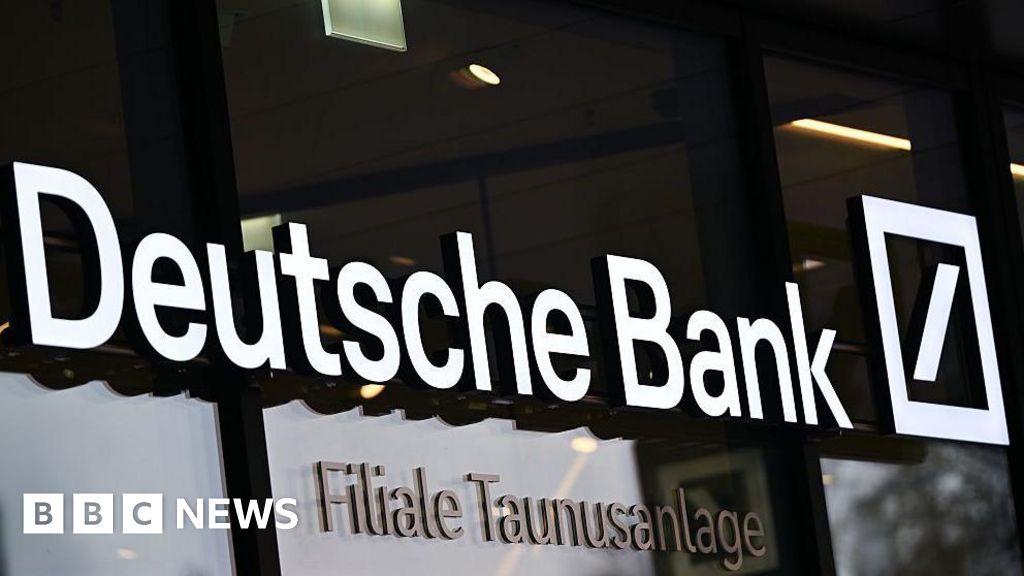

Deutsche Bank offices targeted in money laundering investigation—major disruption for Germany’s financial giant

Germany finds itself at the center of a new wave of scrutiny as officials recently conducted extensive searches in offices across Frankfurt and Berlin. This investigation revolves around what authorities are calling “past business relationships,” a vague yet potentially far-reaching clue into the economic and political fabric of Europe’s largest economy. While details remain scarce, the move signals an increased resolve by German regulators to address issues of transparency and accountability within influential sectors—an effort that has implications well beyond Germany’s borders.

The timing of these searches coincides with heightened geopolitical tensions and fluctuating alliances across Europe. Analysts suggest that such investigations could serve as a lever to scrutinize how certain business dealings—possibly tied to controversial partnerships or regions—may influence national policies or European stability. World observers note that this move also reflects growing concern over the nature of international financial networks and their potential to undermine democratic institutions. Observers point to the importance of this moment, emphasizing that these inquiries are not just domestic affairs—they are part of a broader contest of influence between global powers, where economic ties often mask underlying geopolitical struggles.

European institutions, including the European Commission and agencies specializing in anti-corruption, are closely monitoring the situation. According to international experts, these investigations could open a Pandora’s box, revealing connections that stretch across borders—potentially involving Russian, Chinese, or other foreign entities whose interests challenge Western policies. Such revelations might influence future negotiations on trade, security, and diplomatic relations, especially as Germany seeks to maintain its role as Europe’s economic leader amidst shifting alliances and external pressures. Furthermore, the European Union’s emphasis on scrutinizing corporate practices underscores a broader push towards moral and institutional integrity, which increasingly becomes a battleground in the contest between Western values and authoritarian models.

Historically, the pattern of uncovering hidden dealings within powerful economies has often precipitated significant realignments, warns renowned geopolitical analyst Dr. Jane McAllister. Such investigations, although seemingly procedural, hold the potential to *reshape* the landscape of international influence. As governments scramble to contain or capitalize on these disclosures, the wider societal impact remains profound: questions about accountability, sovereignty, and the true cost of global interconnectedness are laid bare. Meanwhile, several international organizations have issued cautious comments, emphasizing the importance of transparency but also warning against politicized misuse of investigative tools. Yet, the underlying message persists—what is uncovered today may very well determine the course of global history tomorrow.

As the world watches with bated breath, the echoes of this investigation threaten to resonate well beyond the confines of German bureaucracy. The unfolding story becomes a haunting reminder: in an era of intertwined economies and fragile diplomatic ties, history is written not just in treaties or military alliances, but in the quiet, relentless pursuit of truth. The question lingers—how will these revelations shape the future of Europe and the broader international order? The answer remains uncertain, but one thing is clear: the weight of history is still being forged in the shadows of today’s uncoverings.

Weather balloon disruption shuts down Lithuania’s top airports—major security alert!

The recent series of provocative incidents in the Baltic States underscores a shifting landscape of geopolitical instability that threatens the delicate balance of power in Eastern Europe. Lithuania, a staunch member of both European Union and NATO, responded decisively by closing its two largest airports and border crossings following the discovery of numerous helium weather balloons drifting into its airspace. These balloons, believed to be used for smuggling, notably carry Belarusian cigarettes, which are far more expensive within EU borders. The Lithuanian government blames Belarusian President Alexander Lukashenko, an ally of Russian President Vladimir Putin, asserting that his regime tolerates and perhaps facilitates this covert smuggling operation—a move that directly undermines EU security principles and regional stability.

This escalation is not isolated. Reports indicate that, throughout the year, Lithuania has seen an unprecedented number of incursions, with hundreds of helium balloons detected and dozens crossing into its territory. The same pattern of aerial intrusions is evident in neighboring Poland, which experienced over 100 similar incidents, further signaling an orchestrated effort to destabilize the Baltic region. Analysts point out that these seemingly minor incursions are part of a broader strategy by Russia and its proxies to test NATO’s resolve and to sow chaos within EU borders, exploiting vulnerabilities in eastern European countries. Security experts warn that such tactics could prelude more aggressive actions, echoing fears of a renewed hybrid warfare aimed at dividing the alliance and reasserting Moscow’s influence.

The recent encounter involving Russian military aircraft further amplifies these concerns. On Thursday, Lithuanian military sources confirmed the entry of a Sukhoi SU-30 fighter and an IL-78 tanker into Lithuanian airspace—an area protected by NATO’s Enhanced Air Policing Mission. Though the aircraft departed after brief incursions, NATO scrambled fighter jets as a show of force, signaling that the alliance remains vigilant amid the continued threats. These deliberate aerial provocations coincide with diplomatic protests from Vilnius, which summoned the Russian chargé d’affaires and issued a stern warning, underscoring the fragile diplomatic environment. Russia’s denial of the incursions, despite credible military reports, reveals its attempt to obfuscate the narrative and maintain plausible deniability—yet the message remains clear: the Baltic States are caught in the crossfire of a renewed geopolitical struggle.

This unsettling chain of events illuminates the broader geopolitical impact of Russia’s tactics. Under the veneer of trivial balloon crossings, a strategic message is sent: the security of eastern NATO members is fragile, and the Kremlin is willing to test the collective resolve of the West. International organizations and security analysts alike warn that such provocations could serve as precursors to more serious escalations—potentially softening defenses or creating opportunities for unilateral actions that threaten regional sovereignty. Historians like John Mearsheimer argue that Moscow’s deliberate destabilization efforts are designed to weaken NATO from within, reviving Cold War-era fears of renewed conflict in Europe. The unity of the alliance and the resilience of its eastern flank are under direct threat; the question remains whether Western nations can suppress the temptation to retreat or whether they will confront this threat head-on, risking broader confrontation in their effort to uphold stability.

As the curtains lift on this chapter of unfolding history, the precarious balance between sovereignty and aggression continues to sway. The Baltic region has again become a testing ground for geopolitical rivalry, where every balloon, incursion, and diplomatic protest leaves an indelible mark on the fabric of international security. The question looms: how much longer can democratic nations defend their borders against this invisible war? The answer, still shrouded in uncertainty, echoes across the corridors of power—while history, with relentless perseverance, watches and waits, ready to judge the decisions that will shape the future of the free world.

Social Media Auto Publish Powered By : XYZScripts.com



